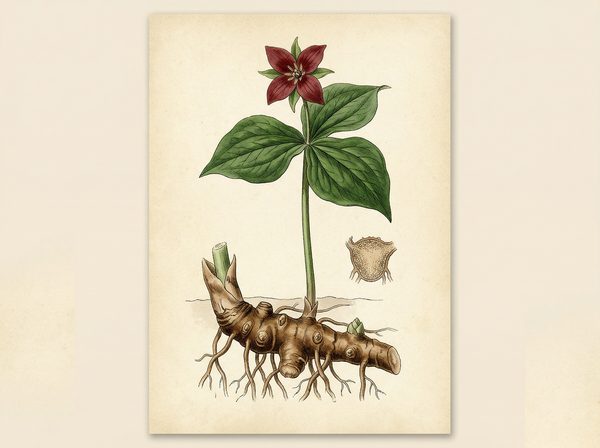
Western Herbalism
Beth Root
Trillium erectum
Also known as Birthroot, Trillium, Bethroot, (See below.).
Trillium influences mildly the nerve supply of the organs of the thorax. It assists heart remedies in relieving ample functional irritation. It cures catarrhal bronchitis when there is very profuse expectoration. It soothes the cough of incipient phthisis, especially where there is a tendency to hemorrhage, over which it has a marked controlling influence. It restrains excessive action of the kindneys. At one time it had an excellent reputation in the control of diabetes insipidus. It controls uterine hemorrhage of a passive character to an excellent advantage, especially menorrhagia and metrorrhagia. Excessive vaginal catarrh is restrained by it.

Ask Herbert about Beth Root. Herbert is the master herbalist inside Bountiful Herbs: he answers from this plate and eleven hundred others, with dosing, pairing and cautions. Your first ten questions are free.
Ask HerbertActions
Indications what the tradition reached for it in
- Hectic fever
- Wounds
- Diarrhea
- Uterine hemorrhage
- Hemoptysis
- Vaginal infections
- Menorrhagia
- Postpartum hemorrhage
- Metrorrhagia
- Menstrual cramps
- Dysentery
- Bronchorrhea
- Phthisis
- Ulcers
- Hematuria
- Leukorrhea
- Varicose veins
- Amenorrhea
- Bleeding
- Bronchitis
- Cough
- Debility
- Fatigue
- Inflammation
- Menstrual irregularity
- Respiratory congestion
- Weakness
- Fever
- Hemorrhage
- Dysmenorrhea
Safety
Pregnancy: Not safe. Contraindicated in pregnancy except just prior to labor.
Pregnancy, our record: Caution. Pregnancy (uterine stimulant
Pregnancy, our record's flag: Caution. Use with care in pregnancy (our record's flag)
Pregnancy, our record's flag: Not safe. Not for use in pregnancy (our record's flag)
Breastfeeding: Caution. Use with caution while breastfeeding. A natural products monograph says to avoid it under a combined pregnancy and lactation heading whose stated reasons concern the uterus, and no lactation data exist.
The record lists 4 contraindications; open the plate in the library to read them in full.
Dosing as the sources wrote it
| Preparation | As written | Metric |
|---|---|---|
| Tincture | Tincture (1:5) 1-2 mL 1-3x daily | 1-2 mL |
| Dried root decoction | Dried root decoction 2-4 fluid oz | |
| Capsules | Capsules 300-500 mg daily | 300-500 mg |
| Dose, of powdered bethroot, 1 drachm, to be given in hot water; of the strong infusion, which is the most common form of administration, from 2 to 4 fluid ounces. | ||
| A strong tincture of the fresh root (℥viii in alcohol, 76 per cent, Oj) may be given in doses of from 1 to 20 drops. | ||
| 1 dram to be given in hot water (King) |
Doses are reproduced from the sources for practitioners and are not a recommendation for any person.
From the sources
Therapy. Trillium influences mildly the nerve supply of the organs of the thorax. It assists heart remedies in relieving ample functional irritation. It cures catarrhal bronchitis when there is very profuse expectoration. It soothes the cough of incipient phthisis, especially where there is a tendency to hemorrhage, over which it has a marked controlling influence. It restrains excessive action of the kindneys. At one time it had an excellent reputation in the control of diabetes insipidus. It controls uterine hemorrhage of a passive character to an excellent advantage, especially menorrhagia and metrorrhagia. Excessive vaginal catarrh is restrained by it.
Action, Medical Uses, and Dosage. Bethroot is astringent, tonic, and antiseptic; it has been employed successfully in hemoptysis, hematuria, menorrhagia, uterine hemorrhage, metrorrhagia, leucorrhoea, cough, asthma, and difficult breathing, and is said to have been much used by the Indian women to promote parturition.
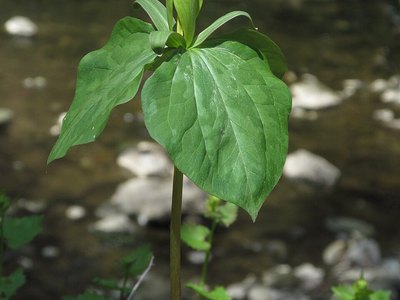
Botanical Source, History, and Description. This is one of an extensive genus of North American, herbaceous, perennial plants, which are variously known under the names of Wake-robin, Birth-root, Indian-balm, Lamb's quarter, Ground lily, etc. It has an oblong, tuberous root, from which arises a slender stem, 10 to 15 inches in height.
Specific indications and reasoning. (BETHBOOT.) Preparation: Prepare a tincture from the fresh root, Jviij. to Alcohol 76° Oj. Dose from gtt. j. to gtts. I. 'The common use of Trillium in large doses obtained its astringeut influence, possibly from the tannin it contains. The preparation from the fresh root named above, is but slightly astringent. We would employ it in disease of mucous membraues with increased secretion, and expect decided benetit. In the earlier part of my practice I used Trillium in chronic brouchitis, in chronic catarrh, in cough with free expectoration, with excellent results. It needs to be thoroughly studied, and it will probably supply a want in our Materia Medica.
Drawn from Scudder's Specific Medication and Specific Medicines; King's American Dispensatory, 18th edition (Felter and Lloyd); Ellingwood's American Materia Medica, Therapeutics and Pharmacognosy, and the Bountiful Herbs editorial.
Nearby on the shelf
 BellwortUvularia
 Benedict's HerbGeum urbanum
 BenzoinStyrax benzoin
 Betel leafPiper betle
 Beth rootTrillium sessile
 BharangiClerodendrum serratum
 Bhumi amlaPhyllanthus amarus
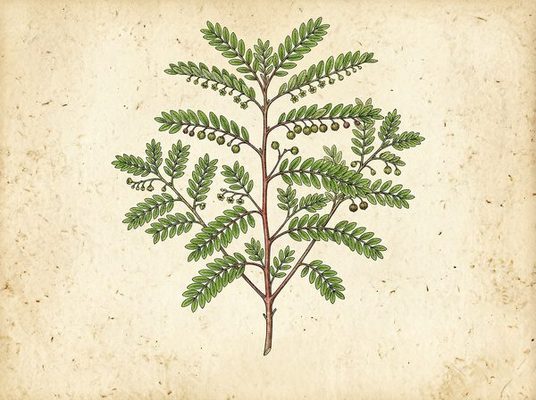 BhumyamalakiPhyllanthus niruri
The whole plate is in the library. The compass, Compare, the Sky of eleven hundred plants and the formulary open with an email address and a password, free, with the formula builder and its safety engine. Herbert in full, his formulating, clients, the handouts and the labels are the paid room.
Open the library, free