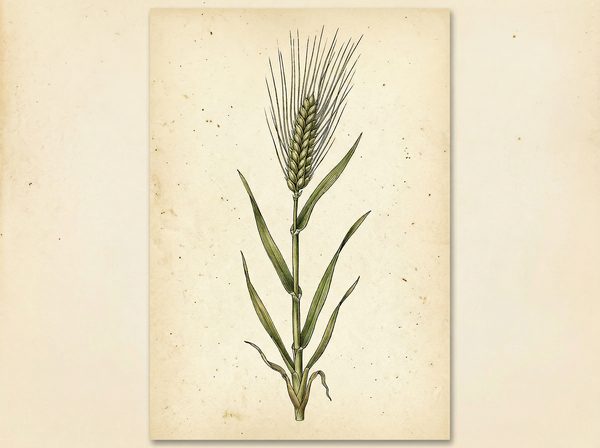
Western, Chinese and Ayurvedic herbalism
Barley
Hordeum vulgare
Also known as pearl barley, barley grass, malt, Yava, Hayapriya, Sitashuka.
Yava is barley, one of the oldest cultivated grains of the Indian subcontinent, grown as a winter crop across the northern plains of Uttar Pradesh, Rajasthan, Punjab, Haryana and Bihar and up into the Himalayan valleys of Ladakh, Himachal Pradesh and Uttarakhand, where it is the staple of the high mountains. Ayurveda ranks it among the foremost dietary medicines: a cooling, sweet, astringent grain that is heavy yet scraping, the cereal of choice for kapha, obesity and prameha, and the basis of the gruels and barley water given in fever, urinary complaints and convalescence. Its ash, Yavakshara, is a classical alkali for urinary stones.

Ask Herbert about Barley. Herbert is the master herbalist inside Bountiful Herbs: he answers from this plate and eleven hundred others, with dosing, pairing and cautions. Your first ten questions are free.
Ask HerbertActions
Indications what the tradition reached for it in
- Hypercholesterolemia and mixed dyslipidemia
- Type 2 diabetes and prediabetes (dietary staple)
- Obesity and metabolic syndrome
- Constipation with sluggish bowel
- Burning urination and mild urinary infection (barley water)
- Fever with thirst and weakness (barley water)
- Convalescence and poor appetite (gruel)
- Chronic sinus and chest congestion in a heavy constitution (dietary)
- Heavy, stiff thighs and legs with fluid retention
- Localized swellings and boils (poultice)
- Low milk supply (malt, traditional)
- Gout
- Gastrointestinal disorders
- Hyperuricemia
- Immunity enhancement
- Liver disease
- Atopic dermatitis
- Constipation
- Hyperlipidemia
- Fatigue
- Diabetes
- Cancer prevention
- Ulcerative colitis
- Hypertension
- Rheumatoid arthritis
- Weight management
- Respiratory support
- Oxidative stress
- Insomnia
- Detoxification
Specific indications
The heavy, soft, slow kapha patient with high cholesterol and rising blood sugar who needs a staple grain that fills without fattening
Fever or urinary heat with thirst, burning and dark urine, soothed by cool barley water through the day
The recovering patient who cannot yet manage solid food and needs a light, digestible gruel
Sluggish bowels with a sense of fullness and heaviness after wheat and rice
Safety
Pregnancy: Pregnancy Caution
Breastfeeding: Lactation (source flag notSafeInLactation)
The record lists 7 contraindications; open the plate in the library to read them in full.
In practice
The Ayurvedic practitioner uses Yava as diet before medicine. For the overweight patient with prameha the texts advise replacing rice and wheat with barley in every form: roti, gruel, saktu drink, roasted barley with buttermilk.
In Ayurveda
Rasa: madhura (sweet), kashaya (astringent). Virya: sheeta (cooling). Vipaka: katu (pungent). Guna: ruksha (dry), guru (heavy), lekhana (scraping), sara (mobile). Dosha: pacifies kapha and pitta; increases vata through its dry, scraping quality and produces abundant stool and flatus. Prabhava: lekhana: barley scrapes fat and kapha from the tissues while nourishing, which makes it the classical staple in obesity and prameha. Karma: lekhana (scraping, reduces excess tissue); medohara (reduces fat); kaphahara (reduces kapha); pittahara (cools pitta); mutrala (diuretic); balya (strengthening); sthairyakara (gives stability and firmness); pramehaghna (helps urinary disorders and diabetes); shleshmahara for the chest (clears mucus); vrana lepana (poultice for swellings and wounds); bhedana (loosens the bowel, mild); tarpana (nourishing and refreshing, as barley water). Classical indications: prameha (urinary disorders including diabetes); medoroga and sthaulya (obesity); urustambha (stiffness and heaviness of the thighs); kaphaja vikara (disorders of excess kapha); pinasa (chronic rhinitis); shvasa and kasa (dyspnea and cough); mutrakrichra (painful urination); ashmari (urinary stones); kushtha (skin disease); galaganda (goiter, in diet); trishna and daha (thirst and burning, as barley water); shotha (swelling, as poultice). The grain is used as food in the classical forms of yavagu (gruel), manda and peya (thin gruels), saktu (roasted flour taken as a drink), and as unleavened bread; barley water is the cooling drink for fever and urinary heat. Yavakshara, the alkaline ash of the whole plant, is a separate plant derived preparation for urinary stones and digestion. The young grass and the sprouted grain are modern additions. Classical formulations: Yavagu, Yava manda and peya, Yava saktu, Yavakshara, Yavadi churna, Yava kwatha (barley water). Described in: Charaka Samhita, Sushruta Samhita, Ashtanga Hridaya, Bhavaprakasha Nighantu, Dhanvantari Nighantu, Raja Nighantu, Kaiyadeva Nighantu, Madanapala Nighantu, Ayurvedic Pharmacopoeia of India.
Dosing as the sources wrote it
| Preparation | As written | Metric |
|---|---|---|
| Grain, as food | 30-60 g dry whole grain daily cooked as gruel or roti | 30000-60000 mg |
| Barley water | 100-200 mL cooled decoction of grain three to four times daily | 100-200 mL |
| Saktu | 20-40 g roasted barley flour stirred into water or buttermilk once or twice daily | 20000-40000 mg |
| Yavakshara | 0.5-1 g barley plant ash twice daily with honey or warm water | 500-1000 mg |
| Barley grass powder | 3-6 g young leaf powder daily in water | 3000-6000 mg |
| Poultice | 20-50 g warm barley flour paste applied locally | 20000-50000 mg |
Doses are reproduced from the sources for practitioners and are not a recommendation for any person.
From the sources
Overview. Yava is barley, one of the oldest cultivated grains of the Indian subcontinent, grown as a winter crop across the northern plains of Uttar Pradesh, Rajasthan, Punjab, Haryana and Bihar and up into the Himalayan valleys of Ladakh, Himachal Pradesh and Uttarakhand, where it is the staple of the high mountains. Ayurveda ranks it among the foremost dietary medicines: a cooling, sweet, astringent grain that is heavy yet scraping, the cereal of choice for kapha, obesity and prameha, and the basis of the gruels and barley water given in fever, urinary complaints and convalescence. Its ash, Yavakshara, is a classical alkali for urinary stones.
Clinical Notes. Primarily used as nutritive tonic and functional food Data mostly from modern reviews synthesizing clinical/preclinical studies rather than classical materia medicas Young leaves harvested at seedling to elongation stage Analogous to Ayurvedic barley grain uses
Clinical Notes. The Ayurvedic practitioner uses Yava as diet before medicine. For the overweight patient with prameha the texts advise replacing rice and wheat with barley in every form: roti, gruel, saktu drink, roasted barley with buttermilk.
Action and Therapy. Outside of its food value in broths, barley is useful as a demulcent and drink for fever patients and those suffering from diarrheal complaints. Barley flour, made into a thin pap, is useful in infant feeding, and a decoction of barley provides a soothing injection for rectal inflammations and a medium for the conveyance of medicines into the bowels in dysentery. It is also a good gastric lenitive after acute poisoning by irritants.
Drawn from King's American Dispensatory, 18th edition (Felter and Lloyd); Felter's Eclectic Materia Medica, Pharmacology and Therapeutics, and the Bountiful Herbs editorial.
In formulas
Barley stands in 69 documented formulas in the library, among them Miśreyārka, Citraka Harītakī, Daśamūla Harītakī, Bhārṅgī Guḍa, Indukānta Ghṛta, Daśamūla Ṣaṭpalaka Ghṛta.
Often paired with
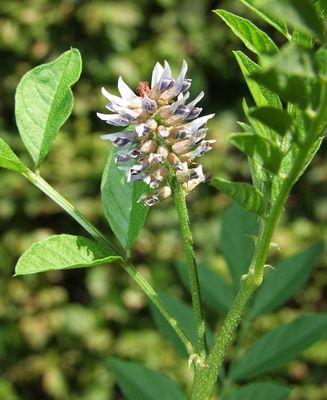 Licorice rootGlycyrrhiza glabra
 MaltMaltum
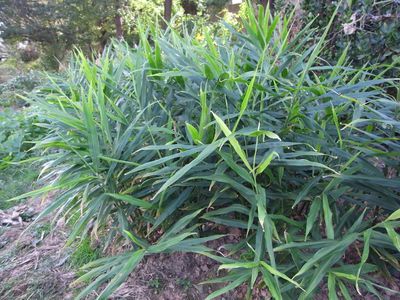 GingerZingiber officinale
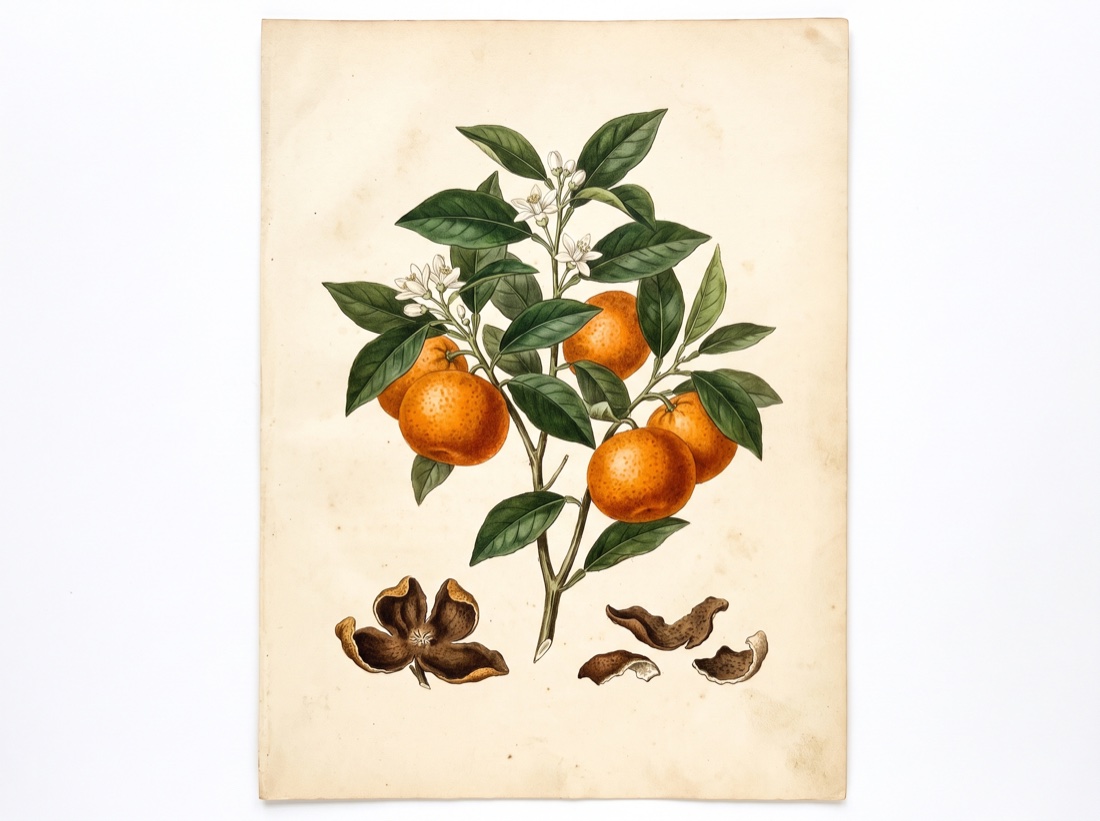 tangerineCitrus reticulata
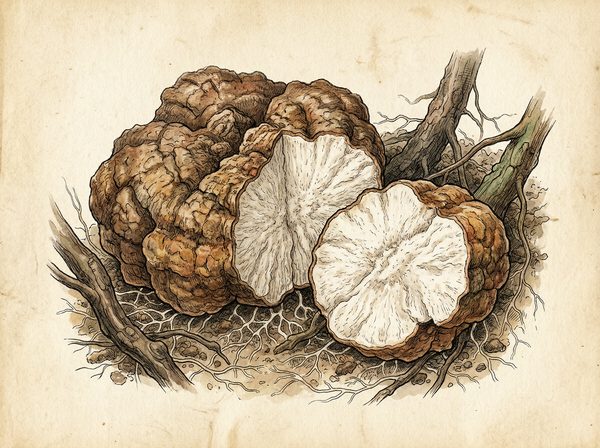 PoriaWolfiporia extensa
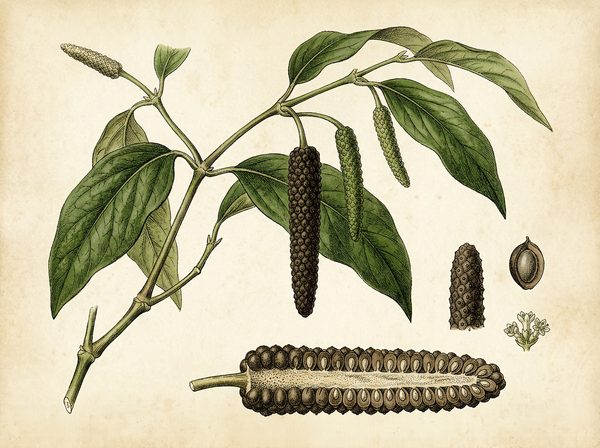 long pepperPiper longum
Nearby on the shelf
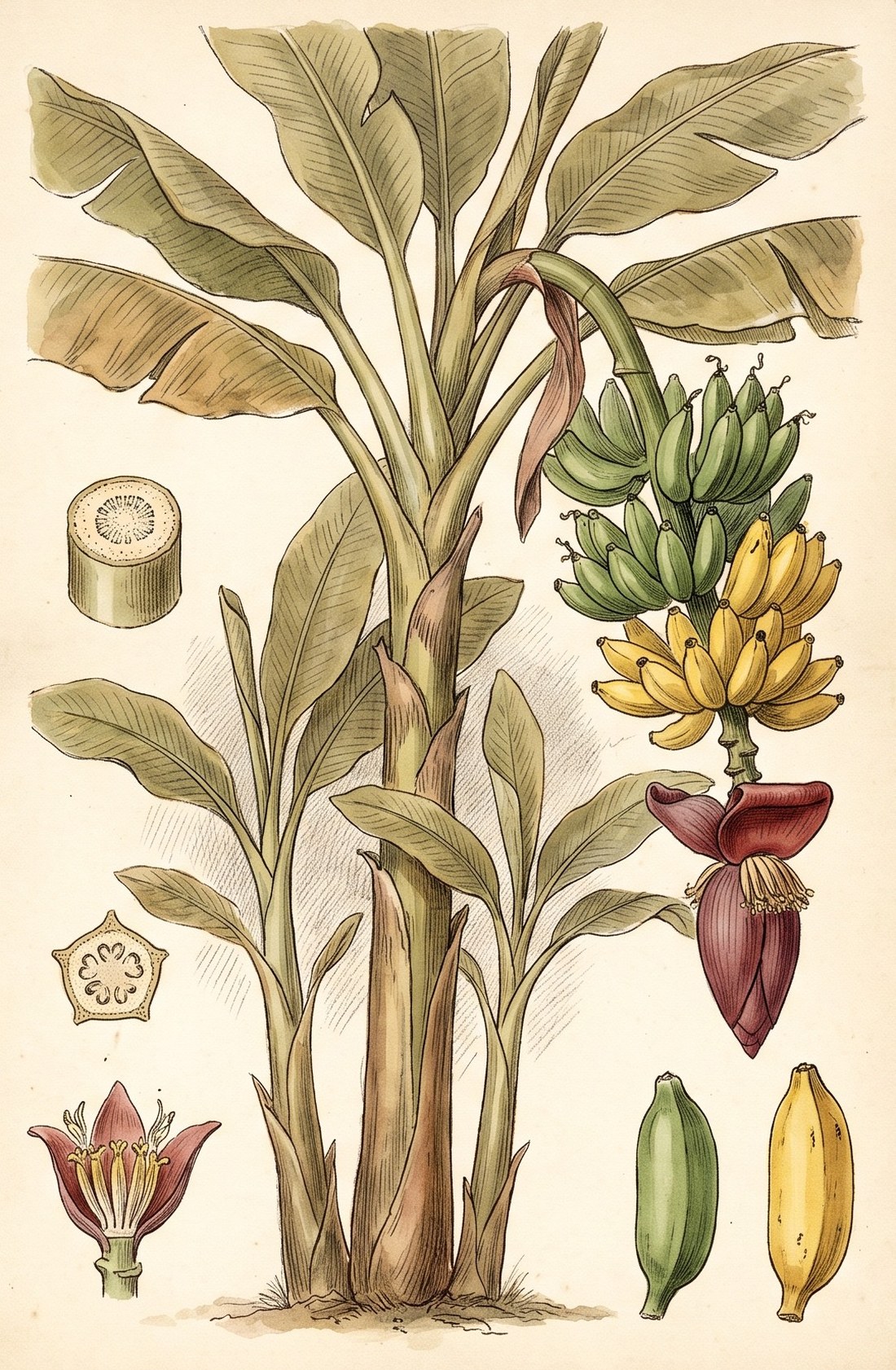 BananaMusa paradisiaca
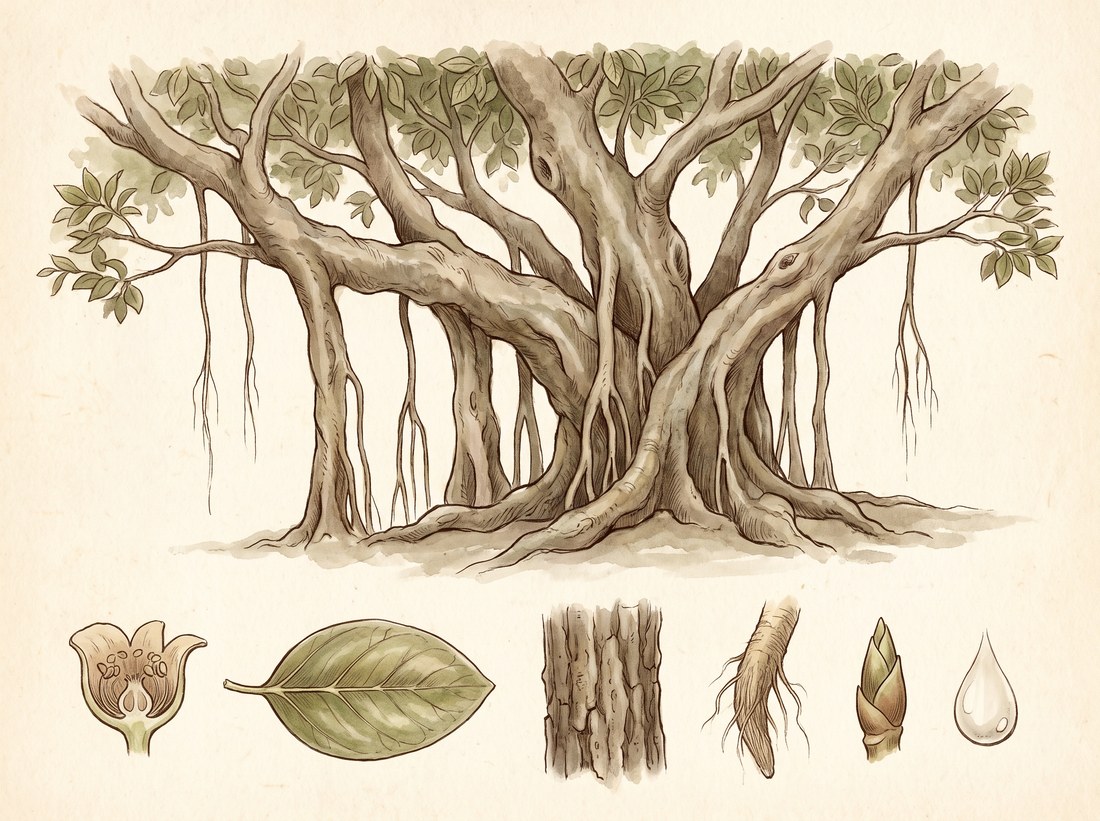 BanyanFicus benghalensis
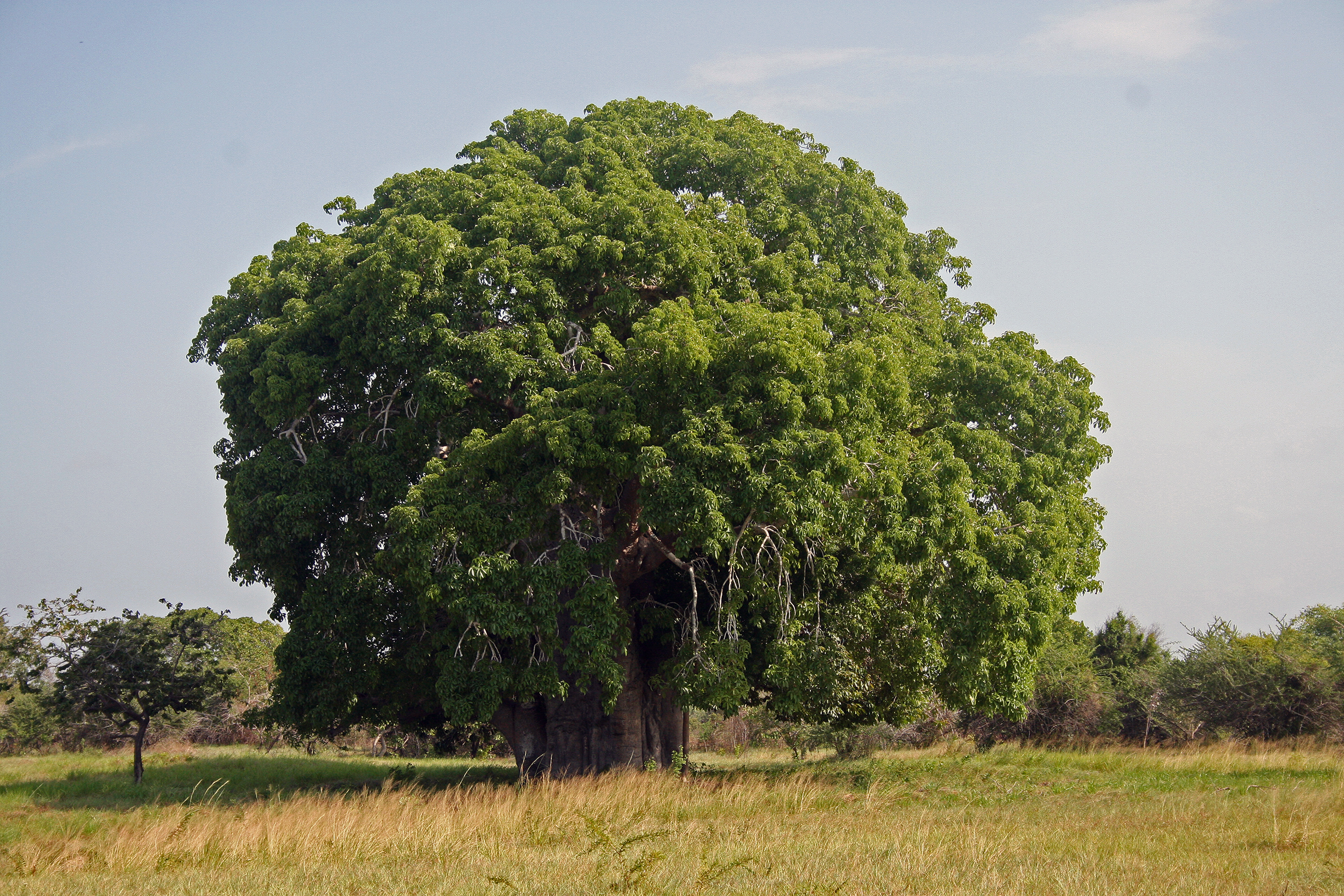 BaobabAdansonia
 BarberryBerberis vulgaris
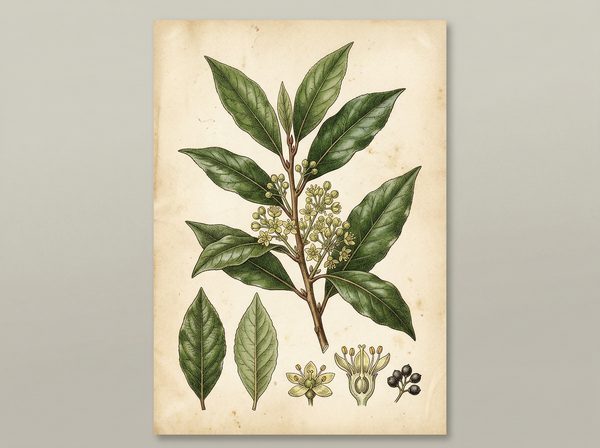 Bay LaurelLaurus nobilis
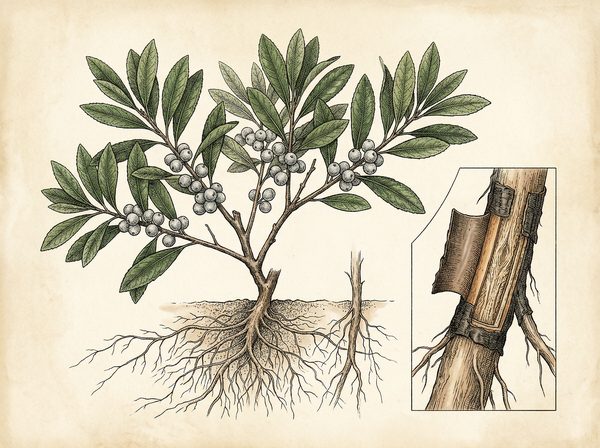 BayberryMyrica cerifera
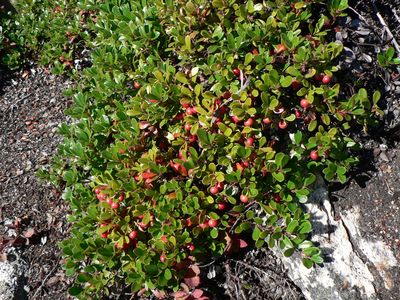 BearberryArctostaphylos uva-ursi
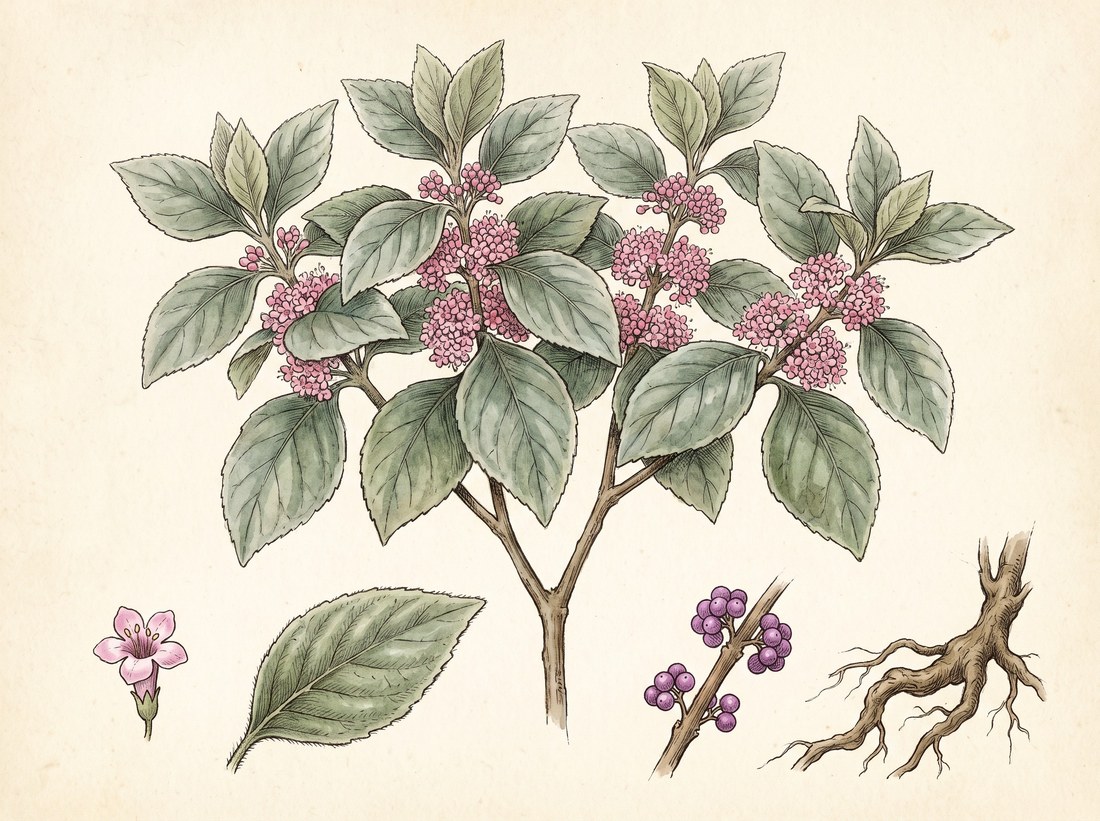 BeautyberryCallicarpa macrophylla
The whole plate is in the library. The compass, Compare, the Sky of eleven hundred plants and the formulary open with an email address and a password, free, with the formula builder and its safety engine. Herbert without limit, his formulating, clients, the handouts and the labels are the paid room.
Open the library, free