Western Herbalism
Balsam of Peru
Myrospermum peruiferum
Also known as Peru balsam, Balsamo, Balsam peru.
Balsam of Peru is the resinous exudate collected from incisions made in the bark of a large leguminous tree native to the forests of Central America and northern South America, historically associated with Peru through its old trade route. The thick, reddish-brown, fragrant balsam is gathered on cloths, then purified by boiling and skimming. Physiomedicalists classed it among the warming, stimulating agents useful for sluggish tissue and indolent sores, and it has long been valued both as an internal expectorant and, more enduringly, as a topical wound and skin remedy.

Ask Herbert about Balsam of Peru. Herbert is the master herbalist inside Bountiful Herbs: he answers from this plate and eleven hundred others, with dosing, pairing and cautions. Your first ten questions are free.
Ask HerbertActions
Indications what the tradition reached for it in
- Indolent wounds and ulcers
- Chronic leg ulcers with poor granulation
- Scabies
- Pediculosis
- Diaper dermatitis (as a compounded ingredient)
- Hemorrhoids
- Chilblains
- Chronic bronchitis with copious secretions
- Minor burns and abrasions
- Chapped or cracked skin
Specific indications
An indolent, poorly granulating wound or ulcer in a sluggish, cool tissue state, calling for a warming, stimulating dressing to rouse local circulation and healing.
Chronic catarrh with profuse thin secretions in a relaxed, debilitated patient, used by physiomedicalists as a warming stimulant to mucous tissue.
Safety
Low dose botanical. Used in drop doses in the classical practice; not a plant to dose freely.
Pregnancy: Avoid: no reliable safety data for internal use in pregnancy and no established indication that justifies the allergenic risk.
Breastfeeding: Avoid applying to the breast or nipple area and avoid internal use given lack of safety data.
The record lists 6 contraindications; open the plate in the library to read them in full.
In practice
In physiomedical and earlier eclectic practice, Balsam of Peru was reached for when tissue tone was low and healing sluggish: an ulcer that would not close, a chronic bronchial catarrh with thin, unproductive secretions in a cold, relaxed constitution.
Dosing as the sources wrote it
| Preparation | As written | Metric |
|---|---|---|
| Topical ointment (10-20% in a suitable base) | Apply to affected skin or wound once or twice daily | |
| Tincture (1:5, traditional internal use, now rarely employed) | 0.5-2 mL up to three times daily | 0.5-2 mL |
Doses are reproduced from the sources for practitioners and are not a recommendation for any person.
From the sources
Overview. Balsam of Peru is the resinous exudate collected from incisions made in the bark of a large leguminous tree native to the forests of Central America and northern South America, historically associated with Peru through its old trade route. The thick, reddish-brown, fragrant balsam is gathered on cloths, then purified by boiling and skimming. Physiomedicalists classed it among the warming, stimulating agents useful for sluggish tissue and indolent sores, and it has long been valued both as an internal expectorant and, more enduringly, as a topical wound and skin remedy.
Clinical Notes. In physiomedical and earlier eclectic practice, Balsam of Peru was reached for when tissue tone was low and healing sluggish: an ulcer that would not close, a chronic bronchial catarrh with thin, unproductive secretions in a cold, relaxed constitution.
Properties and Uses. These two balsams are so nearly alike in character, that they may be considered together. They are pleasant but pungent to the taste; exert a marked stimulating influence on the respiratory mucous membranes; and promote expectoration, at the same time giving a warming impression throughout the lungs.
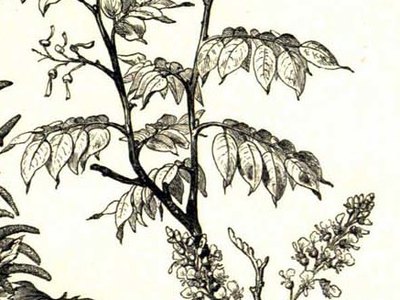
Description. Natural Order, Leguminosae. This is a large tree native to the forests of South America, and especially to Peru. Leaves alternate, with five pairs of leaflets. Flowers white, on long and woolly racemes in the axils of the leaves.
Drawn from Cook's Physio-Medical Dispensatory, and the Bountiful Herbs editorial.
Nearby on the shelf
 Balm of GileadPopulus balsamifera
 BalmonyChelone glabra
 Balsam appleMomordica balsamina
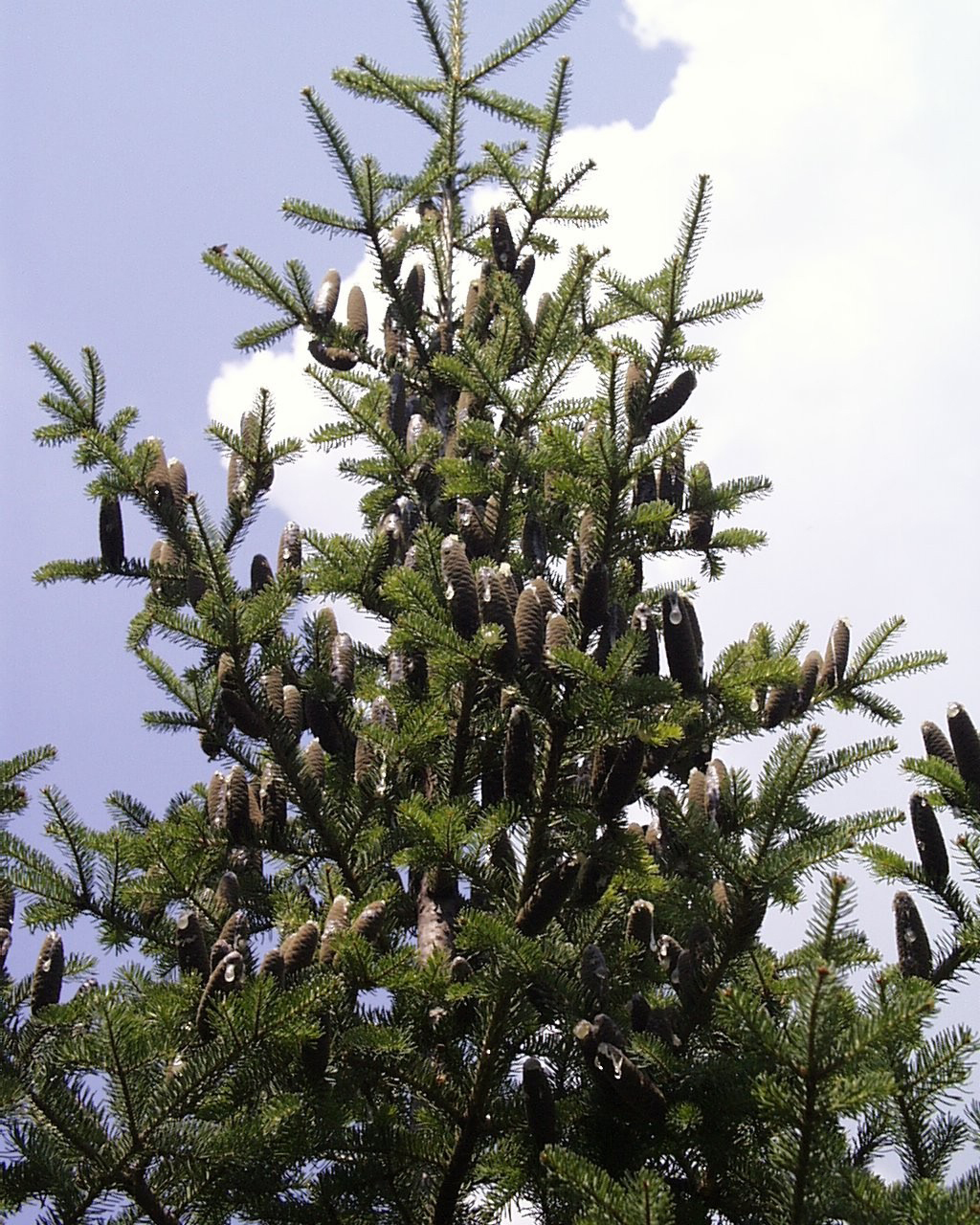 Balsam firAbies balsamea
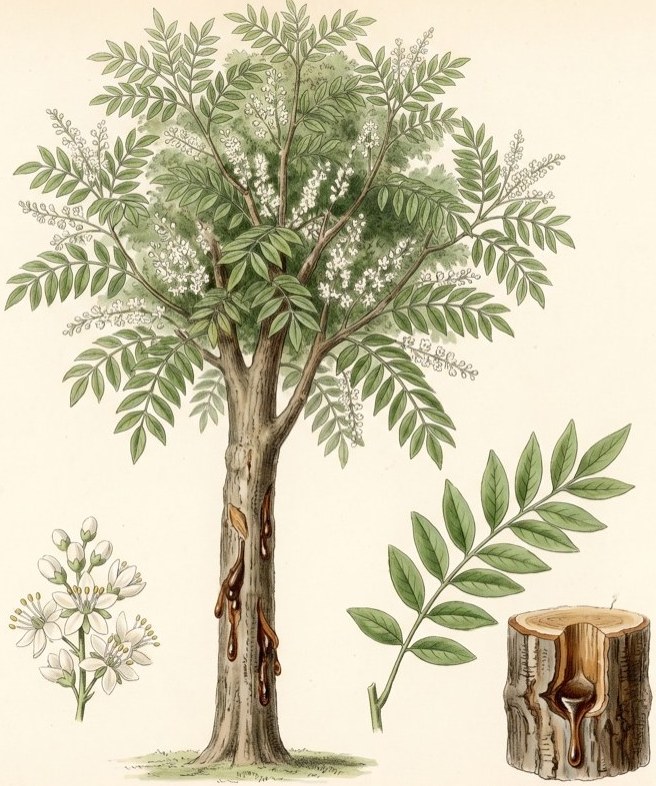 Balsam of PeruBalsamum Peruvianum
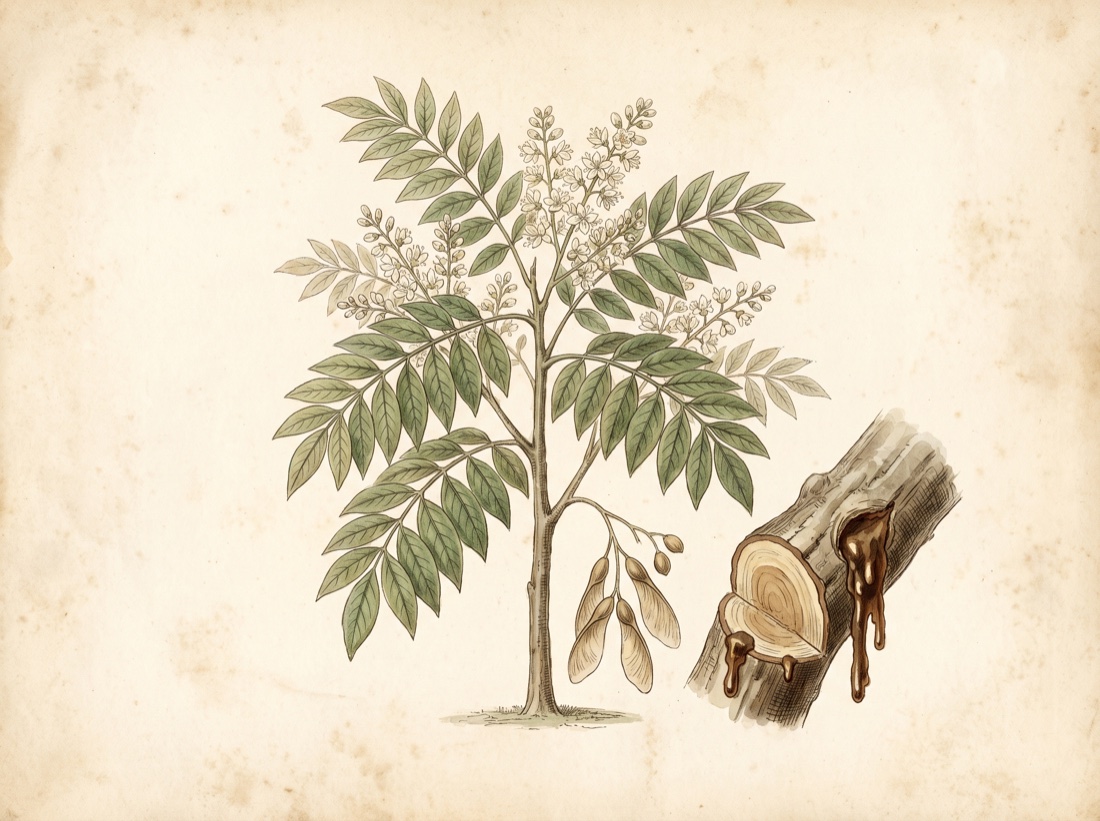 Balsam of ToluBalsamum Tolutanum
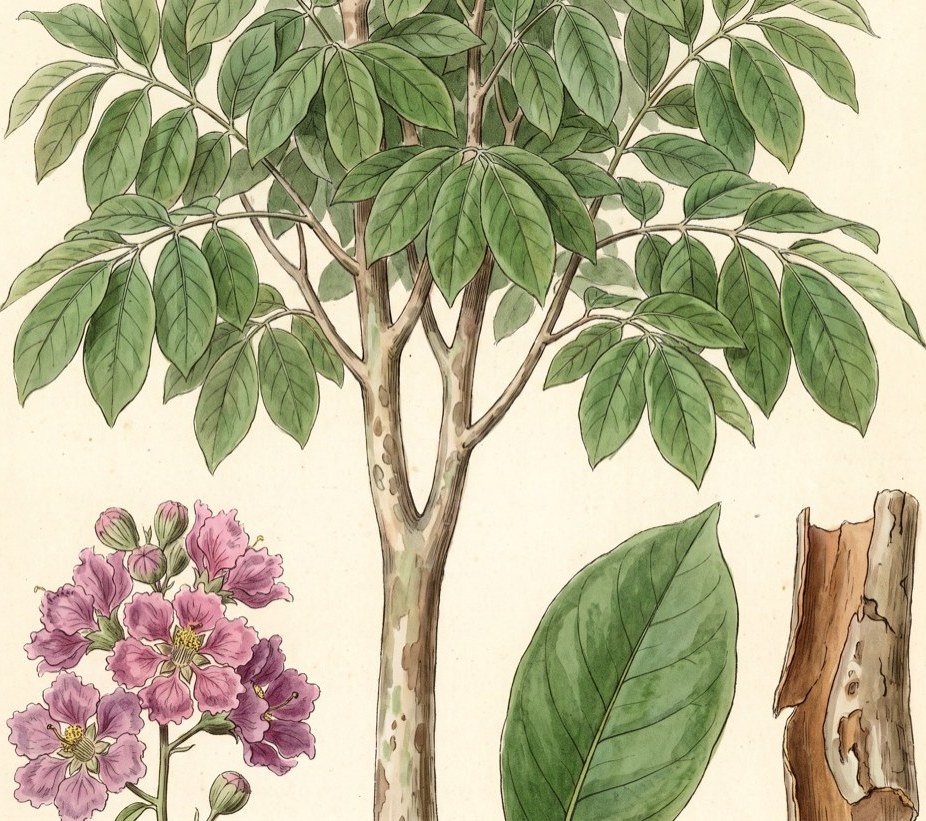 BanabaLagerstroemia speciosa
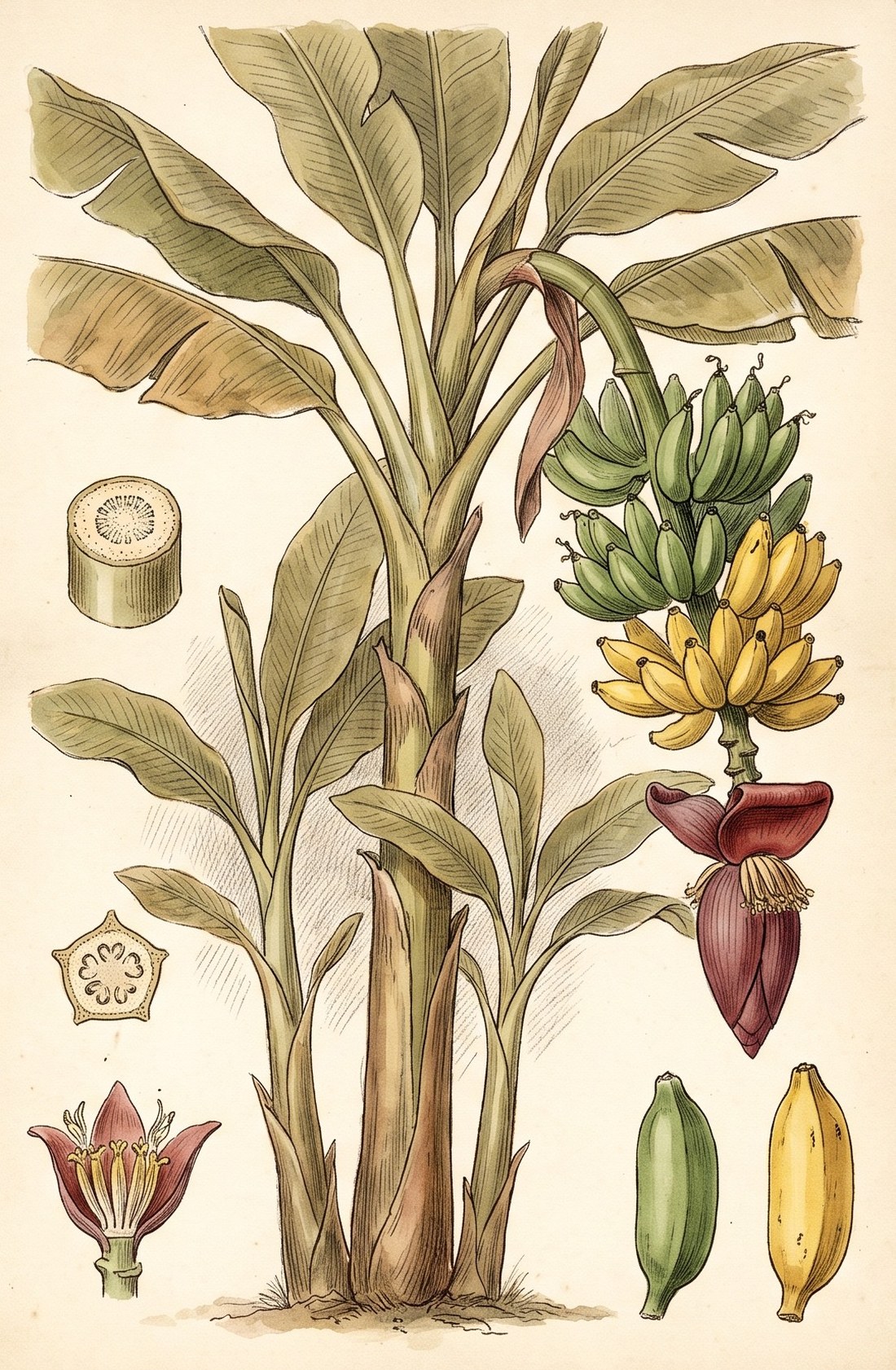 BananaMusa paradisiaca
The whole plate is in the library. The compass, Compare, the Sky of eleven hundred plants and the formulary open with an email address and a password, free, with the formula builder and its safety engine. Herbert without limit, his formulating, clients, the handouts and the labels are the paid room.
Open the library, free