Ayurvedic Herbalism
African basil
Ocimum gratissimum
Also known as clove basil, tree basil, shrubby basil, wild basil, East Indian basil, scent leaf, vana tulsi, Vana tulasi, Ajaka, Ramatulasi (regional attribution).
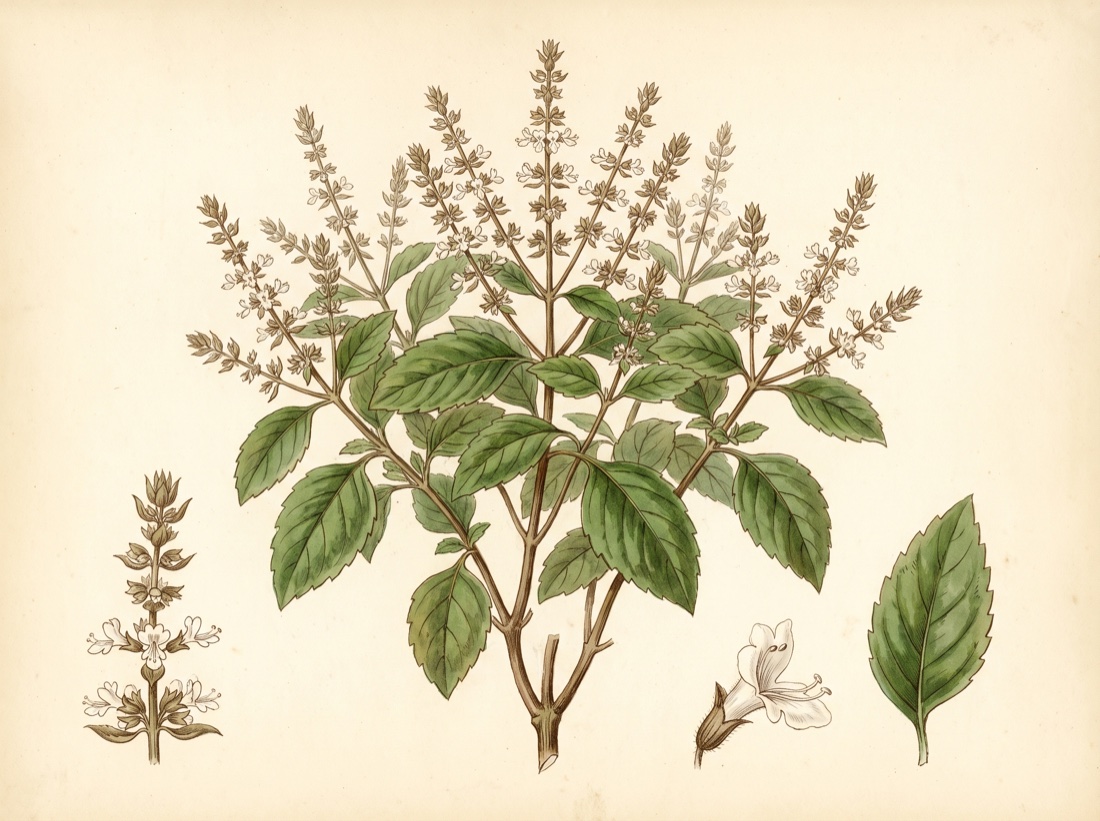
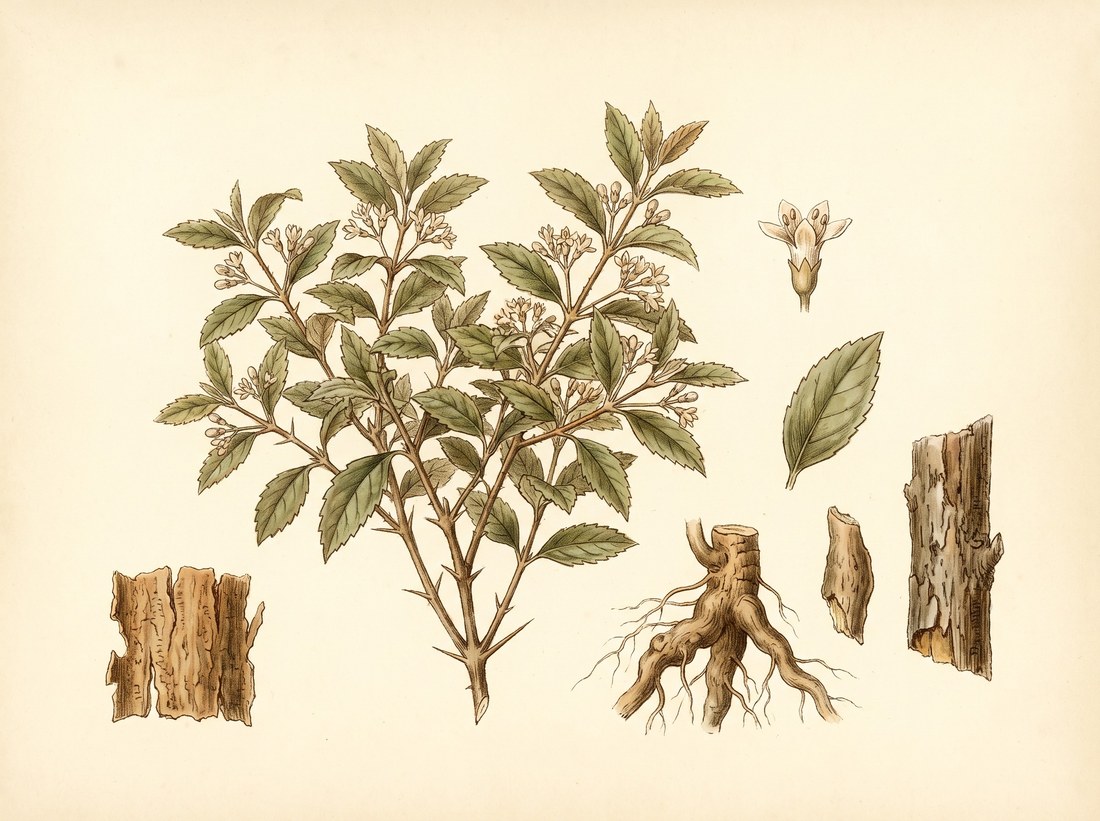
African basil is a woody, aromatic shrub to two meters with large toothed leaves that smell of clove and thyme, native to tropical Africa and the Indian subcontinent and grown throughout the tropics as a pot herb and dooryard medicine. The leaves are used fresh or dried, and the essential oil externally. In India it is one of the wild tulsi types, rām tulsī or vana tulasī, a heating, kapha-reducing plant for coughs, fevers and digestive upset; in West Africa, as scent leaf, it is a leading household remedy for diarrhea, fever, respiratory infection and skin disease.

Ask Herbert about African basil. Herbert is the master herbalist inside Bountiful Herbs: he answers from this plate and eleven hundred others, with dosing, pairing and cautions. Your first ten questions are free.
Ask HerbertActions
Indications what the tradition reached for it in
- Upper respiratory catarrh and cough
- Fever with chills
- Diarrhea and gastroenteritis
- Flatulent dyspepsia and nausea
- Dermatophyte infections of skin and nails (topical)
- Infected wounds and boils (topical)
- Gingivitis and oral hygiene (chewing stick, mouthwash)
- Headache (leaf inhalation or tea)
- Dysmenorrhea
- Type 2 diabetes (adjunct, traditional)
- Intestinal worms (traditional)
- Mosquito nuisance (leaf rub, topical)
- Cough and bronchitis with thick mucus
- Common cold and sinus congestion
- Fever with chills and body ache
- Indigestion, gas and colic
- Nausea and vomiting of cold type
- Fungal skin infections and candidal intertrigo (topical oil)
- Otomycosis and external ear infection (diluted oil, specialist use)
- Insect bites and stings (leaf poultice)
- Acne and boils (topical)
- Bad breath and gum infection (leaf chewed or decoction as mouthwash)
- Malaria convalescence and recurrent fever (traditional in Africa and India)
Specific indications
Watery, cramping diarrhea in a cold, damp, kapha-type patient who also has a stuffy head cold, taken as a hot leaf tea
Ringworm or athlete's foot where an aromatic, warming leaf wash or diluted oil is wanted instead of a pharmaceutical antifungal
Sluggish digestion with gas and a heavy head, in someone who eats the leaf as a pot herb and benefits from it as medicine
Safety
Pregnancy: Avoid medicinal doses in pregnancy: no published safety class is known to us, the plant is heating and sharp, the tradition withholds strong basil preparations from pregnant women, and Ocimum extracts have shown antifertility and uterine effects in animals; culinary amounts are not a concern.
The record lists 4 contraindications; open the plate in the library to read them in full.
In practice
Think of African basil as a stronger, more clove-like tulsi with a marked antimicrobial edge. Its warming, drying, pungent quality suits kapha and vata conditions: the wet cough and blocked head of a cold, sluggish gassy digestion, watery diarrhea with cramping, and the chilled fever of early infection, where a hot infusion provokes a useful sweat.
In Ayurveda
Rasa: katu (pungent), tikta (bitter). Virya: ushna (heating). Vipaka: katu (pungent). Dosha: pacifies kapha and vata; aggravates pitta in excess.
Dosing as the sources wrote it
| Preparation | As written | Metric |
|---|---|---|
| Infusion | 3-6 g dried leaf three times daily | 3000-6000 mg |
| Fresh leaf juice | 5-10 mL twice daily | 5-10 mL |
| Tincture (1:5, 45%) | 2-4 mL three times daily | 2-4 mL |
| Essential oil (topical only) | 1-3 percent dilution in carrier oil applied twice daily | |
| Swarasa | 10-20 mL fresh leaf juice with honey once or twice daily | 10-20 mL |
| Phanta (leaf infusion) | 100-150 mL infusion of 2-4 g dried leaf two to three times daily | 100-150 mL |
Doses are reproduced from the sources for practitioners and are not a recommendation for any person.
From the sources
Overview. African basil is a woody, aromatic shrub to two meters with large toothed leaves that smell of clove and thyme, native to tropical Africa and the Indian subcontinent and grown throughout the tropics as a pot herb and dooryard medicine. The leaves are used fresh or dried, and the essential oil externally. In India it is one of the wild tulsi types, rām tulsī or vana tulasī, a heating, kapha-reducing plant for coughs, fevers and digestive upset; in West Africa, as scent leaf, it is a leading household remedy for diarrhea, fever, respiratory infection and skin disease.
Overview. Ocimum gratissimum is a robust aromatic shrub of the mint family growing to two meters, with large toothed leaves and long spikes of small greenish flowers, native to tropical Africa and India and now naturalized through the wet tropics; it grows wild at forest edges, along roads and in village hedges across peninsular India and the northeast.
Clinical Notes. Think of African basil as a stronger, more clove-like tulsi with a marked antimicrobial edge. Its warming, drying, pungent quality suits kapha and vata conditions: the wet cough and blocked head of a cold, sluggish gassy digestion, watery diarrhea with cramping, and the chilled fever of early infection, where a hot infusion provokes a useful sweat.
Clinical Notes. The Ayurvedic view places Vana tulasi with the kapha-clearing aromatics. Leaf juice with honey for kasa and pratishyaya; a decoction with Shunthi, Maricha and Pippali for jvara with chills and a heavy chest; crushed leaves on bites, stings and ringworm; leaf oil warmed and dropped into the ear for karnashula; the seeds soaked in water as a soothing, mucilaginous drink for urinary burning in the way that sabja seeds are used.
Nearby on the shelf
 AcaciaAcacia
 Acanthopanax root barkEleutherococcus gracilistylus
 Adder's TongueErythronium
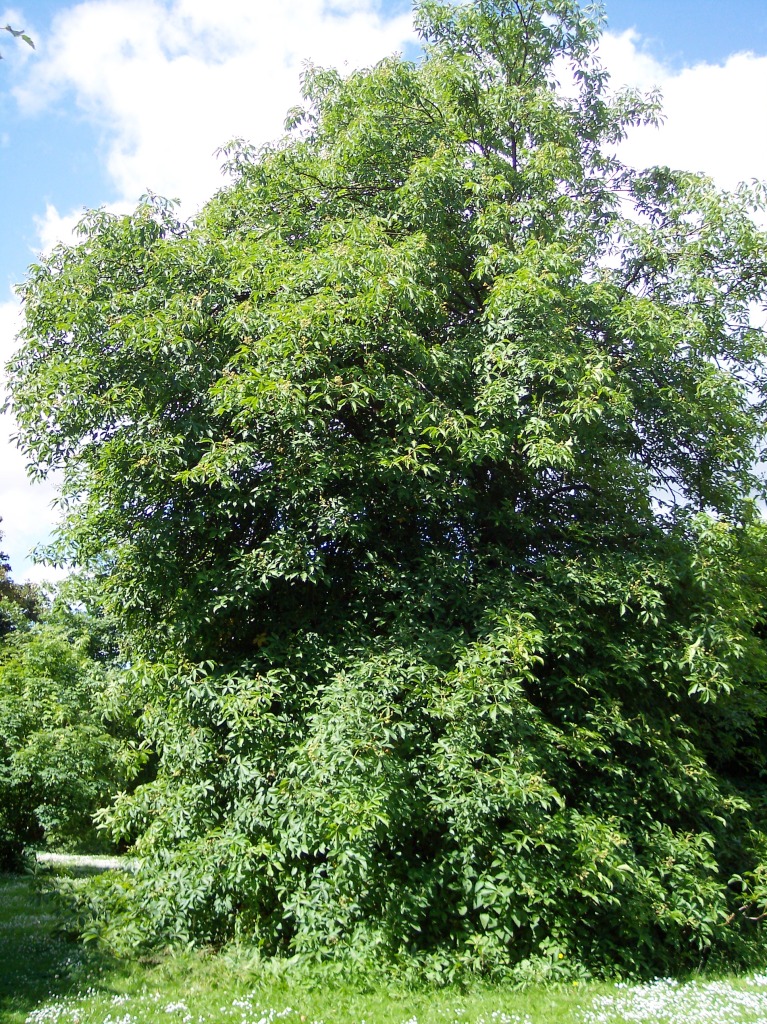 AesculusAesculus glabra
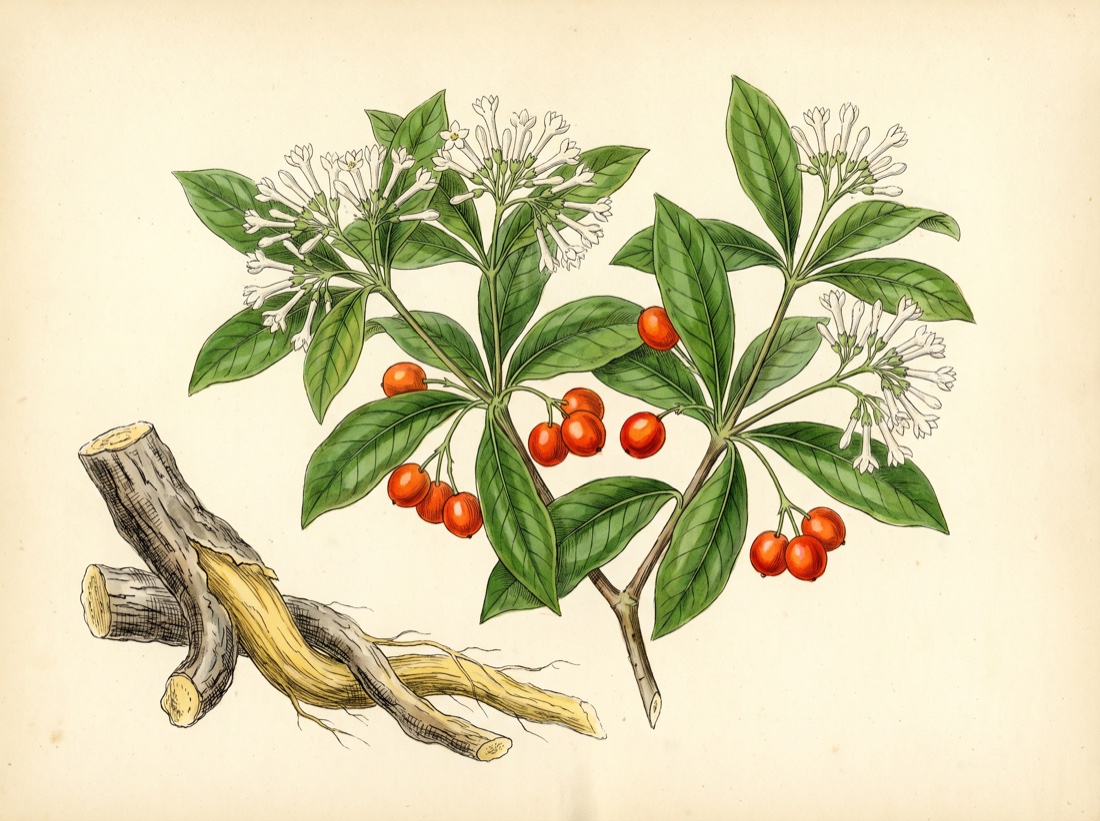 African serpentwoodRauvolfia vomitoria
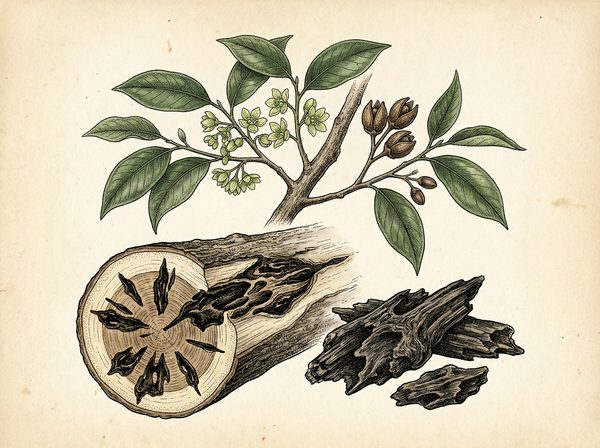 AgarwoodAquilaria sinensis
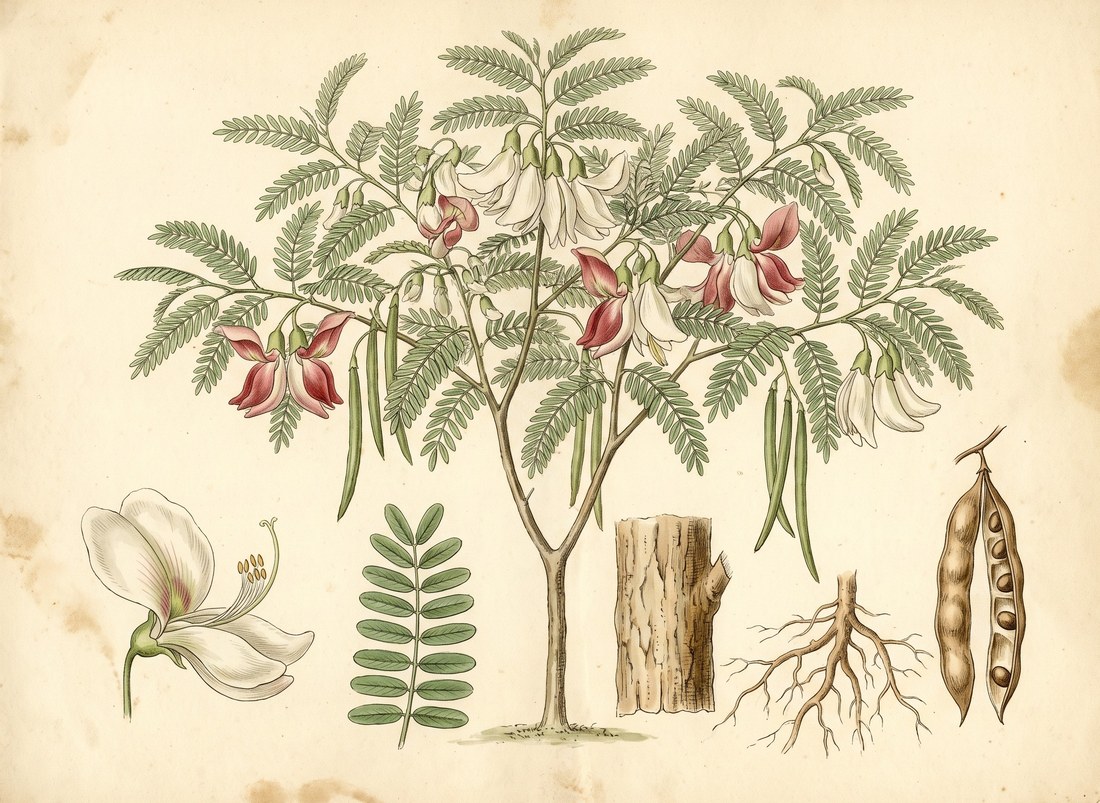 AgatiSesbania grandiflora
 AgnimanthaPremna serratifolia
The whole plate is in the library. The compass, Compare, the Sky of eleven hundred plants and the formulary open with an email address and a password, free, with the formula builder and its safety engine. Herbert without limit, his formulating, clients, the handouts and the labels are the paid room.
Open the library, free