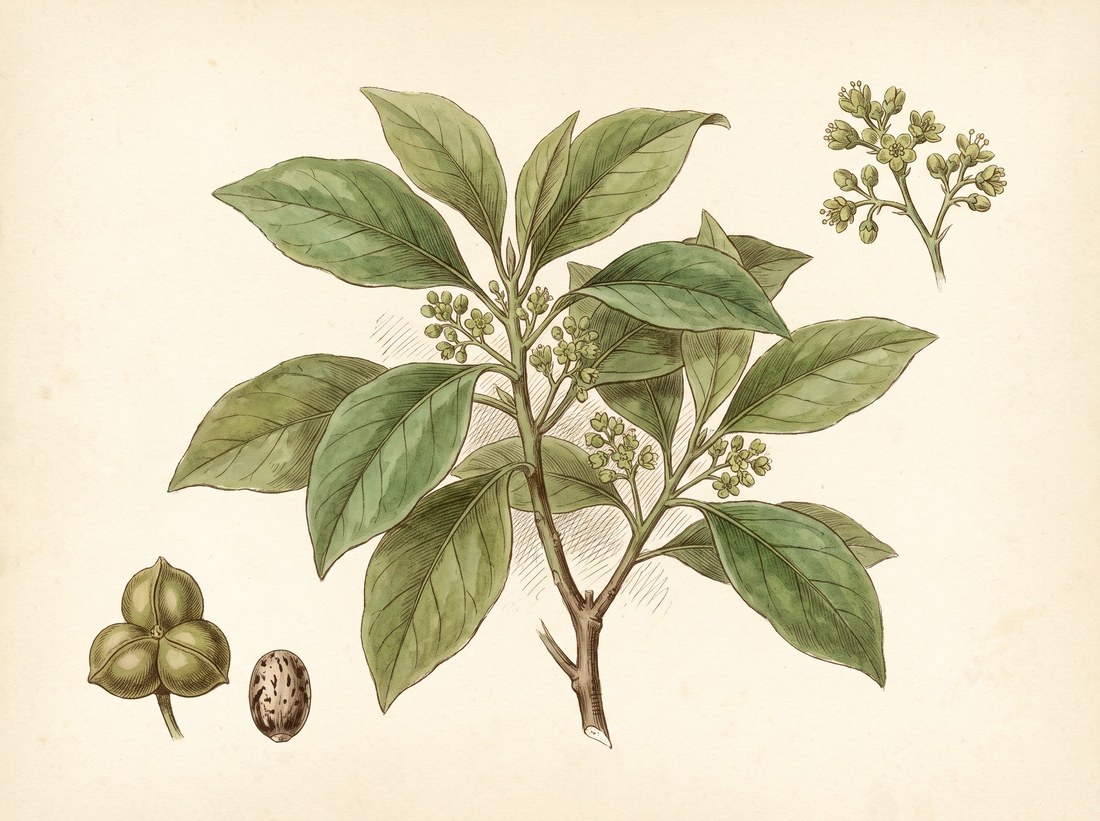
Ayurvedic Herbalism
Purging croton
Croton tiglium
Also known as croton oil plant, jamalgota, croton seed, Jayapala, Dantibija, Kanakaphala.
Croton tiglium is a small evergreen tree or shrub of the spurge family, native to the forests of India, Bangladesh, Myanmar and Southeast Asia and planted in Assam, Bengal and the Western Ghats, bearing three-celled capsules with oily seeds the size of castor beans. The seeds and the oil pressed from them are Jayapala, the most violent purgative in the Ayurvedic materia medica, a drug the classical physicians reserved for ascites, obstinate constipation and gross accumulation, and always purified in milk and given in fractions of a grain. The same seeds are Ba Dou in Chinese medicine and the source of croton oil, a vesicant so irritant that it became the standard tumor-promoting agent in cancer research.

Ask Herbert about Purging croton. Herbert is the master herbalist inside Bountiful Herbs: he answers from this plate and eleven hundred others, with dosing, pairing and cautions. Your first ten questions are free.
Ask HerbertActions
Indications what the tradition reached for it in
- Obstinate constipation unresponsive to milder laxatives (purified material, supervised)
- Ascites and generalized edema (historical, drastic evacuation)
- Abdominal distension with retained stool and gas (purified material)
- Intestinal worms (historical)
- Deep chemical peeling for photoaging and melasma (phenol-croton oil, dermatologic specialists only)
- Warts and corns (traditional topical)
- Counterirritation in chronic joint pain (traditional topical, diluted oil)
- Lead colic and poisoning (historical use only)
Specific indications
A robust kapha patient with a hugely distended, fluid-filled abdomen and days of no stool, in whom the tradition calls for a single forceful evacuation under supervision
Complete bowel stasis with distension and gas in a strong patient after gentler laxatives, castor oil and enemas have failed
A hard corn or wart on thick skin where a single careful application of diluted oil is wanted to blister and lift it
Safety
Recognised toxicity. This plant carries a toxicity flag in the record; it is for trained practitioners only.
Low dose botanical. Used in drop doses in the classical practice; not a plant to dose freely.
Breastfeeding: Contraindicated while nursing; purgative principles and irritant diterpenoids may pass into milk and the mother's fluid loss is itself a risk.
The record lists 14 contraindications; open the plate in the library to read them in full.
In practice
The Ayurvedic tradition treats Jayapala with open respect. The seed is never used raw. Shodhana strips the coat and the embryo, boils the kernels in cow's milk for three hours or more, dries them and presses them in cloth to draw off oil, and the purified kernel is then combined in compound pills such as Icchabhedi rasa, where a fraction of a grain per dose produces watery evacuation within an hour or two.
In Ayurveda
Rasa: katu (pungent). Virya: ushna (heating), tikshna (very sharp). Vipaka: katu (pungent). Guna: guru (heavy), snigdha (unctuous), tikshna (sharp). Dosha: pacifies kapha and vata by forceful evacuation; strongly aggravates pitta and rakta. Prabhava: tikshna rechana: a drastic purgative whose violence exceeds what its taste and qualities would predict, acting within an hour even in tiny amounts. Karma: rechana (purgative); tikshna virechana (drastic purgation); kaphahara (reduces kapha); shothahara (reduces swelling by evacuation); krimighna (anthelmintic); kushthaghna (relieves skin disease, external); deepana (kindles digestion in minute doses); vatanulomana (moves obstructed vata downward); udararogahara (treats abdominal enlargement). Classical indications: udara (abdominal enlargement, ascites); jalodara (ascites); vibandha (obstinate constipation); anaha (abdominal distension with retained stool and gas); shotha (generalized edema); gulma (abdominal masses); krimi (parasites); kushtha (skin disease, external); unmada (insanity, as a drastic evacuant in classical texts); shvasa (dyspnea from kapha, by evacuation). Only the purified seed is used internally, and only in the minutest doses within compound formulations. Shodhana removes the seed coat and the embryo (the small germ, considered the most toxic part), then boils the kernels in cow's milk for several hours, dries them and often presses them in cloth to remove part of the oil. The purified kernel is powdered and combined with other drugs; the raw oil is a vesicant used only externally and in modern dermatology. Classical formulations: Icchabhedi rasa, Jalodarari rasa, Nityananda rasa (some versions), Jayapala vati, Jayapaladi churna, Kanakasundara rasa. Described in: Bhavaprakasha Nighantu, Raja Nighantu, Sharngadhara Samhita, Ayurvedic Pharmacopoeia of India.
Dosing as the sources wrote it
| Preparation | As written | Metric |
|---|---|---|
| Purified seed (classical, in compound) | 15-30 mg purified seed kernel once as a single dose, purified material only | 15-30 mg |
| Oil, topical counterirritant | 1-2 drops croton oil in 10 mL sesame oil applied to unbroken skin, purified material only, specialist use | 0.02-0.04 mL |
Doses are reproduced from the sources for practitioners and are not a recommendation for any person.
From the sources
Overview. Croton tiglium is a small evergreen tree or shrub of the spurge family, native to the forests of India, Bangladesh, Myanmar and Southeast Asia and planted in Assam, Bengal and the Western Ghats, bearing three-celled capsules with oily seeds the size of castor beans. The seeds and the oil pressed from them are Jayapala, the most violent purgative in the Ayurvedic materia medica, a drug the classical physicians reserved for ascites, obstinate constipation and gross accumulation, and always purified in milk and given in fractions of a grain. The same seeds are Ba Dou in Chinese medicine and the source of croton oil, a vesicant so irritant that it became the standard tumor-promoting agent in cancer research.
Clinical Notes. The Ayurvedic tradition treats Jayapala with open respect. The seed is never used raw. Shodhana strips the coat and the embryo, boils the kernels in cow's milk for three hours or more, dries them and presses them in cloth to draw off oil, and the purified kernel is then combined in compound pills such as Icchabhedi rasa, where a fraction of a grain per dose produces watery evacuation within an hour or two.
Ayurvedic Profile. Rasa: katu (pungent). Virya: ushna (heating), tikshna (very sharp). Vipaka: katu (pungent). Guna: guru (heavy), snigdha (unctuous), tikshna (sharp). Dosha: pacifies kapha and vata by forceful evacuation; strongly aggravates pitta and rakta.
Nearby on the shelf
 PumpkinCurcurbita pepo
 PunarnavaBoerhavia diffusa
 Puncture vineTribulus terrestris
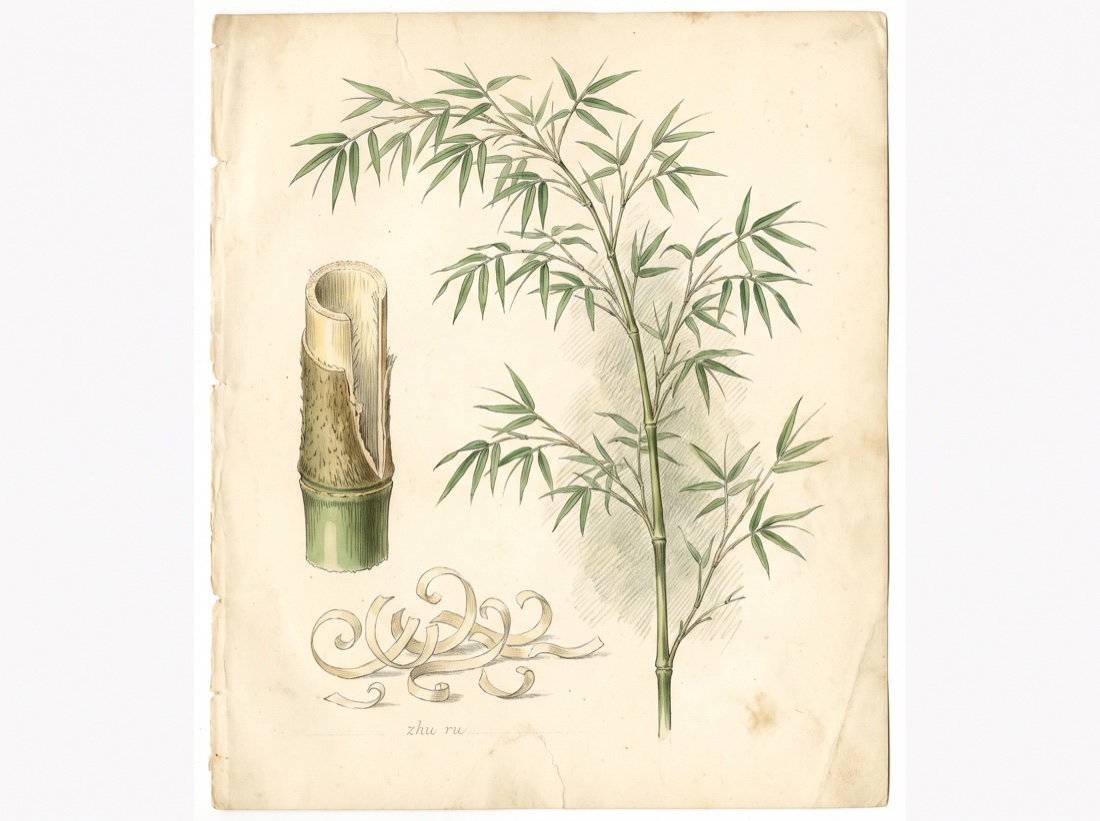 Punting-pole bambooBambusa tuldoides
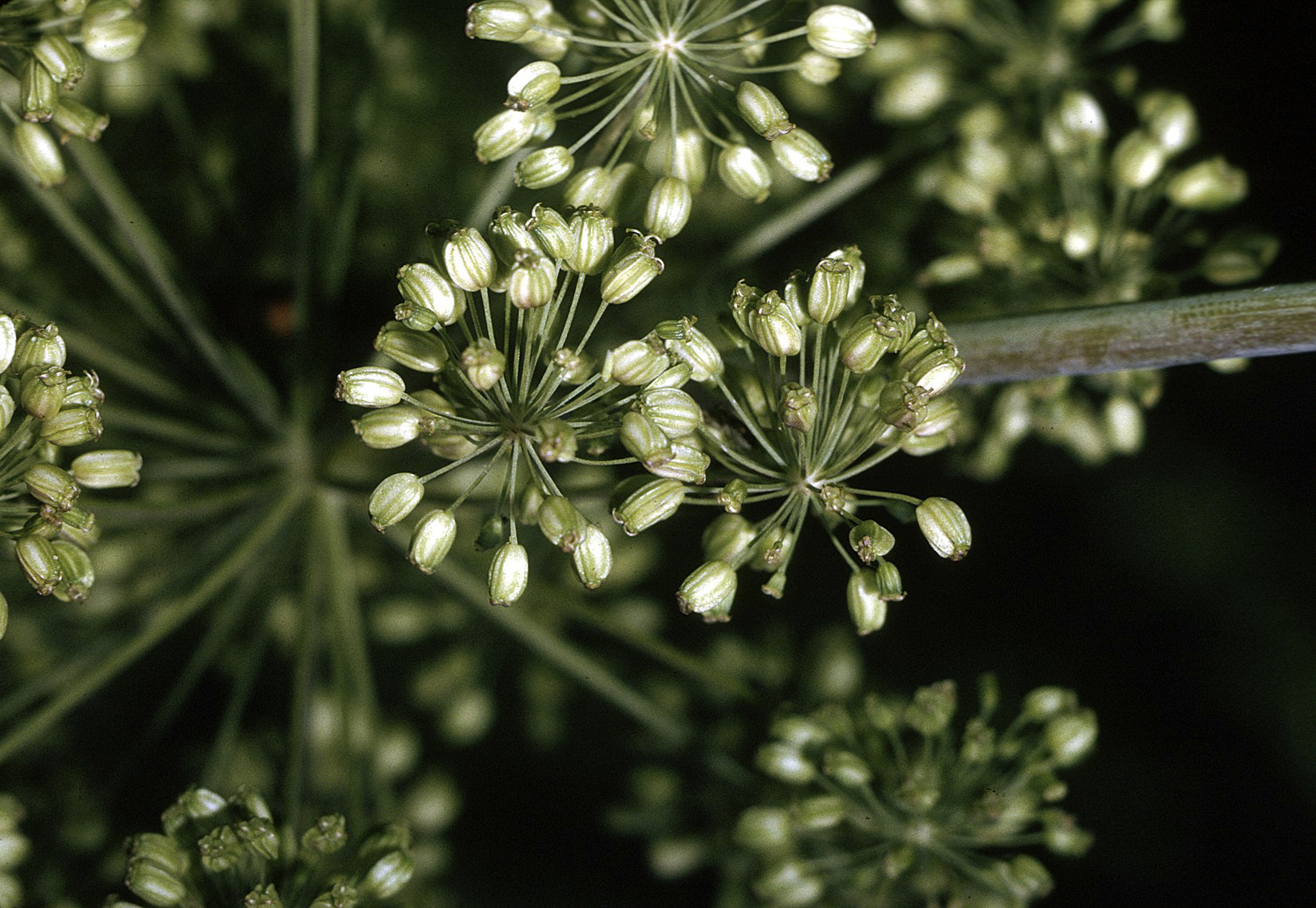 Purple angelicaArchangelica Atropurpurea
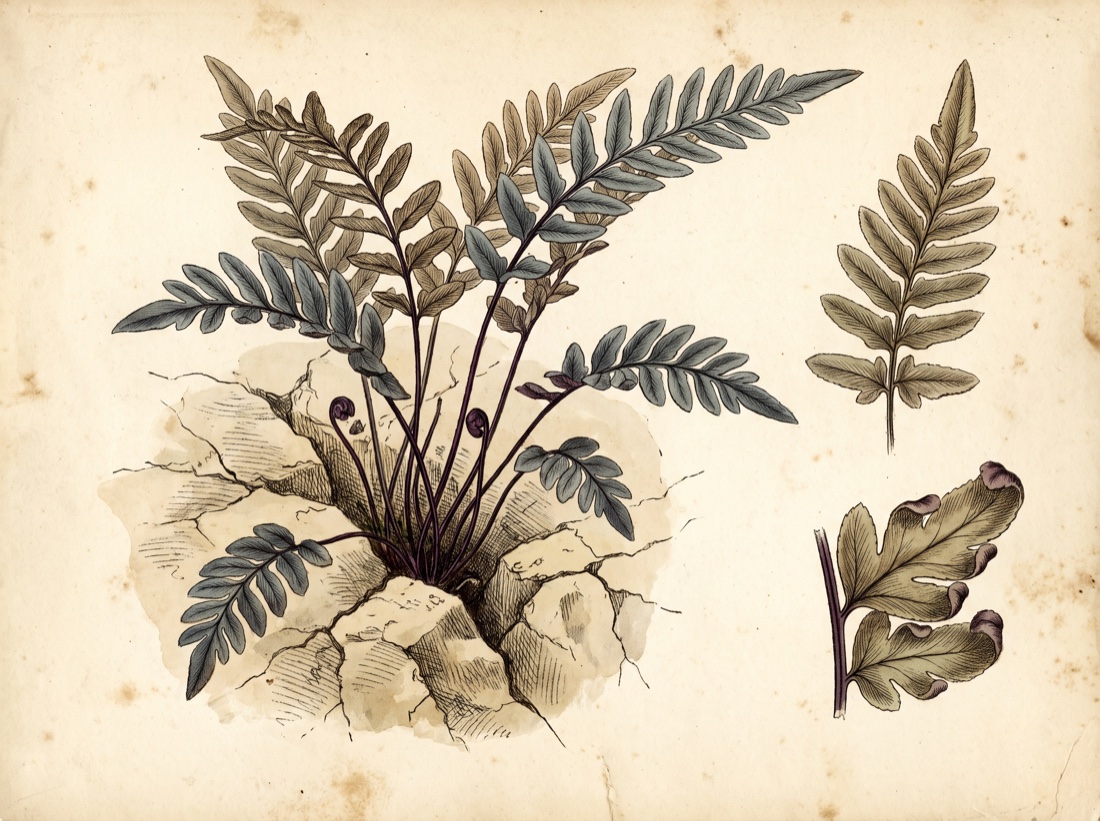 Purple cliff-brakePteris Atropurpurea
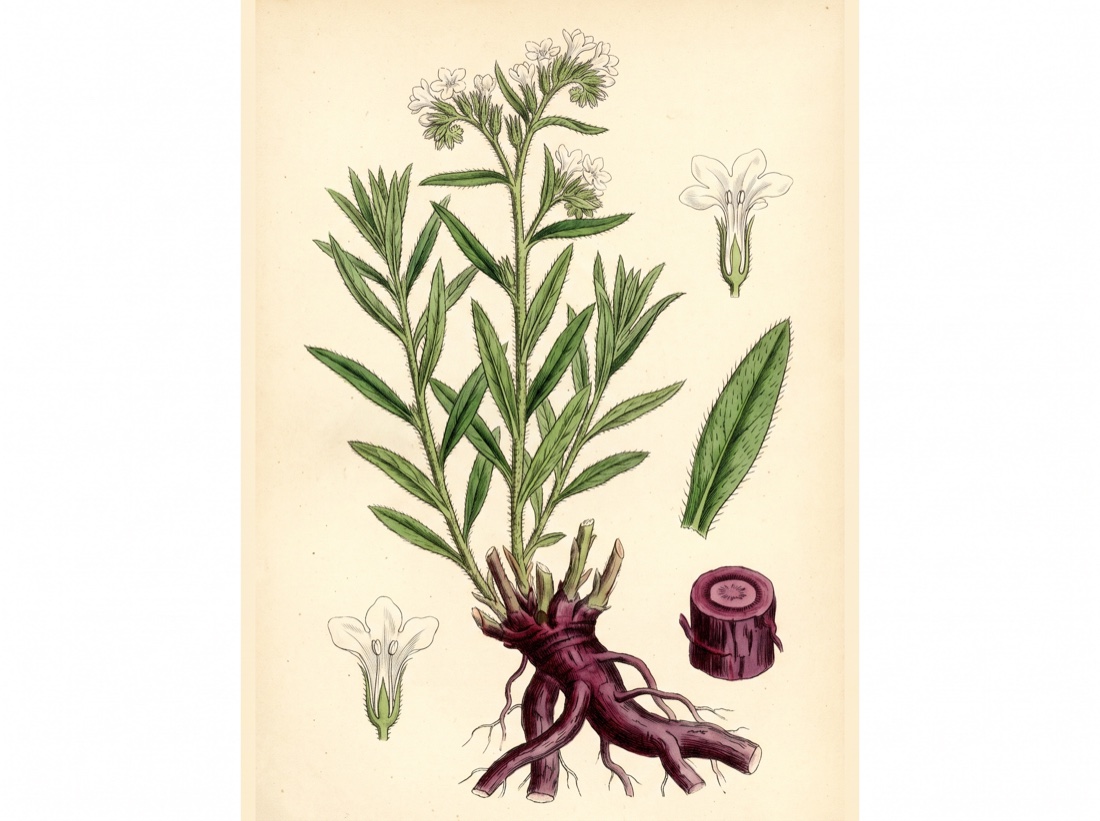 Purple gromwellLithospermum erythrorhizon
 Purple loosestrifeLythrum
The whole plate is in the library. The compass, Compare, the Sky of eleven hundred plants and the formulary open with an email address and a password, free, with the formula builder and its safety engine. Herbert without limit, his formulating, clients, the handouts and the labels are the paid room.
Open the library, free