Western Herbalism
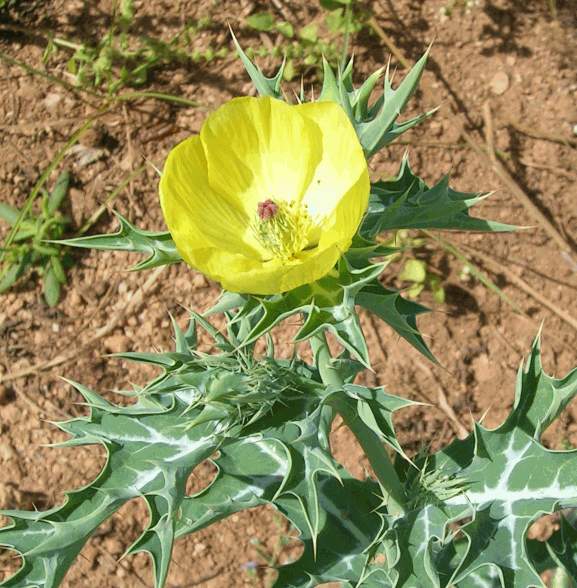
Prickly Poppy
Argemone
Also known as Mexican Poppy, Mexican Prickly Poppy, Yellow Thistle, Devil's Fig.
Prickly poppy is a spiny, yellow-flowered annual of the poppy family native to Mexico and the southern United States and now naturalized as a weed across much of the warmer world. The whole plant exudes a yellow latex when cut, and this latex, along with the seeds, root, and aerial parts, has been used in Mexican folk medicine and in nineteenth century eclectic practice. The plant sits at the toxic end of the herbal materia medica, valued historically for external use and in very small internal doses, but now recognized chiefly as a source of dangerous isoquinoline alkaloids.

Ask Herbert about Prickly Poppy. Herbert is the master herbalist inside Bountiful Herbs: he answers from this plate and eleven hundred others, with dosing, pairing and cautions. Your first ten questions are free.
Ask HerbertActions
Indications what the tradition reached for it in
- Warts and corns
- Dry, irritable cough
- Skin eruptions and ringworm
- Mild insomnia (historical eclectic use)
- Toothache (root chewed, historical)
- Conjunctivitis (historical, now considered unsafe)
- Malarial fevers (traditional Mexican use)
- Constipation (historical, now avoided due to toxicity)
Specific indications
Hard, resistant warts and corns treated topically with the fresh yellow-orange latex
Dry, spasmodic cough in eclectic practice, given historically in very small tinctures of the whole herb
Safety
Recognised toxicity. This plant carries a toxicity flag in the record; it is for trained practitioners only.
Low dose botanical. Used in drop doses in the classical practice; not a plant to dose freely.
Pregnancy: Avoid entirely: the plant's alkaloids are toxic and there is no safety data to support use in pregnancy.
Breastfeeding: Avoid entirely: no safety data exists and the alkaloid content poses a plausible risk to the infant.
The record lists 5 contraindications; open the plate in the library to read them in full.
In practice
Eclectic physicians reached for prickly poppy mainly as a topical remedy: the fresh latex was dabbed directly onto warts, corns, and stubborn skin eruptions, repeated over days as the tissue softened and sloughed.
Dosing as the sources wrote it
| Preparation | As written | Metric |
|---|---|---|
| Fresh latex, topical | Apply a small amount directly to the wart or corn once or twice daily, short course only | |
| Tincture (1:10, historical eclectic use, internal use not recommended) | Historically 0.1-0.3 mL used cautiously; modern internal use is not advised | 0.1-0.3 mL |
| The oil is a mild cathartic in small doses, and has a density of 0.919 at 16.5° C. |
Doses are reproduced from the sources for practitioners and are not a recommendation for any person.
From the sources
Overview. Prickly poppy is a spiny, yellow-flowered annual of the poppy family native to Mexico and the southern United States and now naturalized as a weed across much of the warmer world. The whole plant exudes a yellow latex when cut, and this latex, along with the seeds, root, and aerial parts, has been used in Mexican folk medicine and in nineteenth century eclectic practice. The plant sits at the toxic end of the herbal materia medica, valued historically for external use and in very small internal doses, but now recognized chiefly as a source of dangerous isoquinoline alkaloids.
Clinical Notes. Eclectic physicians reached for prickly poppy mainly as a topical remedy: the fresh latex was dabbed directly onto warts, corns, and stubborn skin eruptions, repeated over days as the tissue softened and sloughed.
Drawn from King's American Dispensatory, 18th edition (Felter and Lloyd), and the Bountiful Herbs editorial.
Nearby on the shelf
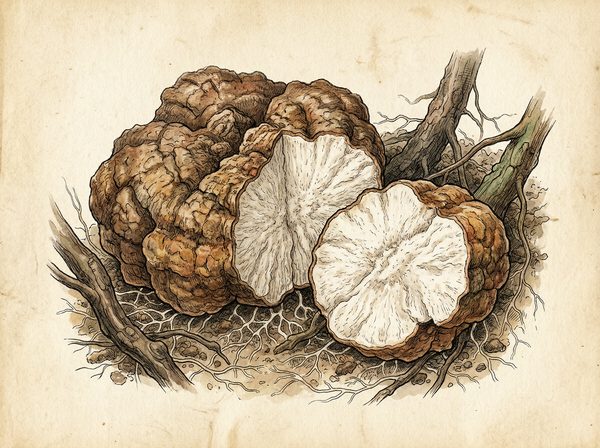 PoriaWolfiporia extensa
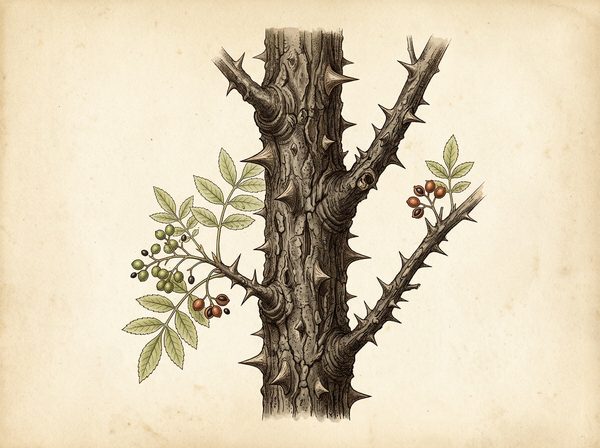 Prickly AshZanthoxylum americanum
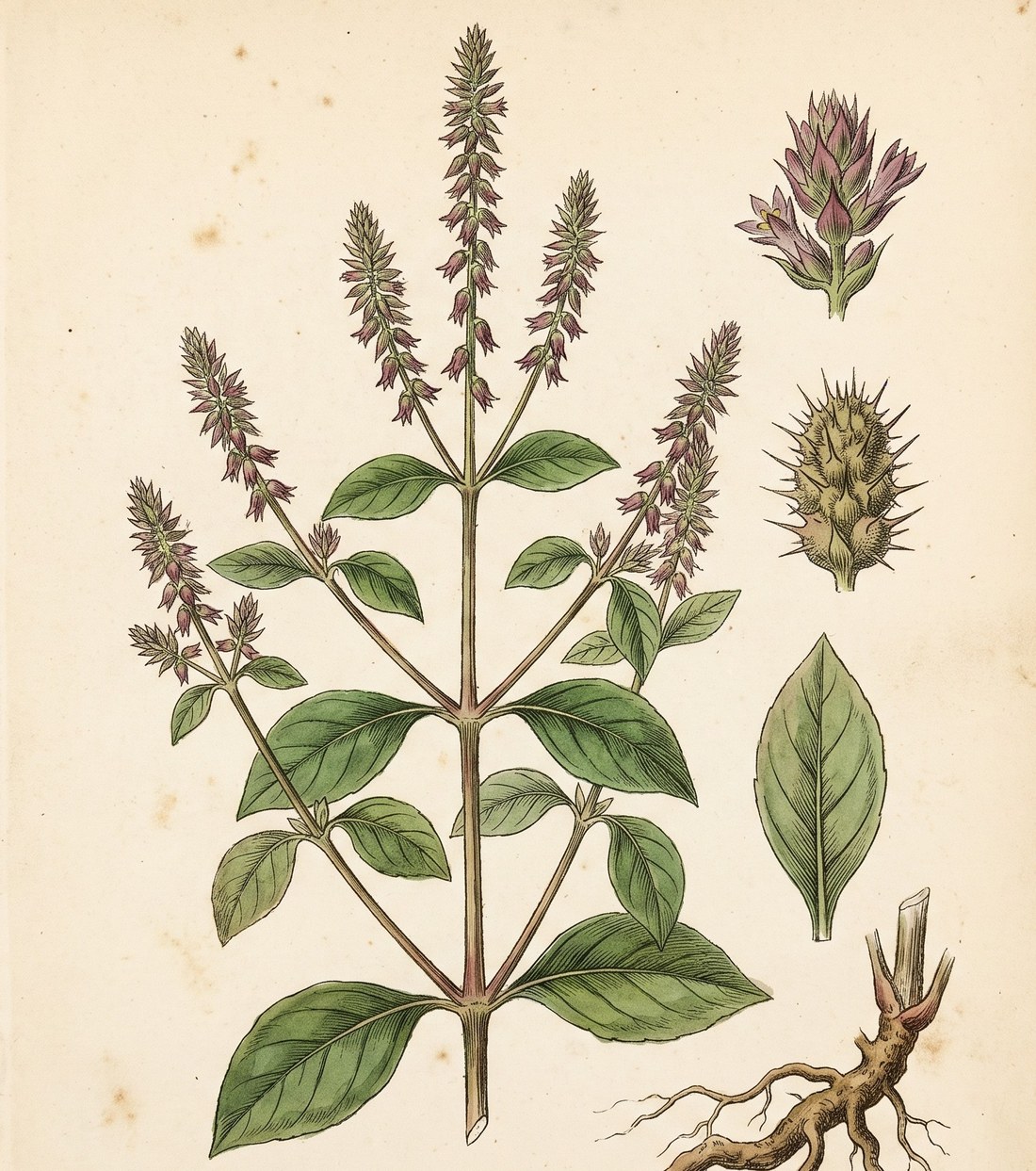 Prickly chaff flowerAchyranthes aspera
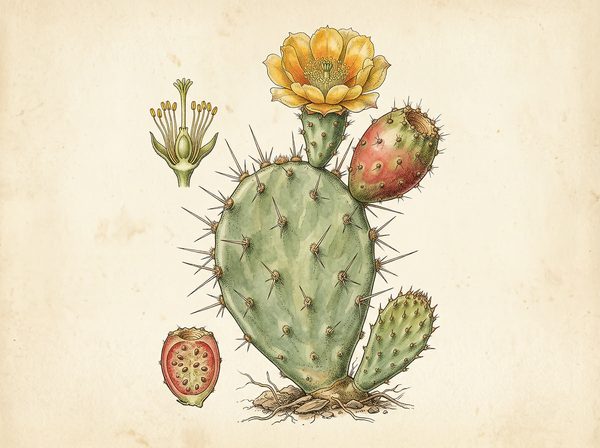 Prickly PearOpuntia ficus-indica
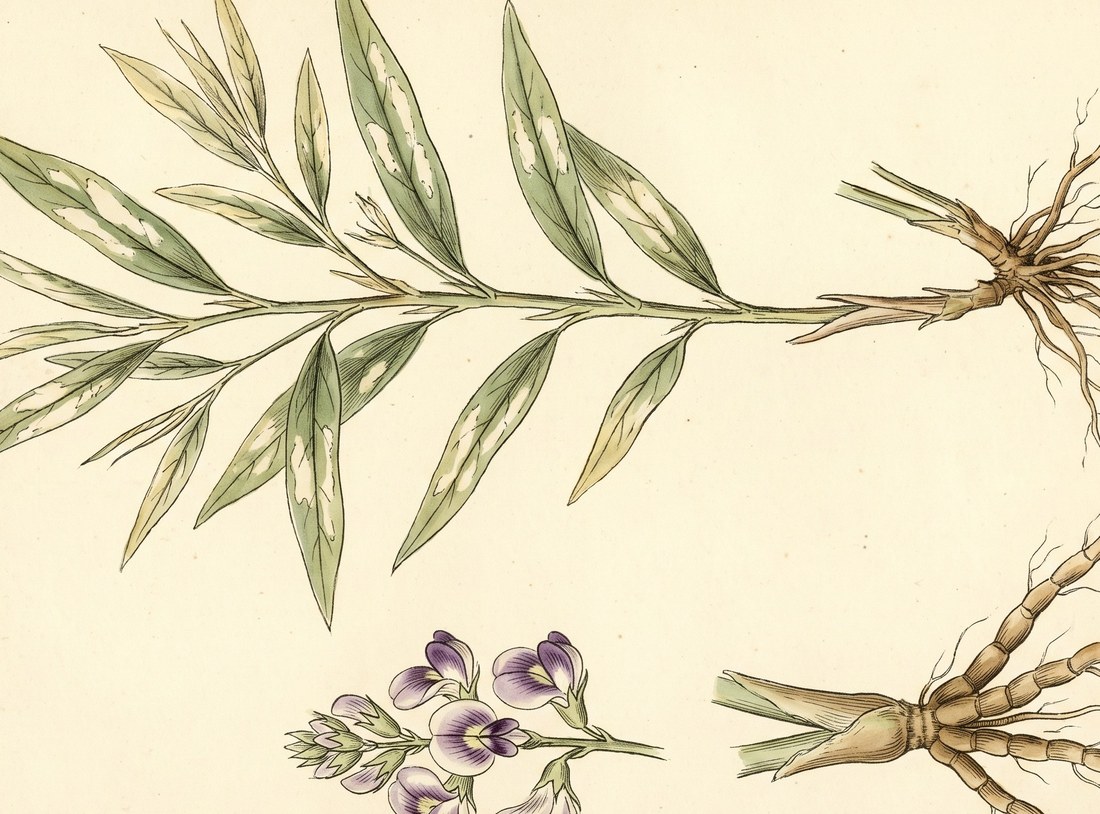 PrishniparniUraria picta
 PrivetLigustrum lucidum
 PrunePrunus
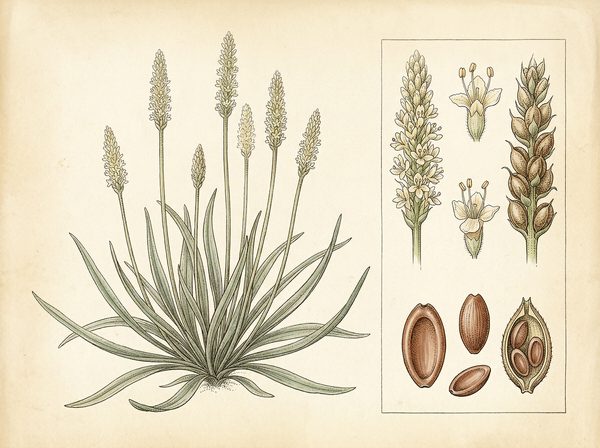 PsylliumPlantago ovata
The whole plate is in the library. The compass, Compare, the Sky of eleven hundred plants and the formulary open with an email address and a password, free, with the formula builder and its safety engine. Herbert without limit, his formulating, clients, the handouts and the labels are the paid room.
Open the library, free