Ayurvedic Herbalism
Pashanbhed
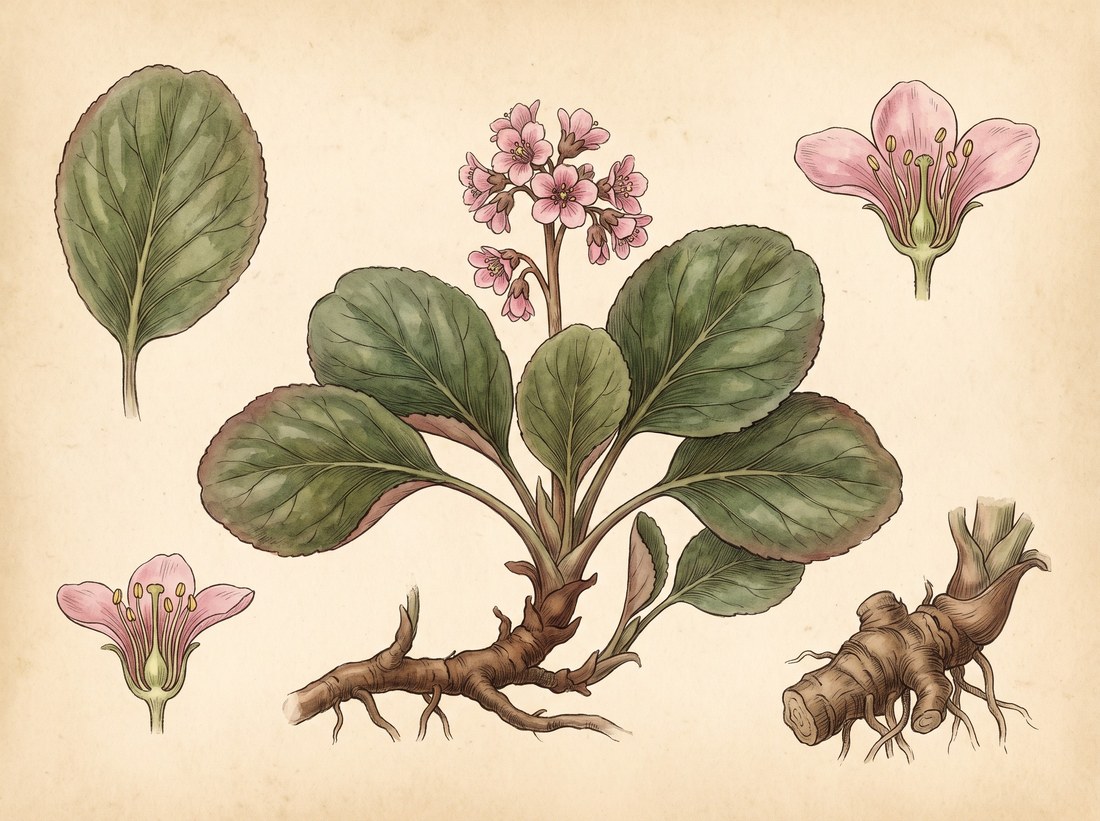
Bergenia ligulata
Also known as stone breaker (Himalayan), hairy bergenia, rockfoil, Pashanabheda, Ashmabheda, Shilabheda.
Bergenia ligulata is a low perennial of the saxifrage family with a thick creeping rhizome, rounded leathery leaves and pink flowers in early spring, growing on shaded wet rocks in the temperate Himalaya from Kashmir through Uttarakhand and Nepal to Bhutan at 900 to 3,000 meters. Plants of the World Online treats it as a form of Bergenia ciliata, and the two names describe the same medicinal plant in trade. Its rhizome is the principal Pashanabheda of northern Ayurveda, the stone breaker, and the classical remedy for urinary calculi and difficult urination. It is cooling, astringent and diuretic, and is a common ingredient in Indian antilithic compounds.

Ask Herbert about Pashanbhed. Herbert is the master herbalist inside Bountiful Herbs: he answers from this plate and eleven hundred others, with dosing, pairing and cautions. Your first ten questions are free.
Ask HerbertActions
Indications what the tradition reached for it in
- Calcium oxalate kidney stones and gravel
- Recurrent stone formation (prevention between episodes)
- Dysuria and burning urination
- Recurrent urinary tract infection
- Urinary retention of obstructive type (adjunct)
- Edema of renal origin
- Hemorrhoids with bleeding (traditional)
- Diarrhea and dysentery (astringent use)
- Fever with urinary symptoms
- Boils and bruises (paste, topical)
- Menorrhagia (traditional)
Specific indications
Recurrent small oxalate stones in a patient with colicky flank pain, gritty urine and a family history of stones
A hot, sluggish kapha-pitta patient with burning, difficult urination and a feeling of incomplete emptying
The stone former in the quiet interval, where a long low-dose course is wanted to keep new crystals from forming
Dysuria with low fever and cloudy urine after a stone has passed
Safety
The record lists 6 contraindications; open the plate in the library to read them in full.
In practice
Pashanabheda is prescribed by the Ayurvedic physician whenever the picture is ashmari or mutrakrichchhra: stone, gravel, gritty or burning urine and colicky pain. The decoction of the rhizome, alone or with Gokshura, Varuna, Punarnava and Kulattha (horse gram), is given in the morning and evening for weeks; the powder with honey or in rice water is the simpler form.
In Ayurveda
Rasa: tikta (bitter), kashaya (astringent), madhura (sweet). Virya: sheeta (cooling). Vipaka: katu (pungent). Guna: laghu (light), snigdha (unctuous). Dosha: pacifies all three doshas, especially kapha and pitta. Prabhava: ashmarighna (specific action of breaking urinary stones). Karma: ashmarighna (dissolves and expels urinary stones); mutrala (diuretic); bhedana (breaks up accumulations); shothahara (reduces swelling); vrishya (aphrodisiac, in some texts); hridya (supports the heart); raktastambhana (arrests bleeding); vishaghna (counters poison); krimighna (anthelmintic); jvaraghna (relieves fever). Classical indications: ashmari (urinary calculi); mutrakrichchhra (dysuria); mutraghata (urinary retention); prameha (urinary and metabolic disorders); shotha (edema); arsha (hemorrhoids); gulma (abdominal mass); hridroga (heart disease); yoniroga (disorders of the female genital tract); pravahika (dysentery); visha (poisoning). The dried rhizome is the drug, given as churna with honey or rice water, more often as a decoction alone or with Gokshura and Varuna, and in compound antilithic kwathas and vatis. Fresh rhizome paste is applied to boils and bruises in the Himalayan folk tradition. Classical formulations: Pashanabhedadi kwatha, Pashanabhedadi churna, Ashmarihara kashaya, Varunadi kwatha (regional versions), Pashanabheda vati. Described in: Charaka Samhita, Sushruta Samhita, Ashtanga Hridaya, Bhavaprakasha Nighantu, Dhanvantari Nighantu, Raja Nighantu, Ayurvedic Pharmacopoeia of India.
Dosing as the sources wrote it
| Preparation | As written | Metric |
|---|---|---|
| Churna | 2-5 g powdered rhizome twice daily with honey or rice water | 2000-5000 mg |
| Kwatha | 50-100 mL decoction twice daily | 50-100 mL |
| Kalka, topical | 5-10 g fresh rhizome paste applied to boils or bruises | 5000-10000 mg |
| Extract | 250-500 mg dried extract twice daily | 250-500 mg |
Doses are reproduced from the sources for practitioners and are not a recommendation for any person.
From the sources
Overview. Bergenia ligulata is a low perennial of the saxifrage family with a thick creeping rhizome, rounded leathery leaves and pink flowers in early spring, growing on shaded wet rocks in the temperate Himalaya from Kashmir through Uttarakhand and Nepal to Bhutan at 900 to 3,000 meters. Plants of the World Online treats it as a form of Bergenia ciliata, and the two names describe the same medicinal plant in trade. Its rhizome is the principal Pashanabheda of northern Ayurveda, the stone breaker, and the classical remedy for urinary calculi and difficult urination. It is cooling, astringent and diuretic, and is a common ingredient in Indian antilithic compounds.
Clinical Notes. Pashanabheda is prescribed by the Ayurvedic physician whenever the picture is ashmari or mutrakrichchhra: stone, gravel, gritty or burning urine and colicky pain. The decoction of the rhizome, alone or with Gokshura, Varuna, Punarnava and Kulattha (horse gram), is given in the morning and evening for weeks; the powder with honey or in rice water is the simpler form.
Ayurvedic Profile. Rasa: tikta (bitter), kashaya (astringent), madhura (sweet). Virya: sheeta (cooling). Vipaka: katu (pungent). Guna: laghu (light), snigdha (unctuous). Dosha: pacifies all three doshas, especially kapha and pitta.
In formulas
Pashanbhed stands in 2 documented formulas in the library, among them Traikaṇṭaka Ghṛta, Marma Guṭikā.
Often paired with
 shatavariAsparagus racemosus
 brahmiBacopa monnieri
 puncture vineTribulus terrestris
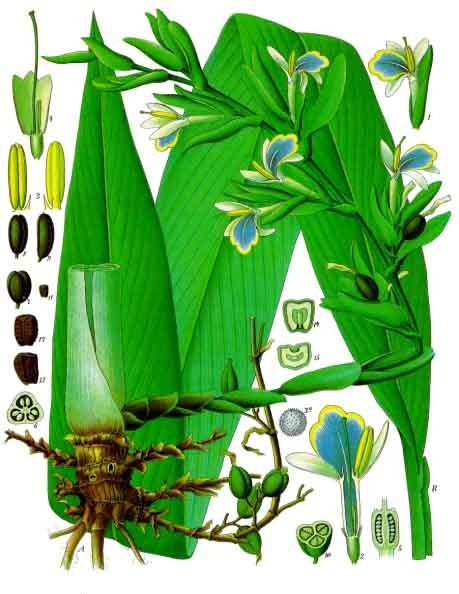 cardamomElettaria cardamomum
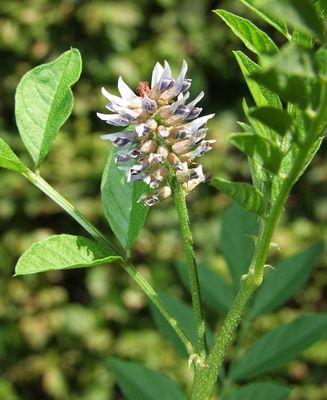 Licorice rootGlycyrrhiza glabra
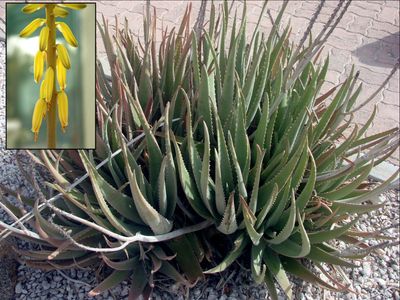 aloe veraAloe vera
Nearby on the shelf
 PareiraPareira brava
 Pareira bravaCissampelos pareira
 ParsleyPetroselinum crispum
 Partridge berryMitchella repens
 Pasque flowerPulsatilla vulgaris
 Passion FlowerPassiflora incarnata
 Pata de vacaBauhinia forficata
 PeachPrunus persica
The whole plate is in the library. The compass, Compare, the Sky of eleven hundred plants and the formulary open with an email address and a password, free, with the formula builder and its safety engine. Herbert without limit, his formulating, clients, the handouts and the labels are the paid room.
Open the library, free