Western and Ayurvedic herbalism
Levant cotton
Gossypium herbaceum
Also known as Asiatic cotton, Indian cotton, cotton plant, cotton root bark, Cotton Root, Cotton, Gossypium, Wild Sunflower, Karpasa, Karpasi, Tundikeri.
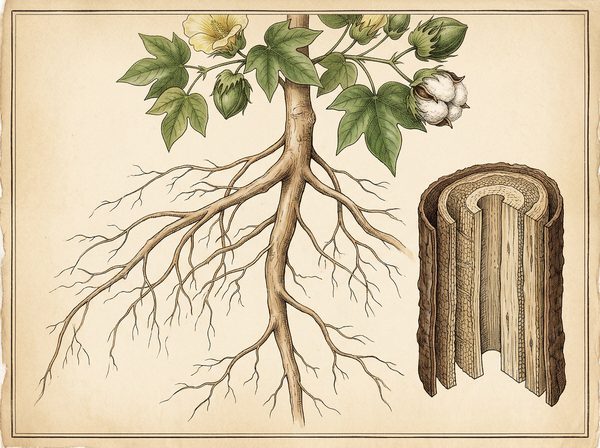
Gossypium herbaceum is the old cotton of Asia and Africa, a shrubby perennial of the mallow family with lobed leaves, pale yellow flowers with a purple heart, and bolls that split open to reveal the seed and its fiber. It is native to the arid belt from Africa through Arabia to India and is still grown in Gujarat, Maharashtra, Madhya Pradesh and the Deccan. Ayurveda calls it Karpasa and uses the seed as a warming, nourishing galactagogue and vata tonic, the root bark as a uterine stimulant, the leaf for ear discharge and wounds, and the seed oil in the classical vata massage oil Karpasasthyadi taila.
Ask Herbert about Levant cotton. Herbert is the master herbalist inside Bountiful Herbs: he answers from this plate and eleven hundred others, with dosing, pairing and cautions. Your first ten questions are free.
Ask HerbertActions
Indications what the tradition reached for it in
- Poor milk supply with weakness after childbirth (seed)
- Delayed, scanty or painful menses (root bark)
- Sluggish uterus after delivery with retained lochia (root bark, traditional)
- Sexual debility and thin semen (seed, traditional)
- Neuromuscular weakness and hemiplegia (seed oil and taila massage)
- Sciatica and low back pain (Karpasasthyadi taila)
- Ear discharge and earache (leaf juice drops)
- Burning urination with scanty flow (seed decoction)
- Slow-healing wounds (leaf paste)
- Convalescent debility with weight loss (seed gruel)
- Suppressed menstruation
- Morning sickness of pregnancy
- Retained placenta
- Afterbirth expulsion
- Stalled labor
- Menstrual disorders
- Labor induction
- Bleeding
- Malaria
- Nausea
- Tardy menses
- Menopausal symptoms
- Headache
- Ovarian pain
- Nerve pain
- Amenorrhea
- Sterility from uterine torpor
- Diarrhea
- Fever
- Dysentery
Specific indications
A thin, tired mother a few weeks after delivery whose milk is scant and who is cold, dry and losing weight, given roasted cottonseed gruel with milk
A woman with cold, cramping, delayed periods and a heavy dragging pelvis who is not pregnant and needs a warming uterine stimulant rather than a cooling astringent
A vata patient with hemiplegia or sciatica whose limbs are cold, stiff and weak, treated with warm Karpasasthyadi taila massage and fomentation
A chronically discharging ear in a child where warm leaf juice drops are the village remedy
Safety
Low dose botanical. Used in drop doses in the classical practice; not a plant to dose freely.
Pregnancy: Avoid in pregnancy: the root bark is a classical uterine stimulant and emmenagogue, gossypol is a reproductive toxin, and the AHPA Botanical Safety Handbook places cotton root bark in class 2b.
Breastfeeding: Lactation (source flag notSafeInLactation)
The record lists 9 contraindications; open the plate in the library to read them in full.
In practice
The Ayurvedic practitioner treats Karpasa as two different drugs. The seed is a food-medicine: roasted, freed of lint, powdered and cooked into milk or a gruel with jaggery, it is the traditional galactagogue of western India and a nourishing tonic for the thin, cold, weak patient, often combined with Shatavari, Vidari and Jivanti for lactation and with Ashwagandha and Kapikacchu for sexual debility.
In Ayurveda
Rasa: madhura (sweet), katu (pungent, root bark). Virya: ushna (heating). Vipaka: madhura (sweet). Guna: guru (heavy), snigdha (unctuous). Dosha: pacifies vata; the seed increases kapha and pitta in excess, the root bark is lighter and reduces kapha. Prabhava: garbhashaya sankochaka (contracts the uterus, root bark). Karma: stanyajanana (promotes lactation, seed); vrishya (aphrodisiac, seed); balya (strengthening, seed); brimhana (nourishing, seed); artavajanana (promotes menstruation, root bark); garbhashaya sankochaka (contracts the uterus, root bark); vatahara (pacifies vata); mutrala (diuretic, seed); vranaropana (heals wounds, leaf); karnashulahara (relieves earache, leaf juice). Classical indications: stanyakshaya (poor lactation); kashtartava (painful menstruation); artavakshaya (scanty or absent menses); klaibya (impotence); shukrakshaya (low semen); vatavyadhi (vata disorders, seed and oil); karnasrava (ear discharge, leaf juice); mutrakricchra (painful urination); vrana (wounds, leaf); sutika roga (postpartum disorders, root bark). The seed, freed of fiber, is the nourishing part, roasted and powdered as churna with milk or cooked into a gruel for lactation and debility, and pressed for an oil used in vata massage tailas; the root bark is the uterine drug, given as kwatha for delayed or painful menses and after childbirth; the leaf juice is dropped into the ear and applied to wounds; the flowers are used in a few regional preparations. Classical formulations: Karpasasthyadi taila, Karpasa beeja churna, Karpasa mula twak kwatha, Karpasa patra swarasa (ear drops). Described in: Charaka Samhita, Sushruta Samhita, Ashtanga Hridaya, Bhavaprakasha Nighantu, Dhanvantari Nighantu, Raja Nighantu, Kaiyadeva Nighantu, Ayurvedic Pharmacopoeia of India.
Dosing as the sources wrote it
| Preparation | As written | Metric |
|---|---|---|
| Churna (seed) | 3-6 g roasted seed powder daily with warm milk | 3000-6000 mg |
| Kwatha (root bark) | 50-100 mL decoction twice daily for up to seven days around the period | 50-100 mL |
| Taila, topical | 10-20 mL warm Karpasasthyadi taila for massage once or twice daily | 10-20 mL |
| Swarasa (leaf), ear drops | 2-4 drops warm leaf juice into the ear twice daily | 0.04-0.08 mL |
| Homeopathic tincture to | Homeopathic tincture to 6C | |
| Fluid Extract of Cotton-root Bark | Dose, from one-half to one dram. | 1944-3888 mg |
Doses are reproduced from the sources for practitioners and are not a recommendation for any person.
From the sources
Overview. Gossypium herbaceum is the old cotton of Asia and Africa, a shrubby perennial of the mallow family with lobed leaves, pale yellow flowers with a purple heart, and bolls that split open to reveal the seed and its fiber. It is native to the arid belt from Africa through Arabia to India and is still grown in Gujarat, Maharashtra, Madhya Pradesh and the Deccan. Ayurveda calls it Karpasa and uses the seed as a warming, nourishing galactagogue and vata tonic, the root bark as a uterine stimulant, the leaf for ear discharge and wounds, and the seed oil in the classical vata massage oil Karpasasthyadi taila.
Clinical Notes. Traditionally used in African American midwifery as uterine stimulant and emmenagogue homeopathic preparation from fresh inner root bark distinguish from gossypol-rich cottonseed most uses lack strong clinical evidence, rated insufficient by comprehensive databases used historically to procure abortion
Clinical Notes. The Ayurvedic practitioner treats Karpasa as two different drugs. The seed is a food-medicine: roasted, freed of lint, powdered and cooked into milk or a gruel with jaggery, it is the traditional galactagogue of western India and a nourishing tonic for the thin, cold, weak patient, often combined with Shatavari, Vidari and Jivanti for lactation and with Ashwagandha and Kapikacchu for sexual debility.
Action and Therapy. External. Absorbent cotton is of mechanical use only in practice. A cotton jacket is preferred by many to poultices and magmas for use in acute lung diseases. It maintains an even protection from changes of temperature, and slight moisture usually accumulates under it, thus making it serve the purpose, without the weight and dangers, of the poultice.
Drawn from Cook's Physio-Medical Dispensatory; Scudder's Specific Medication and Specific Medicines; Ellingwood's American Materia Medica, Therapeutics and Pharmacognosy; Felter's Eclectic Materia Medica, Pharmacology and Therapeutics, and the Bountiful Herbs editorial.
In formulas
Levant cotton stands in 20 documented formulas in the library, among them Kārpāsāsthyādi Taila, guà dì sǎn, bing péng sǎn, lu páo sǎn.
Often paired with
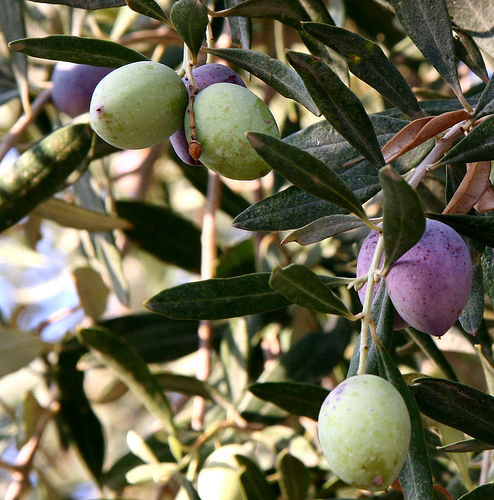 OliveOlea europaea
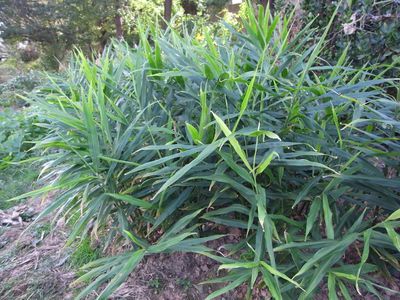 GingerZingiber officinale
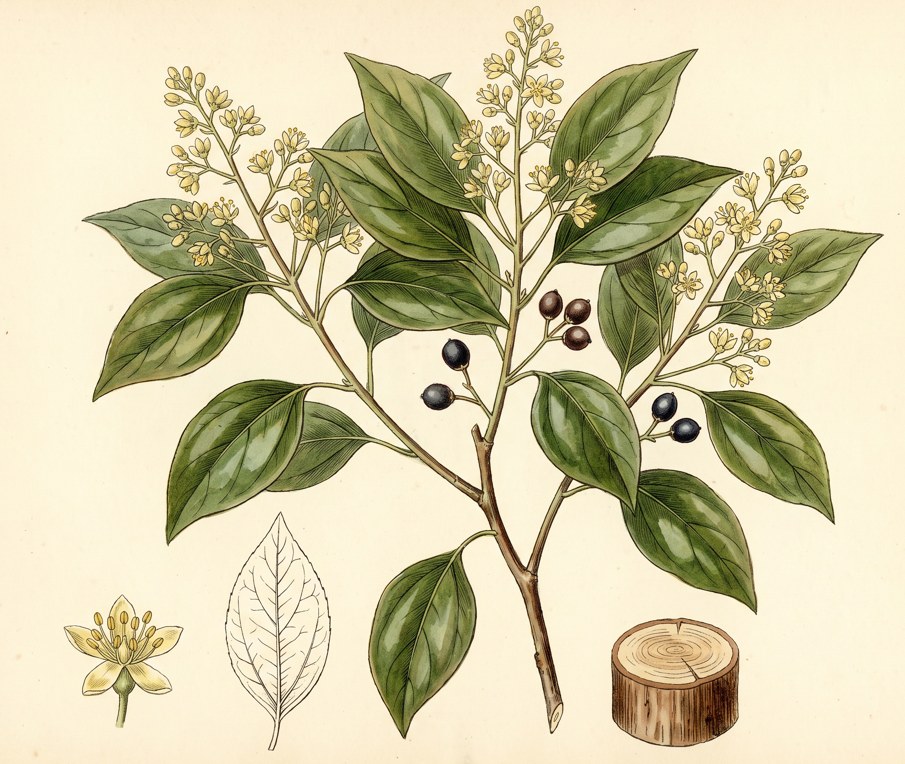 camphor treeCinnamomum camphora
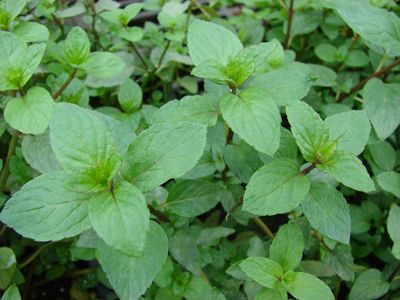 PeppermintMentha piperita
 flaxLinum usitatissimum
Nearby on the shelf
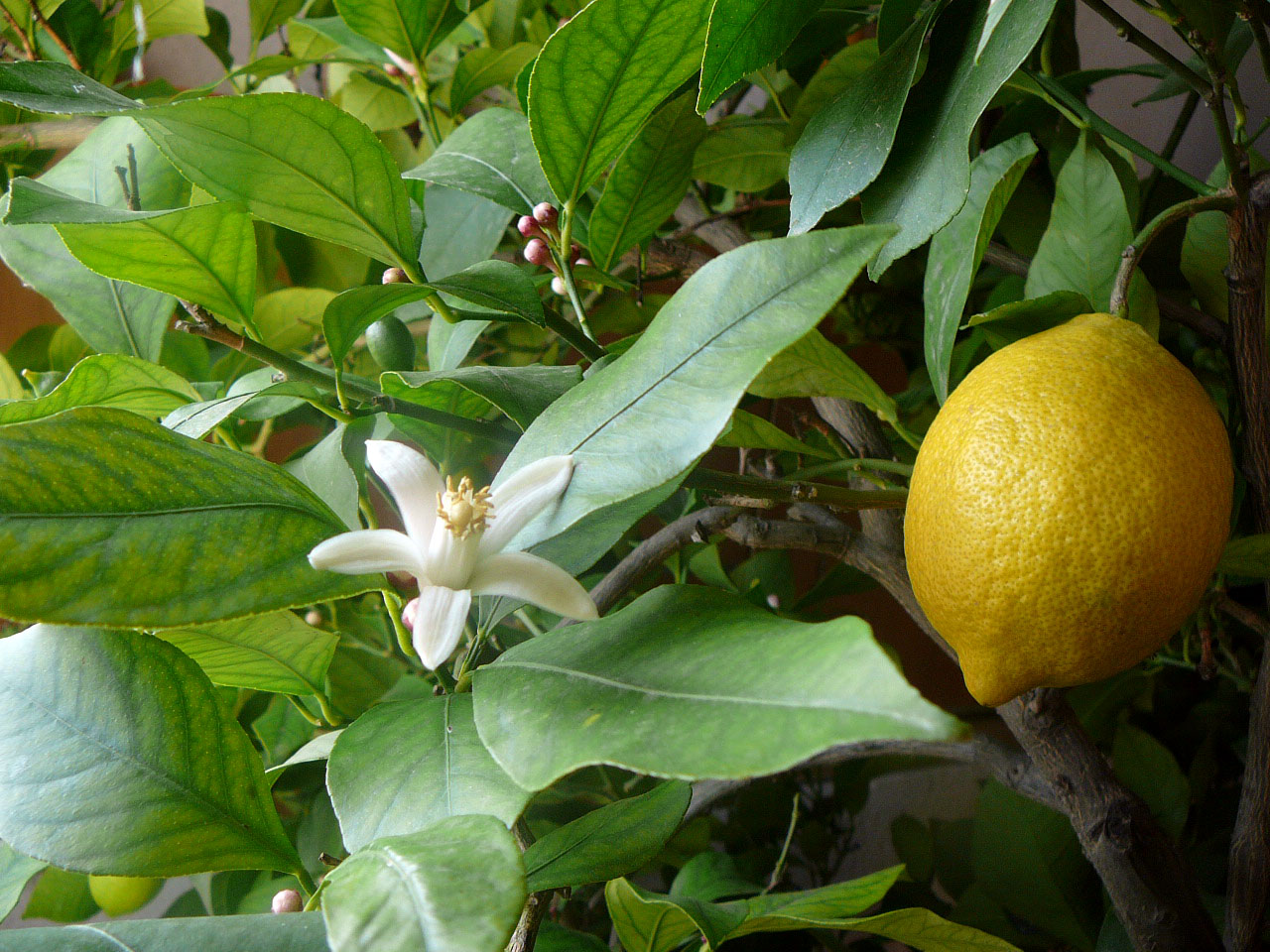 LemonCitrus limon
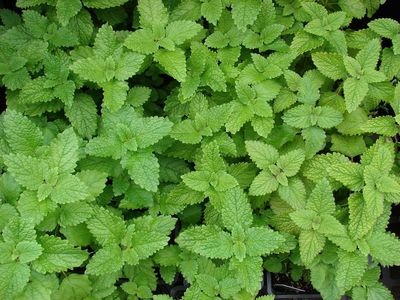 Lemon BalmMelissa officinalis
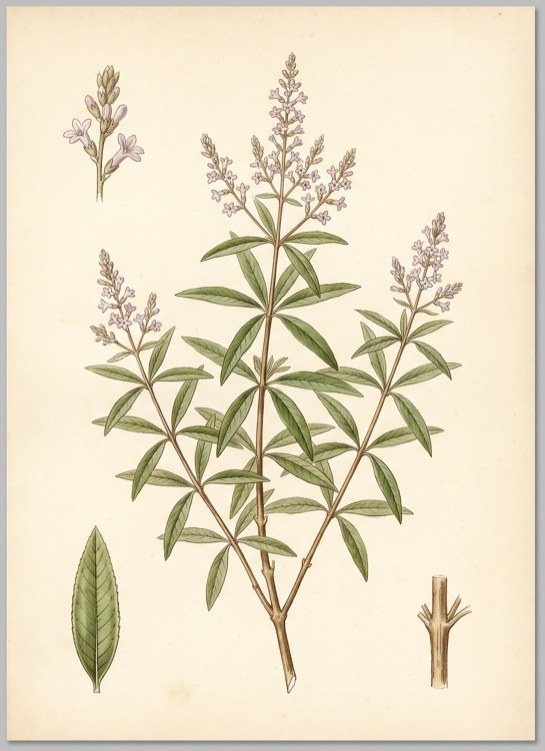 Lemon VerbenaAloysia citrodora
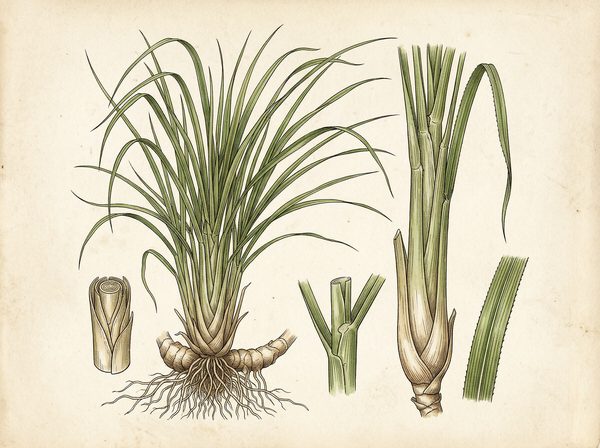 LemongrassCymbopogon citratus
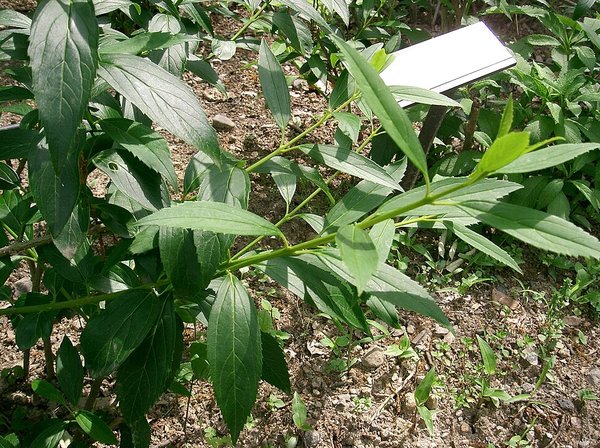 Lian QiaoForsythia suspensa
 Licorice rootGlycyrrhiza glabra
 Lily of the valleyConvallaria majalis
 LimeCitrus aurantiifolia
The whole plate is in the library. The compass, Compare, the Sky of eleven hundred plants and the formulary open with an email address and a password, free, with the formula builder and its safety engine. Herbert without limit, his formulating, clients, the handouts and the labels are the paid room.
Open the library, free