Ayurvedic Herbalism
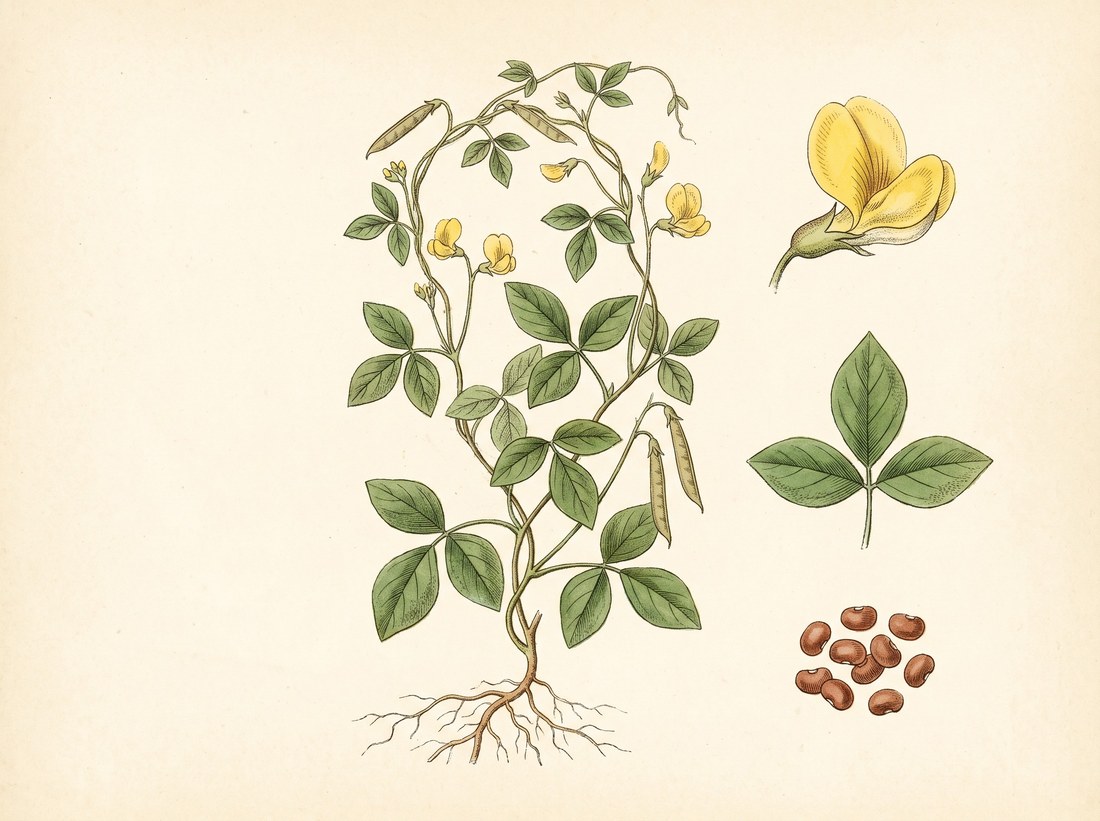
Horse gram
Macrotyloma uniflorum
Also known as kulthi, Madras gram, poor man's pulse, horse grain, Kulattha, Kulatthika, Tamrabija.
Macrotyloma uniflorum, horse gram, is a hardy, drought tolerant annual legume of the Fabaceae with small yellow flowers and flat pods, grown as a pulse and fodder on poor dry soils across peninsular India, the Himalayan foothills, Myanmar and parts of Africa and Australia. Ayurveda knows the brown seed as Kulattha, a hot, dry, astringent food that breaks urinary stones, drains fluid, reduces fat and clears kapha, and prescribes it as soup and as the water in which the seeds have soaked. It is one of the few foods the classical texts elevate to a specific medicine.

Ask Herbert about Horse gram. Herbert is the master herbalist inside Bountiful Herbs: he answers from this plate and eleven hundred others, with dosing, pairing and cautions. Your first ten questions are free.
Ask HerbertActions
Indications what the tradition reached for it in
- Recurrent calcium oxalate kidney stones (dietary prevention)
- Small urinary calculi and gravel (adjunct to hydration)
- Dysuria and sluggish urination
- Obesity with fluid retention and sluggish metabolism
- Type 2 diabetes as a low glycemic dietary pulse
- Dyslipidemia and metabolic syndrome
- Chronic rhinitis and productive cough in cold constitutions
- Edema of kapha type
- Scanty or delayed menstruation in cold, heavy women (traditional)
- Rheumatic stiffness in damp weather (traditional)
- Convalescent weakness where a warming, protein rich food is wanted
- Iron deficiency (dietary contribution)
Specific indications
A stone former who has passed calcium oxalate gravel more than once, drinks too little and eats a heavy diet, for whom a daily cup of horse gram soup or soaking water is a food based preventive alongside water and dietary change
The heavy, cold, waterlogged kapha patient with slow metabolism, puffy ankles and a sluggish bowel who needs a warming, drying, diuretic staple in place of rice and wheat
A woman with delayed, scanty periods, cold hands and a heavy pelvis, where the tradition gives horse gram soup in the days before menstruation
Chronic congested rhinitis with a wet cough in a phlegmatic person for whom the hot pungent soup is both food and medicine
Safety
Pregnancy: Avoid medicinal quantities in pregnancy: no published safety class is known to us, and the tradition regards Kulattha as an emmenagogue that promotes downward movement and heat, although small amounts as part of a mixed diet are common in India.
The record lists 8 contraindications; open the plate in the library to read them in full.
In practice
The Ayurvedic practitioner uses Kulattha as pathya, food that treats. Its first indication is ashmari: for urinary stones and gravel the seeds are soaked overnight and the water drunk in the morning, or boiled into a thin salted soup taken daily, often with Gokshura, Pashanabheda or Varuna in a decoction for a stronger effect.
In Ayurveda
Rasa: kashaya (astringent), madhura (sweet); katu (pungent) in the vipaka. Virya: ushna (heating). Vipaka: katu (pungent), some texts say amla (sour). Guna: laghu (light), ruksha (dry), tikshna (sharp), vidahi (produces burning if overused). Dosha: pacifies kapha and vata; aggravates pitta and rakta if used in excess. Prabhava: Ashmarighna: the tradition singles out the seed decoction as the dietary remedy for urinary stones, and names it among the few foods that break down and expel calculi. Karma: ashmarighna (breaks and expels urinary calculi); mutrala (diuretic); medohara (reduces fat and obesity); kaphahara (reduces kapha); vatahara (pacifies vata); deepana (kindles digestion); grahi (absorbent, binds the stool); shukrahara (reduces semen, a classical caution); shvasahara and kasahara (relieves dyspnea and cough); artavajanana (promotes menstrual flow); stanyashodhana (purifies breast milk); swedajanana (promotes sweating). Classical indications: ashmari (urinary calculi); mutrakrichra (dysuria); medoroga and sthaulya (obesity); prameha (urinary disorders including diabetes); shvasa and kasa (dyspnea and cough); hikka (hiccup); pinasa (chronic rhinitis); amavata (rheumatoid type arthritis); arsha (hemorrhoids); gulma (abdominal masses); jvara (fever); krimi (worms); shotha (edema). The dried seed is the drug and food, boiled into a thin soup (yusha) or thick decoction, soaked overnight and the water drunk (kulattha jala), sprouted, cooked as a dal, or powdered into churna; it also appears as the medium for processing certain medicated oils and in medicated ghee for urinary stones. Classical formulations: Kulattha yusha, Kulattha kwatha, Kulatthadi kwatha, Varunadi kwatha (some variants), Kulattha jala, Kulatthadi ghrita, Sukumara ghrita (uses Kulattha decoction as medium). Described in: Charaka Samhita, Sushruta Samhita, Ashtanga Hridaya, Bhavaprakasha Nighantu, Dhanvantari Nighantu, Raja Nighantu, Kaiyadeva Nighantu, Madanapala Nighantu.
Dosing as the sources wrote it
| Preparation | As written | Metric |
|---|---|---|
| Yusha (soup) | 30-60 g dry seed cooked into soup, taken once daily | 30000-60000 mg |
| Kulattha jala (soak water) | 100-200 mL water in which 30 g seed soaked overnight, taken each morning | 100-200 mL |
| Kwatha | 50-100 mL decoction once or twice daily | 50-100 mL |
| Churna | 5-10 g roasted seed powder daily with warm water | 5000-10000 mg |
Doses are reproduced from the sources for practitioners and are not a recommendation for any person.
From the sources
Overview. Macrotyloma uniflorum, horse gram, is a hardy, drought tolerant annual legume of the Fabaceae with small yellow flowers and flat pods, grown as a pulse and fodder on poor dry soils across peninsular India, the Himalayan foothills, Myanmar and parts of Africa and Australia. Ayurveda knows the brown seed as Kulattha, a hot, dry, astringent food that breaks urinary stones, drains fluid, reduces fat and clears kapha, and prescribes it as soup and as the water in which the seeds have soaked. It is one of the few foods the classical texts elevate to a specific medicine.
Clinical Notes. The Ayurvedic practitioner uses Kulattha as pathya, food that treats. Its first indication is ashmari: for urinary stones and gravel the seeds are soaked overnight and the water drunk in the morning, or boiled into a thin salted soup taken daily, often with Gokshura, Pashanabheda or Varuna in a decoction for a stronger effect.
Ayurvedic Profile. Rasa: kashaya (astringent), madhura (sweet); katu (pungent) in the vipaka. Virya: ushna (heating). Vipaka: katu (pungent), some texts say amla (sour). Guna: laghu (light), ruksha (dry), tikshna (sharp), vidahi (produces burning if overused).
In formulas
Horse gram stands in 5 documented formulas in the library, among them Dādhika Ghṛta, Dhānvantara Ghṛta, Vastyāmayāntaka Ghṛta, Kārpāsāsthyādi Taila, Bṛhatmāṣa Taila.
Often paired with
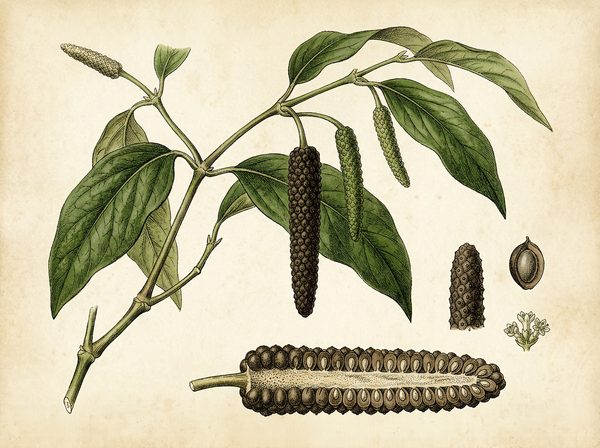 long pepperPiper longum
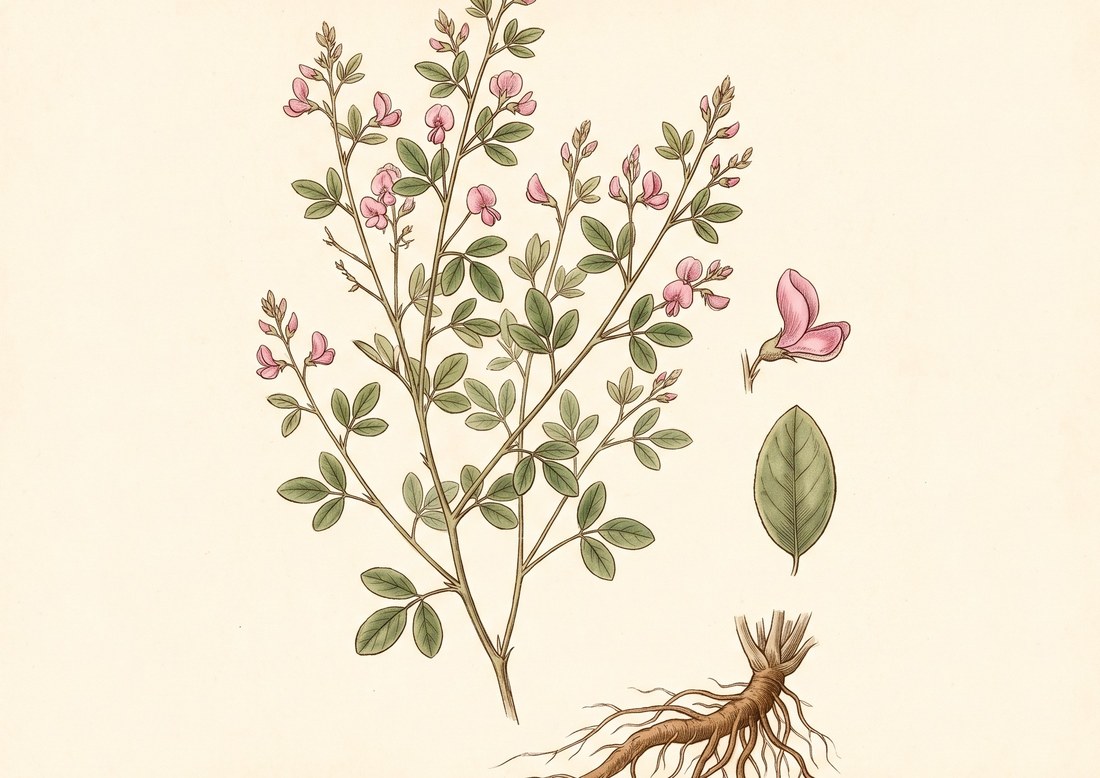 shalparniDesmodium gangeticum
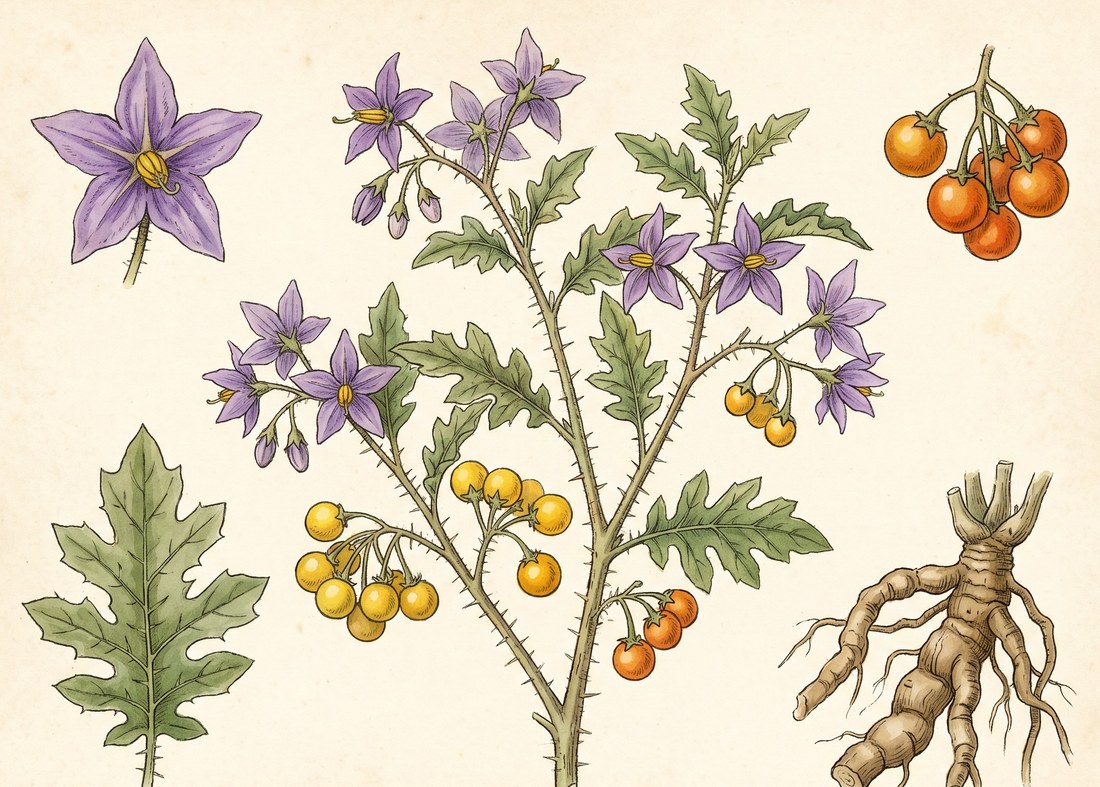 Indian nightshadeSolanum indicum
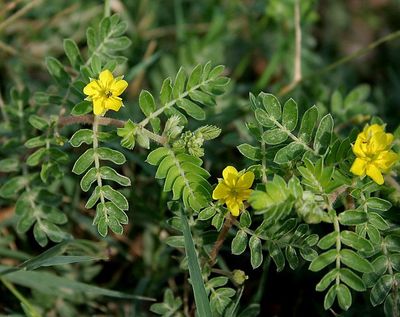 puncture vineTribulus terrestris
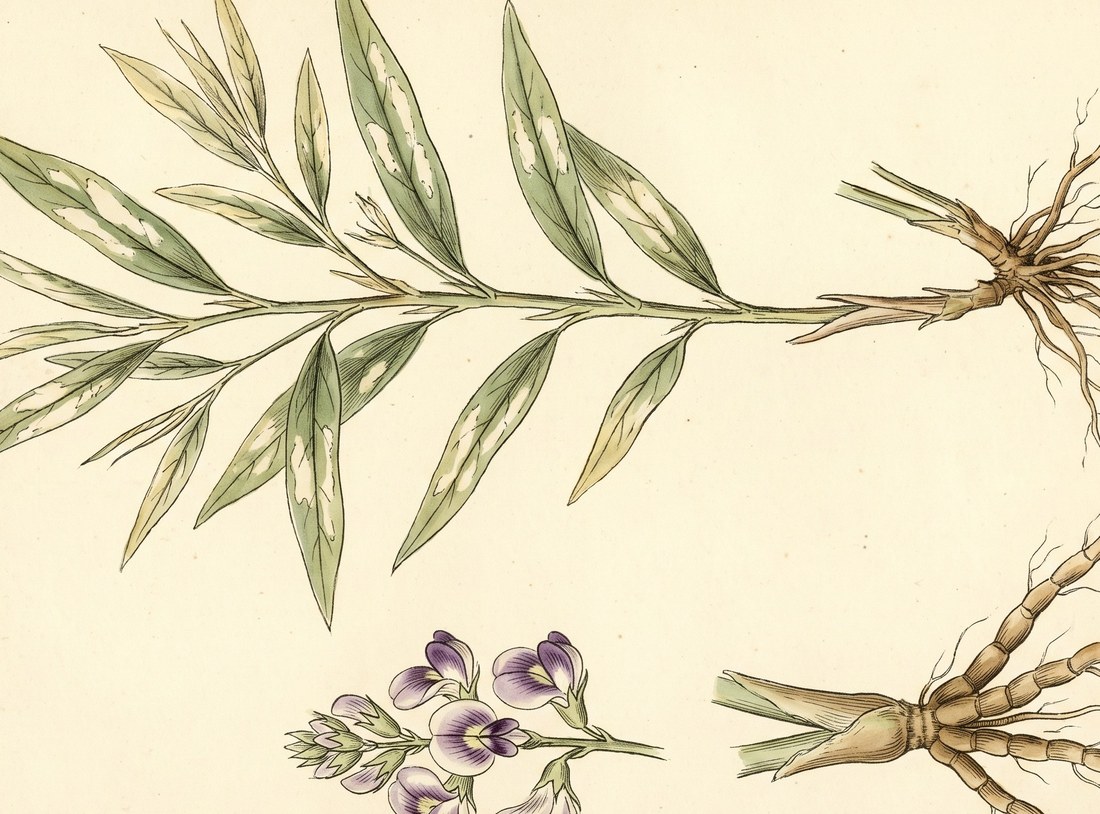 prishniparniUraria picta
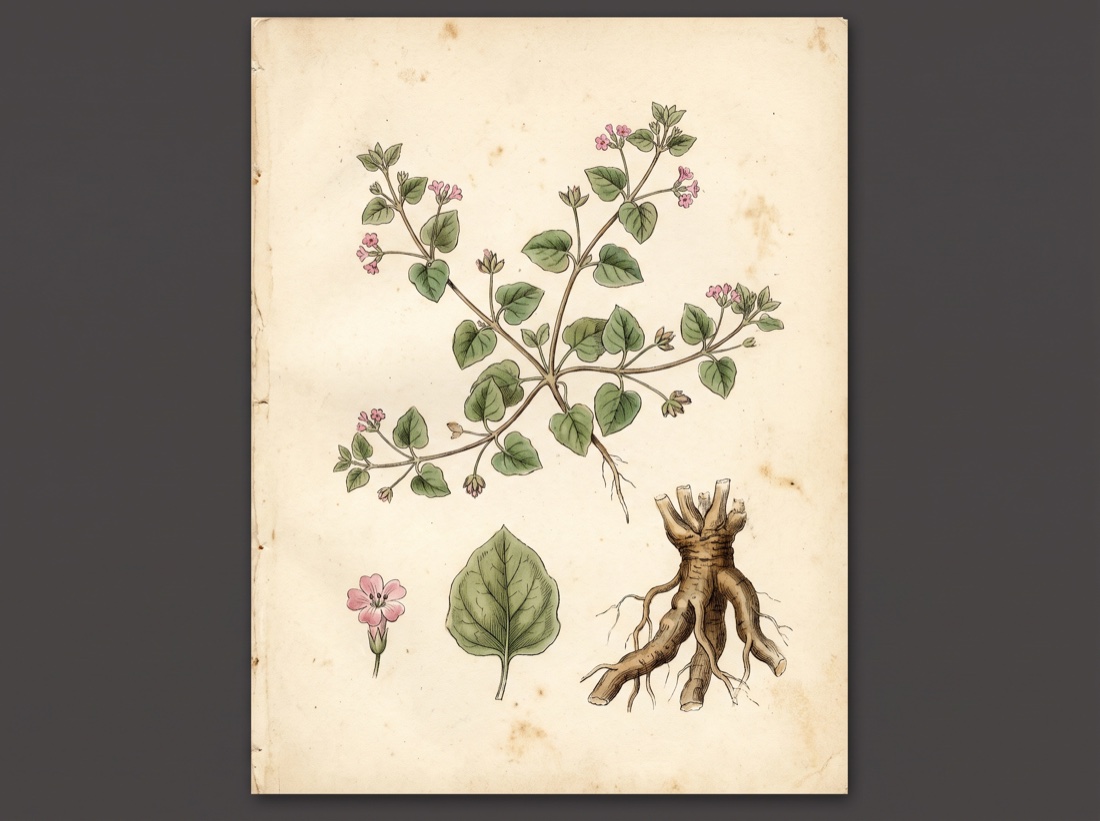 punarnavaBoerhavia diffusa
Nearby on the shelf
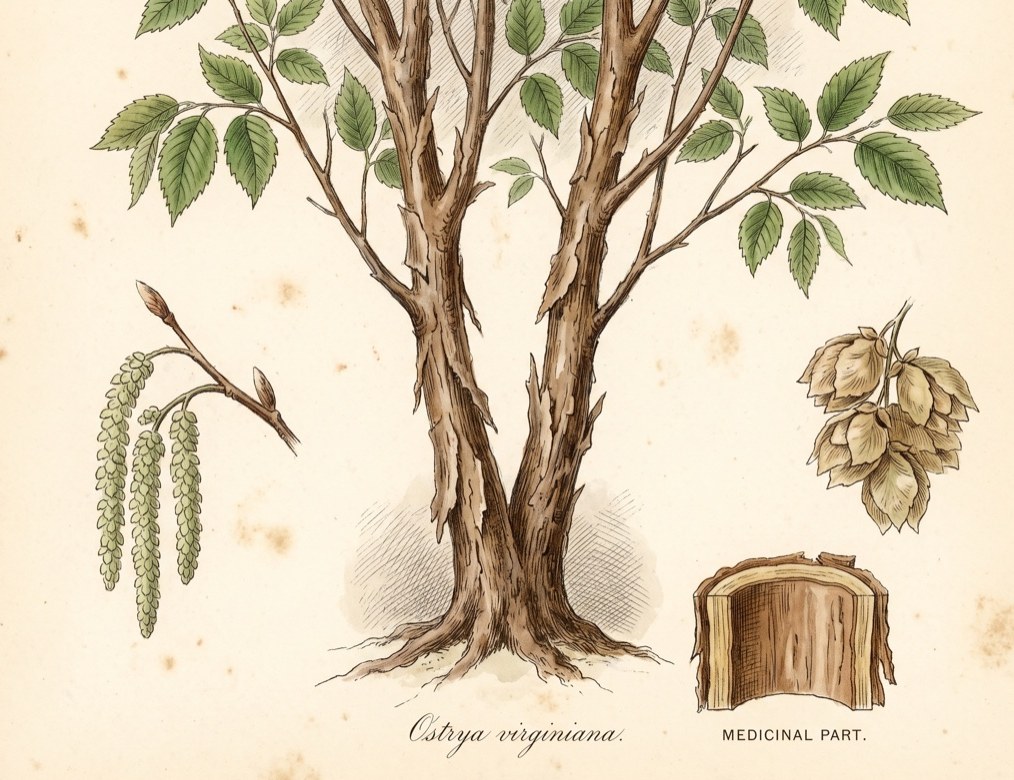 Hop hornbeamOstrya virginica
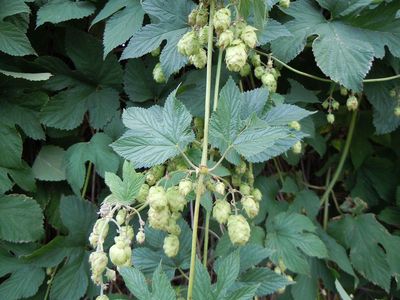 HopsHumulus lupulus
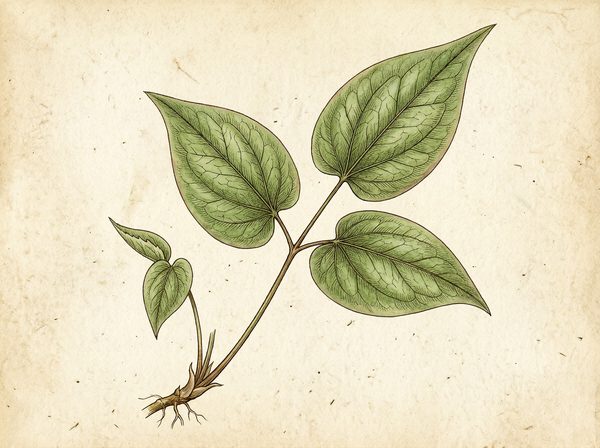 Horny Goat WeedEpimedium brevicornum
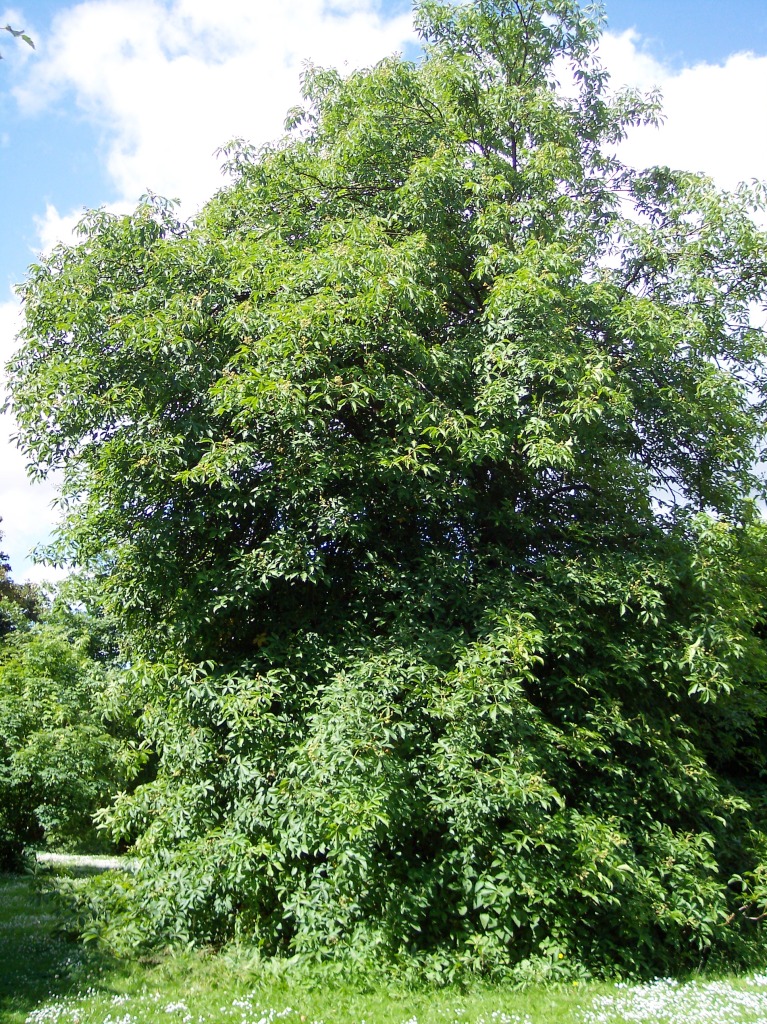 Horse ChestnutAesculus hippocastanum
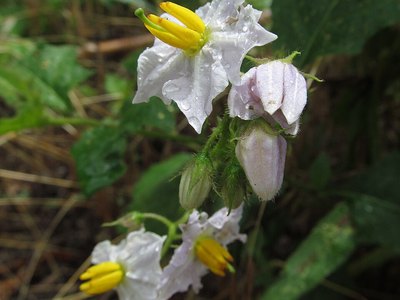 Horse-nettleSolanum Carolinense
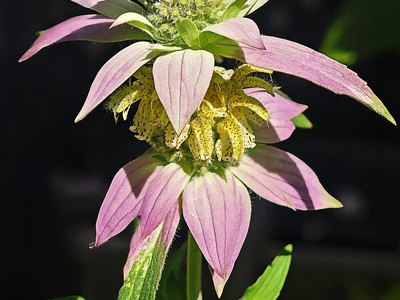 HorsemintMonarda punctata
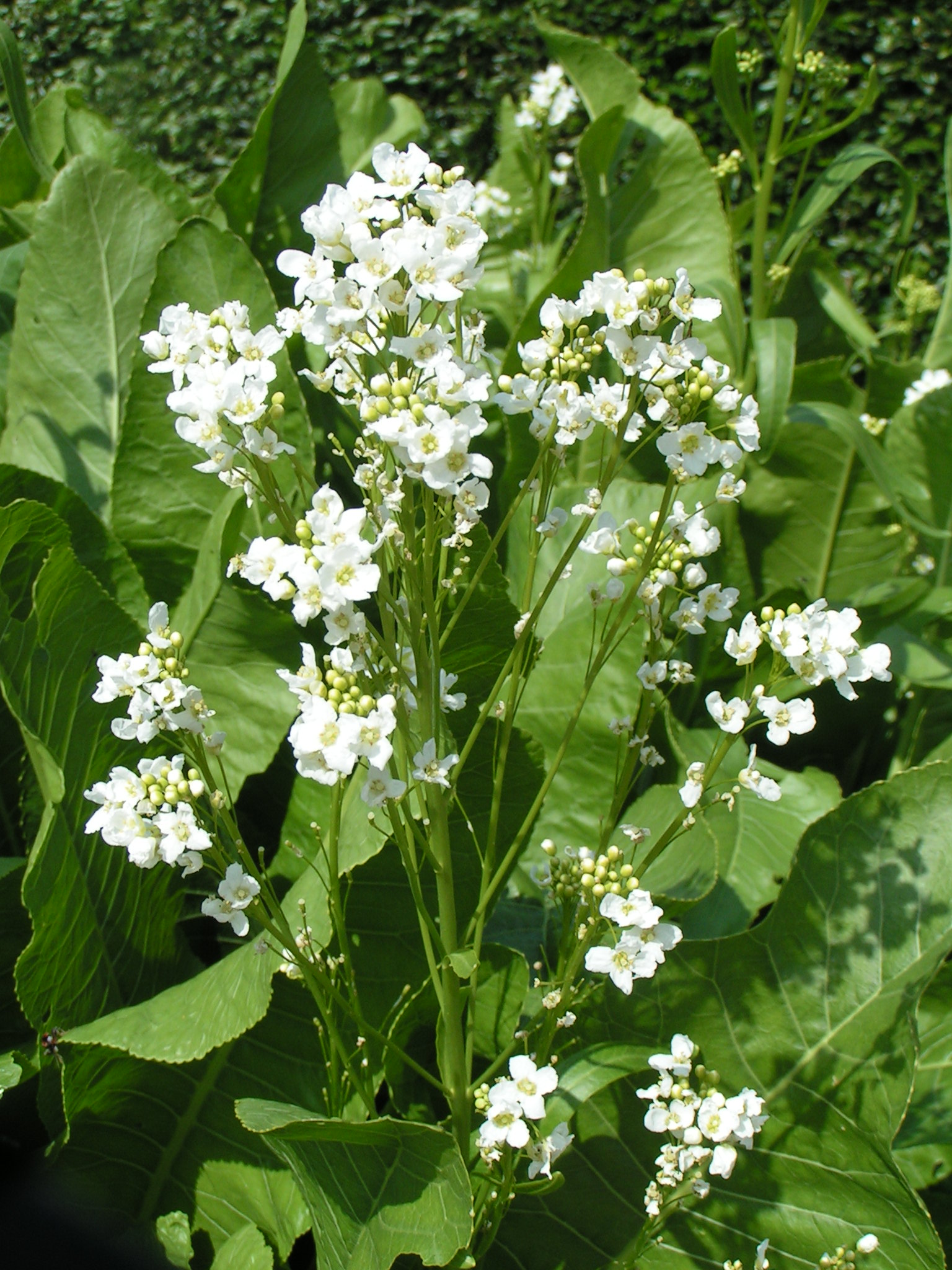 HorseradishArmoracia rusticana
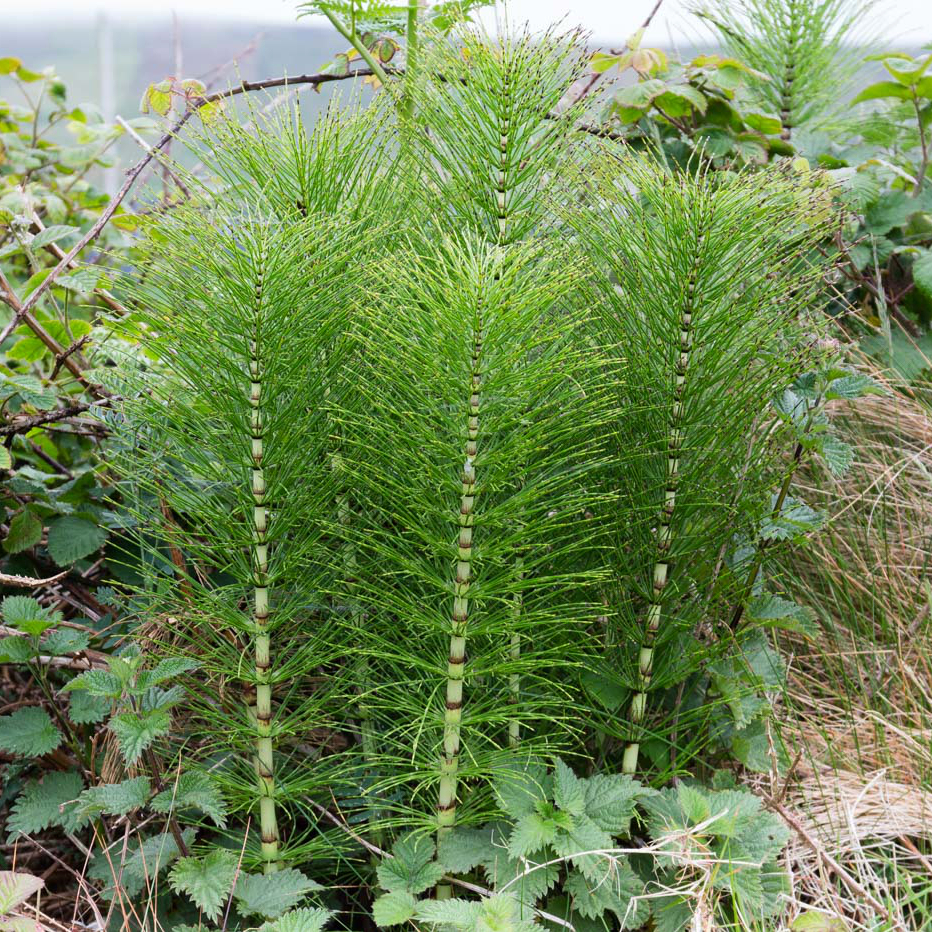 HorsetailEquisetum arvense
The whole plate is in the library. The compass, Compare, the Sky of eleven hundred plants and the formulary open with an email address and a password, free, with the formula builder and its safety engine. Herbert without limit, his formulating, clients, the handouts and the labels are the paid room.
Open the library, free