Chinese Herbalism
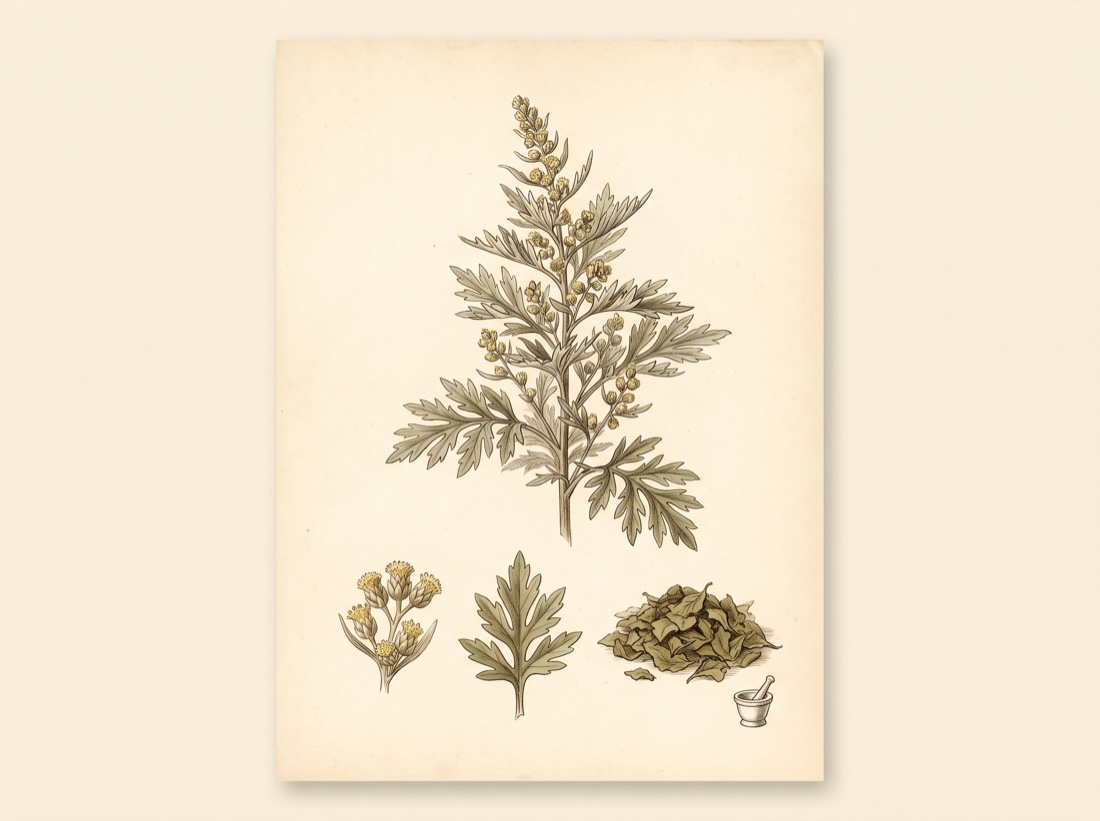
Chinese mugwort
Artemisia argyi
Also known as silvery wormwood, argy wormwood, moxa plant, ai ye, ài yè, ài hāo, qí ài.
Ai ye is the dried leaf of Artemisia argyi, a grey-green perennial mugwort native to China, Korea and Japan, with the Qichun region of Hubei regarded as the best source. The leaves are harvested in early summer before flowering; part of the crop is aged and beaten into the soft wool used for moxibustion, the burning of mugwort over acupuncture points that gives the plant its central place in East Asian medicine. Internally it is a warming hemostatic and gynecological herb.

Ask Herbert about Chinese mugwort. Herbert is the master herbalist inside Bountiful Herbs: he answers from this plate and eleven hundred others, with dosing, pairing and cautions. Your first ten questions are free.
Ask HerbertActions
Indications what the tradition reached for it in
- Heavy or prolonged menstrual bleeding with cold and deficiency
- Threatened miscarriage with bleeding and cold lower abdomen (supervised)
- Dysmenorrhea with cold, cramping pain relieved by warmth
- Infertility with a cold uterus
- Cold abdominal pain and cold-type diarrhea
- Bleeding from cold and deficiency: hematemesis, epistaxis, hematochezia (charred leaf)
- Eczema, scabies and itching skin (external wash)
- Cold, damp pain in joints and abdomen (moxibustion)
- Cold-phlegm cough and wheeze (traditional)
Specific indications
Pale, watery, prolonged uterine bleeding in a woman who feels cold, with a pale tongue and deep slow pulse.
Period pain that eases with a hot water bottle and worsens with cold, often with clots and a dragging sensation.
A cold, weak patient for whom moxibustion over the lower abdomen brings immediate warmth and relief.
Safety
The record lists 7 contraindications; open the plate in the library to read them in full.
In practice
Ai ye belongs to the cold-deficient woman: bleeding that is pale and lingers, cramps that want heat, a womb that feels cold and cannot hold a pregnancy. It is the warming element in Jiao Ai Tang, where it works with e jiao, sheng di huang, dang gui and chuan xiong to stop bleeding while nourishing blood, and it anchors Ai Fu Nuan Gong Wan for cold-uterus infertility together with xiang fu and rou gui.
In Chinese medicine
Temperature: warm. Taste: bitter, acrid. Channels: Liver, Spleen, Kidney. Actions: Warms the channels and stops bleeding; Disperses cold and relieves pain in the lower abdomen; Calms a restless fetus in cold-deficient patterns; Dries dampness and relieves itching when used externally; Warms the yang and moves qi and blood when burned as moxa.
Dosing as the sources wrote it
| Preparation | As written | Metric |
|---|---|---|
| Decoction | 3-9 g dried leaf daily | 3000-9000 mg |
| Charred leaf (ai ye tan) for bleeding | 3-9 g in decoction daily | 3000-9000 mg |
| External wash or sitz bath | 15-30 g decocted in water as needed | 15000-30000 mg |
| Moxibustion | moxa stick or cones over points as directed by practitioner |
Doses are reproduced from the sources for practitioners and are not a recommendation for any person.
From the sources
Overview. Ai ye is the dried leaf of Artemisia argyi, a grey-green perennial mugwort native to China, Korea and Japan, with the Qichun region of Hubei regarded as the best source. The leaves are harvested in early summer before flowering; part of the crop is aged and beaten into the soft wool used for moxibustion, the burning of mugwort over acupuncture points that gives the plant its central place in East Asian medicine. Internally it is a warming hemostatic and gynecological herb.
Clinical Notes. Ai ye belongs to the cold-deficient woman: bleeding that is pale and lingers, cramps that want heat, a womb that feels cold and cannot hold a pregnancy. It is the warming element in Jiao Ai Tang, where it works with e jiao, sheng di huang, dang gui and chuan xiong to stop bleeding while nourishing blood, and it anchors Ai Fu Nuan Gong Wan for cold-uterus infertility together with xiang fu and rou gui.
Chinese Medicine Profile. Temperature: warm. Taste: bitter, acrid. Channels: Liver, Spleen, Kidney. Actions: Warms the channels and stops bleeding; Disperses cold and relieves pain in the lower abdomen; Calms a restless fetus in cold-deficient patterns; Dries dampness and relieves itching when used externally; Warms the yang and moves qi and blood when burned as moxa.
In formulas
Chinese mugwort stands in 12 documented formulas in the library, among them sì shêng wán, ài fù nuǎn gông wán, bài yè tāng.
Often paired with
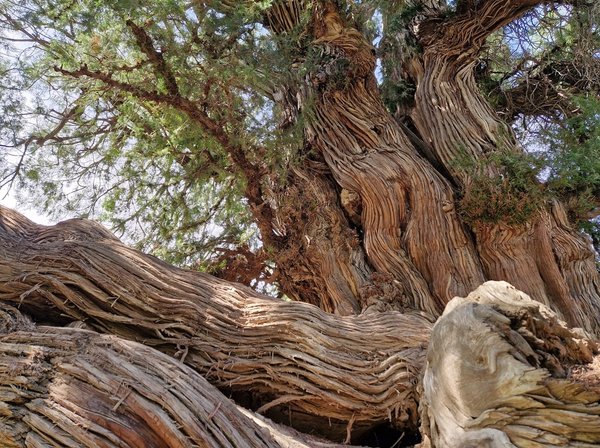 Bai Zi RenPlatycladus orientalis
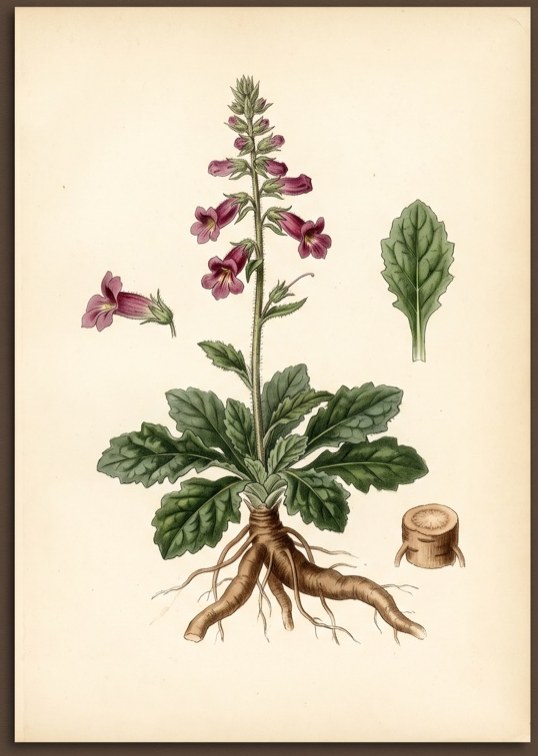 RehmanniaRehmannia glutinosa
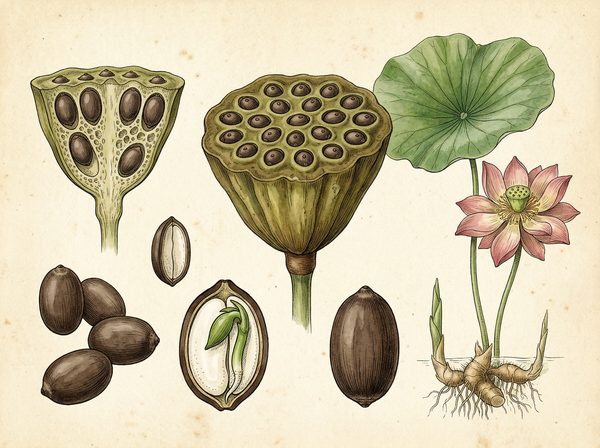 sacred lotusNelumbo nucifera
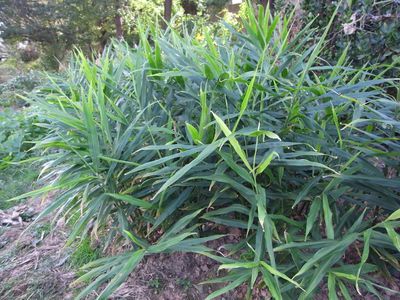 GingerZingiber officinale
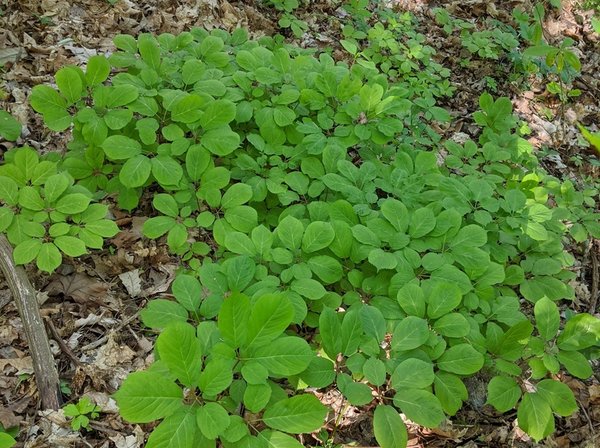 American GinsengPanax quinquefolius
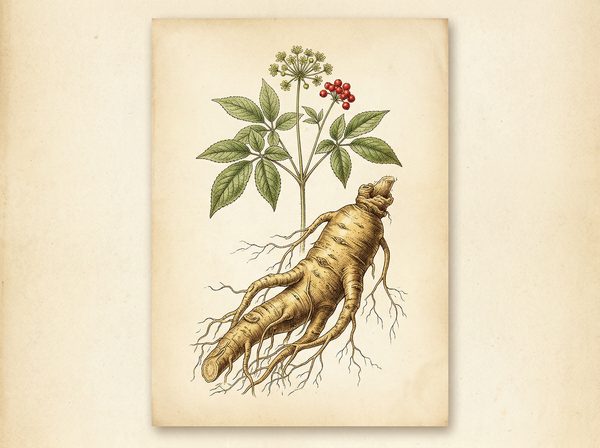 Tienchi GinsengPanax notoginseng
Nearby on the shelf
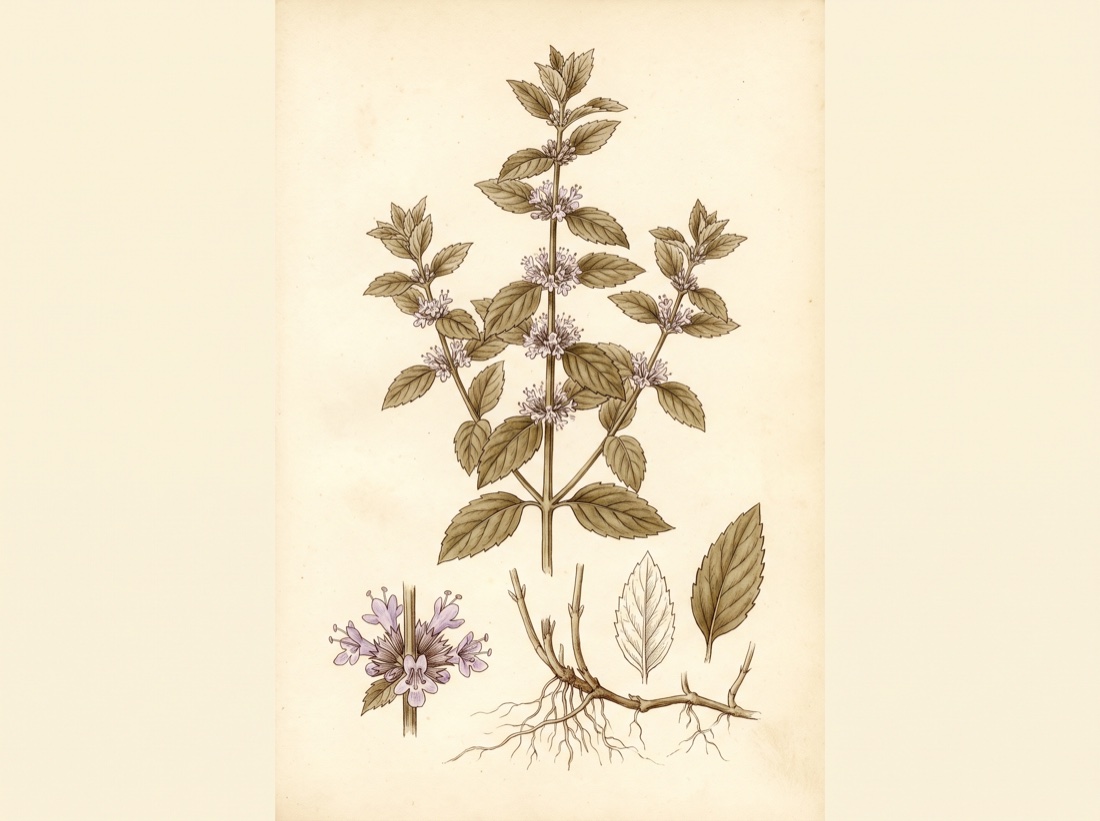 Chinese mintMentha canadensis
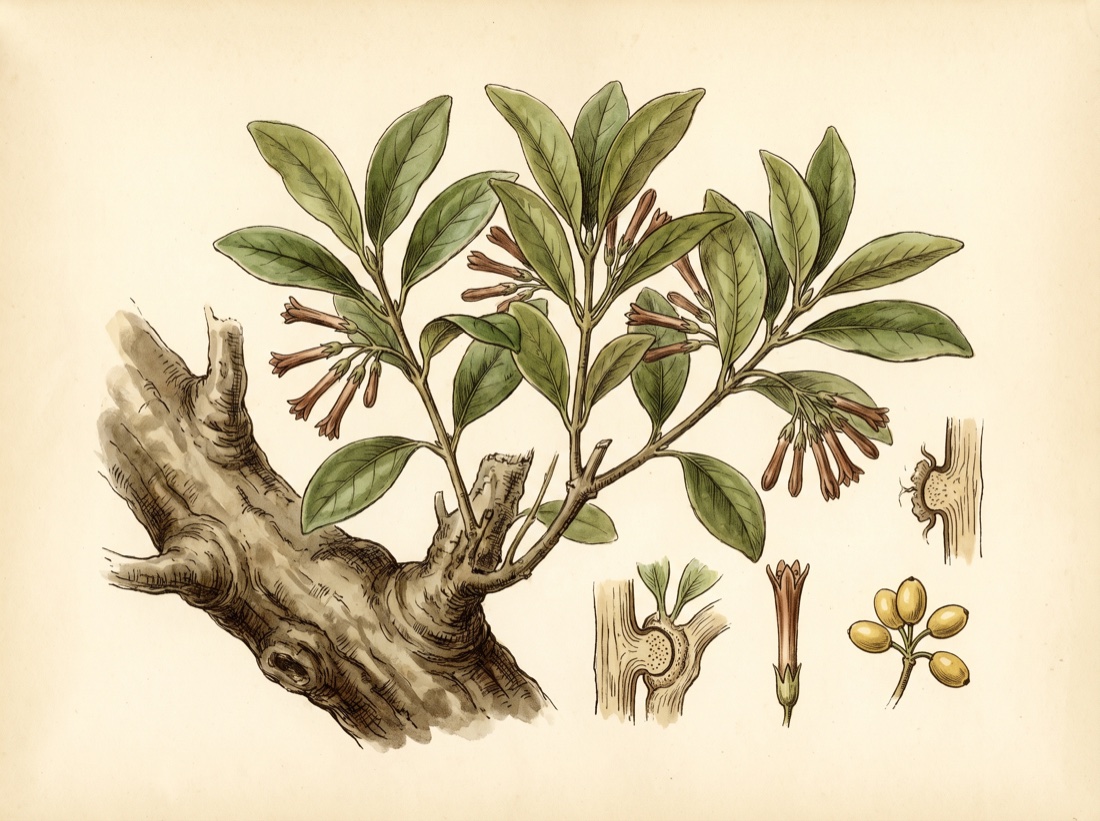 Chinese mistletoeTaxillus chinensis
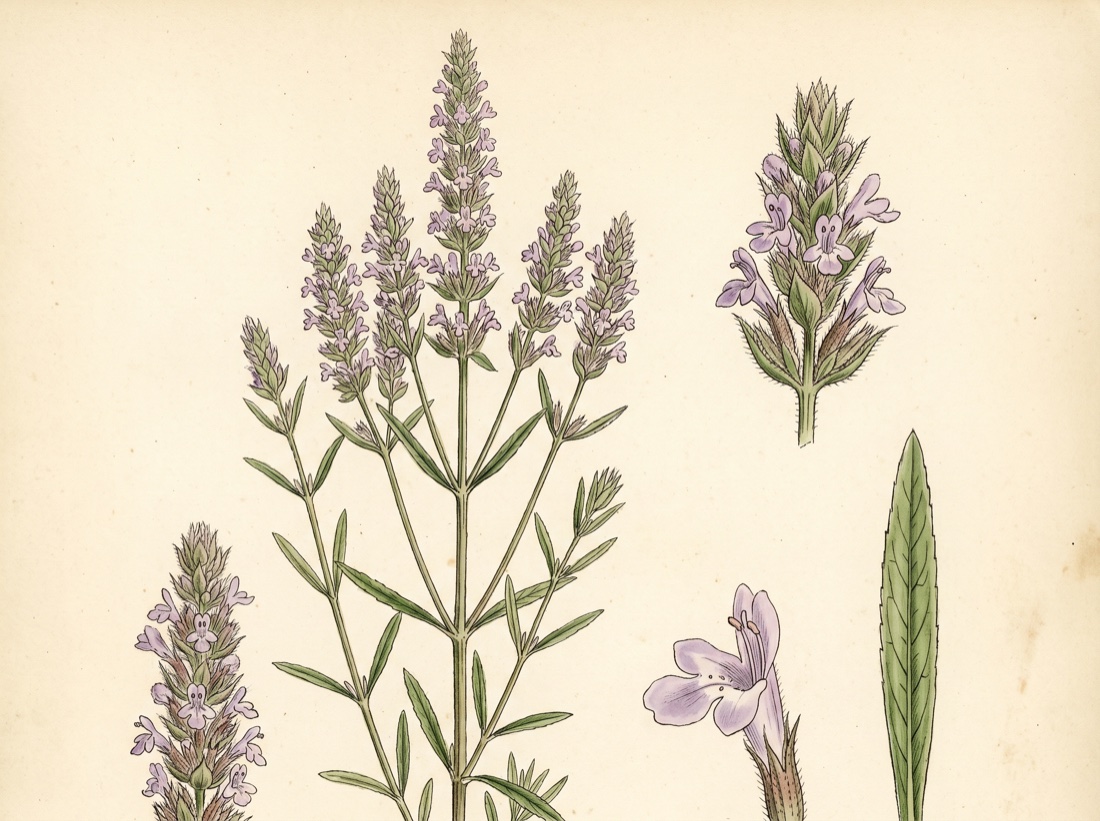 Chinese moslaMosla chinensis
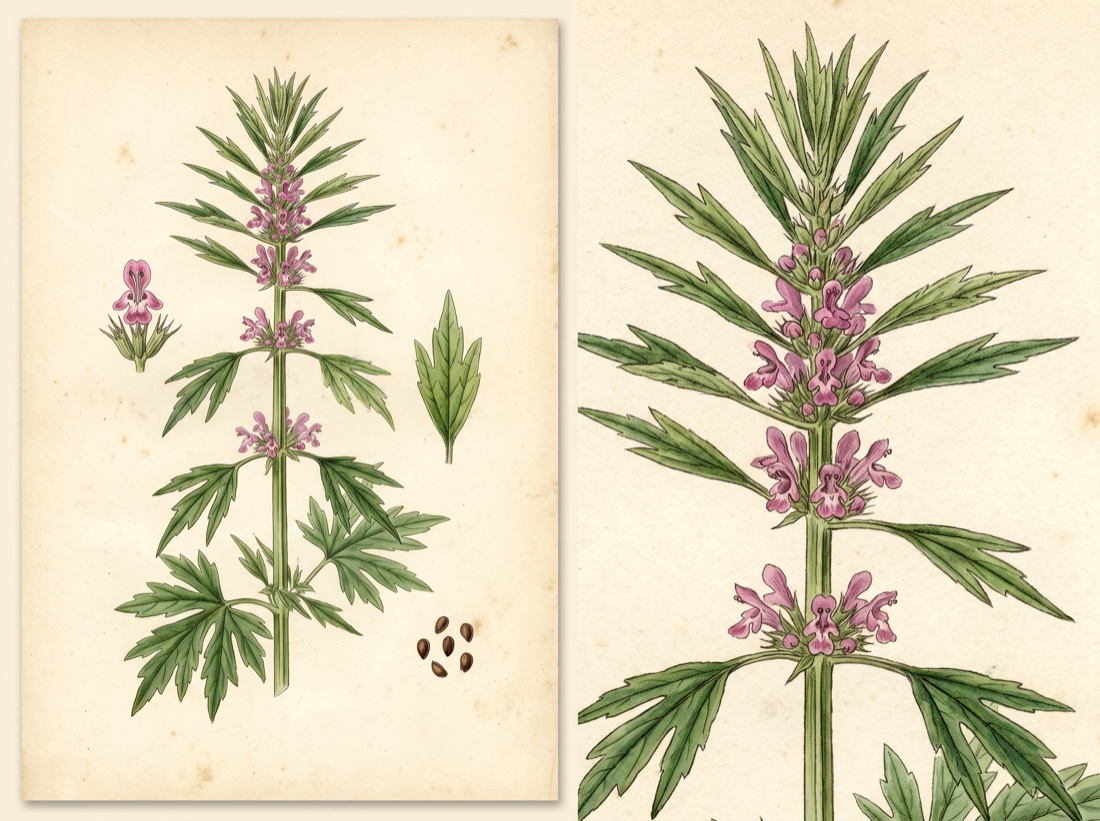 Chinese motherwortLeonurus japonicus
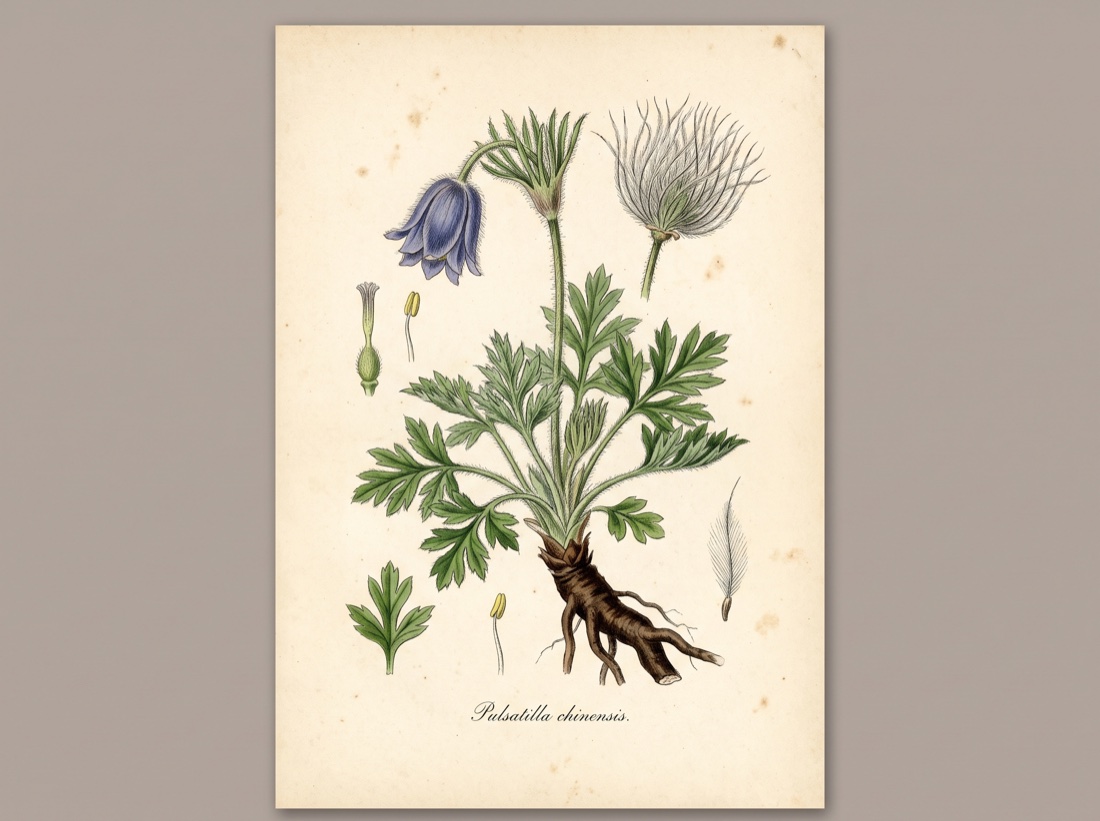 Chinese pulsatillaPulsatilla chinensis
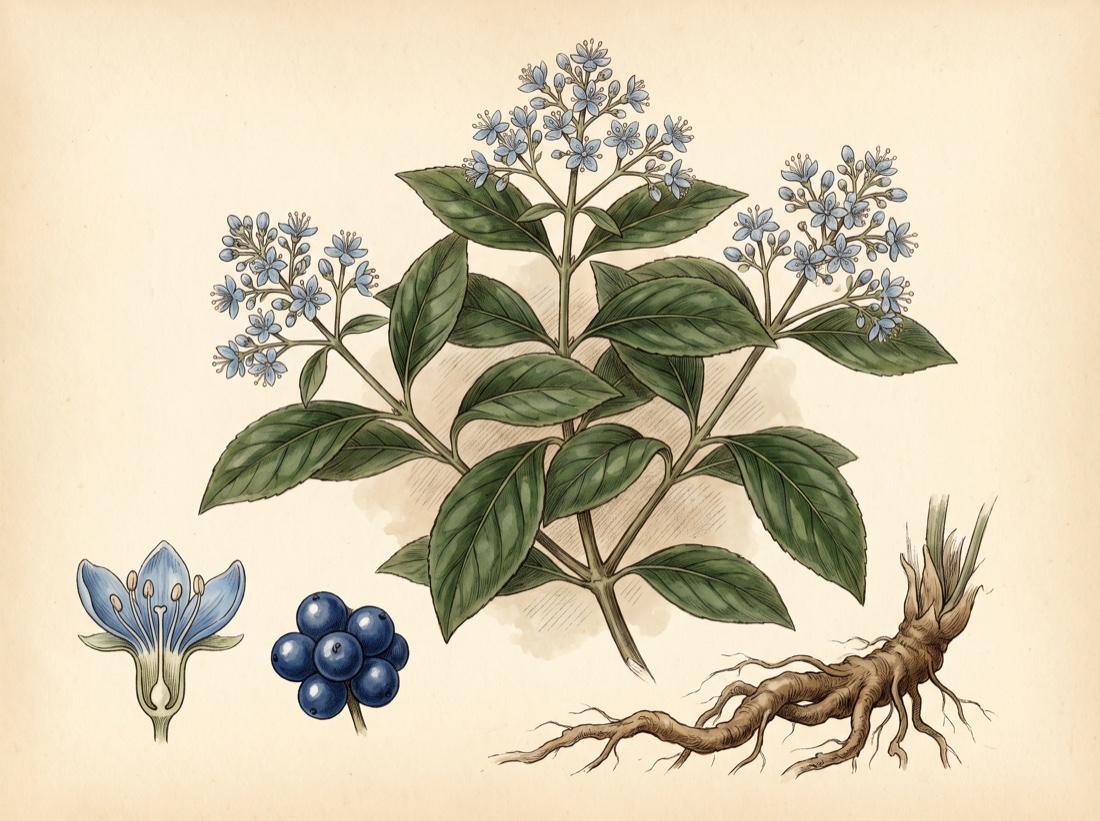 Chinese quinineDichroa febrifuga
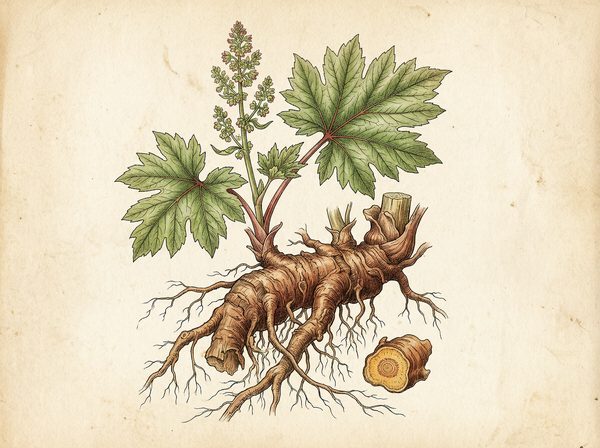 Chinese RhubarbRheum palmatum
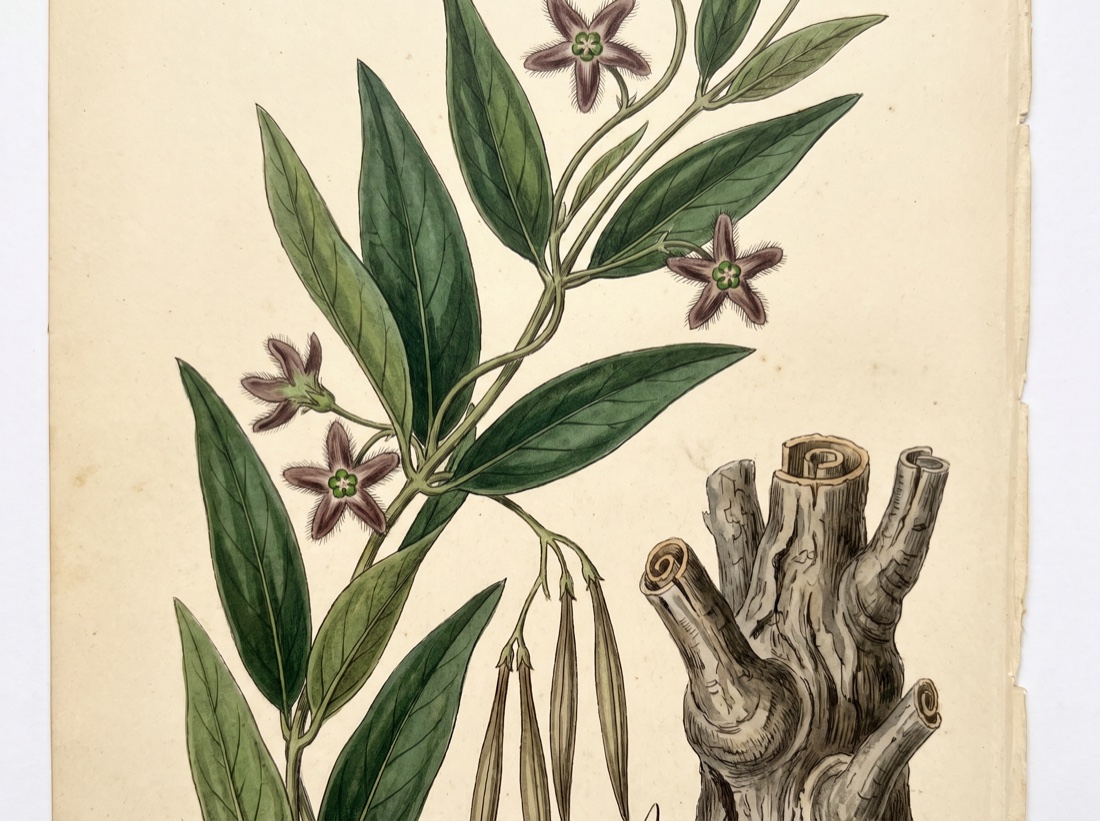 Chinese silk vinePeriploca sepium
The whole plate is in the library. The compass, Compare, the Sky of eleven hundred plants and the formulary open with an email address and a password, free, with the formula builder and its safety engine. Herbert without limit, his formulating, clients, the handouts and the labels are the paid room.
Open the library, free