Chinese Herbalism
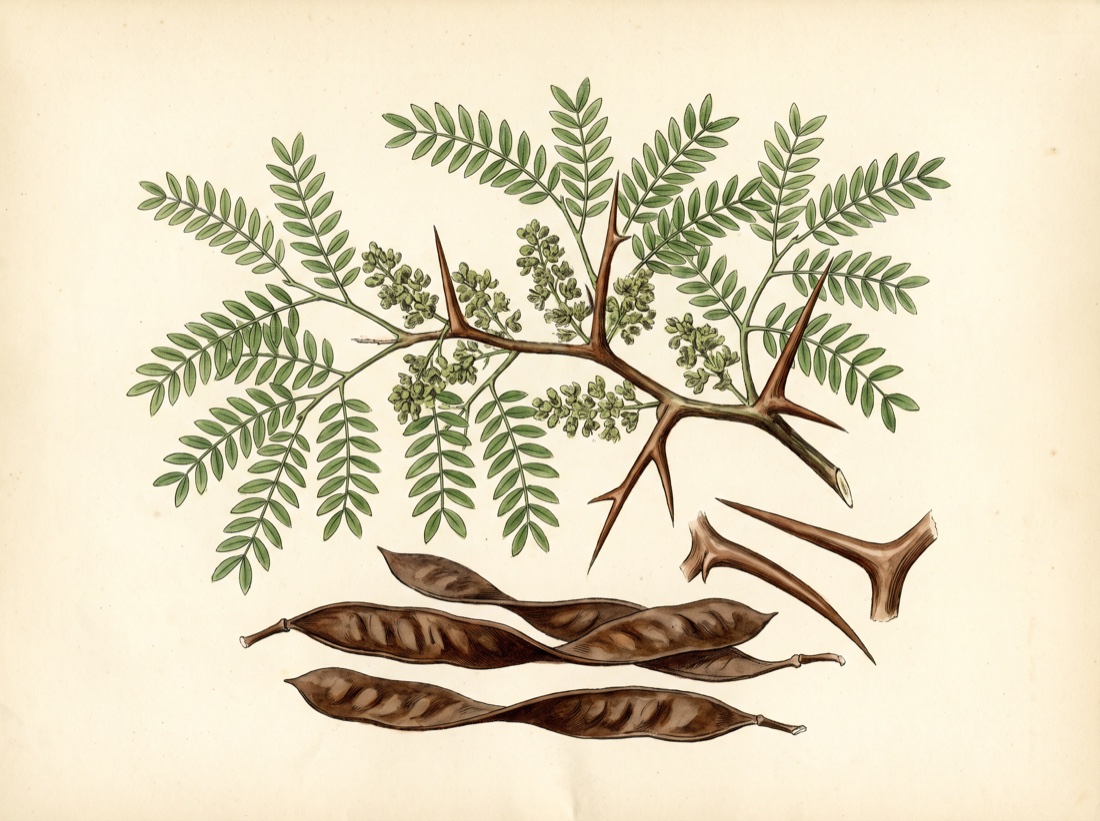
Chinese honey locust
Gleditsia sinensis
Also known as Chinese honeylocust, soap pod tree, soap bean, zao jiao (fruit), zao jiao ci (thorn), zhu ya zao (small abnormal pod), zào jiá, zào jiǎo, zào jiǎo cì.
Gleditsia sinensis is a thorny deciduous tree of the pea family native to China, where it lines rivers and village roads and has long supplied soap pods for washing. Three parts are used: the mature pod (zao jiao), a small stunted sterile pod (zhu ya zao) considered stronger, and the branched trunk spines (zao jiao ci). The saponin-rich pod is a harsh, slightly toxic phlegm-expelling drug; the thorn is a gentler surgical herb for dispersing abscesses and expelling pus.
Ask Herbert about Chinese honey locust. Herbert is the master herbalist inside Bountiful Herbs: he answers from this plate and eleven hundred others, with dosing, pairing and cautions. Your first ten questions are free.
Ask HerbertActions
Indications what the tradition reached for it in
- Chronic cough with copious, thick, hard-to-raise phlegm
- Wheezing with a chest full of phlegm, worse lying flat
- Sudden collapse with phlegm rattling, lockjaw, or fainting (pod powder as snuff)
- Epilepsy or wind-stroke with phlegm obstruction (as part of a formula)
- Early abscess, boil, or carbuncle that is hot and swollen but not yet pointing (thorn)
- Mastitis and breast abscess in the early stage (thorn)
- Deep abscess that has pointed but will not discharge (thorn)
- Scabies, tinea, and stubborn itchy skin lesions (external)
- Facial paralysis and sinus congestion (pod, topical or as snuff, traditional)
- Constipation with hard dry stool from phlegm-heat (pod, in pills, traditional)
Specific indications
Tenacious phlegm that sits in the chest like glue, with a bubbling wheeze and an inability to lie down, in an otherwise robust patient
A red, hot, tense boil or breast abscess in its first days that you want to bring to a head or disperse before it ripens (thorn)
Sudden loss of consciousness with phlegm rattling in the throat where a pinch of pod powder blown into the nose provokes sneezing and rouses the patient
Safety
Low dose botanical. Used in drop doses in the classical practice; not a plant to dose freely.
The record lists 10 contraindications; open the plate in the library to read them in full.
In practice
Treat the pod and the thorn as two different medicines. The pod is a low-dose, irritant expectorant for thick obstructive phlegm in strong patients, given as powder in pills or capsules, 1 to 1.5 g a day, and rarely decocted, because the saponins are hemolytic and irritate the gut.
In Chinese medicine
Temperature: warm, slightly toxic (pod); warm (thorn). Taste: acrid, salty (pod); acrid (thorn). Channels: Lung, Large Intestine (pod); Liver, Stomach (thorn). Actions: Pod: forcefully dislodges stubborn, sticky phlegm from the chest; Pod: opens the orifices and revives consciousness when phlegm blocks the senses; Pod: disperses swellings and kills parasites when applied externally; Thorn: disperses swelling and drives out pus from abscesses that have not yet broken; Thorn: moves blood and unblocks the channels to relieve fixed pain; Thorn: kills parasites and stops itching in skin lesions (external).
Dosing as the sources wrote it
| Preparation | As written | Metric |
|---|---|---|
| Pod powder in pills or capsules (zao jiao) | 1-1.5 g dried pod powder daily in divided doses | 1000-1500 mg |
| Small abnormal pod (zhu ya zao) | 1-1.5 g dried pod powder daily in pills | 1000-1500 mg |
| Thorn decoction (zao jiao ci) | 3-10 g dried thorn daily in decoction | 3000-10000 mg |
| External (pod or thorn) | powder mixed with vinegar applied to the lesion as needed |
Doses are reproduced from the sources for practitioners and are not a recommendation for any person.
From the sources
Overview. Gleditsia sinensis is a thorny deciduous tree of the pea family native to China, where it lines rivers and village roads and has long supplied soap pods for washing. Three parts are used: the mature pod (zao jiao), a small stunted sterile pod (zhu ya zao) considered stronger, and the branched trunk spines (zao jiao ci). The saponin-rich pod is a harsh, slightly toxic phlegm-expelling drug; the thorn is a gentler surgical herb for dispersing abscesses and expelling pus.
Clinical Notes. Treat the pod and the thorn as two different medicines. The pod is a low-dose, irritant expectorant for thick obstructive phlegm in strong patients, given as powder in pills or capsules, 1 to 1.5 g a day, and rarely decocted, because the saponins are hemolytic and irritate the gut.
In formulas
Chinese honey locust stands in 2 documented formulas in the library, among them tòu nóng sǎn, zhông hé tǎng.
Often paired with
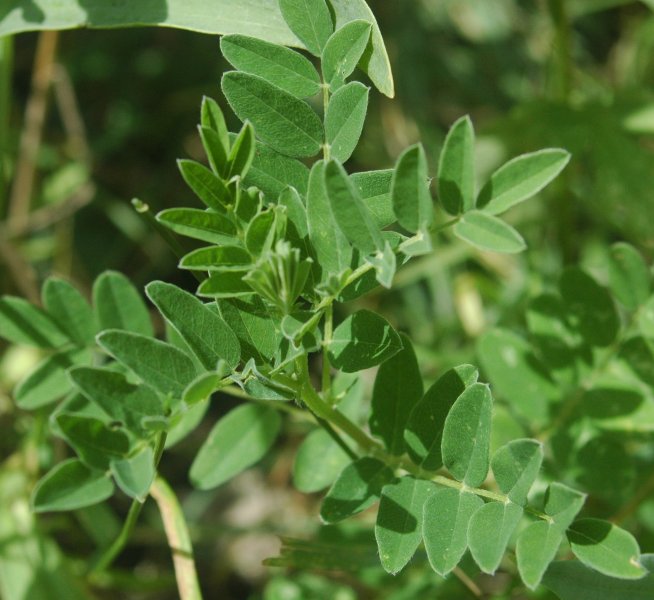 Milk Vetch RootAstragalus membranaceus
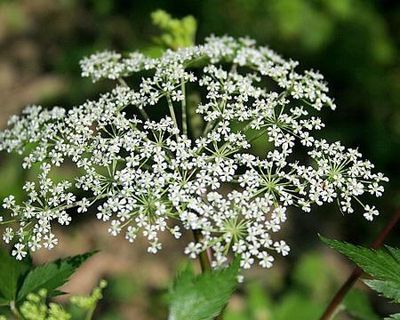 Dong QuaiAngelica sinensis
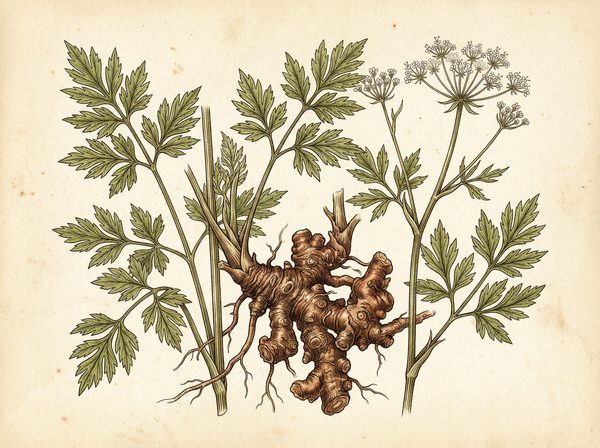 Sichuan Lovage RhizomeLigusticum chuanxiong
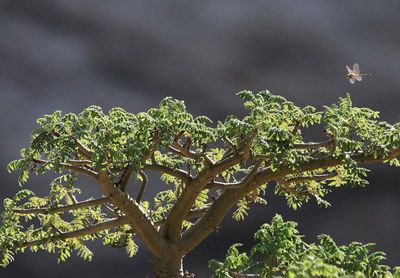 FrankincenseBoswellia spp.
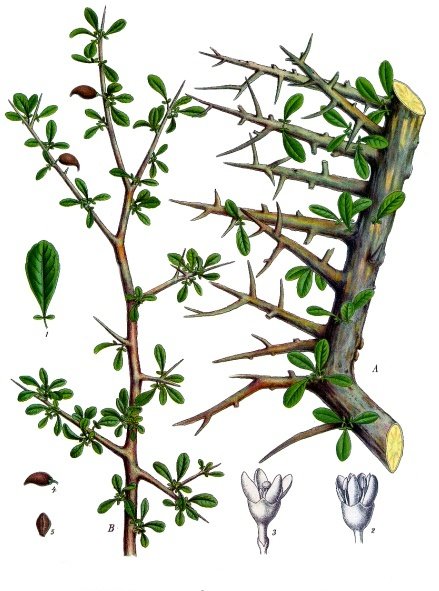 MyrrhCommiphora molmol
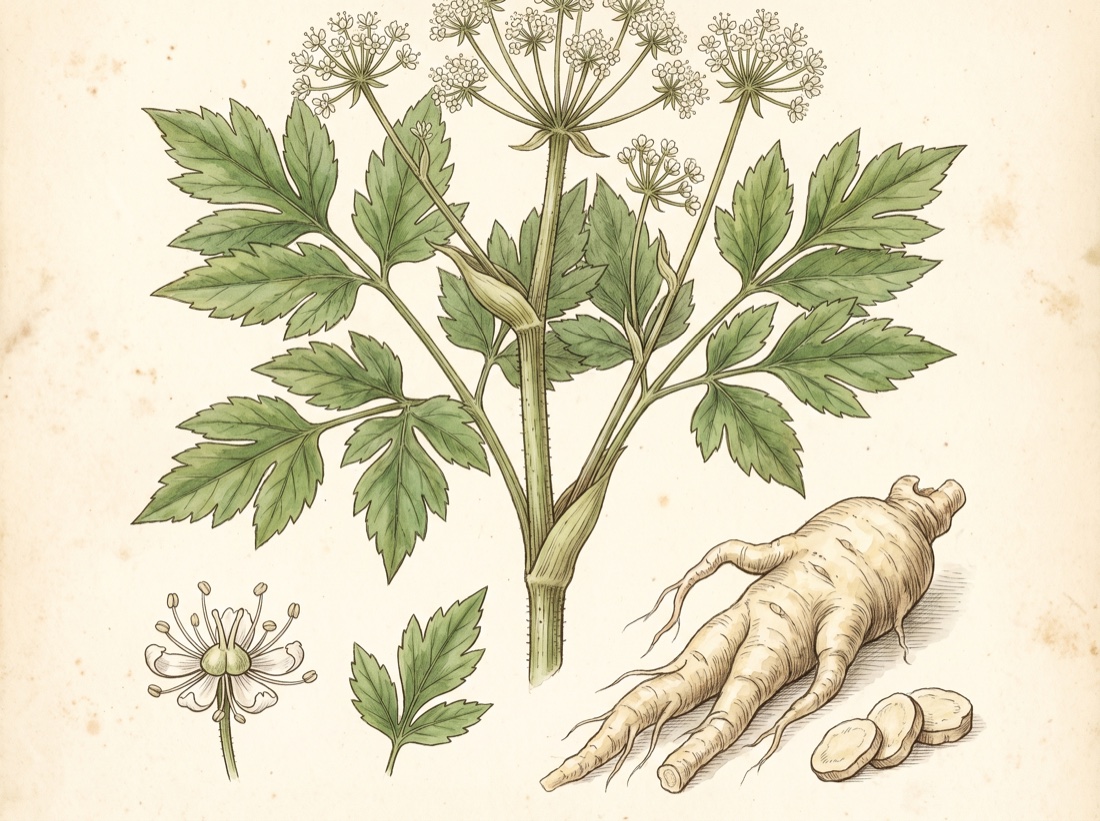 Dahurian angelicaAngelica dahurica
Nearby on the shelf
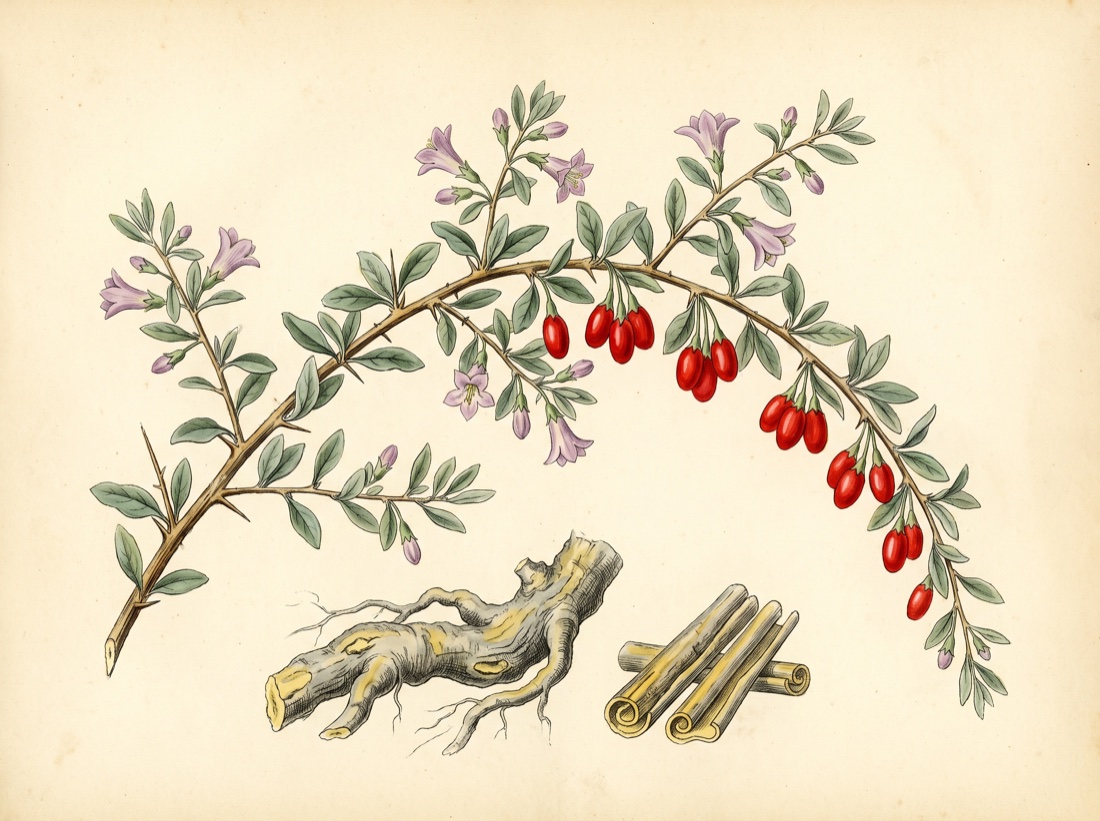 Chinese boxthornLycium chinense
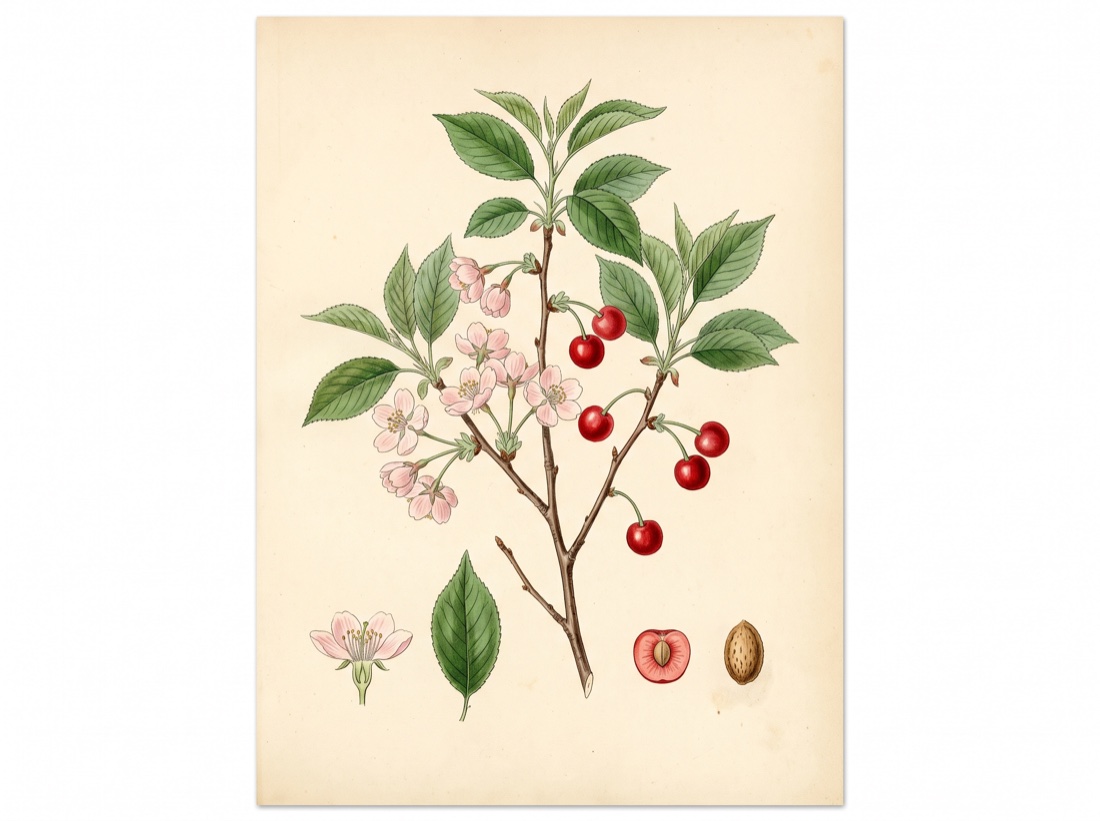 Chinese bush cherryPrunus japonica
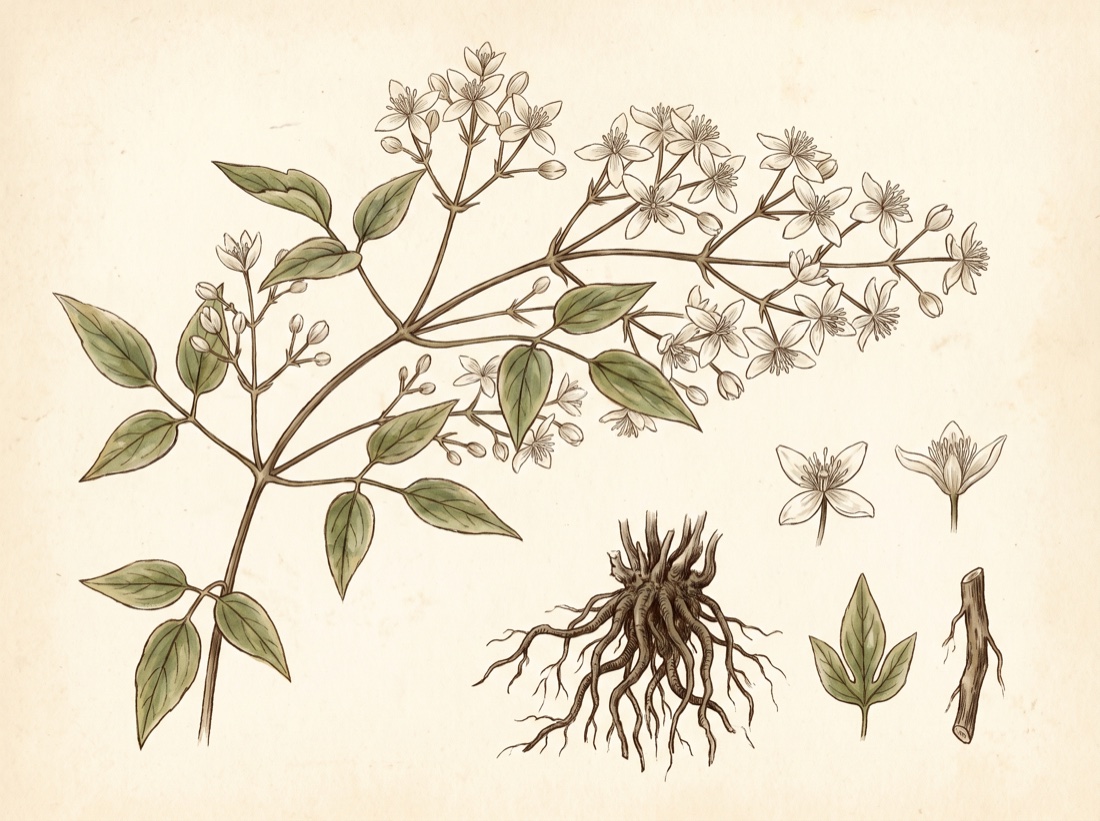 Chinese clematisClematis chinensis
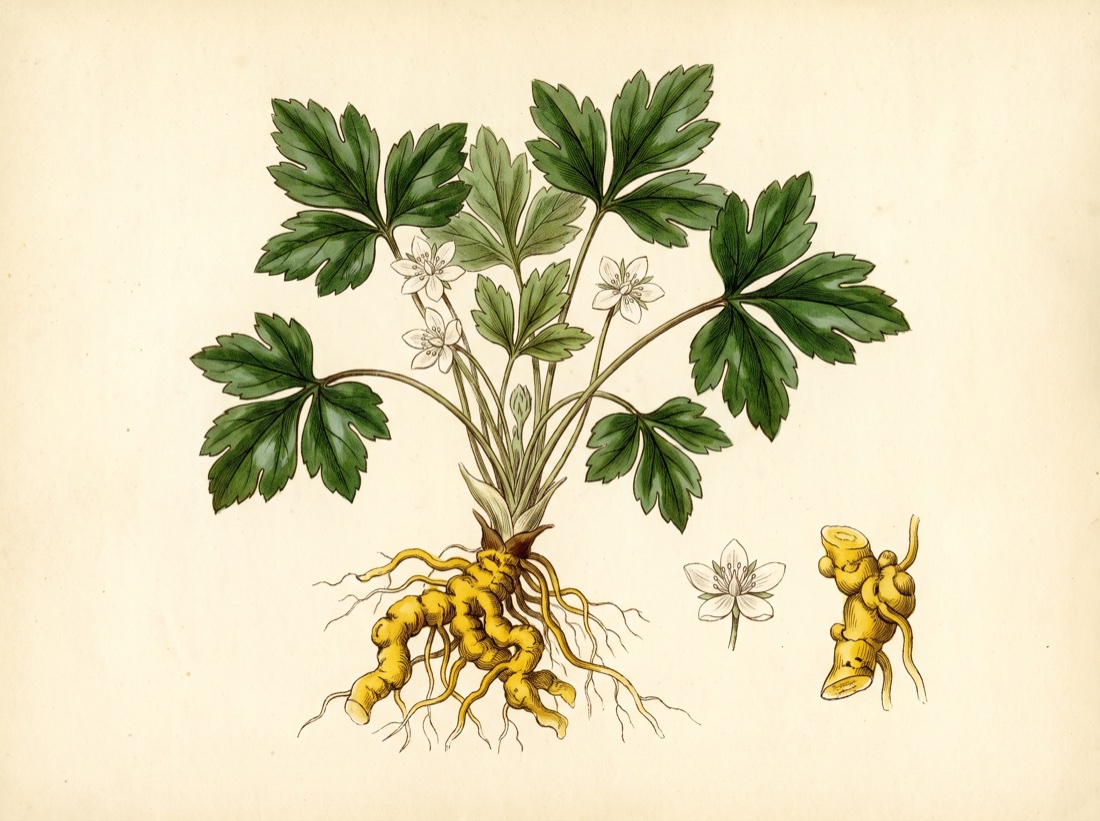 Chinese goldthreadCoptis chinensis
 Chinese mintMentha canadensis
 Chinese mistletoeTaxillus chinensis
 Chinese moslaMosla chinensis
 Chinese motherwortLeonurus japonicus
The whole plate is in the library. The compass, Compare, the Sky of eleven hundred plants and the formulary open with an email address and a password, free, with the formula builder and its safety engine. Herbert without limit, his formulating, clients, the handouts and the labels are the paid room.
Open the library, free