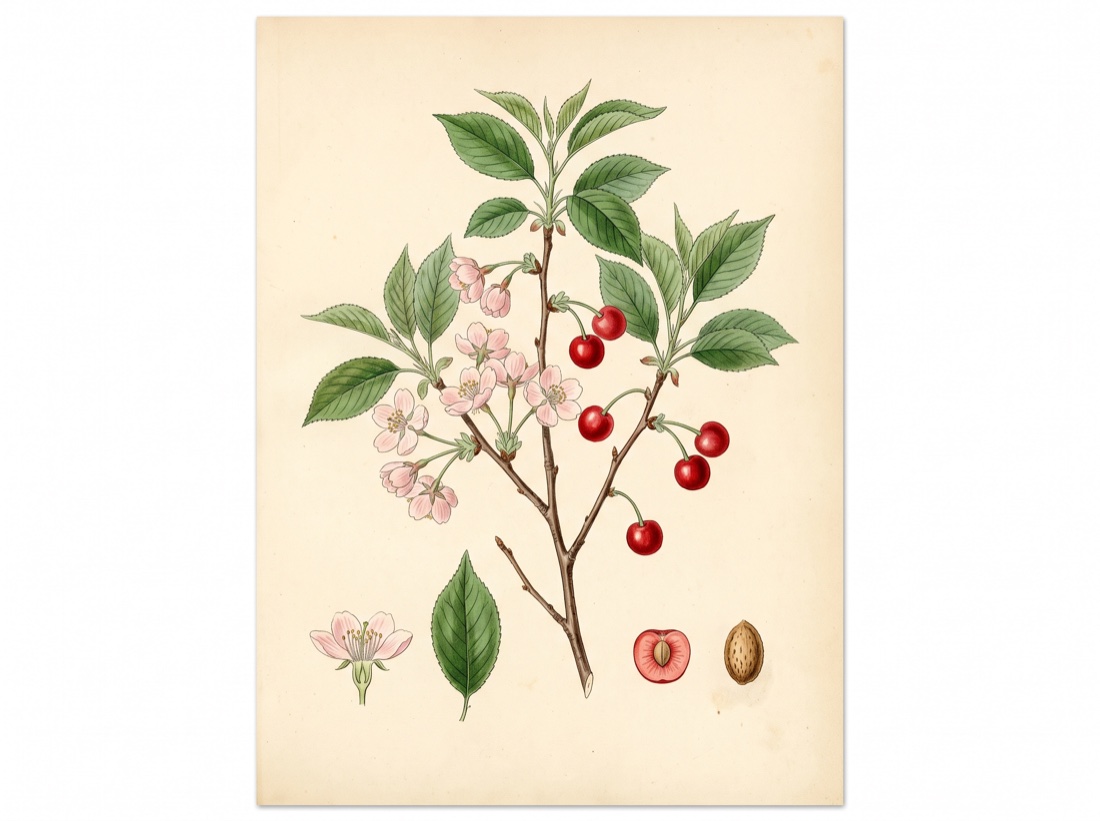
Chinese Herbalism
Chinese bush cherry
Prunus japonica
Also known as Japanese bush cherry, Korean cherry, oriental bush cherry, yu li ren, yù lǐ rén.
Yu li ren is the dried ripe seed of Prunus japonica, a small bush cherry of hillsides and scrub in northern and eastern China and Korea; the seeds of Prunus humilis and Prunus pedunculata are accepted alternative sources. The small pointed kernels are shelled from the stone in summer and dried. In Chinese medicine yu li ren is a moistening seed laxative with a difference: it is also acrid and bitter, so it moves qi downward and drains water, and it is chosen when constipation comes with bloating or edema rather than dryness alone.

Ask Herbert about Chinese bush cherry. Herbert is the master herbalist inside Bountiful Herbs: he answers from this plate and eleven hundred others, with dosing, pairing and cautions. Your first ten questions are free.
Ask HerbertActions
Indications what the tradition reached for it in
- Constipation from intestinal dryness with qi stagnation
- Constipation with abdominal distension and gas
- Edema with constipation and fullness
- Leg swelling with scanty urine (traditional beriberi-type edema)
- Constipation in the elderly and postpartum (with tonics)
- Habitual constipation with bloating
- Dry stools after febrile illness
- Ascites and abdominal distension (traditional adjunct)
Specific indications
Dry constipation with a bloated, gassy abdomen where a moistening seed is wanted but a little push is needed too
Leg swelling with scanty urine and constipation occurring together
Safety
The record lists 6 contraindications; open the plate in the library to read them in full.
In practice
Yu li ren sits between the pure moisteners (huo ma ren, bai zi ren, song zi ren) and the purgatives. Use it when dry stools come with gas, distension and pressure, or when constipation and fluid retention appear together, as in the elderly with swollen legs.
In Chinese medicine
Temperature: neutral. Taste: acrid, bitter, sweet. Channels: Spleen, Large Intestine, Small Intestine. Actions: Moistens the intestines and unblocks the bowels; Directs qi downward and promotes urination; Reduces edema and abdominal fullness.
Dosing as the sources wrote it
| Preparation | As written | Metric |
|---|---|---|
| Decoction (crushed seed) | 6-10 g dried seed daily | 6000-10000 mg |
| Powder or paste with honey | 2-3 g twice daily | 2000-3000 mg |
Doses are reproduced from the sources for practitioners and are not a recommendation for any person.
From the sources
Overview. Yu li ren is the dried ripe seed of Prunus japonica, a small bush cherry of hillsides and scrub in northern and eastern China and Korea; the seeds of Prunus humilis and Prunus pedunculata are accepted alternative sources. The small pointed kernels are shelled from the stone in summer and dried. In Chinese medicine yu li ren is a moistening seed laxative with a difference: it is also acrid and bitter, so it moves qi downward and drains water, and it is chosen when constipation comes with bloating or edema rather than dryness alone.
Clinical Notes. Yu li ren sits between the pure moisteners (huo ma ren, bai zi ren, song zi ren) and the purgatives. Use it when dry stools come with gas, distension and pressure, or when constipation and fluid retention appear together, as in the elderly with swollen legs.
Chinese Medicine Profile. Temperature: neutral. Taste: acrid, bitter, sweet. Channels: Spleen, Large Intestine, Small Intestine. Actions: Moistens the intestines and unblocks the bowels; Directs qi downward and promotes urination; Reduces edema and abdominal fullness.
In formulas
Chinese bush cherry stands in 6 documented formulas in the library, among them wũ rén wán, lou xiè liu rén tāng.
Often paired with
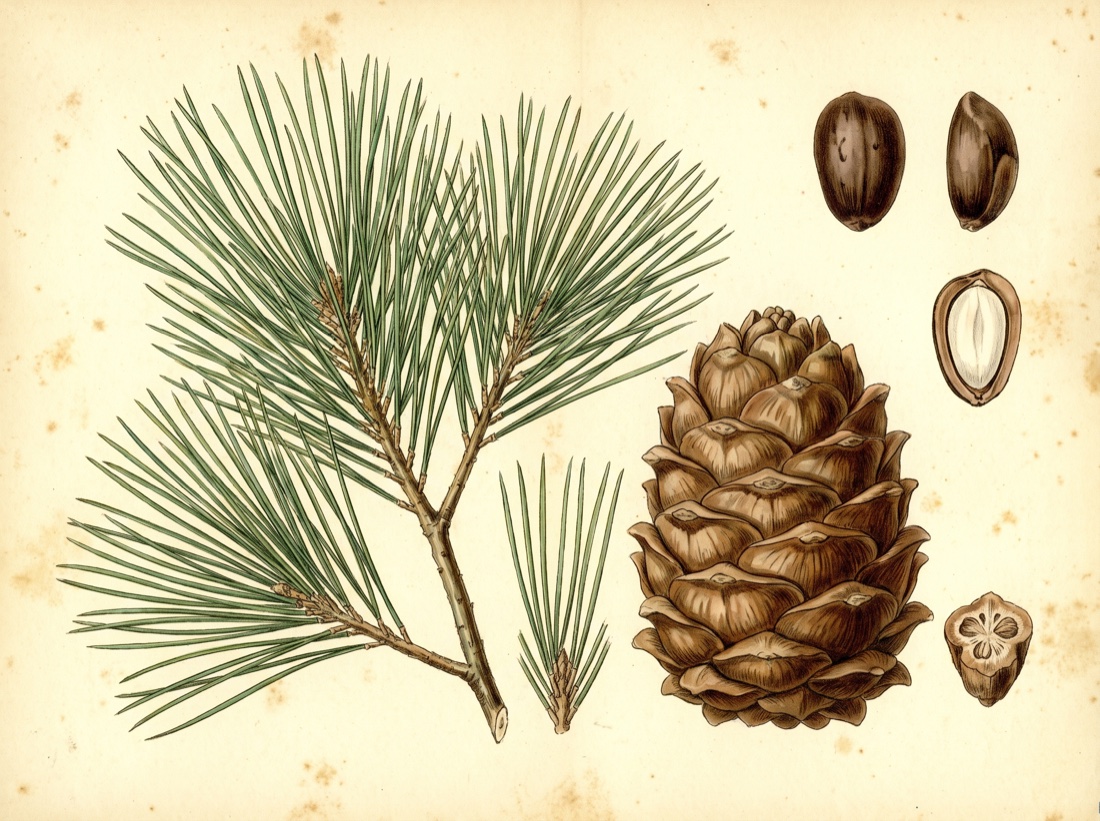 Korean pinePinus koraiensis
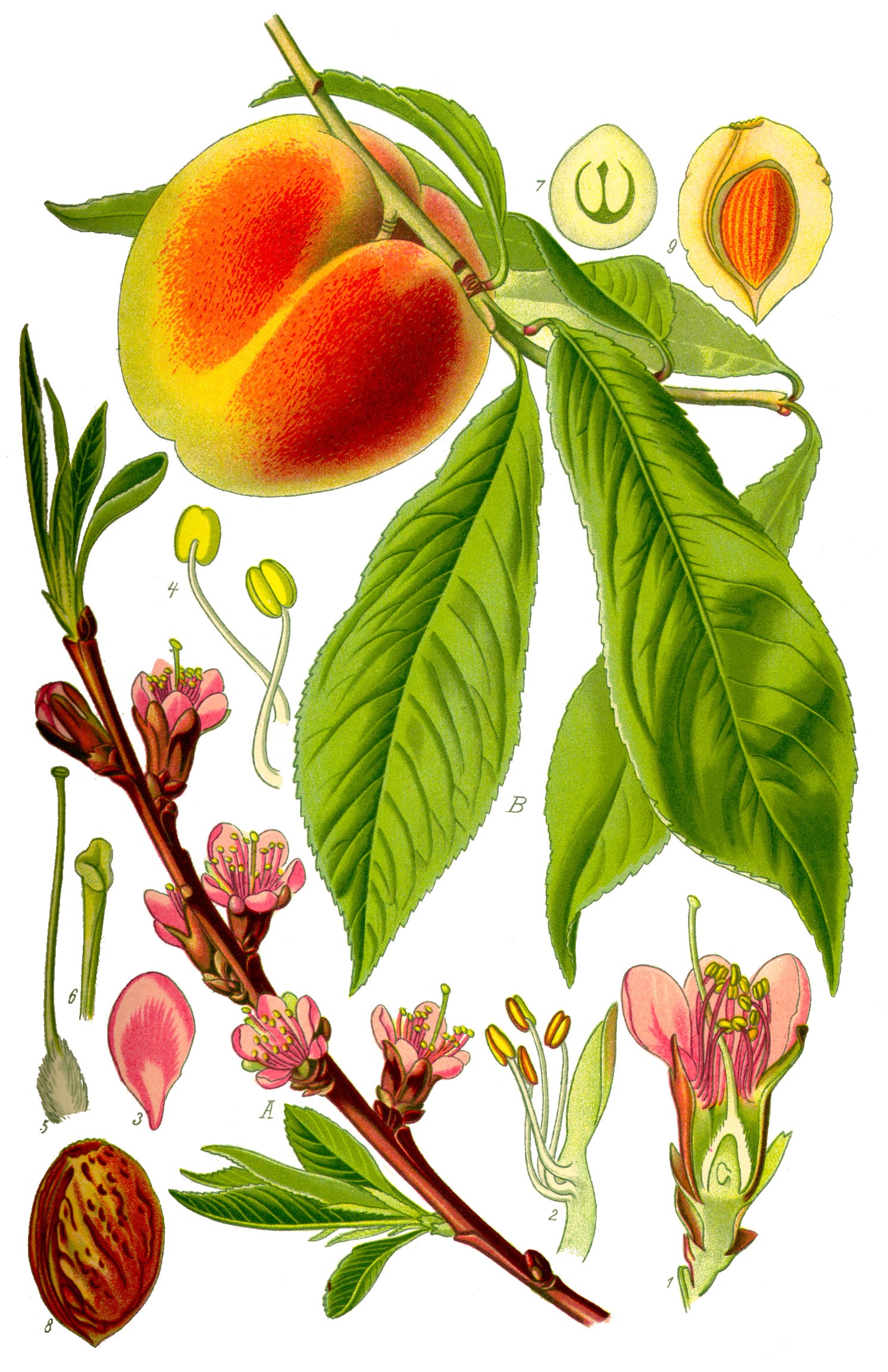 PeachPrunus persica
 Bai Zi RenPlatycladus orientalis
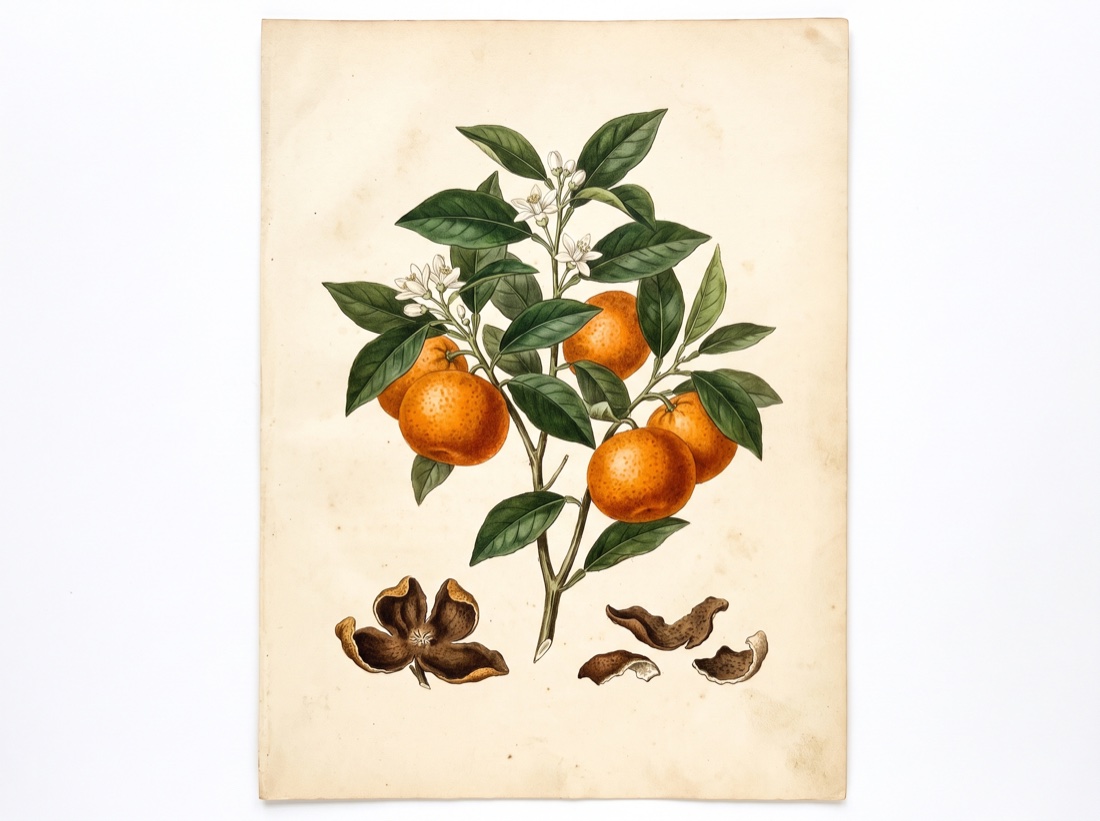 tangerineCitrus reticulata
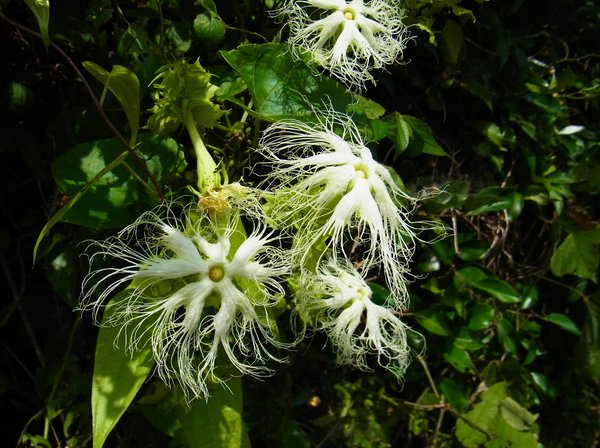 Gua LouTrichosanthes kirilowii
 MarijuanaCannabis sativa
Nearby on the shelf
 ChicoryCichorium intybus
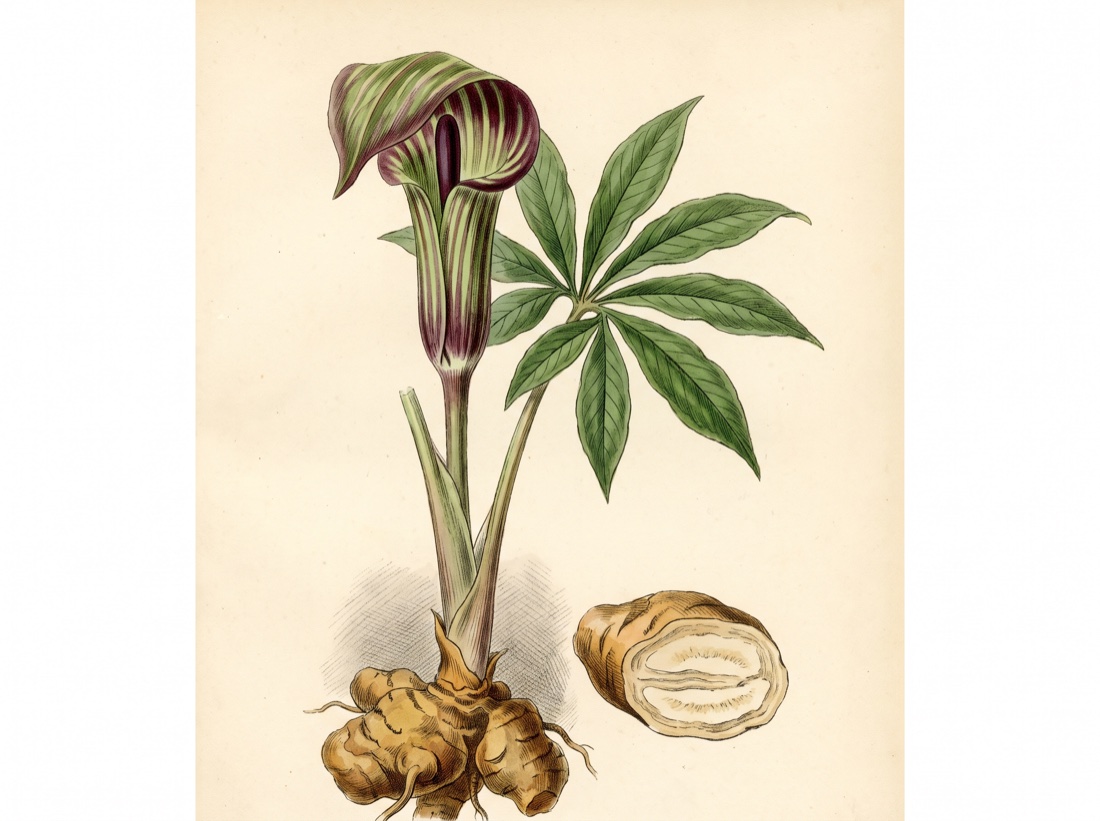 Chinese arisaemaArisaema erubescens
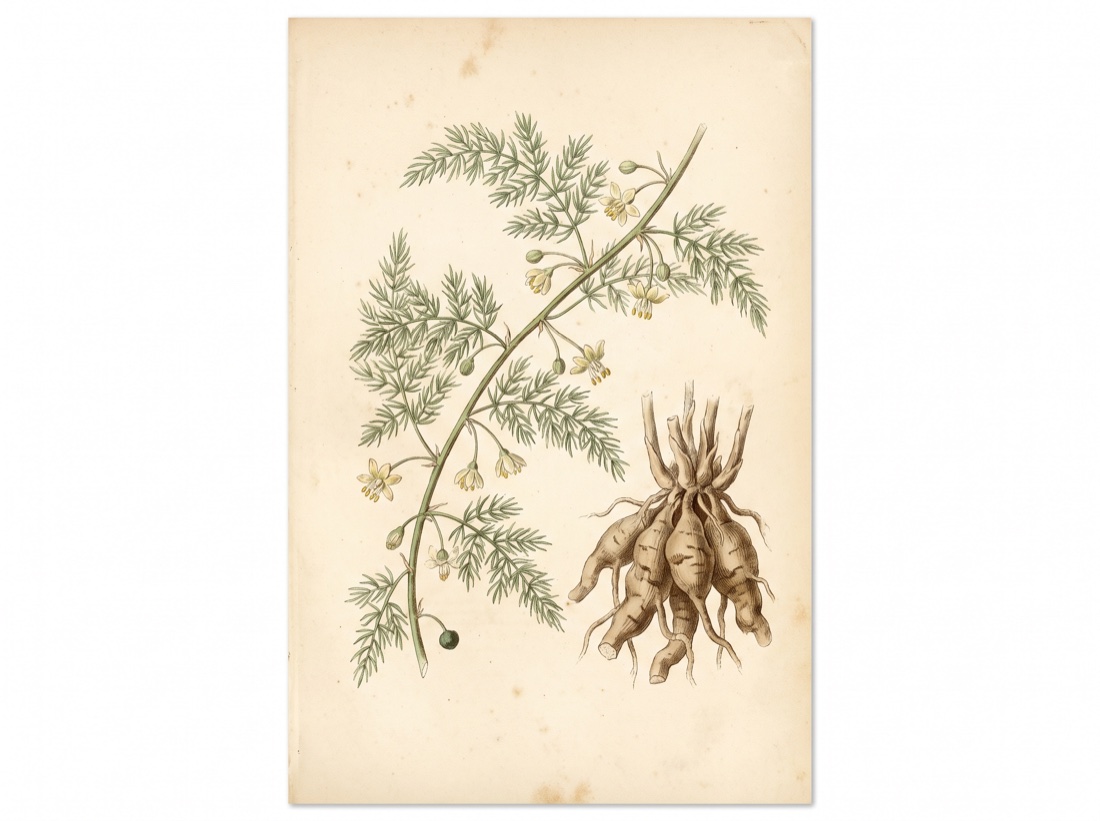 Chinese asparagusAsparagus cochinchinensis
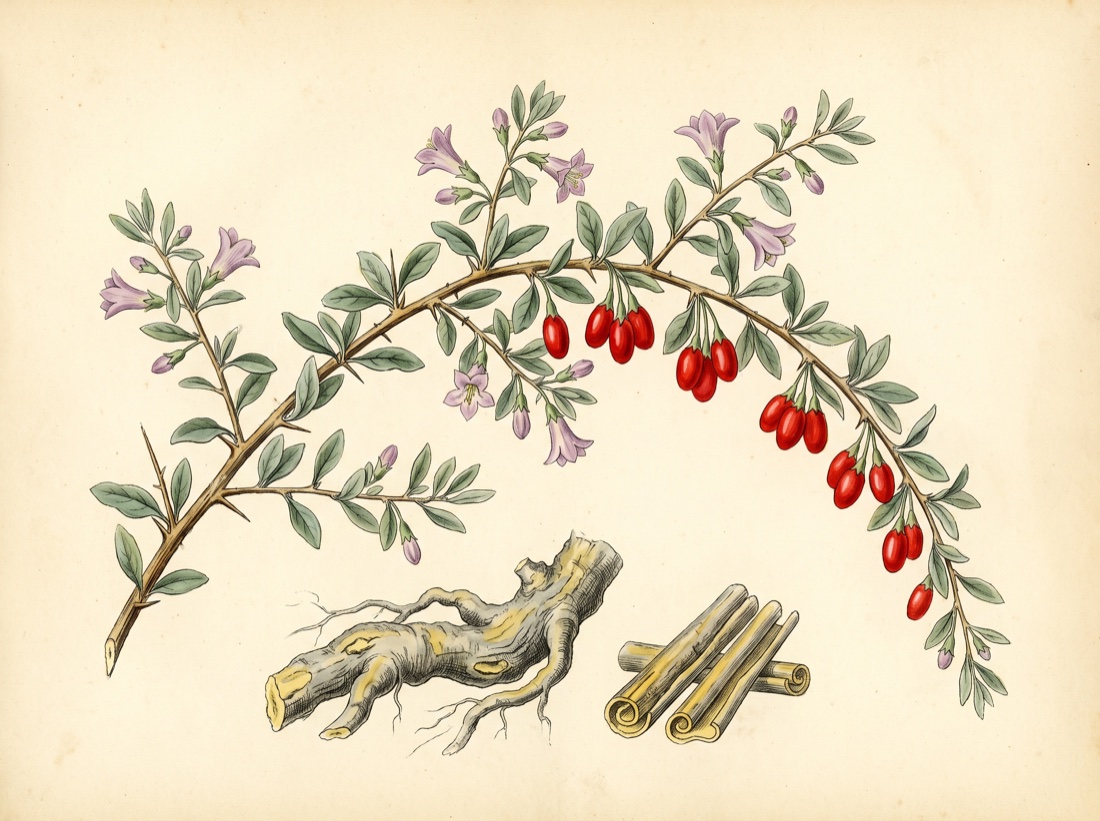 Chinese boxthornLycium chinense
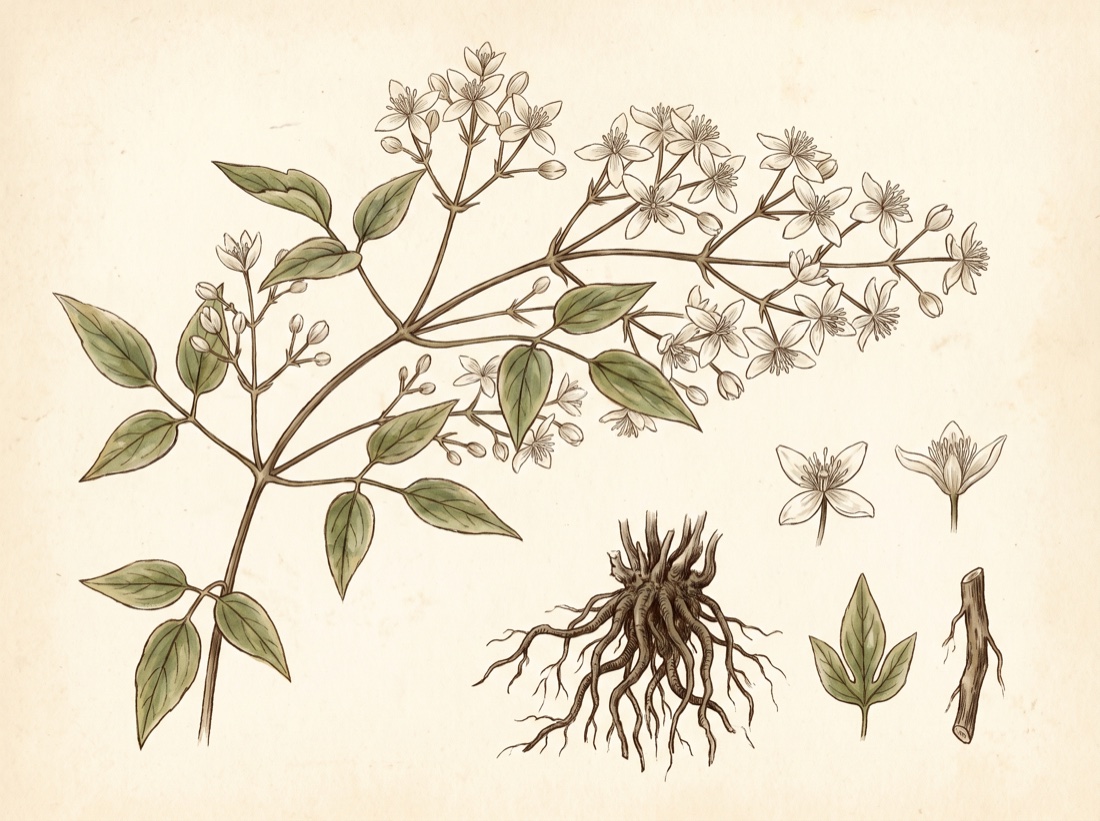 Chinese clematisClematis chinensis
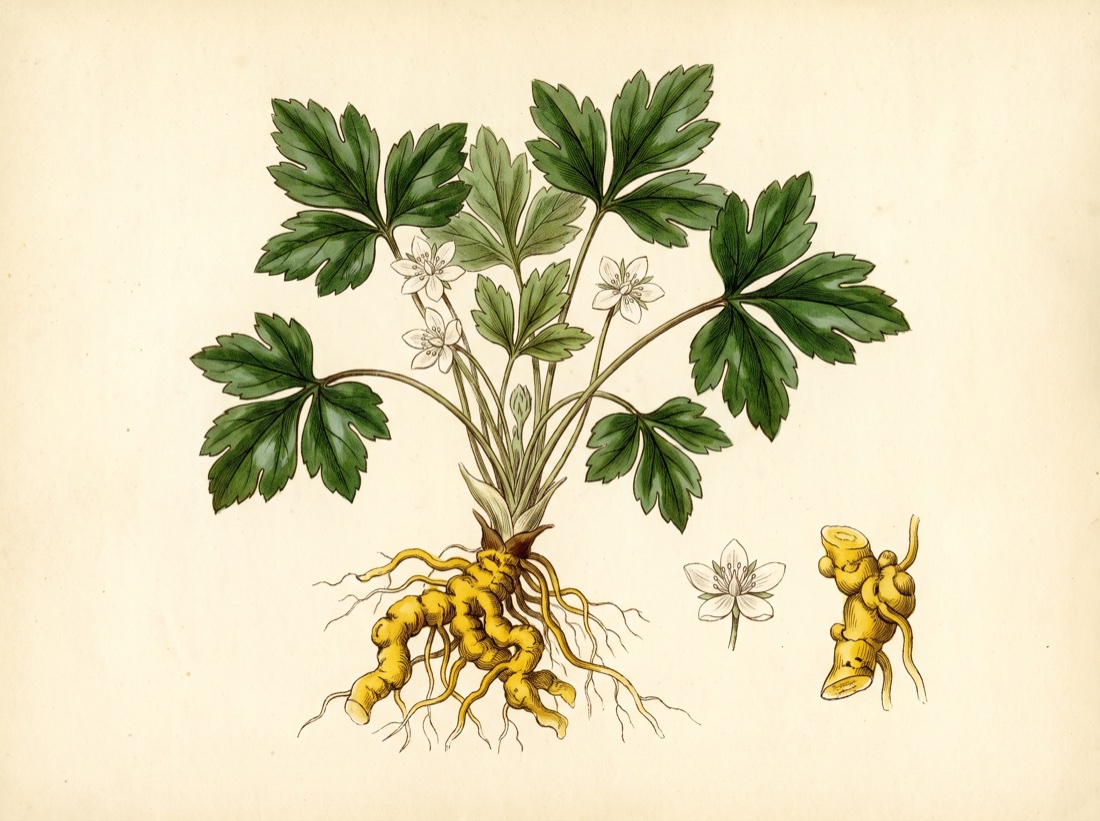 Chinese goldthreadCoptis chinensis
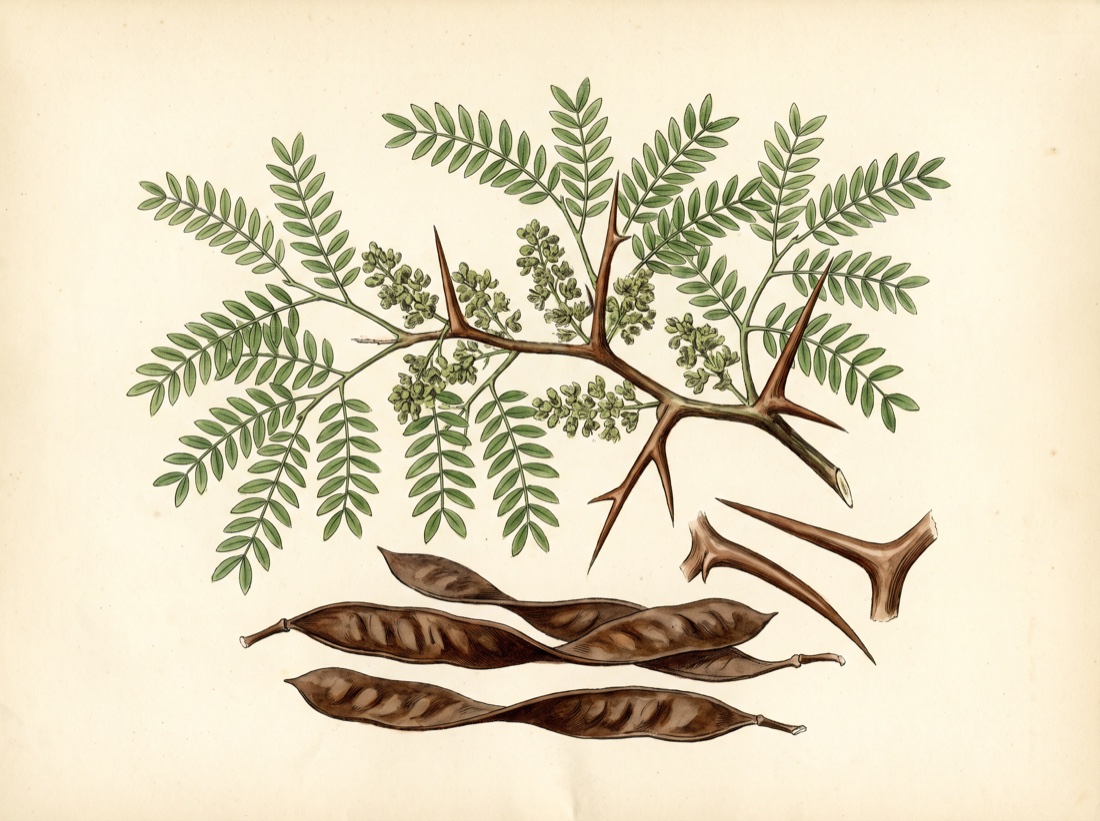 Chinese honey locustGleditsia sinensis
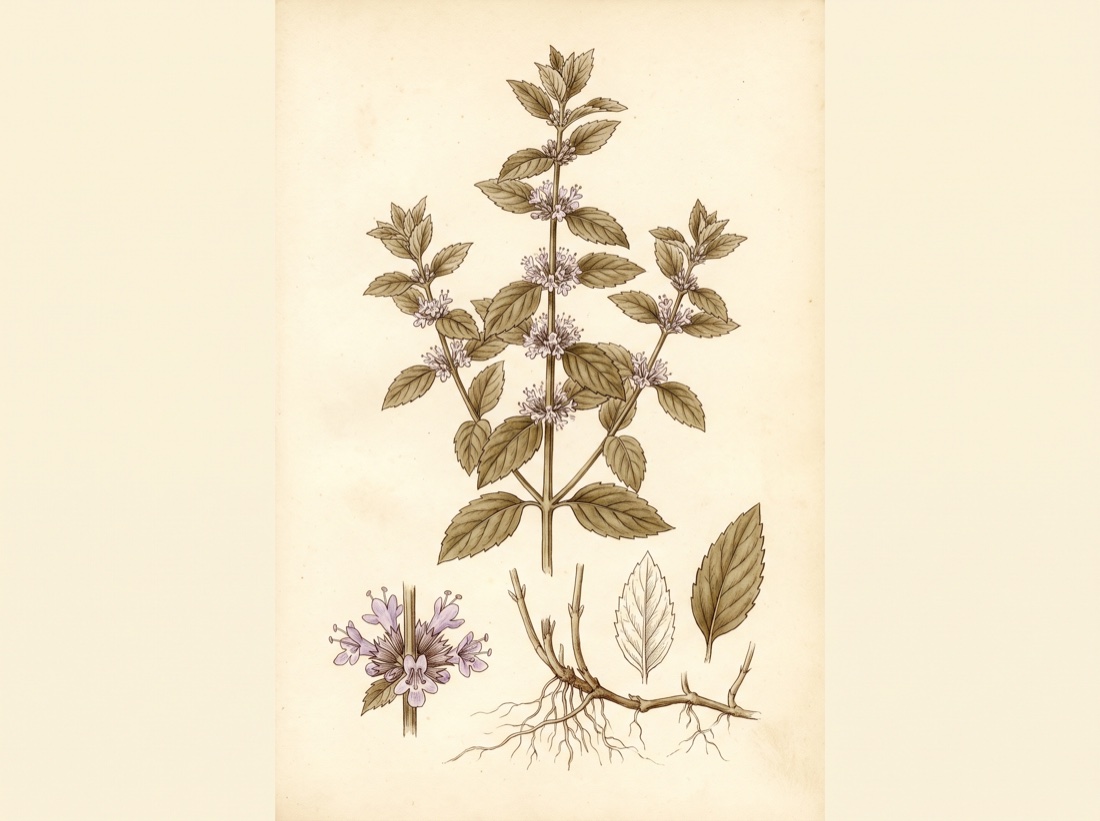 Chinese mintMentha canadensis
The whole plate is in the library. The compass, Compare, the Sky of eleven hundred plants and the formulary open with an email address and a password, free, with the formula builder and its safety engine. Herbert without limit, his formulating, clients, the handouts and the labels are the paid room.
Open the library, free