Chinese Herbalism
Chinese goldthread
Coptis chinensis
Also known as goldthread, coptis, huang lian, Chinese coptis, huáng lián.
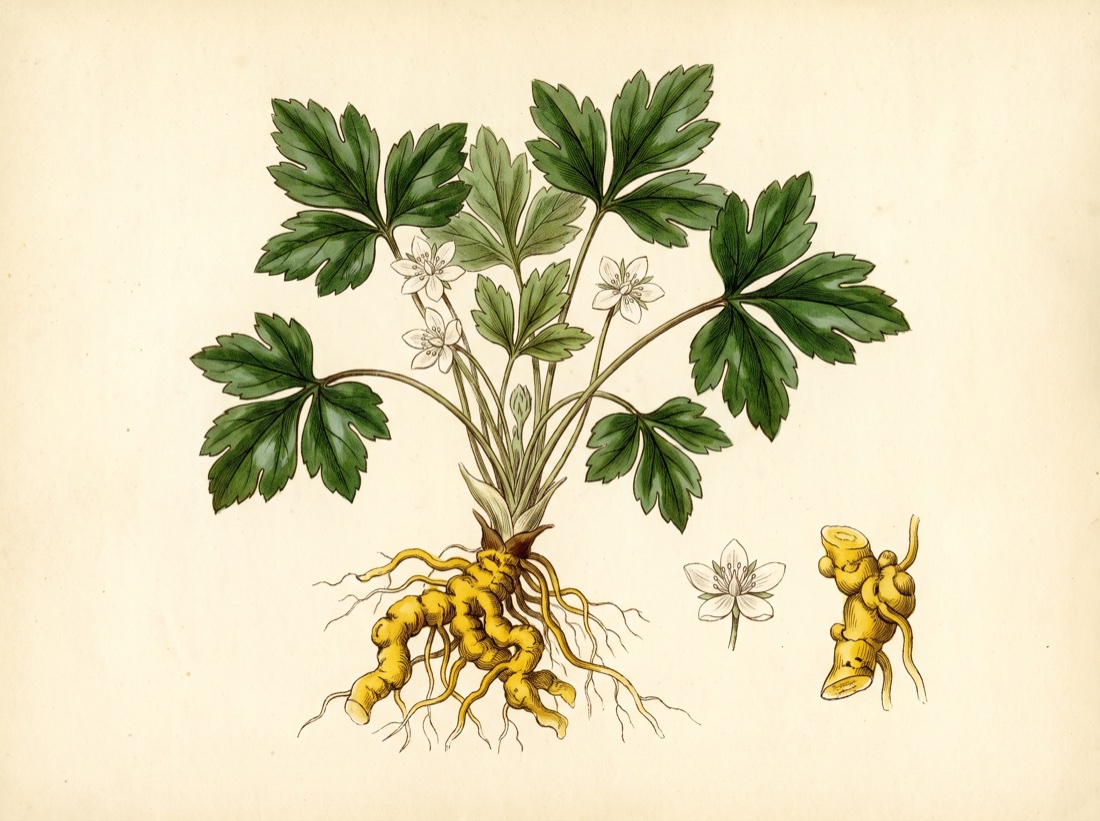
Huang lian is the knotted, bright yellow rhizome of Coptis chinensis, a small shade-loving perennial of the mountain forests of central China, now cultivated on a large scale in Sichuan, Hubei and Chongqing. Its intense bitterness and golden color come from berberine and related alkaloids, shared with goldenseal and barberry. It is the archetypal cold, bitter, heat-clearing herb of Chinese medicine, used in small doses for hot, damp, infected and inflamed conditions.

Ask Herbert about Chinese goldthread. Herbert is the master herbalist inside Bountiful Herbs: he answers from this plate and eleven hundred others, with dosing, pairing and cautions. Your first ten questions are free.
Ask HerbertActions
Indications what the tradition reached for it in
- Acute infectious diarrhea and dysentery with burning stool and tenesmus
- Damp-heat gastroenteritis with nausea and vomiting
- Helicobacter pylori gastritis and peptic ulcer with burning epigastric pain
- Acid reflux and bitter taste with irritability
- High fever with delirium or agitation
- Insomnia and palpitations from heart fire
- Mouth ulcers, swollen gums and toothache
- Red, painful eyes (internal and as a wash)
- Boils, abscesses and infected skin lesions (internal and topical)
- Type 2 diabetes and insulin resistance (berberine-rich extracts)
- Dyslipidemia (berberine-rich extracts)
- Small intestinal bacterial overgrowth and dysbiosis
- Eczema and weeping skin conditions (topical)
Specific indications
Foul, burning diarrhea with abdominal pain, a red tongue with a yellow greasy coat and a rapid pulse, where a small dose gives rapid relief
Epigastric burning with acid reflux, nausea and a restless, irritable mood, often with insomnia, in a robust patient with stomach fire
Recurrent mouth ulcers and bleeding gums with a bitter taste and constipation
Safety
Pregnancy: Not for use in pregnancy
Breastfeeding: Not for use while breastfeeding
The record lists 10 contraindications; open the plate in the library to read them in full.
In practice
Huang lian is unmatched for damp-heat in the gut. For acute diarrhea, dysentery or food poisoning with burning stool, combine it with huang qin, ge gen and mu xiang; for burning epigastric pain, reflux and nausea in a hot, irritable patient, pair it with wu zhu yu (Evodia) in the classic six-to-one ratio.
In Chinese medicine
Temperature: cold. Taste: bitter. Channels: Heart, Liver, Stomach, Large Intestine. Actions: Clears heat and dries dampness, especially damp-heat in the stomach and intestines; Drains fire from the heart and stomach; Resolves fire toxicity in sores, abscesses and eye inflammation; Stops vomiting from stomach heat and calms the heart to relieve irritability and insomnia.
Dosing as the sources wrote it
| Preparation | As written | Metric |
|---|---|---|
| Decoction | 2-5 g dried rhizome daily in decoction | 2000-5000 mg |
| Powder or capsule | 0.5-1 g powdered rhizome two to three times daily | 500-1000 mg |
| Tincture (1:5, 45%) | 0.5-2 mL three times daily | 0.5-2 mL |
| Topical wash | 5-10 g decocted in 250 mL water, cooled, applied to skin or eyes as a compress twice daily | 5000-10000 mg |
Doses are reproduced from the sources for practitioners and are not a recommendation for any person.
From the sources
Overview. Huang lian is the knotted, bright yellow rhizome of Coptis chinensis, a small shade-loving perennial of the mountain forests of central China, now cultivated on a large scale in Sichuan, Hubei and Chongqing. Its intense bitterness and golden color come from berberine and related alkaloids, shared with goldenseal and barberry. It is the archetypal cold, bitter, heat-clearing herb of Chinese medicine, used in small doses for hot, damp, infected and inflamed conditions.
Clinical Notes. Huang lian is unmatched for damp-heat in the gut. For acute diarrhea, dysentery or food poisoning with burning stool, combine it with huang qin, ge gen and mu xiang; for burning epigastric pain, reflux and nausea in a hot, irritable patient, pair it with wu zhu yu (Evodia) in the classic six-to-one ratio.
Chinese Medicine Profile. Temperature: cold. Taste: bitter. Channels: Heart, Liver, Stomach, Large Intestine. Actions: Clears heat and dries dampness, especially damp-heat in the stomach and intestines; Drains fire from the heart and stomach; Resolves fire toxicity in sores, abscesses and eye inflammation; Stops vomiting from stomach heat and calms the heart to relieve irritability and insomnia.
Conservation. Wild Coptis has been depleted in China and the related Coptis teeta is threatened; commercial huang lian is cultivated, so source cultivated material and avoid wild-harvested Coptis teeta.
In formulas
Chinese goldthread stands in 191 documented formulas in the library, among them dà giang huo tàng, dão chì chéng gì tāng, huáng lián tàng, gǎn jiãng huáng lián huáng qin rén shên tǎng, zhi zi qin gé tǎng, ging ying tāng.
Often paired with
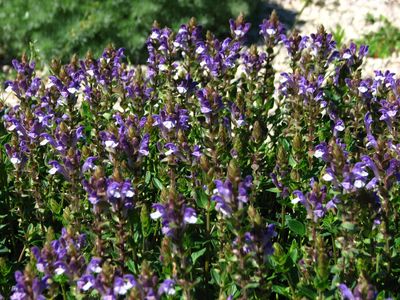 Chinese skullcapScutellaria baicalensis
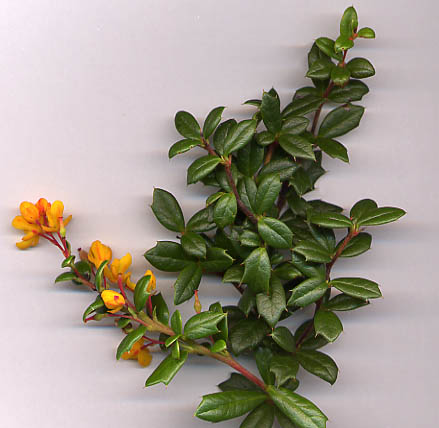 BarberryBerberis vulgaris
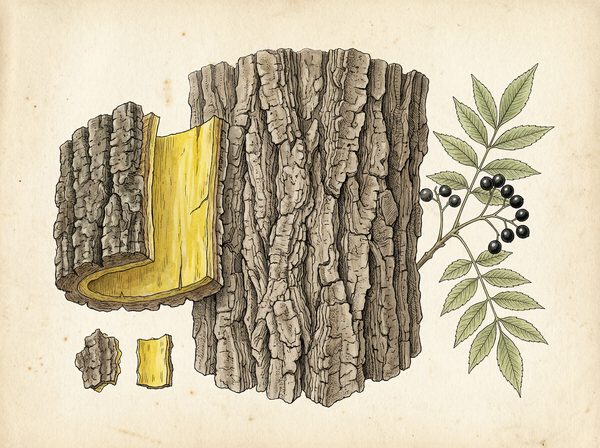 Huang BaiPhellodendron amurense
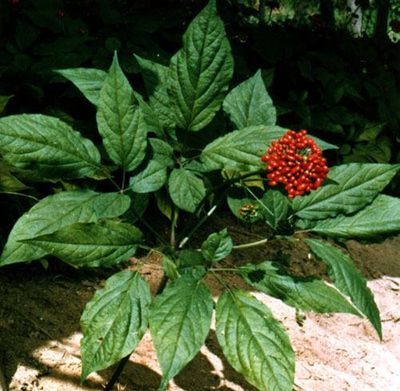 GinsengPanax ginseng
 Zhi ZiGardenia jasminoides
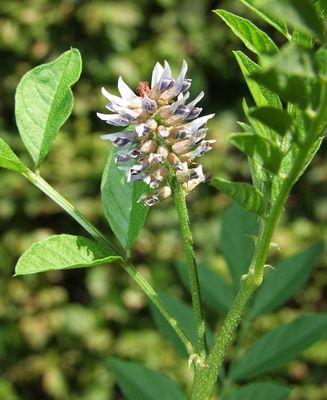 Licorice rootGlycyrrhiza glabra
Nearby on the shelf
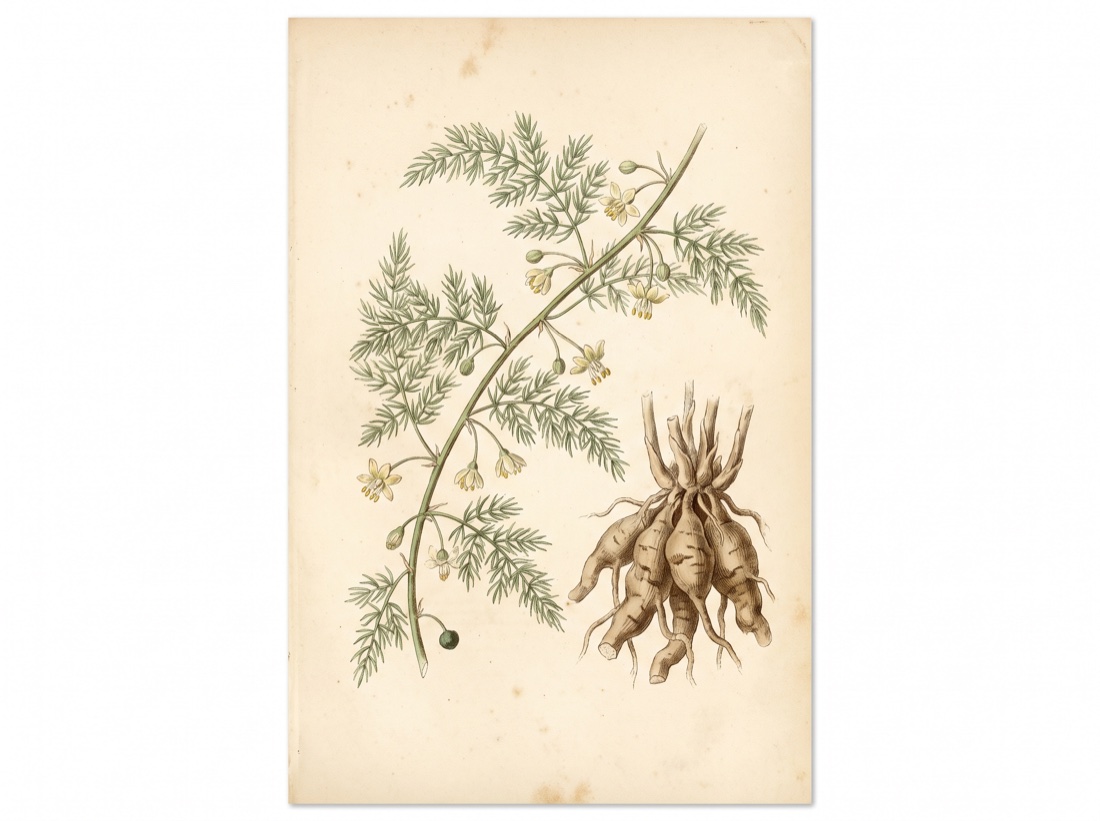 Chinese asparagusAsparagus cochinchinensis
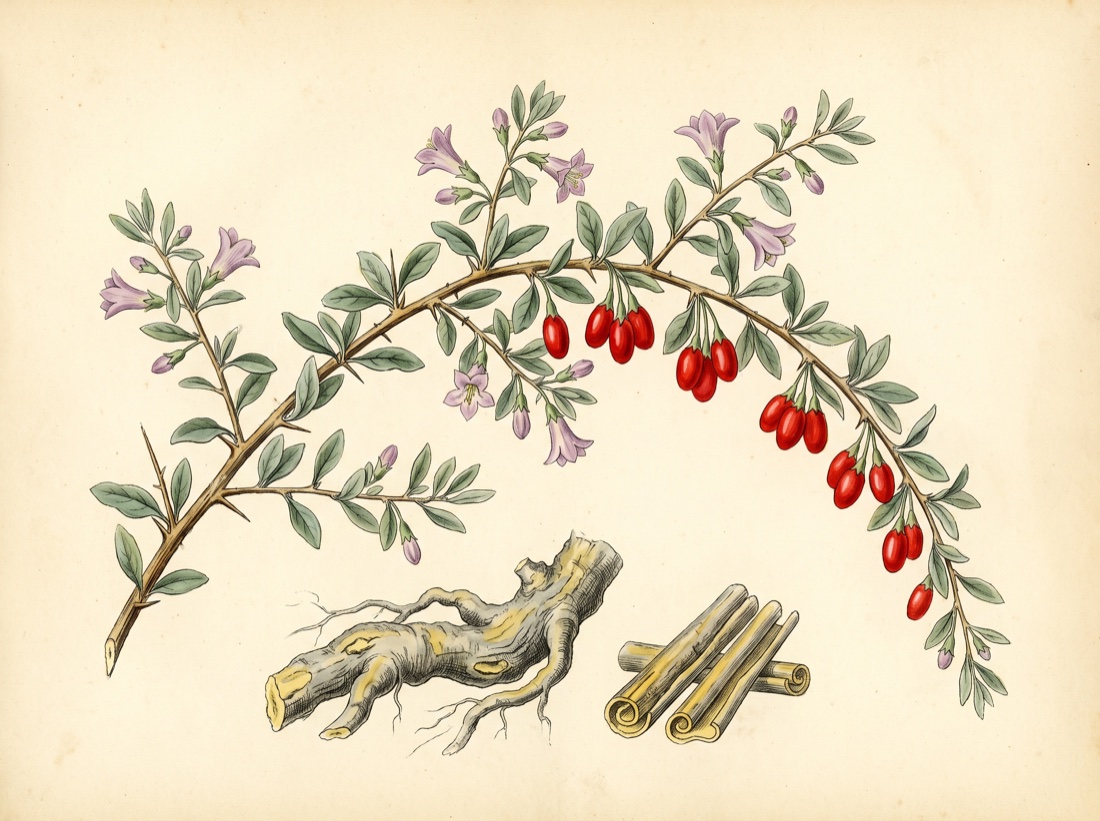 Chinese boxthornLycium chinense
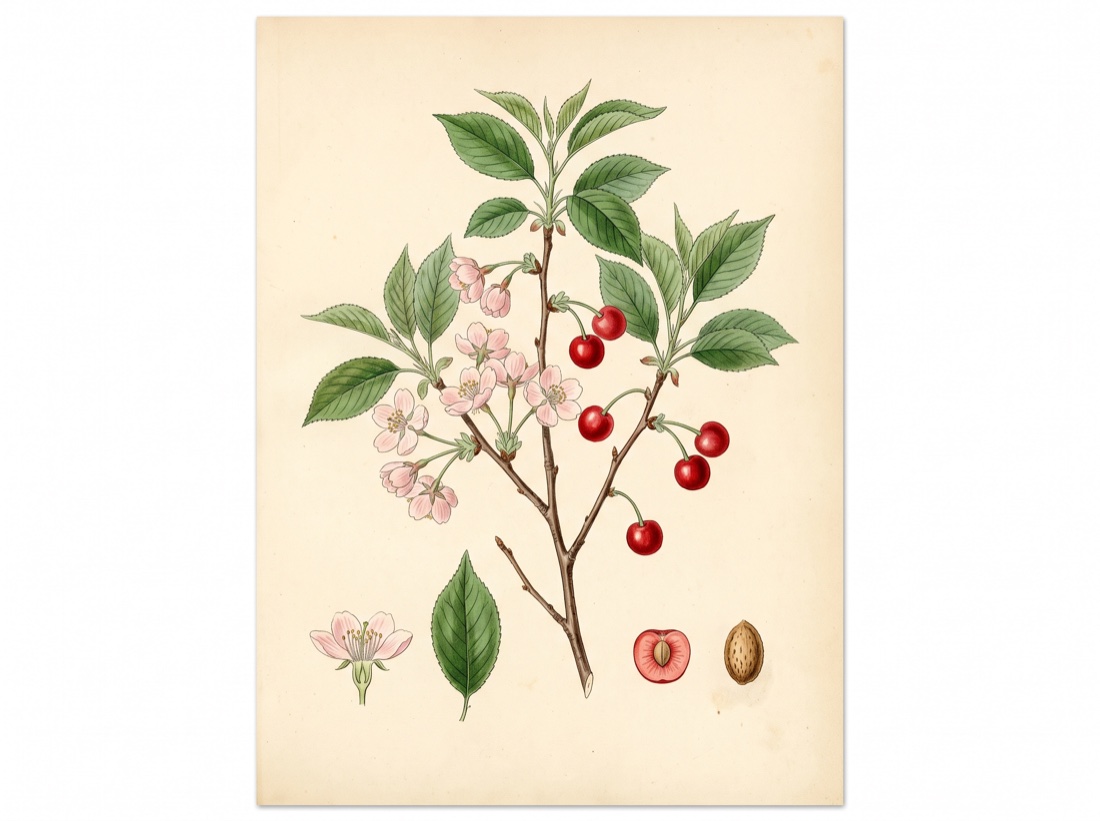 Chinese bush cherryPrunus japonica
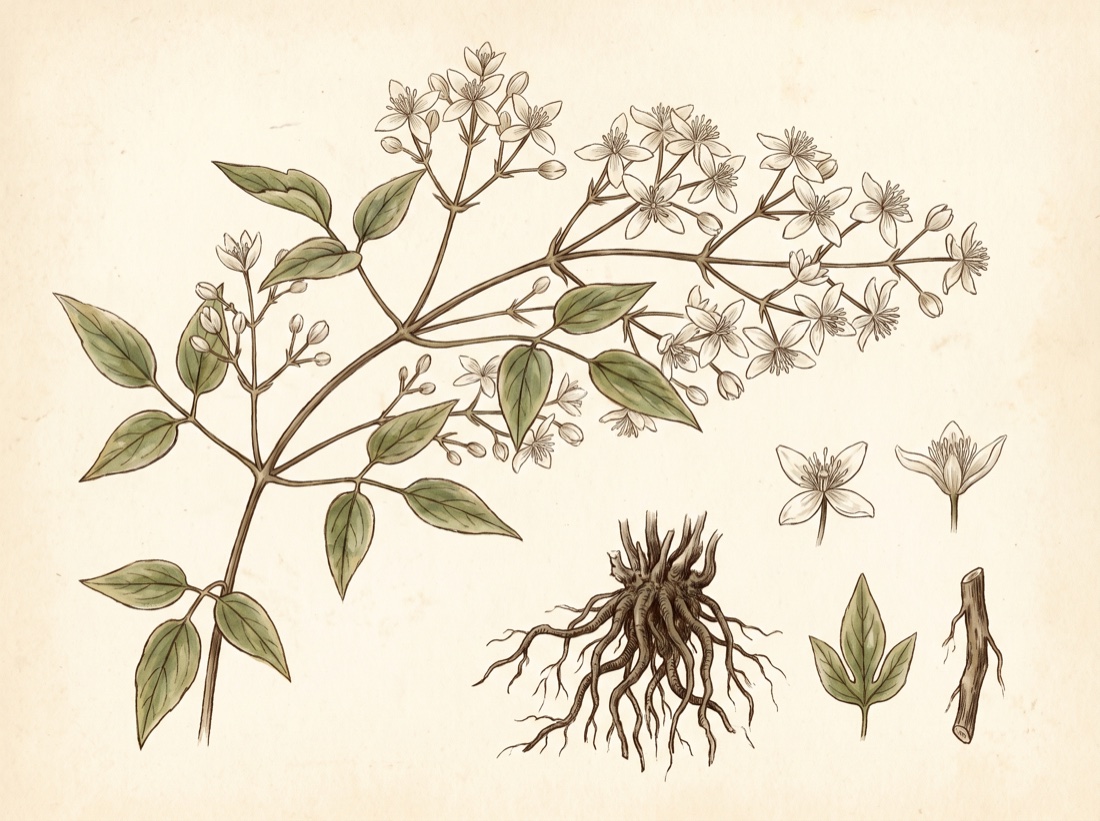 Chinese clematisClematis chinensis
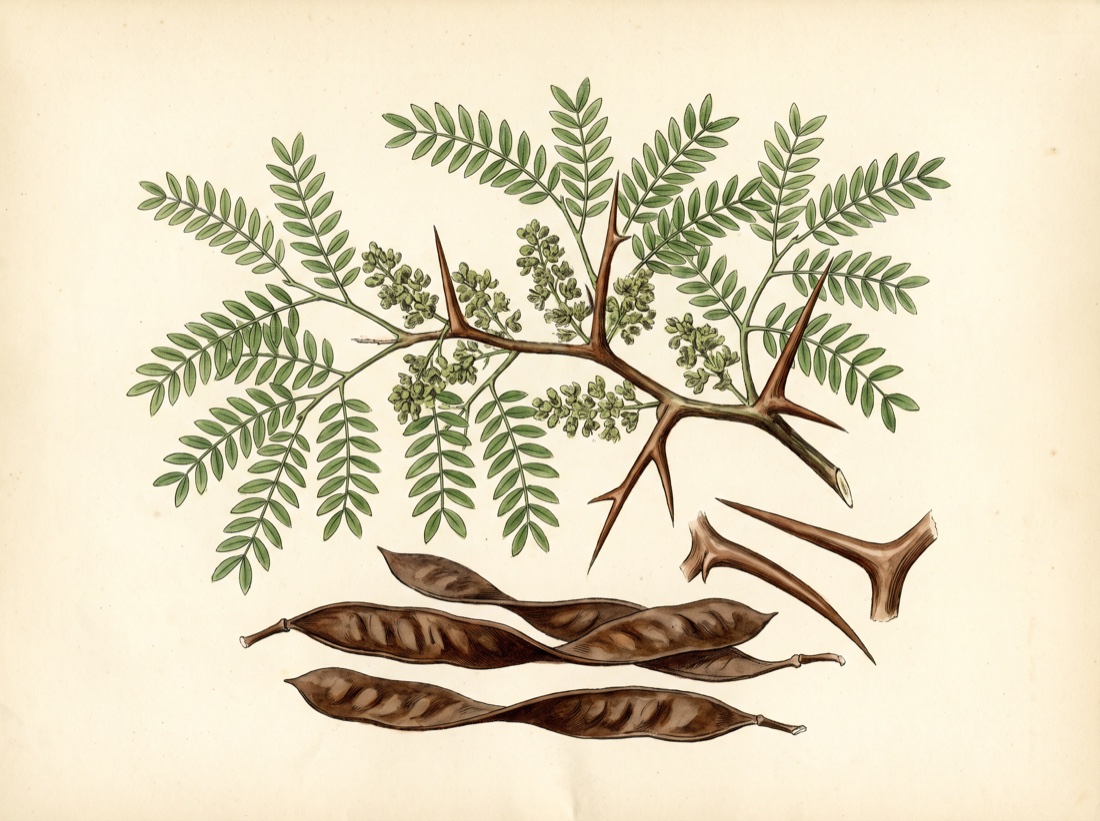 Chinese honey locustGleditsia sinensis
 Chinese mintMentha canadensis
 Chinese mistletoeTaxillus chinensis
 Chinese moslaMosla chinensis
The whole plate is in the library. The compass, Compare, the Sky of eleven hundred plants and the formulary open with an email address and a password, free, with the formula builder and its safety engine. Herbert without limit, his formulating, clients, the handouts and the labels are the paid room.
Open the library, free