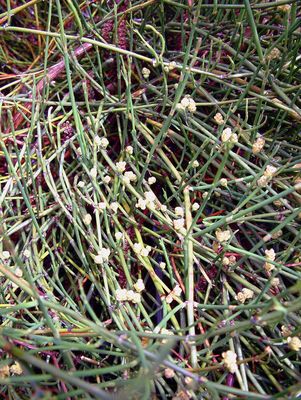
Western and Chinese herbalism
Ma huang
Ephedra sinica
Also known as Ephedra, Cao Ma Huang, cǎo má huáng, zhōng má huáng, mù zéi má huáng.
Typically contains 2.5-3% total alkaloids TCM=Releases wind cold external pathogens, releases damp conditions thru diaphoresis, stimulates qi and reduces stagnation in lung/urinary bladder channels, used to release exterior through diaphoresis for exterior-excess conditions and wind-cold conditions, ventilates lung and is commonly used to treat conditions characterized by chills, aversion to cold, fever, absence of perspiration, headache, body aches, nasal obstruction and a superficial, tight pulse, relieves wheezing, dyspnea & cough, helps regulate water circulation and relieves ed Discontinue use if rapid heartbeat, dizziness, severe headache, shortness of breath

Ask Herbert about Ma huang. Herbert is the master herbalist inside Bountiful Herbs: he answers from this plate and eleven hundred others, with dosing, pairing and cautions. Your first ten questions are free.
Ask HerbertActions
Indications what the tradition reached for it in
- Sinusitis
- Cough (wheezing)
- Rhinitis
- Bronchoconstriction
- Upper respiratory infection
- Congestion (respiratory)
- Allergies
- Weight management
- Hay fever
- Bronchitis
- Congestion (sinus)
- Asthma
- Bronchospasm
- Inflammation
- Infection
- Spasm
- Respiratory complaints
- Fatigue
- Lethargy
- Dyspnea
- Allergic reactions
- Bronchial asthma
- Hayfever
- Coughs
- Colds
- Fever
- Urticaria
- Enuresis
- Narcolepsy
- Myasthenia gravis
Safety
Recognised toxicity. This plant carries a toxicity flag in the record; it is for trained practitioners only.
Low dose botanical. Used in drop doses in the classical practice; not a plant to dose freely.
Pregnancy: Not safe. Not for use in pregnancy (our record's flag)
Pregnancy, our record's flag: Caution. Use with care in pregnancy (our record's flag)
Pregnancy, a modern clinical reference: There are no reliable data on the use of ephedra during pregnancy and lactation; The safety of ephedra during pregnancy and lactation has not been established and its use should be avoided
Pregnancy, published rating: Caution. No increase in harm from limited human use, but animal studies show fetal damage of uncertain relevance (Mills & Bone B3)
Breastfeeding: Not safe. Strongly discouraged while breastfeeding (Mills & Bone SD); Brinker notes: stimulant alkaloids pass into milk.
Breastfeeding, our record's flag: Caution. Use with care while breastfeeding (our record's flag)
Breastfeeding, our record's flag: Not safe. Not for use while breastfeeding (our record's flag)
Breastfeeding, a modern clinical reference: There are no reliable data on the use of ephedra during pregnancy and lactation
Breastfeeding, a modern clinical reference: The safety of ephedra during pregnancy and lactation has not been established and its use should be avoided
The record lists 16 contraindications; open the plate in the library to read them in full.
Dosing as the sources wrote it
| Preparation | As written | Metric |
|---|---|---|
| Decoction | 1-2 tsp/c TID | |
| Tincture (1:3-1:5) | 1-2 ml TID | 1-2 mL |
| Max dose | 300 mg total alkaloids/d for adult, don't start at this dose (only short term use at this dose for weight loss) | |
| Crude herb | 1.5-9 g/d | 1500-9000 mg |
| Herb 1.2-2.3 g cut herbs containing approximately 1.3% (13 mg/ g) total alkaloids | ||
| Extract Adults: 15 -30 mg alkaloids (maximum daily dose 300 mg), calculated as ephedrine |
Doses are reproduced from the sources for practitioners and are not a recommendation for any person.
From the sources
Clinical Notes. Typically contains 2.5-3% total alkaloids TCM=Releases wind cold external pathogens, releases damp conditions thru diaphoresis, stimulates qi and reduces stagnation in lung/urinary bladder channels, used to release exterior through diaphoresis for exterior-excess conditions and wind-cold conditions, ventilates lung and is commonly used to treat conditions characterized by chills, aversion to cold, fever, absence of perspiration, headache, body aches, nasal obstruction and a superficial, tight pulse, relieves wheezing, dyspnea & cough, helps regulate water circulation and relieves ed Discontinue use if rapid heartbeat, dizziness, severe headache, shortness of breath
indications. Ma huang is traditionally indicated for: Sinusitis, Cough (wheezing), Rhinitis, Bronchoconstriction, Upper respiratory infection, Congestion (respiratory), Allergies, Weight management, Hay fever, Bronchitis, Congestion (sinus), Asthma, Bronchospasm, Inflammation, Infection, and 6 further conditions.
dose-reference. Reference preparation/dosing for Ma huang: Decoction=1-2 tsp/c TID; Tincture (1:3-1:5)=1-2 ml TID; Max dose=300 mg total alkaloids/d for adult, don't start at this dose (only short term use at this dose for weight loss); Crude herb=1.5-9 g/d
safety-cautions. Ma huang - Contraindications: Heart disease, Hypertension, Insomnia, Anxiety, Prostatic enlargement, Benign prostatic hyperplasia, Glaucoma, Thyrotoxicosis, Renal failure, Diabetes | Side effects: Greater than or equal to 150 mg ephedrine alkaloids/day=some pts experience side effects, Insomnia, Irritability, Restlessness, Anxiety, Headache, Nausea, Vomiting | Safety flags: not considered safe in pregnancy; not considered safe during lactation; low-dose / narrow therapeutic window (use caution).
In formulas
Ma huang stands in 122 documented formulas in the library, among them huo rén công chi tāng, má huáng tâng, má huáng jia zhú tǎng, sǎn ǎo tāng, hua gài sǎn, má huáng xing rén yì yi gàn cǎo tàng.
Often paired with
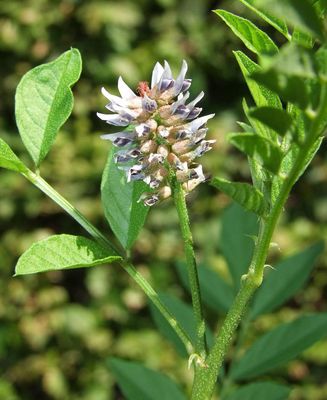 Licorice rootGlycyrrhiza glabra
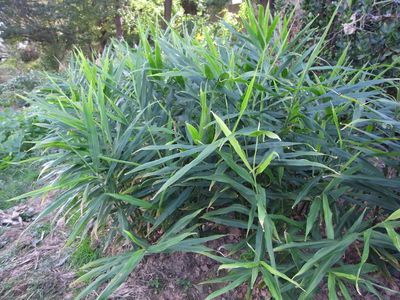 GingerZingiber officinale
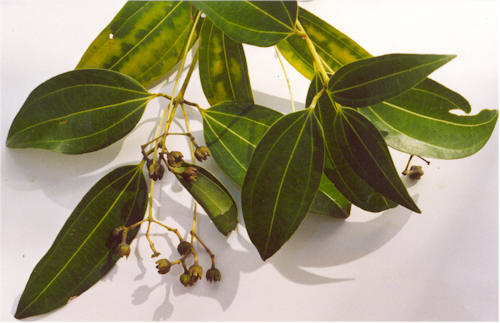 Chinese cinnamonCinnamomum cassia
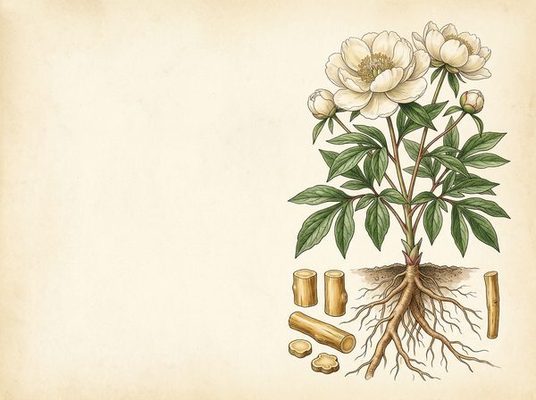 White PeonyPaeonia lactiflora
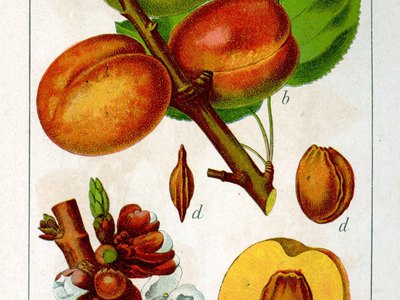 Armeniaca vulgarisArmeniaca vulgaris
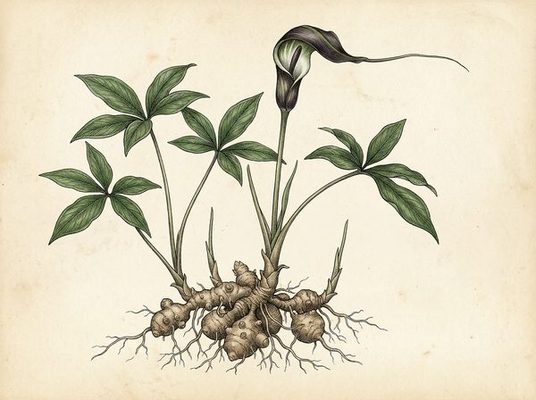 PinelliaPinellia ternata
Nearby on the shelf
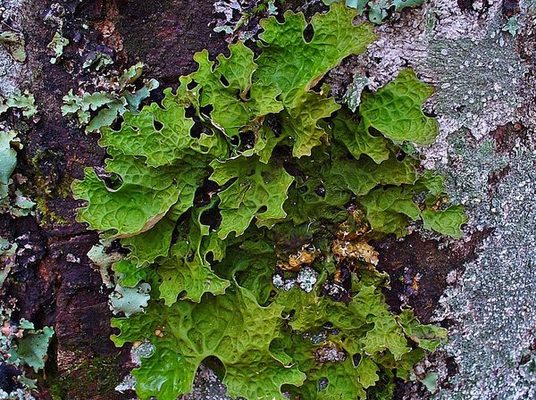 Lungwort LichenLobaria pulmonaria
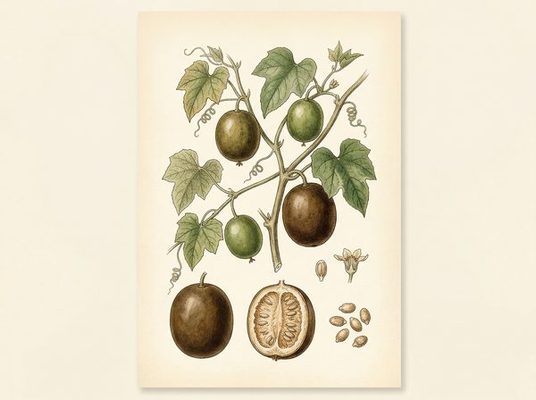 Luo Han GuoSiraitia grosvenorii
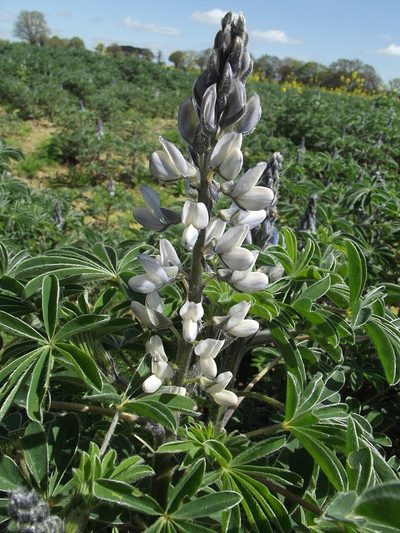 LupinLupinus albus
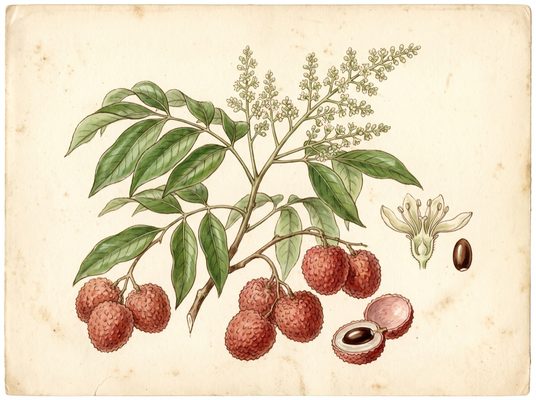 LycheeLitchi chinensis
 MacaLepidium meyenii
 Madagascar PeriwinkleCatharanthus roseus
 Magnolia BarkMagnolia officinalis
 MahuaMadhuca longifolia
The whole plate is in the library. The compass, Compare, the Sky of eleven hundred plants and the formulary open with an email address and a password, free, with the formula builder and its safety engine. Herbert in full, his formulating, clients, the handouts and the labels are the paid room.
Open the library, free