Western Herbalism
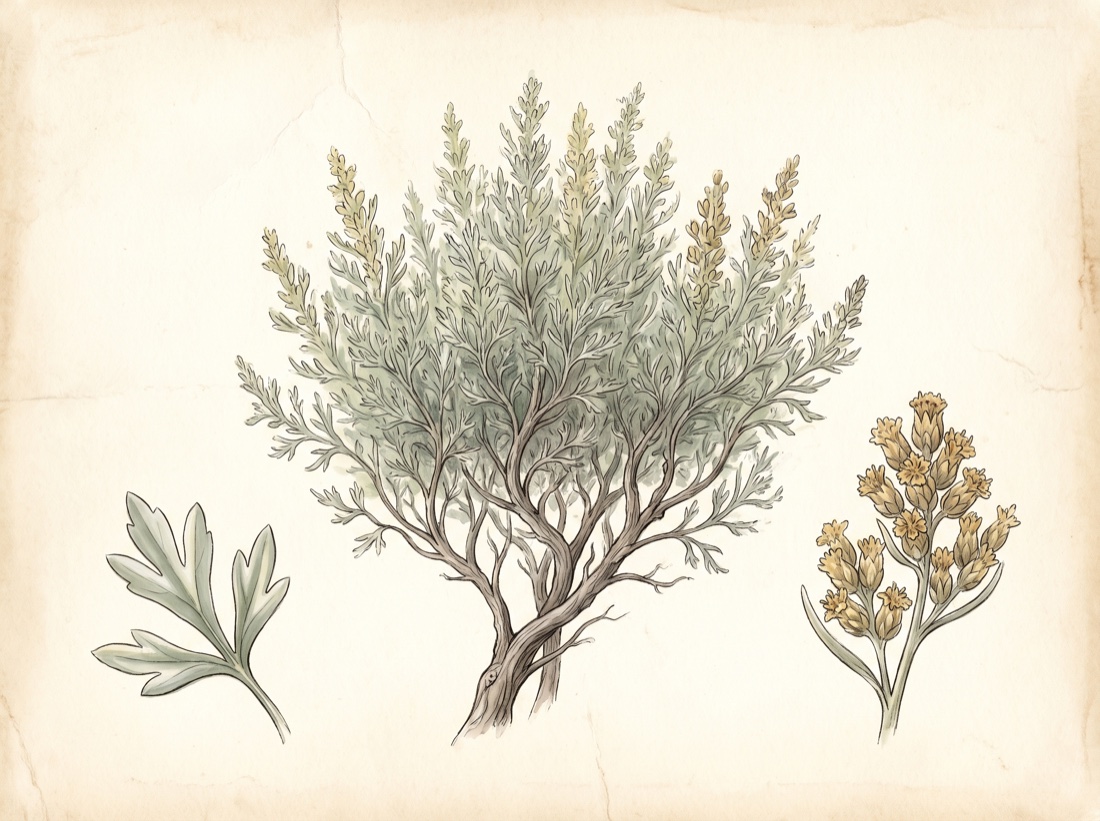
Big sagebrush
Artemisia tridentata
Also known as basin sagebrush, Great Basin sagebrush, bigleaf sagebrush, sagebrush.
Big sagebrush is the silver-gray shrub that defines the Great Basin and much of the intermountain West of North America, growing in vast stands from British Columbia to New Mexico. The pungent, camphor-scented leaves are the part used. It is one of the most important medicines of the Indigenous peoples of the western United States, used as a tea, a steam, a wash, a poultice and a ceremonial smoke, and it entered Hispanic New Mexican and later Western herbal practice from that root.

Ask Herbert about Big sagebrush. Herbert is the master herbalist inside Bountiful Herbs: he answers from this plate and eleven hundred others, with dosing, pairing and cautions. Your first ten questions are free.
Ask HerbertActions
Indications what the tradition reached for it in
- Early colds and influenza with chills
- Sinus congestion (steam inhalation)
- Sore throat (gargle)
- Bronchitis with thick sputum
- Sluggish digestion and poor appetite
- Intestinal worms
- Athlete's foot and fungal skin infections (topical)
- Wounds, scrapes and insect bites (topical wash)
- Sore muscles and arthritic joints (poultice or bath)
- Delayed menses
Specific indications
The first chilled, achy day of a cold when a hot bitter aromatic tea and a sweat are wanted
Damp, itching fungal infection of the feet or skin folds that responds to a drying aromatic wash
Cold, weak digestion with bloating and no appetite in a person who tolerates strong bitters
Safety
Pregnancy: Avoid in pregnancy: emmenagogue with a thujone-containing oil; not rated by Mills and Bone, Brinker or AHPA.
The record lists 8 contraindications; open the plate in the library to read them in full.
In practice
Sagebrush is a strong, hot, drying aromatic bitter and is best used briefly and in small amounts. Internally it shines at the onset of a cold: a weak tea of a few leaves, hot, drives a sweat and opens the chest, and the same tea gargled eases a raw throat.
Dosing as the sources wrote it
| Preparation | As written | Metric |
|---|---|---|
| Infusion | 1-2 g dried leaf per cup up to twice daily for up to 10 days | 1000-2000 mg |
| Tincture (1:5, 60%) | 0.5-2 mL up to three times daily | 0.5-2 mL |
| Topical wash or foot soak | 10-20 g dried leaf infused in 1 L water | 10000-20000 mg |
| Steam inhalation | 5-10 g dried leaf in a bowl of hot water | 5000-10000 mg |
Doses are reproduced from the sources for practitioners and are not a recommendation for any person.
From the sources
Overview. Big sagebrush is the silver-gray shrub that defines the Great Basin and much of the intermountain West of North America, growing in vast stands from British Columbia to New Mexico. The pungent, camphor-scented leaves are the part used. It is one of the most important medicines of the Indigenous peoples of the western United States, used as a tea, a steam, a wash, a poultice and a ceremonial smoke, and it entered Hispanic New Mexican and later Western herbal practice from that root.
Clinical Notes. Sagebrush is a strong, hot, drying aromatic bitter and is best used briefly and in small amounts. Internally it shines at the onset of a cold: a weak tea of a few leaves, hot, drives a sweat and opens the chest, and the same tea gargled eases a raw throat.
Nearby on the shelf
 Beth RootTrillium erectum
 BharangiClerodendrum serratum
 Bhumi amlaPhyllanthus amarus
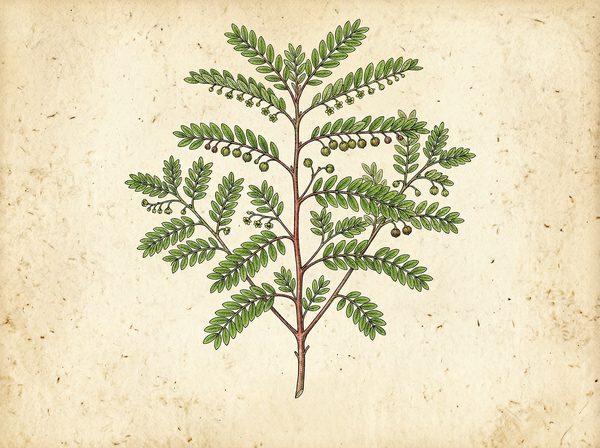 BhumyamalakiPhyllanthus niruri
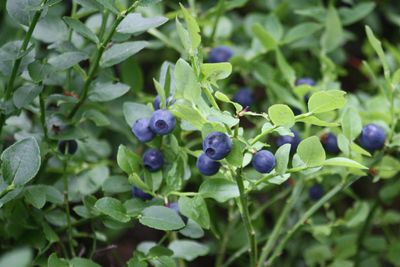 BilberryVaccinium myrtillus
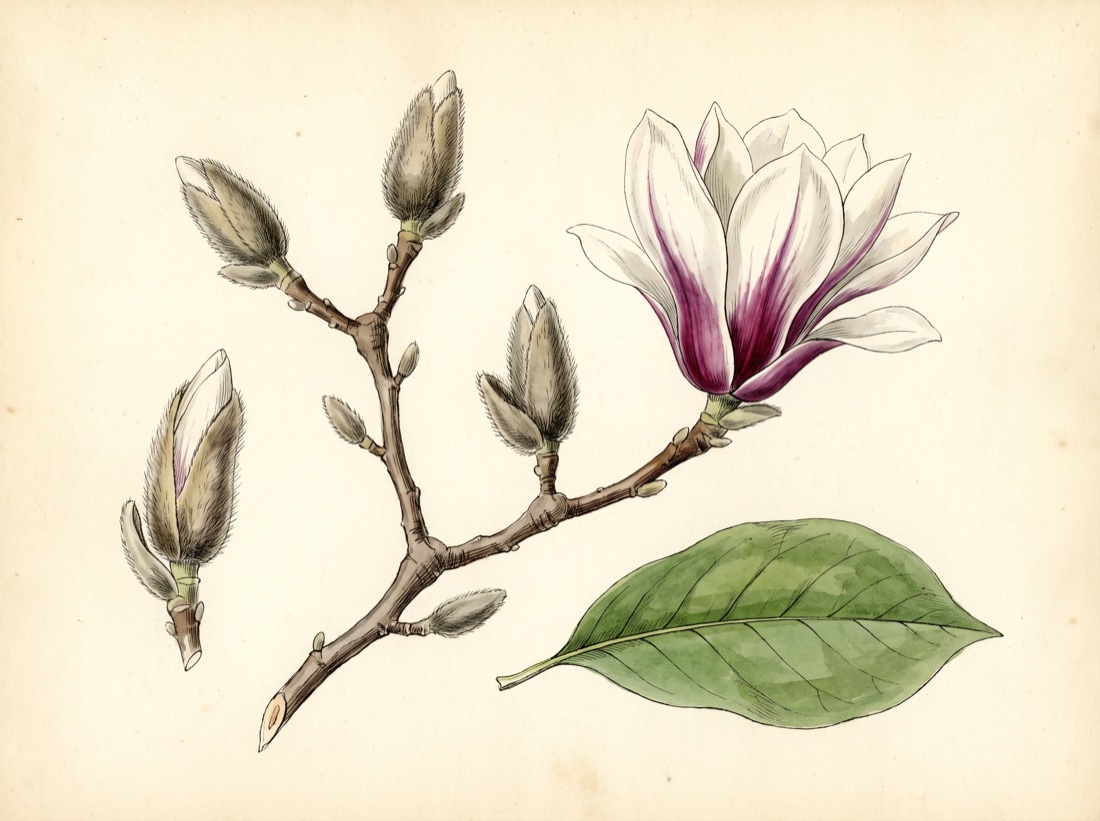 Biond's magnoliaMagnolia biondii
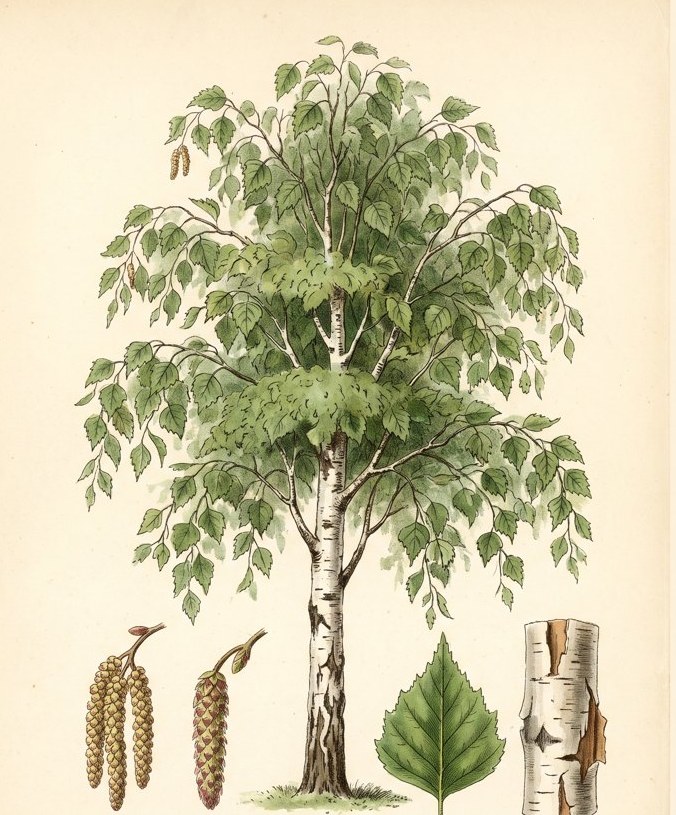 BirchBetula pendula
 BistortPersicaria bistorta
The whole plate is in the library. The compass, Compare, the Sky of eleven hundred plants and the formulary open with an email address and a password, free, with the formula builder and its safety engine. Herbert without limit, his formulating, clients, the handouts and the labels are the paid room.
Open the library, free