Western and Ayurvedic herbalism
Bhumyamalaki
Phyllanthus niruri
Also known as stonebreaker, gale of the wind, seed under leaf, chanca piedra, Bhui Amla, Bhumyamalaki, Bhudhatri, Tamalaki.
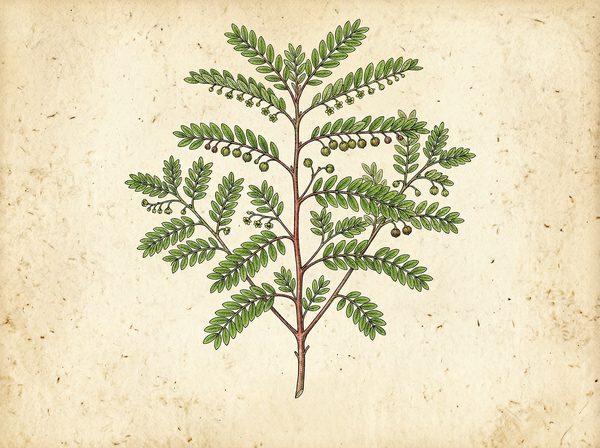
Phyllanthus niruri is a small annual weed of moist tropical ground, with tiny fruits hanging in a row beneath each leaf, found across India in fields, gardens and along paths during and after the monsoon, and across the tropics of both hemispheres. Ayurveda gathers the whole plant as Bhumyamalaki, the amla of the ground, and uses it above all for jaundice and liver disease, for urinary stones and for pitta fevers. In India the plant sold under this name is very often the closely related Phyllanthus amarus or Phyllanthus fraternus, and the classical drug is best understood as this group of small Phyllanthus species used interchangeably.

Ask Herbert about Bhumyamalaki. Herbert is the master herbalist inside Bountiful Herbs: he answers from this plate and eleven hundred others, with dosing, pairing and cautions. Your first ten questions are free.
Ask HerbertActions
Indications what the tradition reached for it in
- Chronic hepatitis B as an adjunct to antiviral therapy
- Acute viral hepatitis and jaundice in convalescence
- Fatty liver and raised liver enzymes
- Calcium oxalate kidney stones, prevention and clearance of fragments
- Renal colic and ureteric spasm with small stones
- Recurrent urinary tract infection with burning
- Type 2 diabetes with hepatic congestion (adjunct)
- Fevers of pitta type with thirst and bitter taste
- Itchy skin conditions linked to liver heat
- Dyspepsia with bilious symptoms
- Hyperuricemia
- Liver disease
- Urinary calculi
- Flu
- Hyperlipidemia
- Bronchitis
- Asthma
- Vaginitis
- Dyspepsia
- Diabetes
- Urinary tract infection
- Nausea
- Cough
- Hyperglycemia
- Bladder stones
- Abdominal pain
- Jaundice
- Hepatotoxicity
- Alcoholic hepatitis
- Kidney stone
Specific indications
A patient with recurrent calcium oxalate stones, or with residual fragments after lithotripsy, who wants a daily preventive tea
Raised transaminases and a heavy, hot liver in a person who eats and drinks too richly, with a yellow coated tongue
A chronic hepatitis B carrier on antiviral treatment who is looking for supportive herbal care
Burning urination and low grade renal ache in a pitta constitution, with thirst and irritability
Safety
Pregnancy: Avoid in pregnancy as a precaution: no published safety class is known to us, and animal studies of related Phyllanthus species suggest antifertility and uterine effects, although the plant has some traditional use in Indian folk medicine.
Breastfeeding: Lactation (source flag notSafeInLactation)
The record lists 6 contraindications; open the plate in the library to read them in full.
In practice
Bhumyamalaki is a cooling, bitter, liver and kidney herb for the pitta patient: jaundice, hepatitis, bilious dyspepsia, burning urine, gravel and fever with thirst. The Ayurvedic physician gives the fresh plant paste or juice on an empty stomach for jaundice, often with buttermilk or with Katuki and Guduchi, and combines it with Punarnava and Gokshura for urinary calculi and with Chandana and Ushira for burning urination.
In Ayurveda
Rasa: tikta (bitter), kashaya (astringent), madhura (sweet). Virya: sheeta (cooling). Vipaka: madhura (sweet). Guna: laghu (light), ruksha (dry). Dosha: pacifies pitta and kapha; neutral to mildly aggravating for vata in excess. Karma: pittahara (pacifies pitta); yakrituttejaka (stimulates and protects the liver); kamalahara (relieves jaundice); mutrala (diuretic); ashmarighna (breaks urinary stones); kasahara (relieves cough); shvasahara (relieves dyspnea); kushthaghna (cures skin disease); jvaraghna (relieves fever); raktapittahara (checks bleeding disorders); trishnanigrahana (relieves thirst). Classical indications: kamala (jaundice); yakritvikara (liver disorders); prameha (urinary disorders including diabetes); ashmari (urinary calculi); mutrakrichchhra (painful urination); jvara (fever); kasa (cough); shvasa (dyspnea); kushtha (skin disease); raktapitta (bleeding disorders); pandu (anemia); trishna (thirst). The whole herb, pulled up while in fruit, is used fresh as swarasa and kalka and dried as churna and kwatha; it is a leading herb in the liver protective decoctions and is also taken as a fresh plant paste with buttermilk for jaundice. Classical formulations: Bhumyamalaki churna, Bhumyamalakyadi kwatha, Nimbadi kwatha, Chandanadi kwatha, Vasaguduchyadi kwatha, Phalatrikadi kwatha. Described in: Charaka Samhita, Sushruta Samhita, Bhavaprakasha Nighantu, Dhanvantari Nighantu, Raja Nighantu, Kaiyadeva Nighantu, Ayurvedic Pharmacopoeia of India.
Dosing as the sources wrote it
| Preparation | As written | Metric |
|---|---|---|
| Churna | 3-6 g powdered whole plant twice daily with water or buttermilk | 3000-6000 mg |
| Kwatha | 50-100 mL decoction twice daily | 50-100 mL |
| Swarasa | 10-20 mL fresh plant juice daily on an empty stomach | 10-20 mL |
| Infusion | 5-10 g dried herb infused daily and drunk through the day | 5000-10000 mg |
| Standardized extract | 500-2000 mg extract daily in divided doses | 500-2000 mg |
| Tincture | Tincture 4-12 mL daily | 4-12 mL |
Doses are reproduced from the sources for practitioners and are not a recommendation for any person.
From the sources
Overview. Phyllanthus niruri is a small annual weed of moist tropical ground, with tiny fruits hanging in a row beneath each leaf, found across India in fields, gardens and along paths during and after the monsoon, and across the tropics of both hemispheres. Ayurveda gathers the whole plant as Bhumyamalaki, the amla of the ground, and uses it above all for jaundice and liver disease, for urinary stones and for pitta fevers. In India the plant sold under this name is very often the closely related Phyllanthus amarus or Phyllanthus fraternus, and the classical drug is best understood as this group of small Phyllanthus species used interchangeably.
Clinical Notes. Bhumyamalaki is a cooling, bitter, liver and kidney herb for the pitta patient: jaundice, hepatitis, bilious dyspepsia, burning urine, gravel and fever with thirst. The Ayurvedic physician gives the fresh plant paste or juice on an empty stomach for jaundice, often with buttermilk or with Katuki and Guduchi, and combines it with Punarnava and Gokshura for urinary calculi and with Chandana and Ushira for burning urination.
primary-actions. Stonebreaker acts primarily as: Antilithic, Hepatoprotective, Diuretic, Antioxidant. Secondary actions include Antispasmodic, Anti-inflammatory, Antiviral, Analgesic.
indications. Stonebreaker is traditionally indicated for: Hyperuricemia, Liver disease, Urinary calculi, Flu, Hyperlipidemia, Bronchitis, Asthma, Vaginitis, Dyspepsia, Diabetes, Urinary tract infection, Nausea, Cough, Hyperglycemia, Bladder stones, and 22 further conditions.
Nearby on the shelf
 Betel leafPiper betle
 Beth RootTrillium erectum
 BharangiClerodendrum serratum
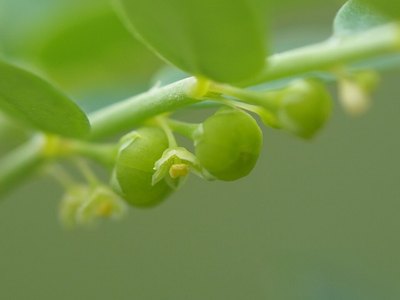 Bhumi amlaPhyllanthus amarus
 Big sagebrushArtemisia tridentata
 BilberryVaccinium myrtillus
 Biond's magnoliaMagnolia biondii
 BirchBetula pendula
The whole plate is in the library. The compass, Compare, the Sky of eleven hundred plants and the formulary open with an email address and a password, free, with the formula builder and its safety engine. Herbert without limit, his formulating, clients, the handouts and the labels are the paid room.
Open the library, free