Western Herbalism
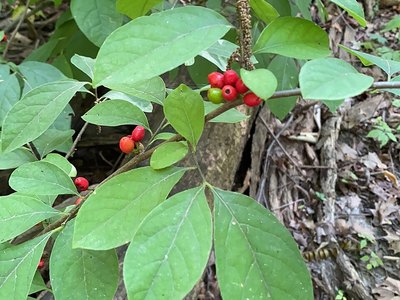
Spicebush
Benzoin odoriferum
Also known as Spicewood, Feverbush, Wild allspice, Benjamin bush.
Spicebush is a deciduous aromatic shrub of moist eastern North American woodlands, a member of the laurel family and a relative of true benzoin and sassafras in the pungency of its bark. Early American folk and physiomedical practitioners used the twig bark and berries as a warming, spicy diaphoretic and stomachic, and the berries were also dried and ground as a home substitute for allspice. It holds a modest place in nineteenth century American herbal practice as a gentle domestic remedy for colds and digestive upset rather than a heroic agent.

Ask Herbert about Spicebush. Herbert is the master herbalist inside Bountiful Herbs: he answers from this plate and eleven hundred others, with dosing, pairing and cautions. Your first ten questions are free.
Ask HerbertActions
Indications what the tradition reached for it in
- Recent colds with chill
- Tardy or suppressed eruption of measles
- Chickenpox
- Early stage typhoid and other low fevers
- Colic
- Flatulent dyspepsia
- Amenorrhea
- Rheumatic pains
- Intestinal worms
- Sluggish peripheral circulation with cold extremities
Specific indications
A recent cold or feverish eruptive illness where the skin is cold, dry, and the rash is slow to come out, calling for a warm diffusive diaphoretic
Colicky, griping abdominal pain with flatulence, especially in children
Safety
Pregnancy: Not for use in pregnancy
Breastfeeding: Insufficient safety data in lactation, so avoid or use only under professional guidance.
The record lists 2 contraindications; open the plate in the library to read them in full.
In practice
In the older American tradition, a warm infusion of the bark was given freely at the first sign of a cold or a feverish eruptive illness, the idea being to open the skin and encourage the eruption of measles or chickenpox to come out fully and quickly rather than being suppressed.
Dosing as the sources wrote it
| Preparation | As written | Metric |
|---|---|---|
| Bark infusion | 15-30 g dried bark per 500 mL water, taken warm in frequent small cups | 15000-30000 mg |
| Tincture (1:5, 45%) | 2-4 mL three times daily | 2-4 mL |
| It is given in doses of from one-half to one dram. | 1944-3888 mg | |
| The dose is from one-half to two fluid drams of the official U. |
Doses are reproduced from the sources for practitioners and are not a recommendation for any person.
From the sources
Overview. Spicebush is a deciduous aromatic shrub of moist eastern North American woodlands, a member of the laurel family and a relative of true benzoin and sassafras in the pungency of its bark. Early American folk and physiomedical practitioners used the twig bark and berries as a warming, spicy diaphoretic and stomachic, and the berries were also dried and ground as a home substitute for allspice. It holds a modest place in nineteenth century American herbal practice as a gentle domestic remedy for colds and digestive upset rather than a heroic agent.
Clinical Notes. In the older American tradition, a warm infusion of the bark was given freely at the first sign of a cold or a feverish eruptive illness, the idea being to open the skin and encourage the eruption of measles or chickenpox to come out fully and quickly rather than being suppressed.
Properties and Uses. The bark of this shrub is a diffusive relaxant, with mild stimulating properties. A warm infusion, of an ounce to a pint of water, may be used freely; and is a mild diaphoretic in recent colds, tardy appearance of the eruption of measles and small-pox, and in the early stages of typhus.
Description. Natural Order, Lauraceae. Genus BENZOIN: Shrubs five to twelve feet high. Flowers dioecious; calyx six-cleft, open, yellow; corolla wanting; sterile flowers with nine stamens in three bands; fertile flowers fifteen to sixteen rudiments of stamens; deciduous scale-like bracts, four. Inflorescence in clusters, made up of umbels of four to six honey-scented flowers. Leaves appearing after the flowers, deciduous, entire. B. ODORIFERUM: Leaves two to four inches long, half as wide, obovate-lanceolate, veinless, entire, pale beneath. Flowers in small, sessile umbels. Drupes red. Common to moist woods in America. Whole plant spicy, aromatic, resembling benzoin. May.
Drawn from Cook's Physio-Medical Dispensatory; Ellingwood's American Materia Medica, Therapeutics and Pharmacognosy, and the Bountiful Herbs editorial.
Often paired with
 BenzoinStyrax benzoin
 AlmondAmygdala
 flaxLinum usitatissimum
 PygeumPrunus africana
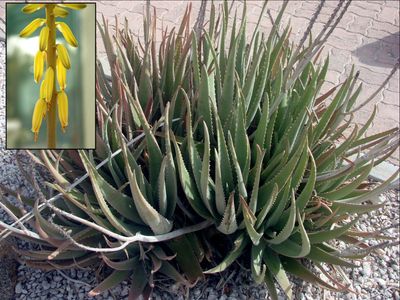 aloe veraAloe vera
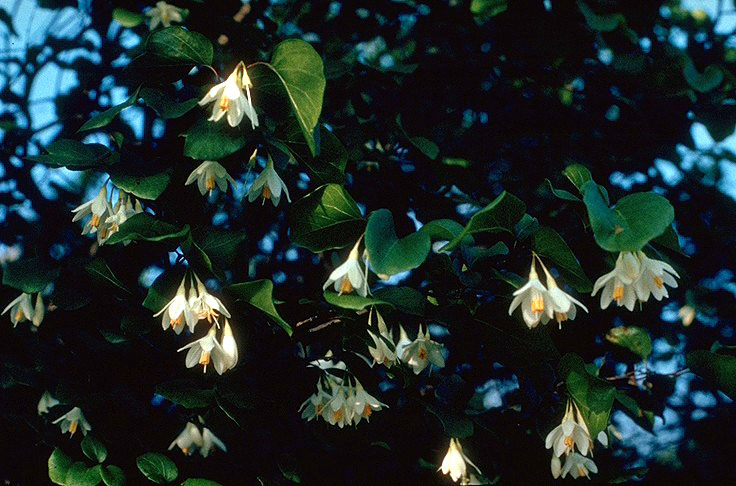 StoraxStyrax officinale
Nearby on the shelf
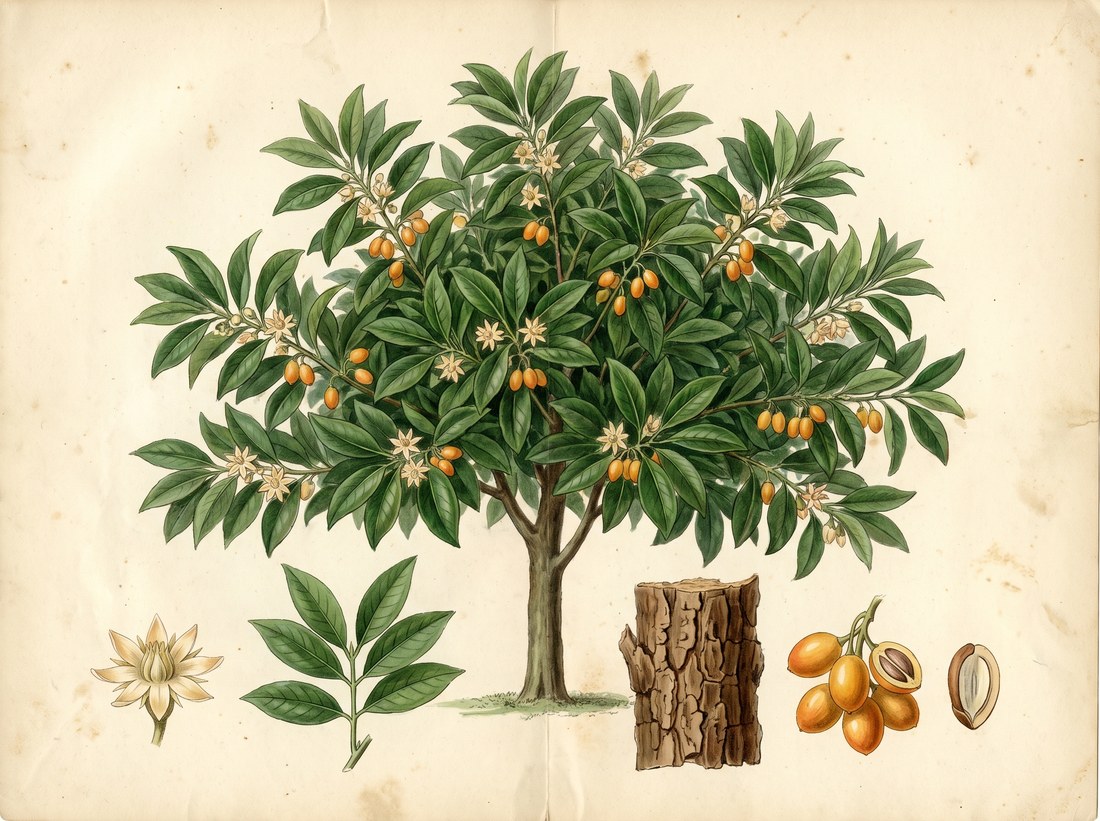 Spanish cherryMimusops elengi
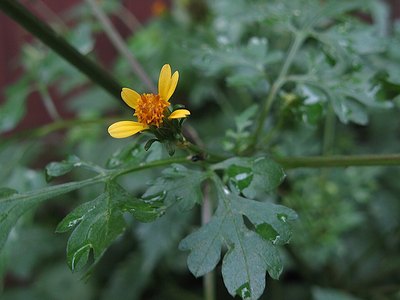 Spanish needlesBidens bipinnata
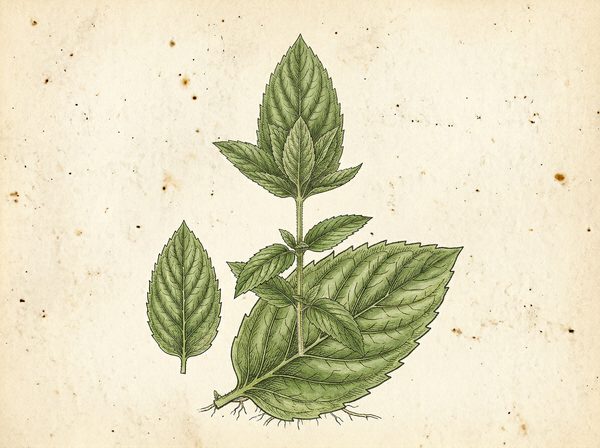 SpearmintMentha spicata
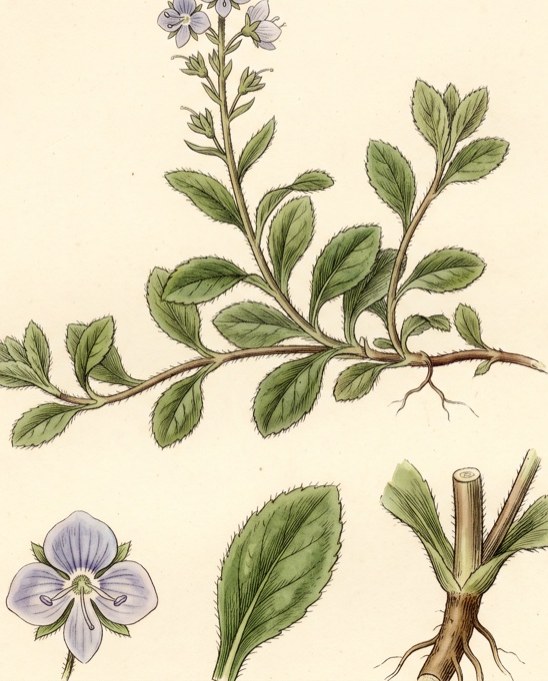 SpeedwellVeronica officinalis
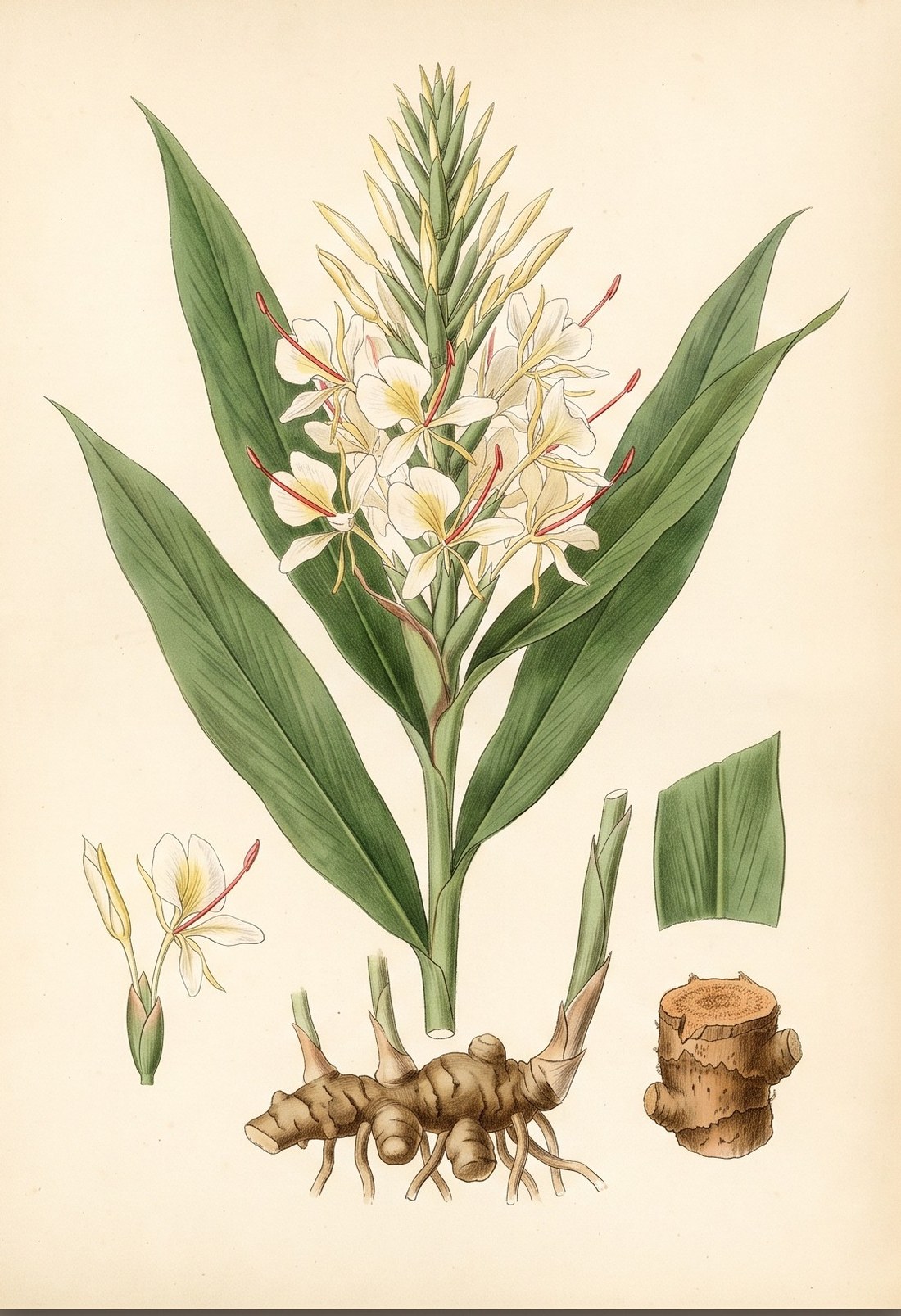 Spiked ginger lilyHedychium spicatum
 SpikenardAralia Racemosa
 SpirulinaArthrospira platensis
 SprucePicea abies
The whole plate is in the library. The compass, Compare, the Sky of eleven hundred plants and the formulary open with an email address and a password, free, with the formula builder and its safety engine. Herbert without limit, his formulating, clients, the handouts and the labels are the paid room.
Open the library, free