Western and Ayurvedic herbalism
Yew
Taxus baccata
Also known as Himalayan yew, English yew, talispatra, birmi, Yew tree, Sthauneyaka, Talisapatra, Talisa.
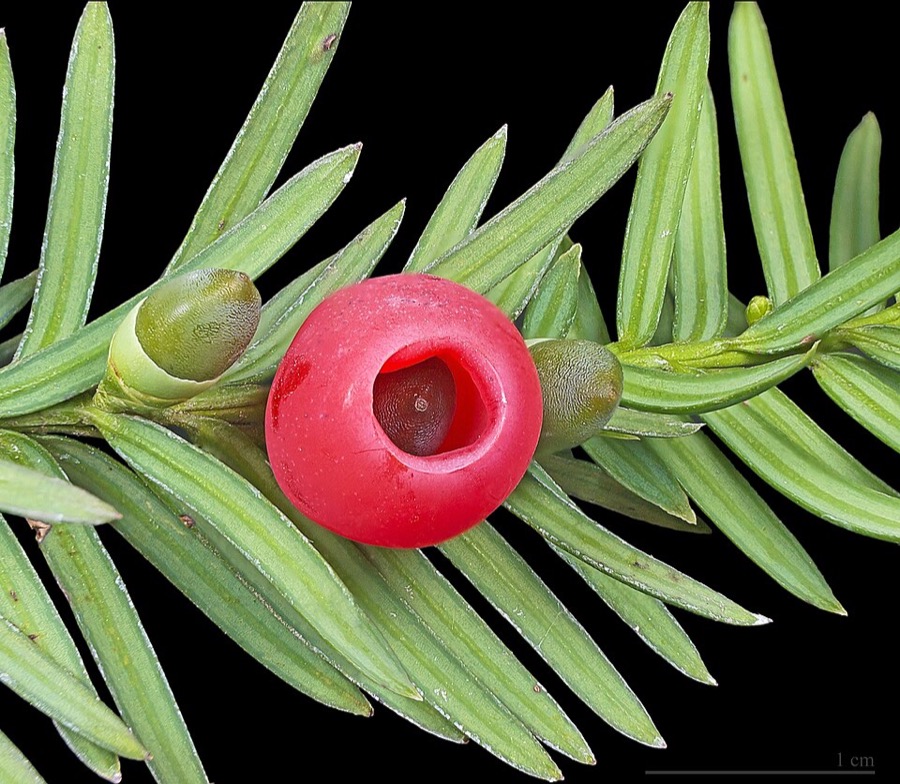
Taxus baccata in the Indian materia medica means the Himalayan yew, now accepted as Taxus wallichiana, a slow-growing evergreen conifer with flat dark needles, reddish flaking bark and red berry-like arils, found between 1800 and 3300 meters from Afghanistan through Kashmir, Himachal, Uttarakhand, Nepal and Sikkim to Assam. Ayurveda knows the leaves as Sthauneyaka or Talisapatra, a warming, bitter, aromatic drug used in small quantity within compound powders for cough, asthma and hiccup, and the tree is the source of the taxane precursors used to make modern anticancer drugs. All parts except the fleshy red aril are poisonous.

Ask Herbert about Yew. Herbert is the master herbalist inside Bountiful Herbs: he answers from this plate and eleven hundred others, with dosing, pairing and cautions. Your first ten questions are free.
Ask HerbertActions
Indications what the tradition reached for it in
- Chronic cough with wheeze (as Talisadi churna only)
- Bronchial asthma with mucus (as compound only)
- Persistent hiccup (as compound only)
- Poor appetite with respiratory congestion (as compound only)
- Joint and nerve pain (external oil, traditional)
- Headache (external paste, traditional)
- Tuberculous and wasting cough (historical, as compound)
- Fever with cough (traditional, as compound)
Specific indications
A kapha patient with a long, wet, wheezy cough, a heavy chest and no appetite, for whom Talisadi churna with honey is the classical compound
Stubborn hiccup or a cough that will not settle after a chest infection, where a small dose of the compound powder is traditional
Never as a single herb, never in quantity, and never in anyone with heart disease, since the leaves are cardiotoxic
Safety
Recognised toxicity. This plant carries a toxicity flag in the record; it is for trained practitioners only.
Low dose botanical. Used in drop doses in the classical practice; not a plant to dose freely.
Pregnancy: Contraindicated in pregnancy: taxine alkaloids are cardiotoxic and the taxanes are antimitotic; no published AHPA class is known to us and the tradition does not give it to pregnant women.
Breastfeeding: Contraindicated while nursing; the alkaloids are likely to enter milk and the infant heart is vulnerable.
The record lists 9 contraindications; open the plate in the library to read them in full.
In practice
The tradition uses Talisapatra sparingly and almost always in compound. Its home is Talisadi churna, where a small proportion of the leaf joins Pippali, Maricha, Shunthi, Vamshalochana and sugar in a warming, kapha-reducing powder given with honey for chronic cough, asthma with mucus, hiccup, poor appetite and the wasting cough of old tuberculosis; Sharngadhara records the formula and it remains a dispensary staple in northern India.
In Ayurveda
Rasa: tikta (bitter), katu (pungent). Virya: ushna (heating). Vipaka: katu (pungent). Guna: laghu (light), snigdha (unctuous). Dosha: pacifies kapha and vata; may aggravate pitta. Karma: kaphaghna (reduces kapha); shvasahara (relieves dyspnea); kasahara (relieves cough); hikkanigrahana (stops hiccup); deepana (kindles digestion); ruchya (improves taste); vedanasthapana (relieves pain, externally); jvarahara (reduces fever); hridya (cardiotonic in tradition, though the plant is cardiotoxic in quantity). Classical indications: kasa (cough); shvasa (dyspnea, asthma); hikka (hiccup); kshaya (wasting with cough); aruchi (loss of taste); jvara (fever); shirahshula (headache); vatavyadhi (joint and nerve pain, externally); arsha (hemorrhoids); gulma (abdominal masses). The dried leaves, sold as Talisapatra, are the drug, used in small quantity as one ingredient of compound powders such as Talisadi churna with Pippali, Maricha, Shunthi, Vamshalochana, Ela, Twak and sugar; the bark is used externally and in regional folk preparations. The leaf is never given alone in quantity. Classical formulations: Talisadi churna, Talisadya churna, Sthauneyakadi taila (external), Eladi gana preparations (Eladi churna, Eladi taila). Described in: Charaka Samhita, Sushruta Samhita, Ashtanga Hridaya, Sharngadhara Samhita, Bhavaprakasha Nighantu, Dhanvantari Nighantu, Raja Nighantu, Ayurvedic Pharmacopoeia of India.
Dosing as the sources wrote it
| Preparation | As written | Metric |
|---|---|---|
| Talisadi churna (compound) | 1-3 g compound powder twice daily with honey, containing only a small proportion of yew leaf | 1000-3000 mg |
| Leaf within compound | 250-500 mg dried leaf daily as the yew fraction of a classical compound, purified material only from a reputable pharmacy | 250-500 mg |
| Taila, external | 5-10 mL medicated oil applied to painful joints once daily | 5-10 mL |
| The leaves have been given in doses of | The leaves have been given in doses of 1 to 5 grains; or the infusion may be given corresponding in dosage. | 64.8-324 mg |
Doses are reproduced from the sources for practitioners and are not a recommendation for any person.
From the sources
Overview. Taxus baccata in the Indian materia medica means the Himalayan yew, now accepted as Taxus wallichiana, a slow-growing evergreen conifer with flat dark needles, reddish flaking bark and red berry-like arils, found between 1800 and 3300 meters from Afghanistan through Kashmir, Himachal, Uttarakhand, Nepal and Sikkim to Assam. Ayurveda knows the leaves as Sthauneyaka or Talisapatra, a warming, bitter, aromatic drug used in small quantity within compound powders for cough, asthma and hiccup, and the tree is the source of the taxane precursors used to make modern anticancer drugs. All parts except the fleshy red aril are poisonous.
Clinical Notes. The tradition uses Talisapatra sparingly and almost always in compound. Its home is Talisadi churna, where a small proportion of the leaf joins Pippali, Maricha, Shunthi, Vamshalochana and sugar in a warming, kapha-reducing powder given with honey for chronic cough, asthma with mucus, hiccup, poor appetite and the wasting cough of old tuberculosis; Sharngadhara records the formula and it remains a dispensary staple in northern India.
Ayurvedic Profile. Rasa: tikta (bitter), katu (pungent). Virya: ushna (heating). Vipaka: katu (pungent). Guna: laghu (light), snigdha (unctuous). Dosha: pacifies kapha and vata; may aggravate pitta. Karma: kaphaghna (reduces kapha); shvasahara (relieves dyspnea); kasahara (relieves cough); hikkanigrahana (stops hiccup); deepana (kindles digestion); ruchya (improves taste); vedanasthapana (relieves pain, externally); jvarahara (reduces fever); hridya (cardiotonic in tradition, though the plant is cardiotoxic in quantity).
Conservation. Taxus wallichiana is listed as endangered by the IUCN and in CITES Appendix II because of bark and leaf stripping for taxane extraction; wild populations across the Himalaya have collapsed. Use only cultivated or certified material, and sparingly.
Drawn from King's American Dispensatory, 18th edition (Felter and Lloyd), and the Bountiful Herbs editorial.
In formulas
Yew stands in 2 documented formulas in the library, among them Balā Taila, Mahā Nārāyaṇa Taila.
Often paired with
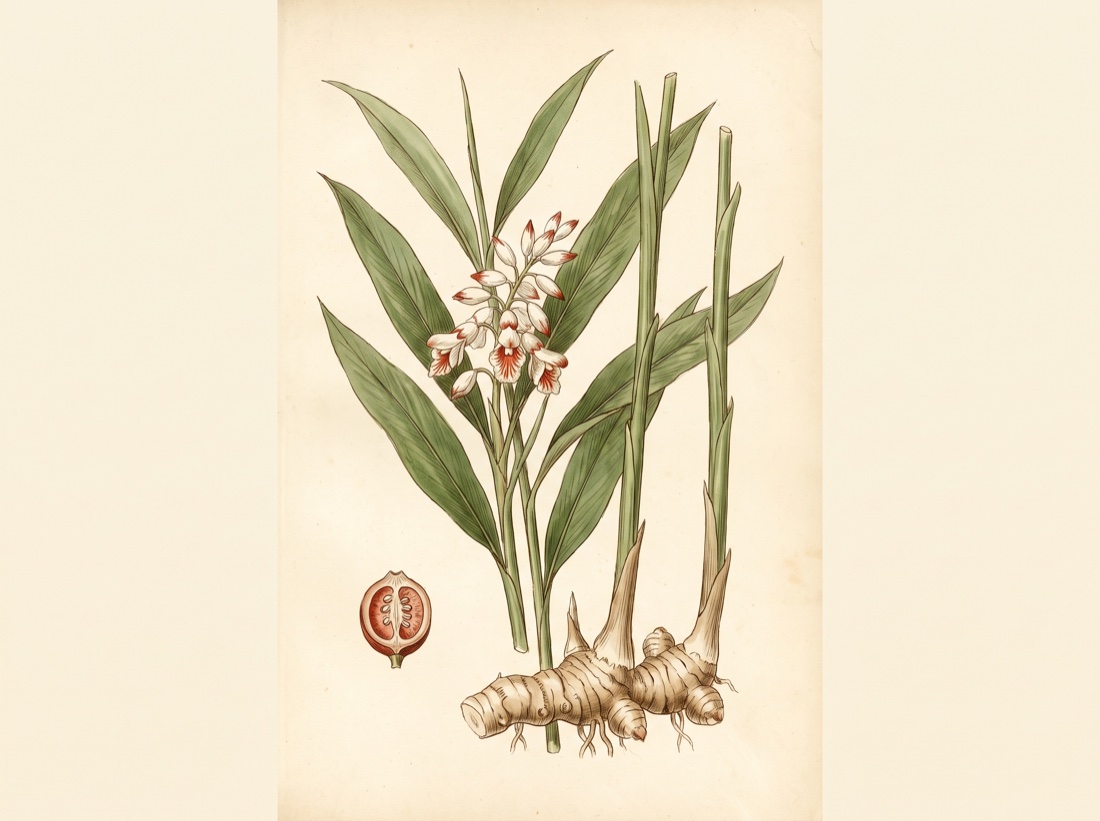 greater galangalAlpinia galanga
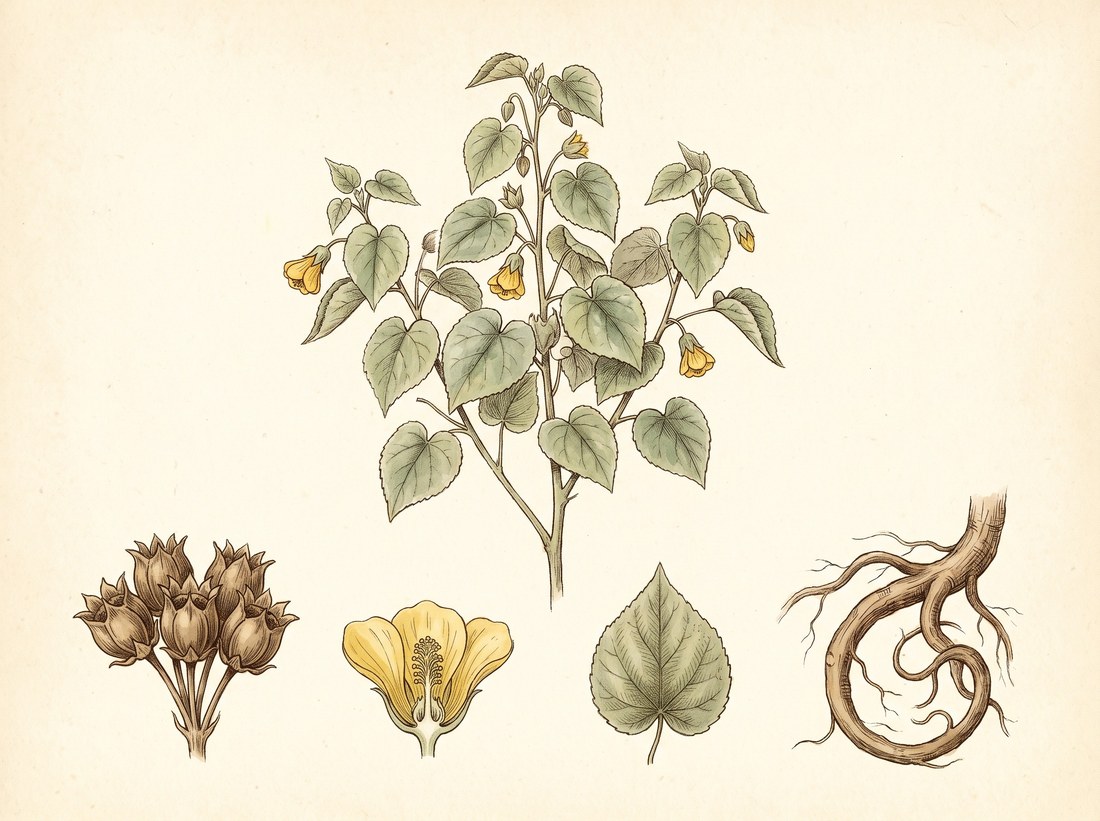 atibalaAbutilon indicum
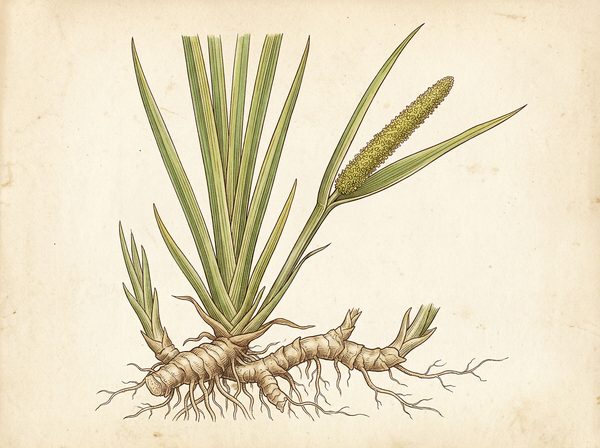 sweet flagAcorus calamus
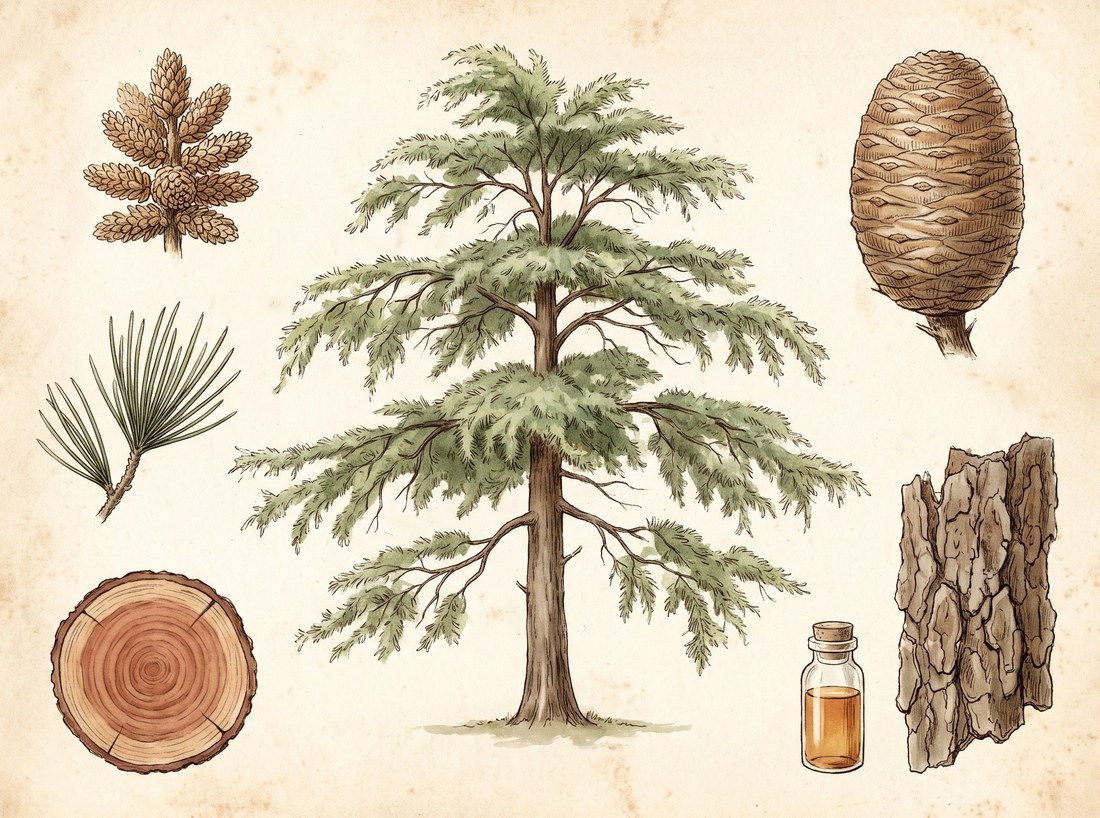 Himalayan cedarCedrus deodara
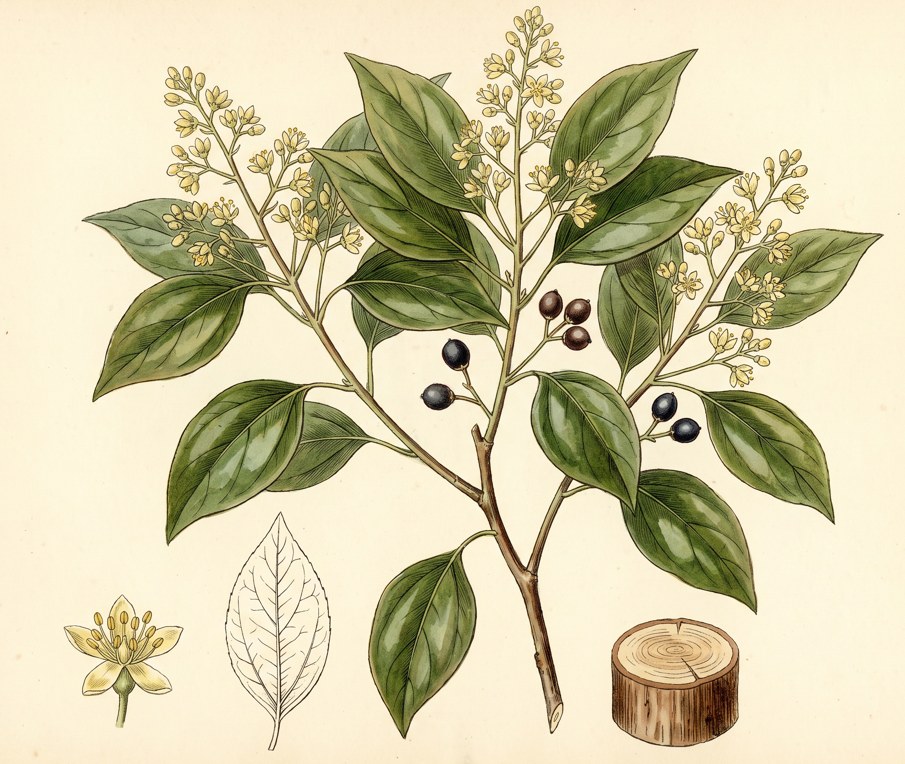 camphor treeCinnamomum camphora
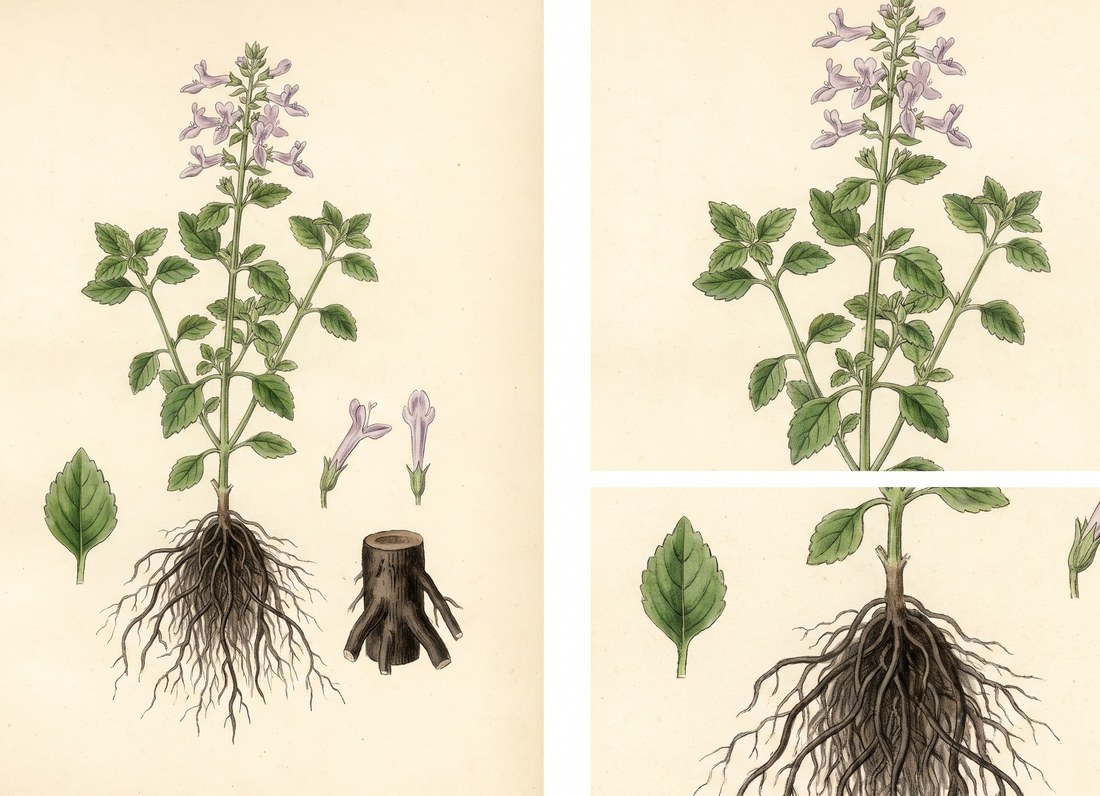 hriberaColeus vettiveroides
Nearby on the shelf
 Yerba MansaAnemopsis californica
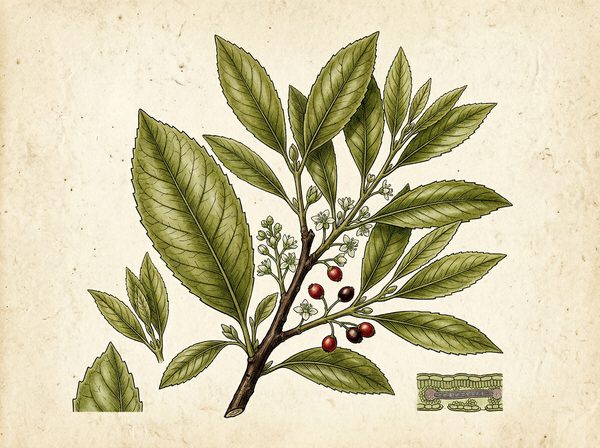 Yerba MateIlex paraguariensis
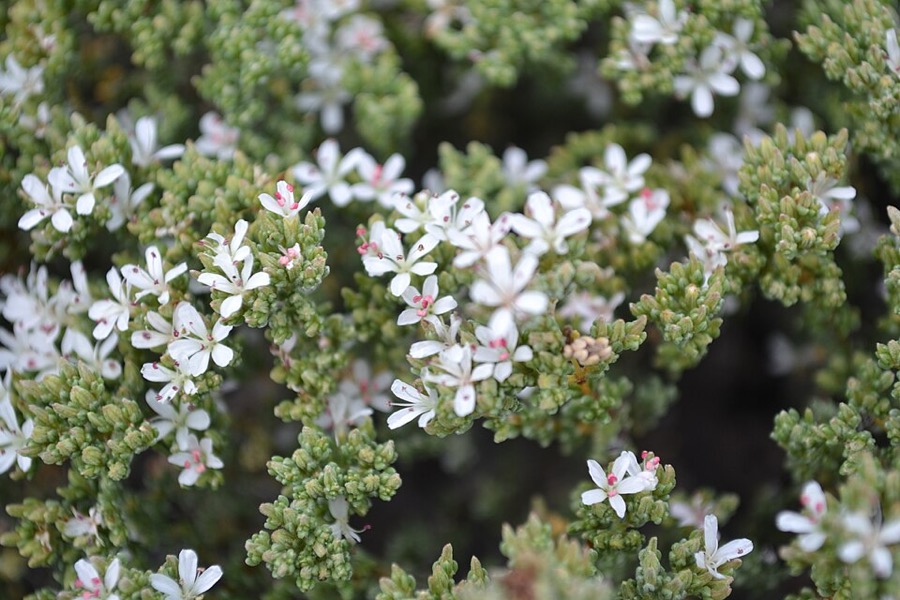 Yerba ReumaFrankenia
 Yerba santaEriodictyon californicum
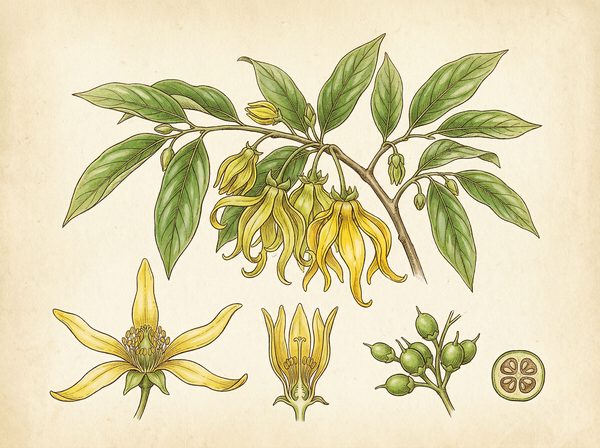 Ylang YlangCananga odorata
 YohimbePausinystalia johimbe
 ZedoaryCurcuma zedoaria
 Zhe Bei MuFritillaria thunbergii
The whole plate is in the library. The compass, Compare, the Sky of eleven hundred plants and the formulary open with an email address and a password, free, with the formula builder and its safety engine. Herbert without limit, his formulating, clients, the handouts and the labels are the paid room.
Open the library, free