Western Herbalism
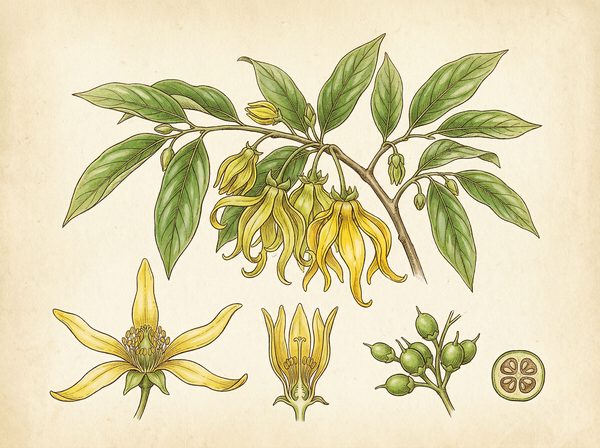
Ylang Ylang
Cananga odorata
Primarily documented for essential oil use in aromatherapy and topical applications traditional Southeast Asian, Polynesian, Indian uses strong antimicrobial support from in vitro studies but limited clinical herbal data GRAS for food flavoring trace estragole (genotoxic at high doses

Ask Herbert about Ylang Ylang. Herbert is the master herbalist inside Bountiful Herbs: he answers from this plate and eleven hundred others, with dosing, pairing and cautions. Your first ten questions are free.
Ask HerbertActions
Indications what the tradition reached for it in
- Chest infections
- Gout
- Cramping
- Depression
- Intermittent fevers
- Spasmodic cough
- Eye inflammation
- Insect sting
- Heavy periods
- Rheumatism
- Bronchitis
- Malaria
- Stomachache
- Asthma
- Itchiness
- Stomach ailments
- Pneumonia
- Headache
- Sexual anxiety
- Mood swings
- Dandruff
- Insomnia
- PMS
- Painful periods
- Nervous tension
- Bites
- High blood pressure
- Cardiac weakness
- Colic
- Cramps
Safety
The record lists 3 contraindications; open the plate in the library to read them in full.
Dosing as the sources wrote it
| Preparation | As written | Metric |
|---|---|---|
| Essential oil from flowers | Essential oil from flowers (steam distillation): dilute 1:32 in carrier oil for topical use | |
| Topical (diluted in carrier) | Topical: typical 0.8% in carrier; face/sensitive 0.5; dermal maximum 0.8%. Rich, heady aroma; sensitizing above ~0.8% and can cause headache/nausea if overdosed by smell. | |
| Internal (oral) | Not recommended internally ... insufficient current safety data for the essential oil; use the culinary herb or tea instead. No established oral oil dose. |
Doses are reproduced from the sources for practitioners and are not a recommendation for any person.
From the sources
Clinical Notes. Primarily documented for essential oil use in aromatherapy and topical applications traditional Southeast Asian, Polynesian, Indian uses strong antimicrobial support from in vitro studies but limited clinical herbal data GRAS for food flavoring trace estragole (genotoxic at high doses
primary-actions. Ylang Ylang acts primarily as: Nervine, Antiseptic, Antispasmodic, Hypotensive, Aphrodisiac. Secondary actions include Antimicrobial, Anti-inflammatory, Cardiotonic.
indications. Ylang Ylang is traditionally indicated for: Chest infections, Gout, Cramping, Depression, Intermittent fevers, Spasmodic cough, Eye inflammation, Insect sting, Heavy periods, Rheumatism, Bronchitis, Malaria, Stomachache, Asthma, Itchiness, and 28 further conditions.
constituents. Notable constituents of Ylang Ylang include: linalool, benzyl acetate, p-cresyl methyl ether, methyl benzoate, geranyl acetate, germacrene D, β-caryophyllene, liriodenine, O-methylmoschatoline, 3,4-dihydroxybenzoic acid.
Nearby on the shelf
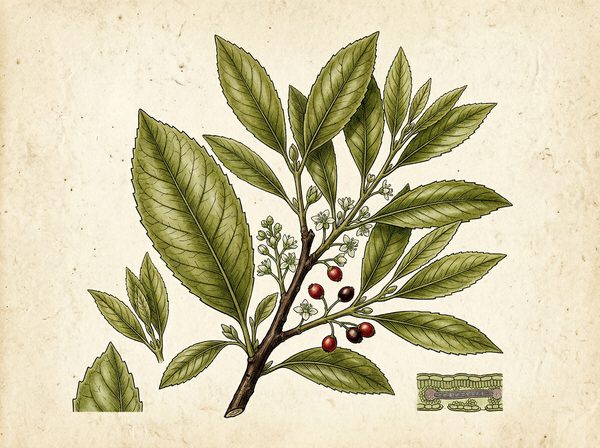 Yerba MateIlex paraguariensis
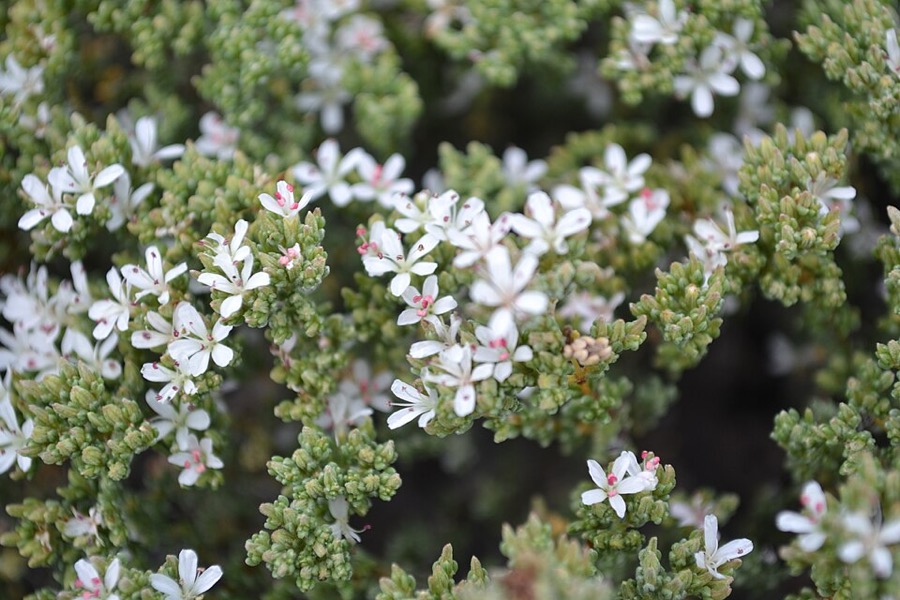 Yerba ReumaFrankenia
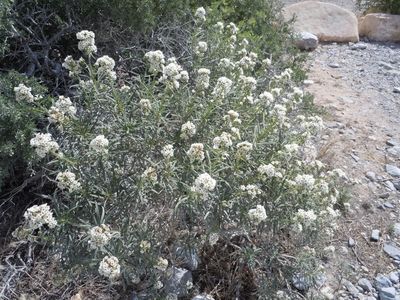 Yerba santaEriodictyon californicum
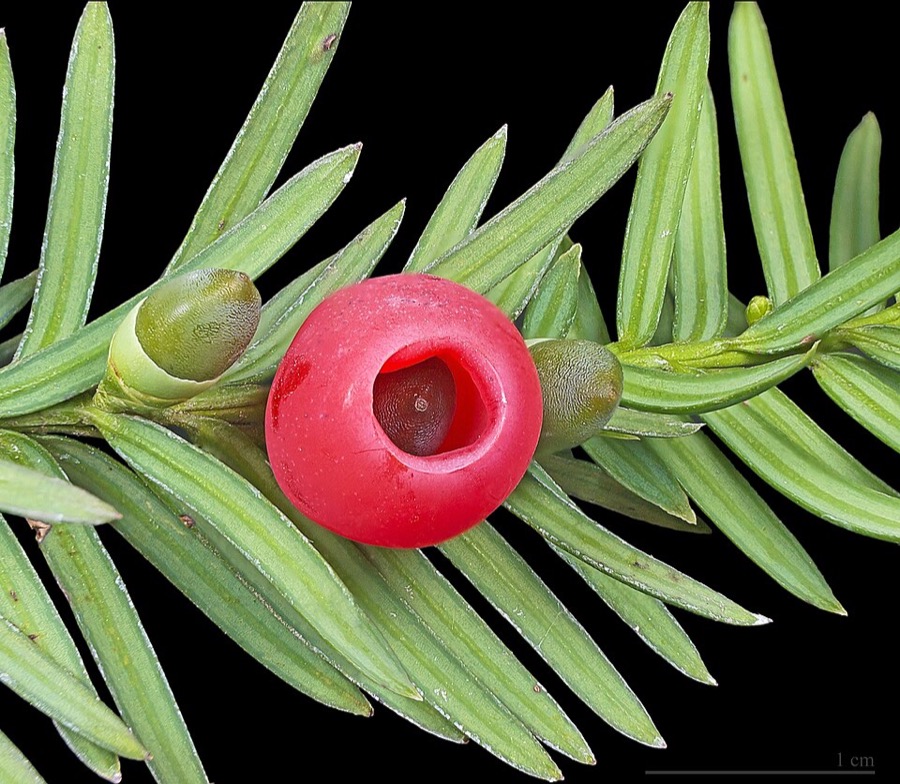 YewTaxus baccata
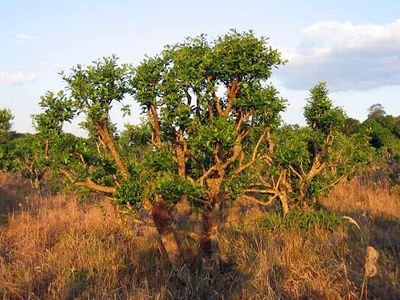 YohimbePausinystalia johimbe
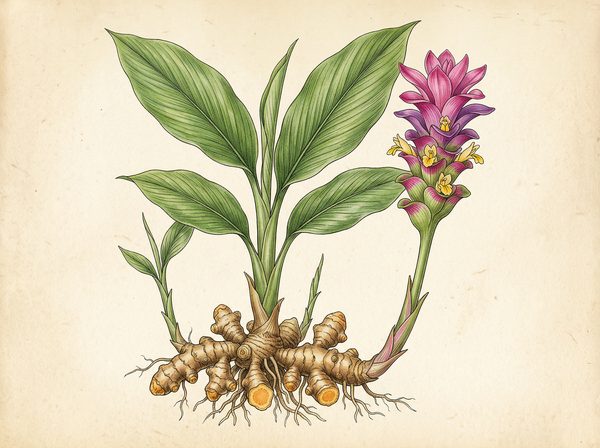 ZedoaryCurcuma zedoaria
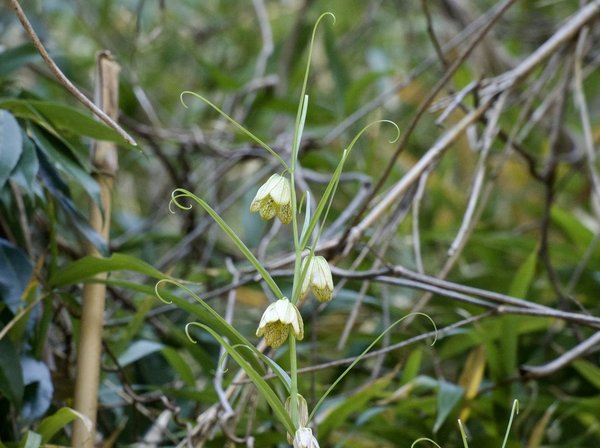 Zhe Bei MuFritillaria thunbergii
 Zhi MuAnemarrhena asphodeloides
The whole plate is in the library. The compass, Compare, the Sky of eleven hundred plants and the formulary open with an email address and a password, free, with the formula builder and its safety engine. Herbert without limit, his formulating, clients, the handouts and the labels are the paid room.
Open the library, free