Chinese and Ayurvedic herbalism
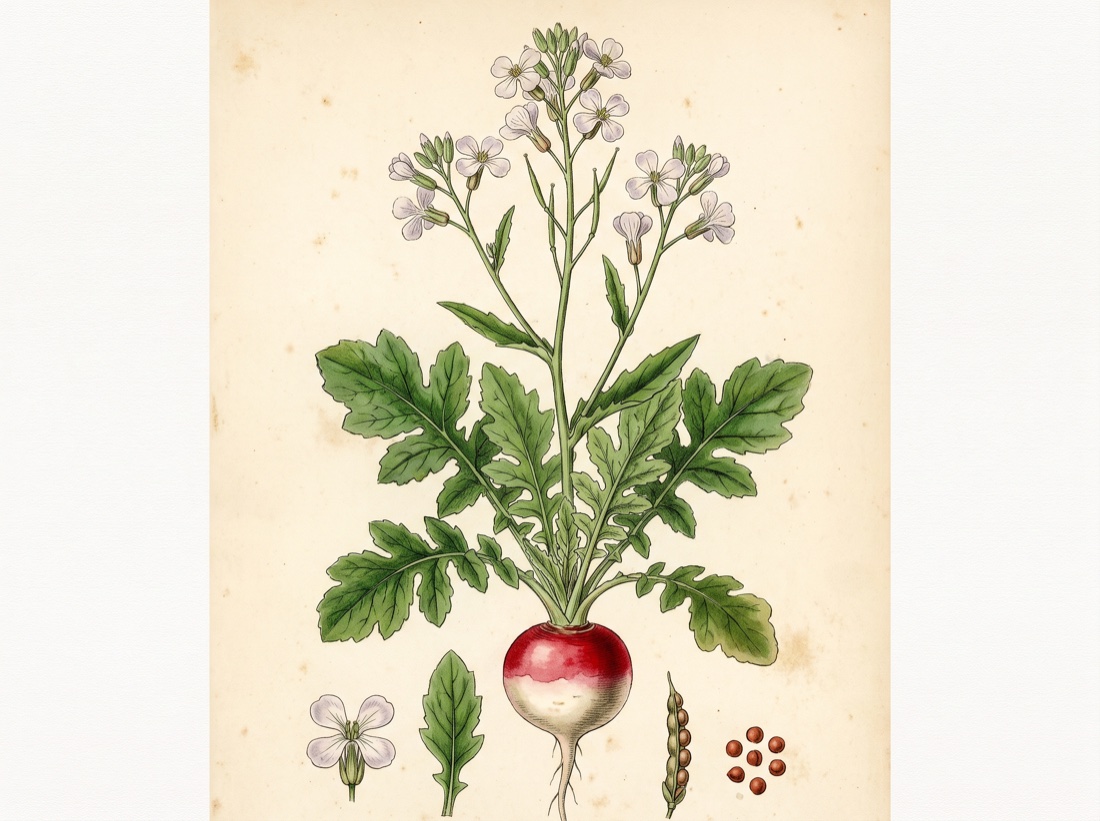
Radish seed
Raphanus sativus
Also known as radish, daikon seed, Chinese radish seed, lai fu zi, white radish, daikon, black radish, rat-tail radish (pods), lái fú zǐ, luó bo zǐ, Mulaka.
Lai fu zi is the small, reddish-brown ripe seed of the common radish, the same species grown for its root across Asia and Europe. The seed is harvested in summer when the pods yellow, threshed and dried, and is used in China in the raw or dry-fried form. Its place in the materia medica is at the junction of digestion and breathing: it breaks up food stagnation in the gut and pushes phlegm and qi downward in the chest.

Ask Herbert about Radish seed. Herbert is the master herbalist inside Bountiful Herbs: he answers from this plate and eleven hundred others, with dosing, pairing and cautions. Your first ten questions are free.
Ask HerbertActions
Indications what the tradition reached for it in
- Food stagnation with abdominal fullness and bloating
- Belching with a sour, foul taste after overeating
- Constipation with gas and distension
- Diarrhea or dysentery with tenesmus from food retention
- Cough with copious white or yellow phlegm
- Wheezing and chest oppression from phlegm
- Chronic bronchitis with sticky sputum in the elderly
- Infant dyspepsia and milk stagnation (small doses)
- Postoperative ileus and abdominal distension (adjunctive)
- Mild hypertension with phlegm-damp constitution (supportive)
- Sluggish digestion with bloating after fatty meals
- Poor appetite and heaviness (tender root)
- Urinary stones and gravel (leaf juice, kshara)
- Painful or scanty urination
- Edema of kapha type (adjunct)
- Hemorrhoids with constipation (traditional)
- Biliary sluggishness and fatty liver (black radish, dietary)
- Chronic cough with thick mucus
- Hoarseness and sore throat
- Type 2 diabetes as a dietary adjunct
- Intestinal worms (seed, traditional)
Specific indications
Distended, gassy abdomen after a heavy meal with foul belching, a thick greasy tongue coating and a slippery pulse
An older person with a rattling chest, thick phlegm that is hard to raise, and a stuffed, sluggish digestion, the picture of San Zi Yang Qin Tang
Constipation in a robust person where stools are held back by gas and stagnation rather than dryness or weakness
Safety
The record lists 5 contraindications; open the plate in the library to read them in full.
In practice
Think of lai fu zi whenever bloating, belching and a greasy tongue tell you food is sitting in the stomach, and especially when the same patient has a phlegmy chest. It is a core member of Bao He Wan (with shan zha, shen qu, ban xia, chen pi, fu ling and lian qiao) for the overeaten stomach, and of San Zi Yang Qin Tang (with su zi and bai jie zi) for the elderly wheezing patient whose digestion and lungs are both clogged.
In Ayurveda
Rasa: katu (pungent), tikta (bitter) in the tender root; madhura (sweet) and katu in the mature root. Virya: ushna (heating). Vipaka: katu (pungent). Guna: laghu (light), tikshna (sharp) in the tender root; guru (heavy), vidahi (causing burning) in the mature root. Dosha: the tender root pacifies all three doshas; the mature raw root aggravates all three, and cooking with oil or ghee tames it. Karma: deepana (kindles digestion); pachana (digestive); mutrala (diuretic); ashmaribhedana (breaks urinary stones, leaf juice and kshara); kanthya (benefits the throat and voice); arshoghna (relieves hemorrhoids); shothahara (reduces swelling); kaphavatahara (pacifies kapha and vata); yakrit uttejaka (stimulates the liver); krimighna (anthelmintic); svarya (improves the voice). Classical indications: arsha (hemorrhoids); ashmari (urinary stones); mutrakrichhra (painful urination); gulma (abdominal mass, bloating); shotha (edema); agnimandya (weak digestion); aruchi (loss of appetite); kasa and shvasa (cough and dyspnea); pinasa (chronic rhinitis); kantha roga (throat disorders); yakrit and pliha vikara (liver and spleen disorders); krimi (worms). The tender young root and leaves are eaten raw or cooked as food-medicine; the leaf juice is drunk for urinary stones and edema; the seeds are powdered as a digestive and diuretic; and the whole plant or its leaves are burned to an ash from which Mulaka kshara, an alkaline salt, is prepared for stones, hemorrhoids and abdominal masses. Classical formulations: Mulaka kshara, Mulaka patra svarasa (leaf juice), Mulaka beeja churna (seed powder), Mulakadi kwatha, Mulaka taila (regional), Kshara sutra and kshara preparations for arsha (as an ash source). Described in: Charaka Samhita, Sushruta Samhita, Ashtanga Hridaya, Bhavaprakasha Nighantu, Dhanvantari Nighantu, Raja Nighantu, Kaiyadeva Nighantu, Sharngadhara Samhita.
In Chinese medicine
Temperature: neutral. Taste: acrid, sweet. Channels: Lung, Spleen, Stomach. Actions: Reduces food stagnation and relieves abdominal distension; Directs qi downward and transforms phlegm; Relieves cough and wheezing with copious phlegm.
Dosing as the sources wrote it
| Preparation | As written | Metric |
|---|---|---|
| Decoction (dry-fried, crushed seed) | 5-12 g dried seed daily | 5000-12000 mg |
| Powder in pills or capsules | 1.5-3 g dried seed powder two to three times daily | 1500-3000 mg |
| Infant dyspepsia (in formula, decoction) | 1-3 g dried seed daily | 1000-3000 mg |
| Svarasa (leaf or root juice) | 50-100 mL fresh leaf or root juice once daily in the morning | 50-100 mL |
| Beeja churna (seed) | 1-3 g seed powder twice daily with warm water | 1000-3000 mg |
| Kshara | 250-500 mg plant ash alkali once or twice daily with warm water under supervision | 250-500 mg |
Doses are reproduced from the sources for practitioners and are not a recommendation for any person.
From the sources
Overview. Lai fu zi is the small, reddish-brown ripe seed of the common radish, the same species grown for its root across Asia and Europe. The seed is harvested in summer when the pods yellow, threshed and dried, and is used in China in the raw or dry-fried form. Its place in the materia medica is at the junction of digestion and breathing: it breaks up food stagnation in the gut and pushes phlegm and qi downward in the chest.
Overview. Raphanus sativus, the radish, is an annual root vegetable of the mustard family grown throughout India in the cool season, from the long white daikon types of the north to the small red radishes of the hills. Ayurveda names it Mulaka and draws a sharp line between the tender young root, which is light, pungent and good for all three doshas, and the mature root, which is heavy and hard to digest unless cooked with oil. The leaves, seeds and the alkaline ash of the plant are all medicines in their own right, chiefly for digestion, urine and hemorrhoids.
Clinical Notes. Think of lai fu zi whenever bloating, belching and a greasy tongue tell you food is sitting in the stomach, and especially when the same patient has a phlegmy chest. It is a core member of Bao He Wan (with shan zha, shen qu, ban xia, chen pi, fu ling and lian qiao) for the overeaten stomach, and of San Zi Yang Qin Tang (with su zi and bai jie zi) for the elderly wheezing patient whose digestion and lungs are both clogged.
Chinese Medicine Profile. Temperature: neutral. Taste: acrid, sweet. Channels: Lung, Spleen, Stomach. Actions: Reduces food stagnation and relieves abdominal distension; Directs qi downward and transforms phlegm; Relieves cough and wheezing with copious phlegm.
In formulas
Radish seed stands in 28 documented formulas in the library, among them jià jiǎn zhú yè shí gão tāng, sàn zi yǎng qin tàng, fù fǎng dà chéng qì tāng, tán yìn wán, bão hé wán, dà ǎn wán.
Often paired with
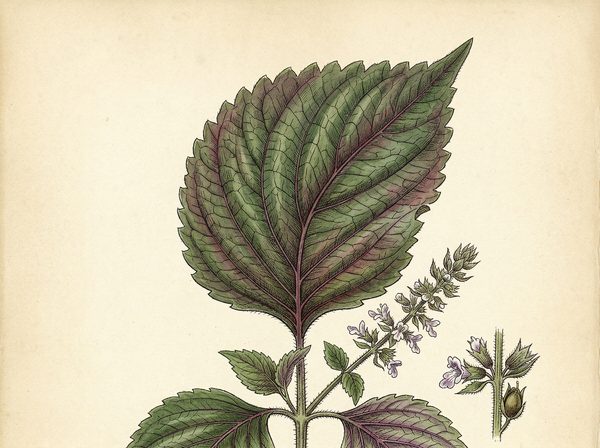 PerillaPerilla frutescens
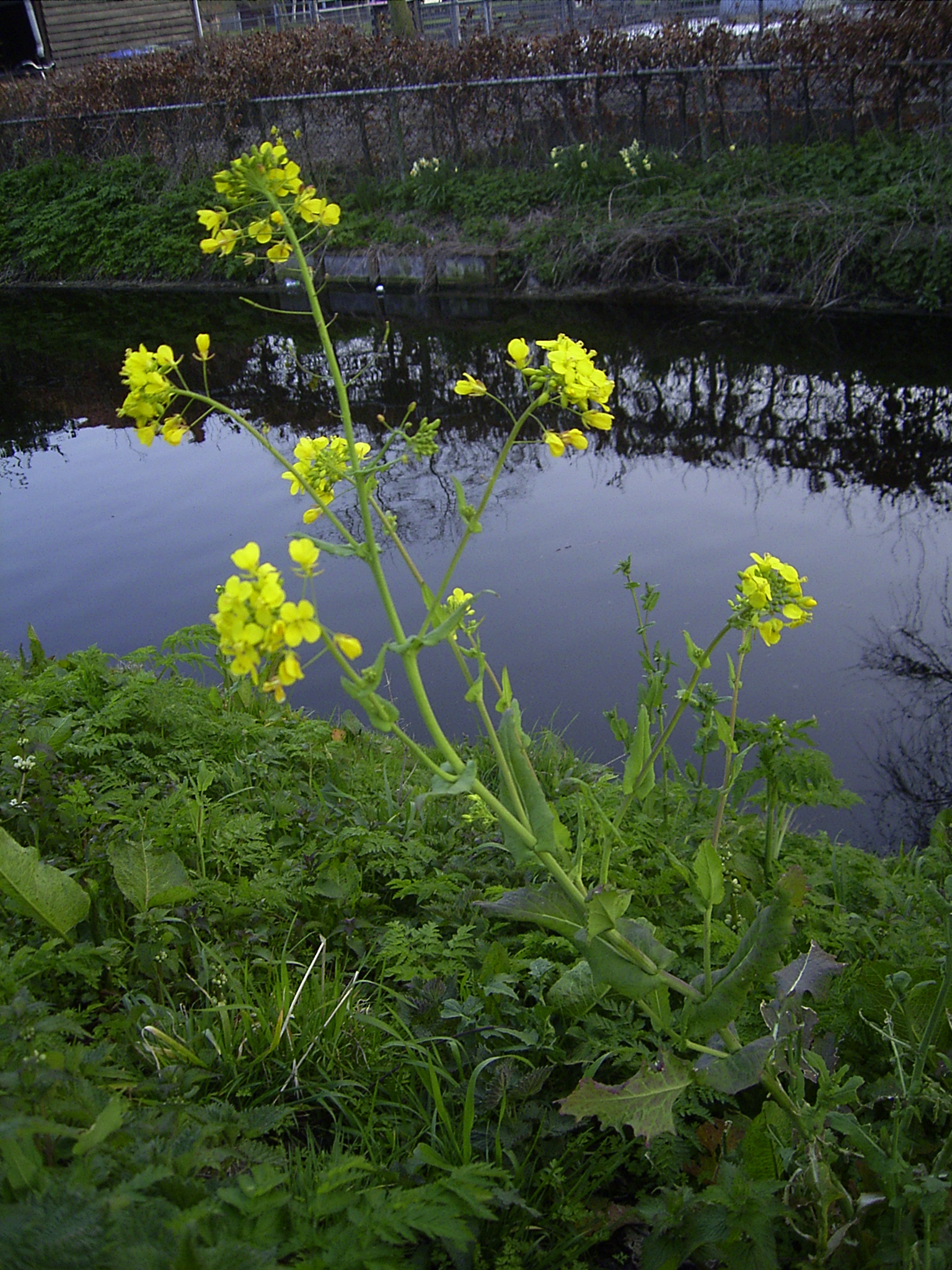 white mustardBrassica alba
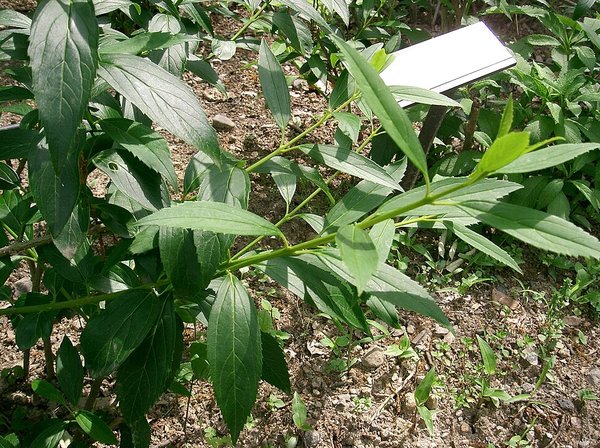 Lian QiaoForsythia suspensa
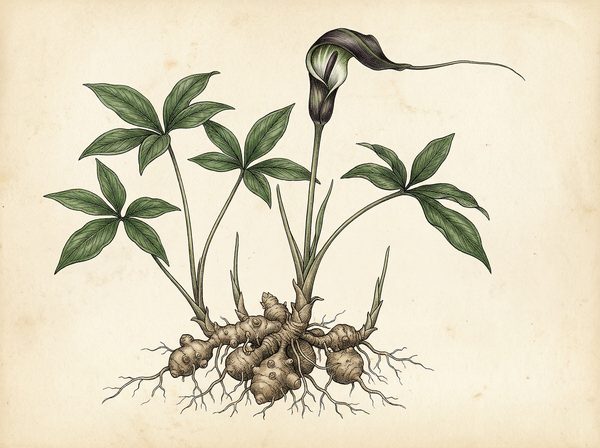 PinelliaPinellia ternata
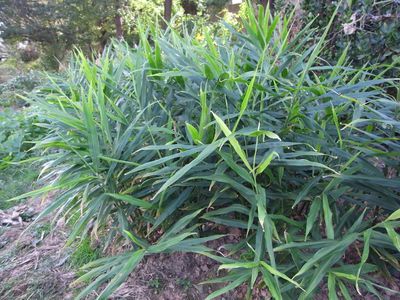 GingerZingiber officinale
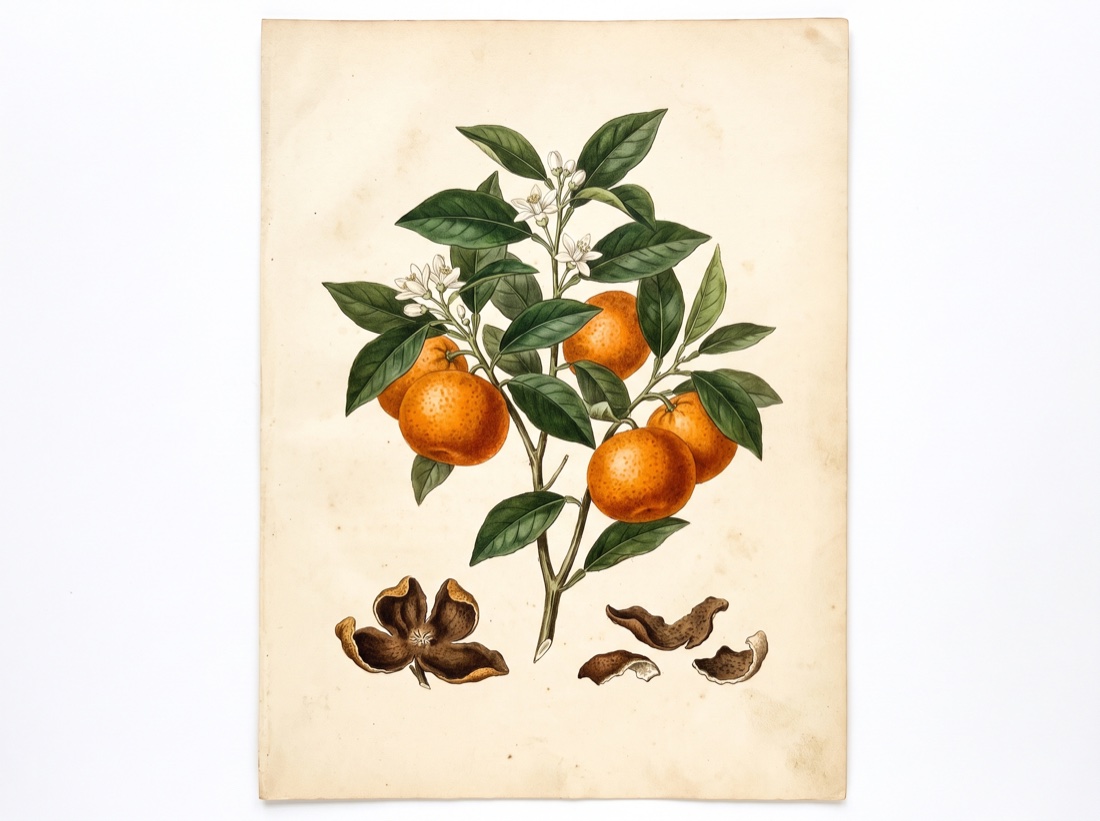 tangerineCitrus reticulata
Nearby on the shelf
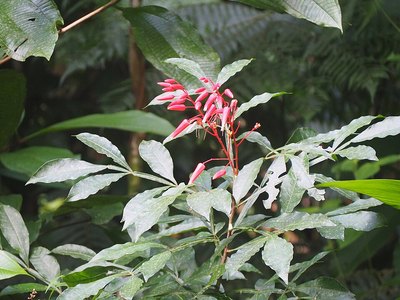 QuassiaQuassia amara
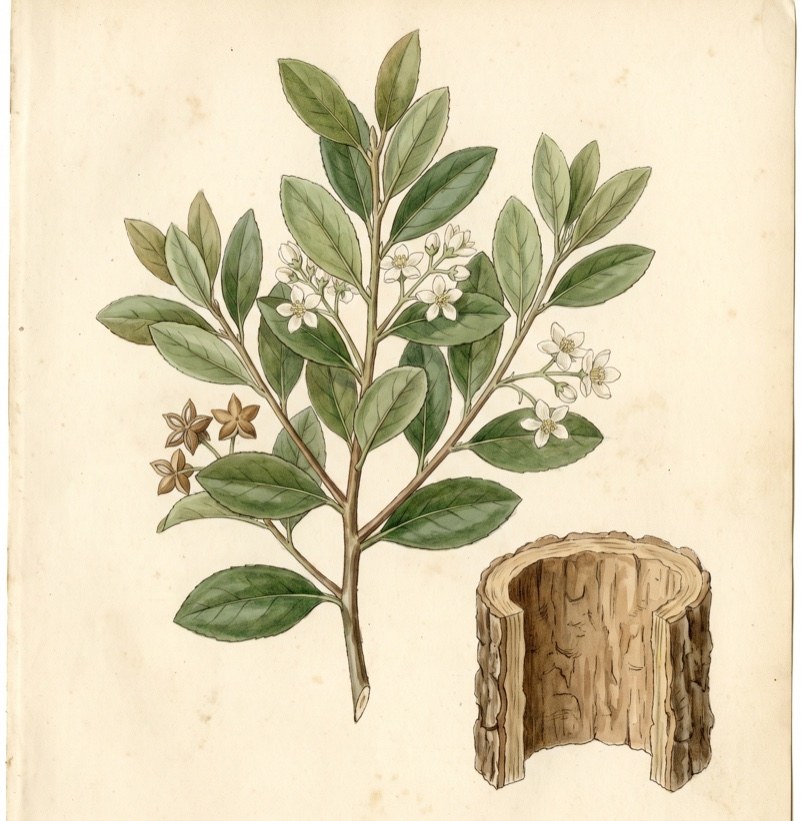 QuillajaQuillaja
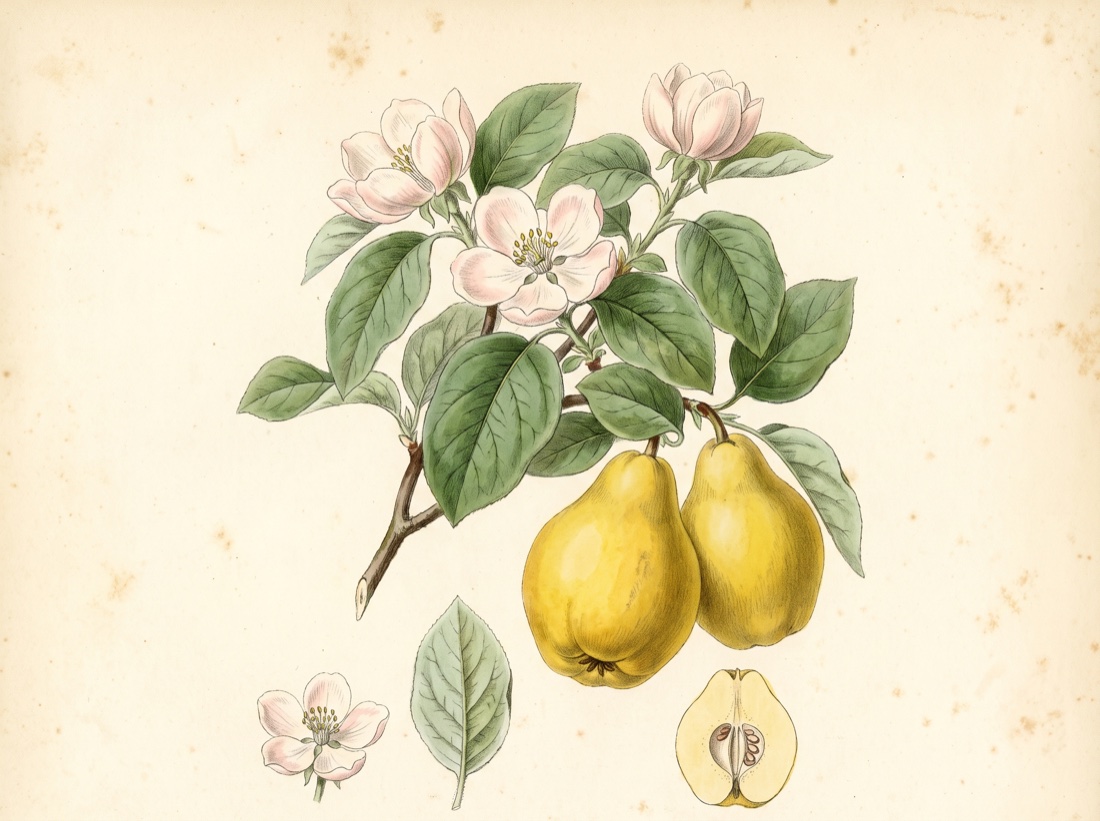 QuinceCydonium vulgaris
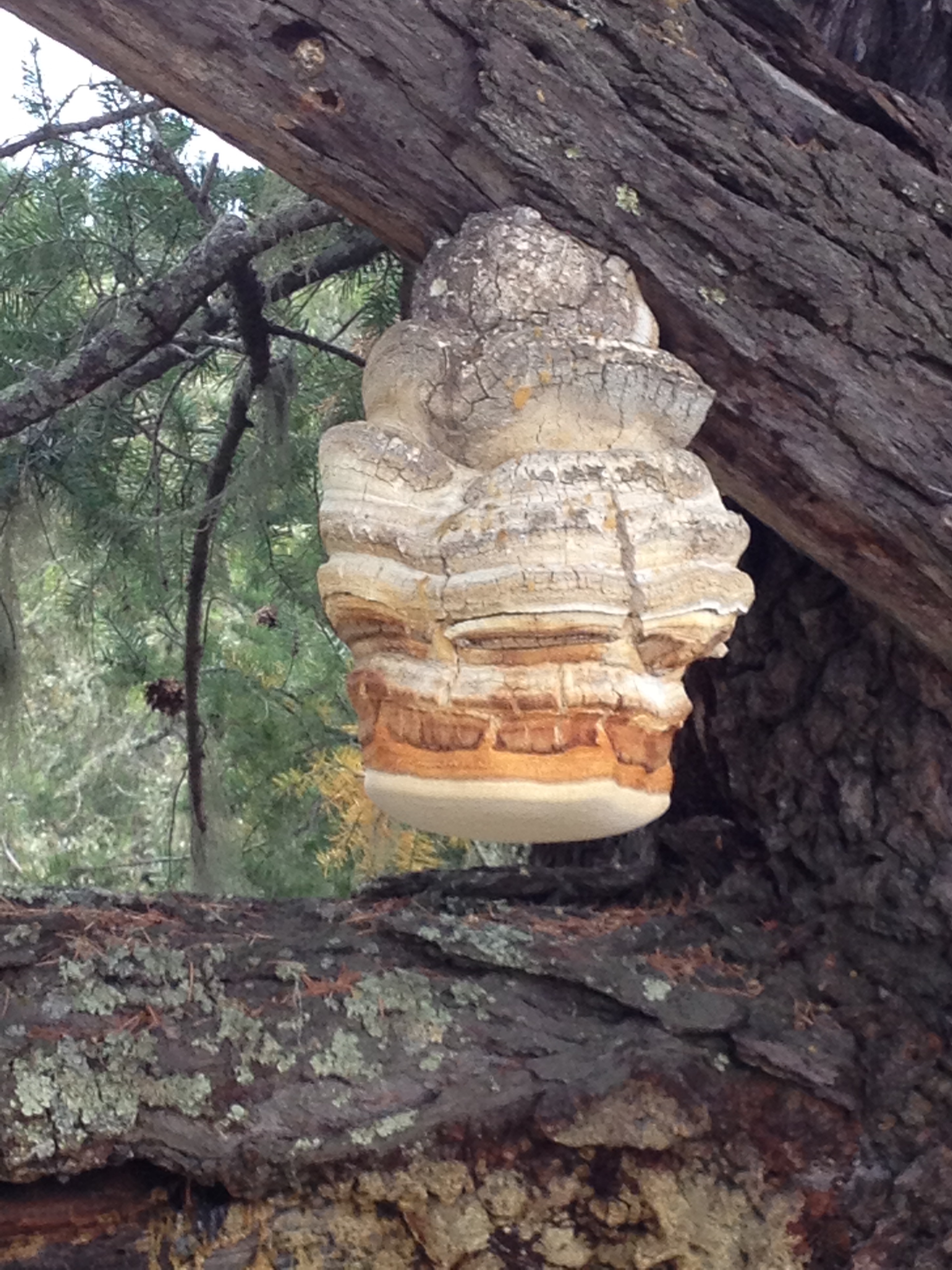 Quinine conkBoletus laricis
 RagweedAmbrosia artemisiaefolia
 Rajmahal hempMarsdenia tenacissima
 RampsAllium tricoccum
 Rangoon creeperCombretum indicum
The whole plate is in the library. The compass, Compare, the Sky of eleven hundred plants and the formulary open with an email address and a password, free, with the formula builder and its safety engine. Herbert without limit, his formulating, clients, the handouts and the labels are the paid room.
Open the library, free