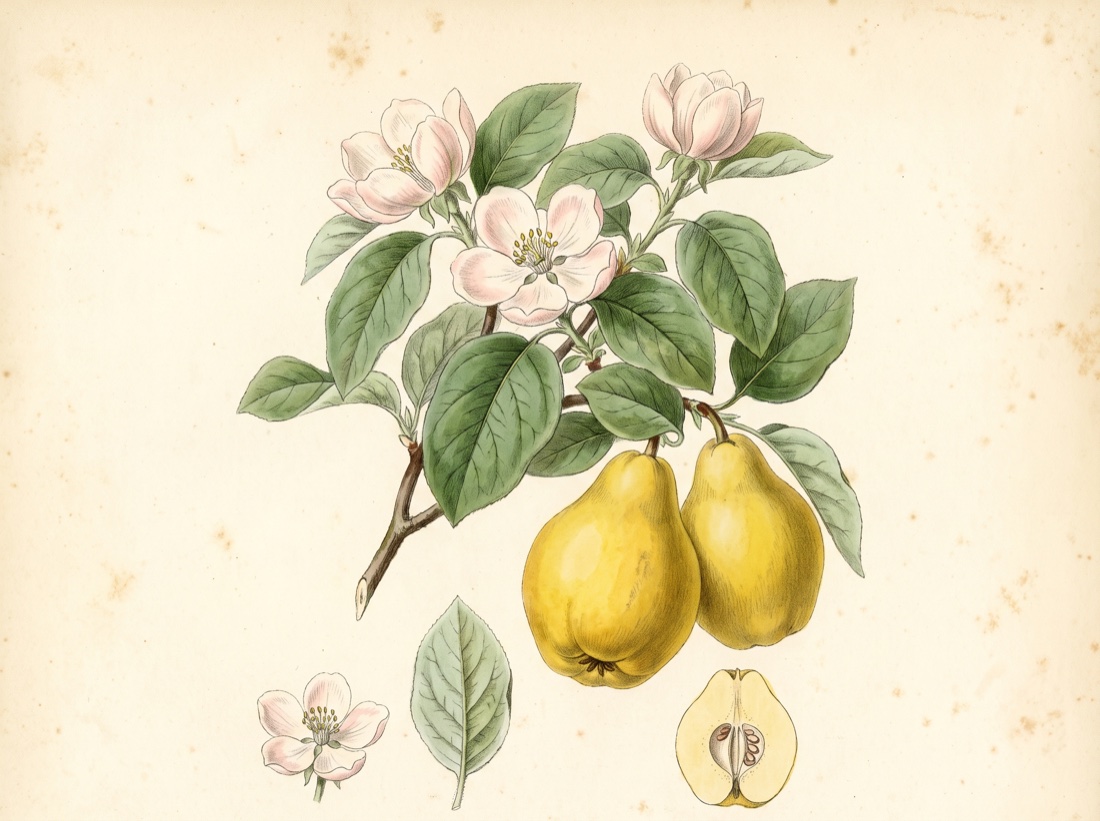
Western Herbalism
Quince
Cydonium vulgaris
Also known as Quince seed, Quince seed mucilage, Quince seeds.
Quince, Cydonia oblonga, is a small deciduous tree of the rose family, native to the Caucasus and Persia and long cultivated across the Mediterranean and temperate gardens for its fragrant, hard, yellow fruit. In herbal use the seeds are the prized part: soaked in water they release a thick, glassy mucilage prized as a gentle demulcent for irritated throats, gut linings, and skin. The physiomedicalist writers of the nineteenth century regarded quince chiefly as a mild relaxant and soothing agent, useful wherever tissues were dry, hot, or irritated and needed a bland covering rather than a stimulating remedy.

Ask Herbert about Quince. Herbert is the master herbalist inside Bountiful Herbs: he answers from this plate and eleven hundred others, with dosing, pairing and cautions. Your first ten questions are free.
Ask HerbertActions
Indications what the tradition reached for it in
- Sore throat
- Dry, irritating cough
- Mouth ulcers
- Gastritis with burning discomfort
- Mild diarrhea (fruit preparations)
- Chapped lips and dry skin
- Minor burns and abrasions
- Conjunctivitis and eye irritation (as a wash)
- Diaper rash and skin chafing
Specific indications
A hot, dry, scratchy throat with a tickling cough that responds to a soothing mucilaginous drink rather than a stimulating expectorant.
Red, chapped, or weeping skin surfaces that need a bland, cooling protective film rather than an active antimicrobial.
Safety
Low dose botanical. Used in drop doses in the classical practice; not a plant to dose freely.
The record lists 3 contraindications; open the plate in the library to read them in full.
In practice
Quince seed mucilage earns its place as one of the gentlest demulcents available, comparable in feel to slippery elm or marshmallow but with a cooler, more astringent edge from the small amount of tannin and pectin the seed coat also carries.
Dosing as the sources wrote it
| Preparation | As written | Metric |
|---|---|---|
| Seed mucilage infusion | 5-10 g whole quince seeds soaked in 150 mL cool to lukewarm water for 1-2 hours, strained and taken as a soothing drink or gargle, up to three times daily | 5000-10000 mg |
| Topical mucilage | Freshly prepared mucilage applied directly to irritated skin, lips, or as a cooled eyewash, as needed | |
| Dose of the powder, ten to thirty grains every four hours | 648-1944 mg | |
| Dose from half a fluid ounce to two fluid ounces every two hours in ordinary cases | 14.79-59.15 mL | |
| Dose, one to three grains, at such intervals as necessity requires | 64.8-194 mg | |
| This is a good preparation, of which the dose may range from five to twenty drops | 0.1-0.4 mL |
Doses are reproduced from the sources for practitioners and are not a recommendation for any person.
From the sources
Overview. Quince, Cydonia oblonga, is a small deciduous tree of the rose family, native to the Caucasus and Persia and long cultivated across the Mediterranean and temperate gardens for its fragrant, hard, yellow fruit. In herbal use the seeds are the prized part: soaked in water they release a thick, glassy mucilage prized as a gentle demulcent for irritated throats, gut linings, and skin. The physiomedicalist writers of the nineteenth century regarded quince chiefly as a mild relaxant and soothing agent, useful wherever tissues were dry, hot, or irritated and needed a bland covering rather than a stimulating remedy.
Clinical Notes. Quince seed mucilage earns its place as one of the gentlest demulcents available, comparable in feel to slippery elm or marshmallow but with a cooler, more astringent edge from the small amount of tannin and pectin the seed coat also carries.
Properties and Uses. The seeds of quince contain a large quantity of a peculiar and very pleasant mucilage, which most abounds in their leathery covering. They yield this property to boiling water, and a drachm of the seeds is sufficient to make a pint of water quite mucilaginous.
Properties and Uses. The roots of these plants are the medicinal part, and were introduced to practice by Dr. S. Thomson-with whom they formed a leading remedy. They are nearly pure relaxants, with not enough stimulation to be available.
Drawn from Cook's Physio-Medical Dispensatory; King's American Dispensatory, 18th edition (Felter and Lloyd), and the Bountiful Herbs editorial.
Nearby on the shelf
 PygeumPrunus africana
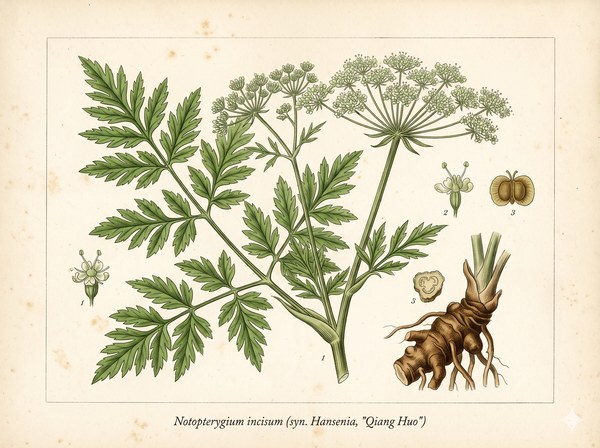 Qiang HuoNotopterygium incisum
 QuassiaQuassia amara
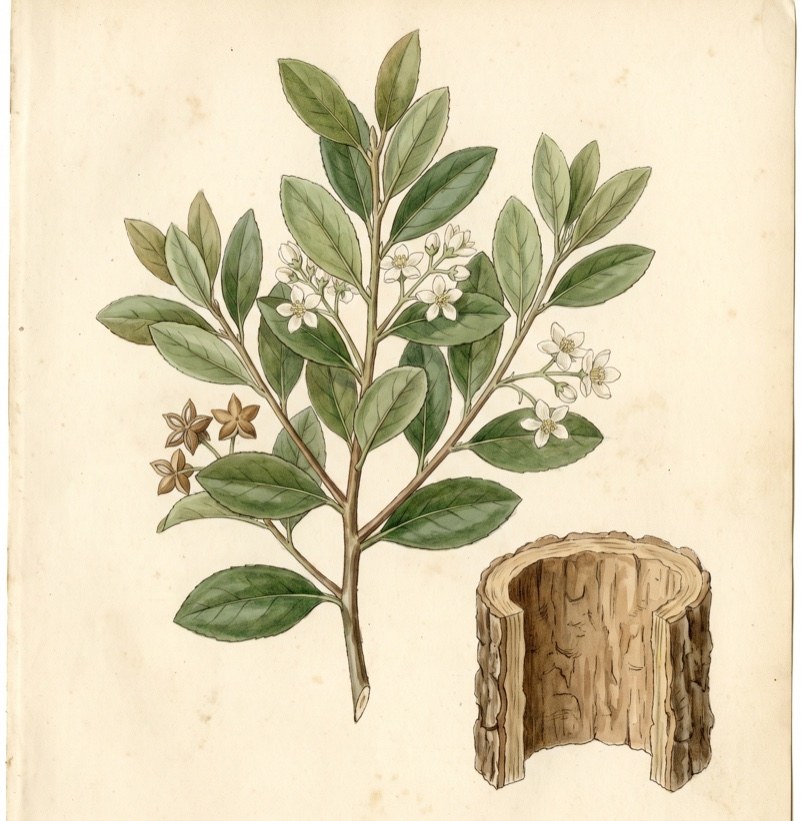 QuillajaQuillaja
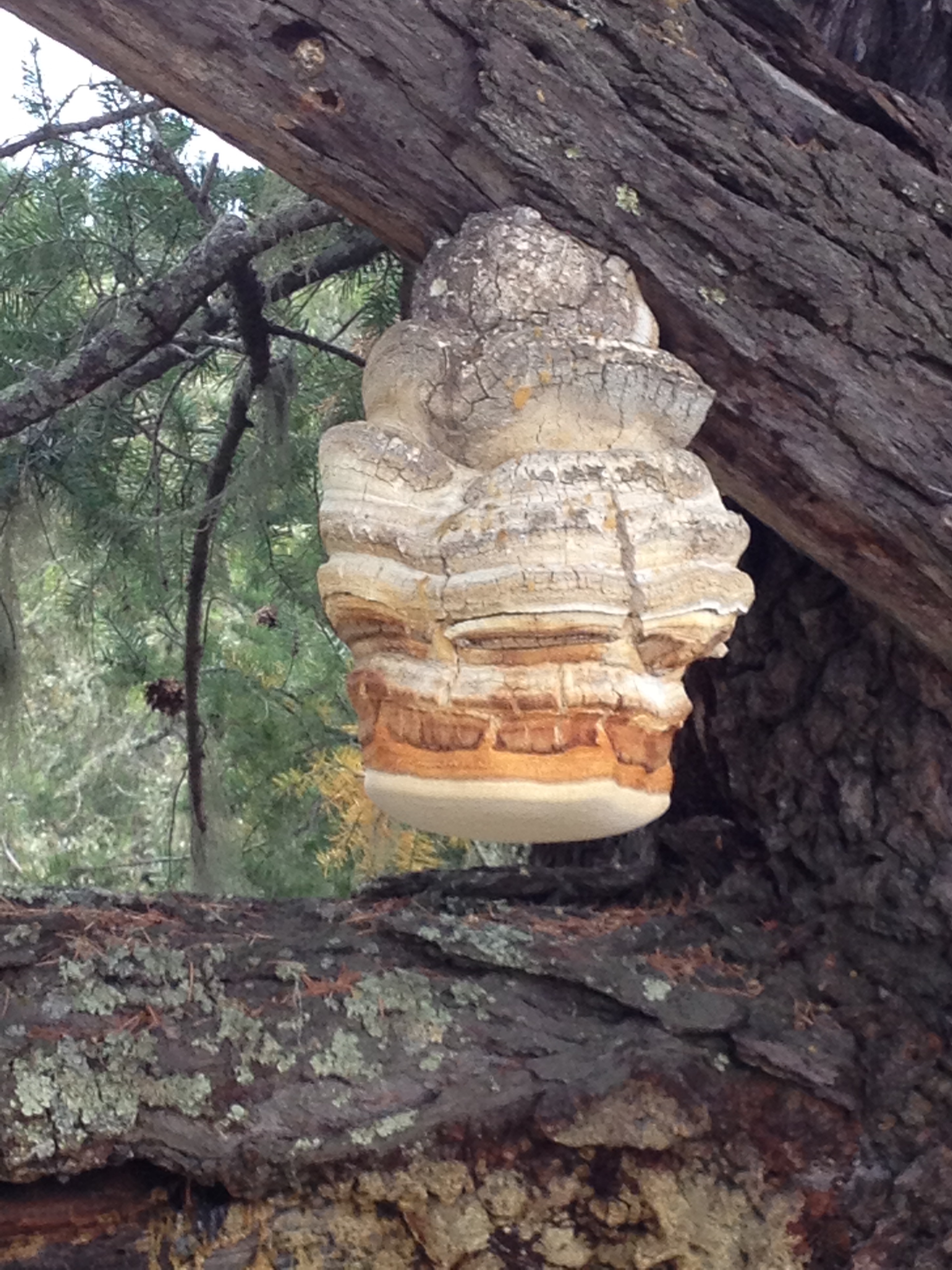 Quinine conkBoletus laricis
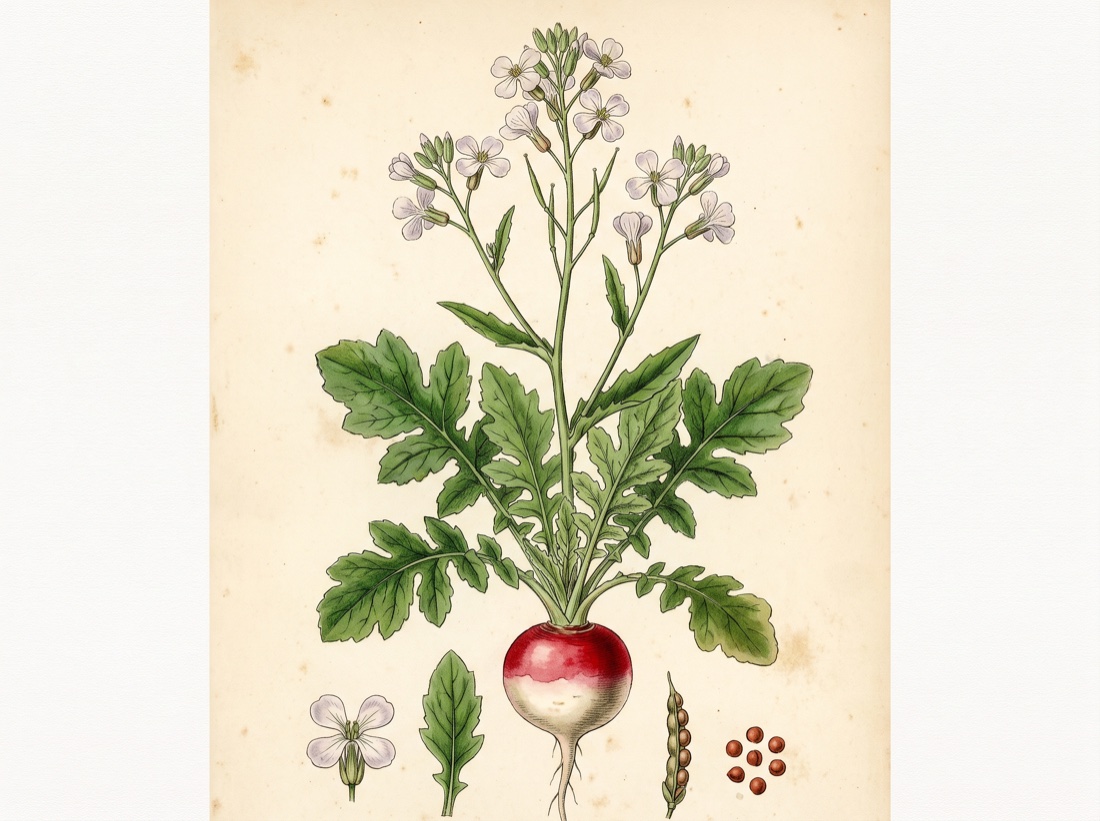 Radish seedRaphanus sativus
 RagweedAmbrosia artemisiaefolia
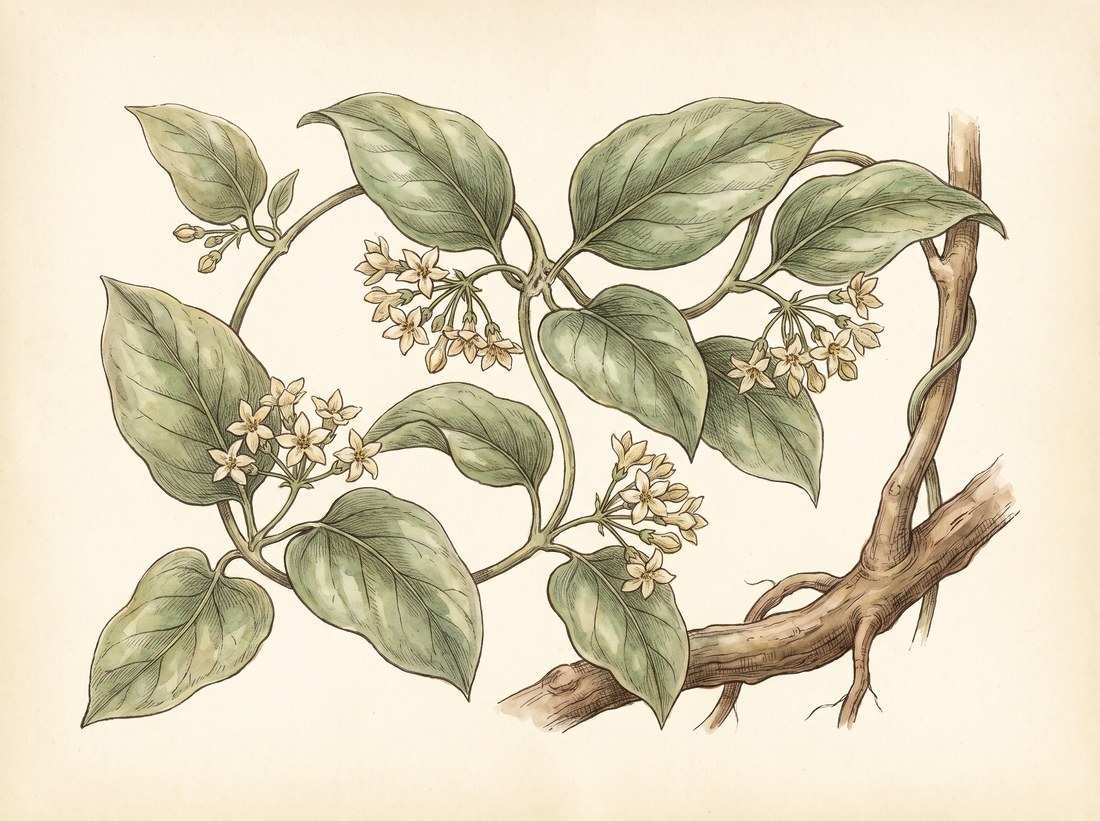 Rajmahal hempMarsdenia tenacissima
The whole plate is in the library. The compass, Compare, the Sky of eleven hundred plants and the formulary open with an email address and a password, free, with the formula builder and its safety engine. Herbert without limit, his formulating, clients, the handouts and the labels are the paid room.
Open the library, free