Western Herbalism
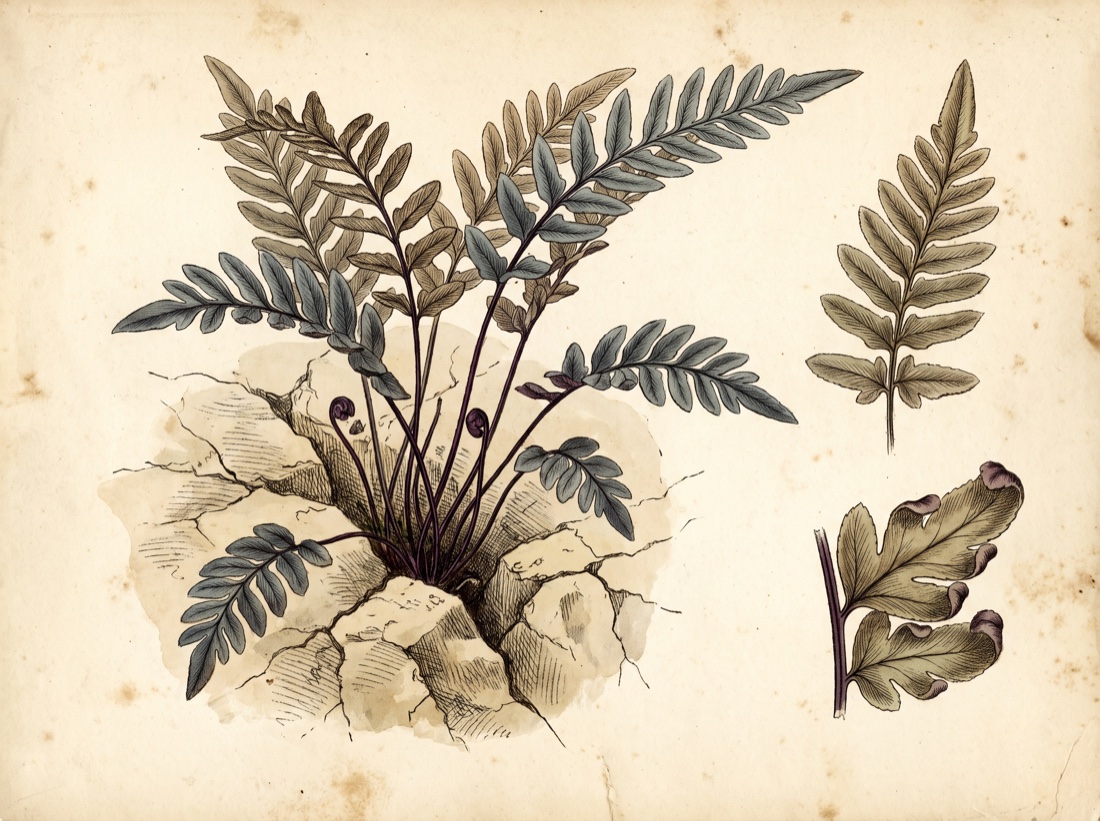
Purple cliff-brake
Pteris Atropurpurea
Also known as Purple-stemmed cliff-brake, Pteris, (1) Rockbrake; (2) Common brake.
Purple cliff-brake is a small evergreen fern of eastern and central North America, typically found rooted in crevices of limestone and other calcareous rock outcrops. Eclectic physicians of the nineteenth century occasionally used the fresh whole plant as an astringent remedy, though it never became a mainstream botanical and remained largely confined to domestic and regional practice. The part used is the fresh frond, prepared as a tincture.

Ask Herbert about Purple cliff-brake. Herbert is the master herbalist inside Bountiful Herbs: he answers from this plate and eleven hundred others, with dosing, pairing and cautions. Your first ten questions are free.
Ask HerbertActions
Indications what the tradition reached for it in
- Diarrhea
- Dysentery
- Night sweats
- Passive hemorrhage
- Hemoptysis
- Hematuria
- Menorrhagia
- Chronic mucous discharge
- Debility with loose stools
- Excessive perspiration in convalescence
Specific indications
Persistent watery diarrhea accompanied by profuse night sweats in a debilitated patient
Passive, low-grade hemorrhage or spotting without acute inflammation, occurring alongside a tendency to sweat excessively
Safety
Pregnancy: Avoid in pregnancy: no safety data exist for this plant and it has essentially no modern clinical use.
Breastfeeding: Avoid in lactation: no safety data exist and traditional use was extremely limited.
The record lists 3 contraindications; open the plate in the library to read them in full.
In practice
This is one of the least documented remedies in the Eclectic materia medica. The original account describes it as exerting a general astringent action on the excretory functions, checking diarrhea, dysentery, night sweats, and various hemorrhages, with the tannin content of the fronds proposed as at least part of the mechanism.
Dosing as the sources wrote it
| Preparation | As written | Metric |
|---|---|---|
| Fresh plant tincture (Scudder's Specific Medication scale, not comparable to standard Eclectic dosing) | 0.3-0.6 mL (5-10 drops) as needed | 0.3-0.6 mL |
| Tincture (1:5, fresh plant, standard modern preparation, used cautiously by analogy to other astringent ferns) | 1-2 mL up to three times daily | 1-2 mL |
| A powerful astringent infusion may be made by adding 4 drachms of the plant to 1 pint of boiling water, and which has been used in diarrhoea and dysentery, in ½ fluid ounce doses, repeated every 2 or 3 hours, with success. | 15552-15552 mg | |
| A tincture of the fresh entire plant (℥viii to alcohol, 76 per cent, Oj) is suggested in from 1 to 10-drop doses (Scudder). |
Doses are reproduced from the sources for practitioners and are not a recommendation for any person.
From the sources
Overview. Purple cliff-brake is a small evergreen fern of eastern and central North America, typically found rooted in crevices of limestone and other calcareous rock outcrops. Eclectic physicians of the nineteenth century occasionally used the fresh whole plant as an astringent remedy, though it never became a mainstream botanical and remained largely confined to domestic and regional practice. The part used is the fresh frond, prepared as a tincture.
Clinical Notes. This is one of the least documented remedies in the Eclectic materia medica. The original account describes it as exerting a general astringent action on the excretory functions, checking diarrhea, dysentery, night sweats, and various hemorrhages, with the tannin content of the fronds proposed as at least part of the mechanism.
Specific indications and reasoning. (Rook BRAKt.) A tincture should be prepared from the entire plant fresh, Svij. to Alcohol 76° Oj. Dose from gtts. v. to gtts. X. This remedy has been but little used except in domestic practice. It exerts a marked influence upon the excretory apparatus, controlling diarrhoa, dysentery, night sweats, hemorrhages, etc. This may depend to some extent upon its tannic acid, but there is an influence beyond this. Will some of our practitioners prepare & tincture and test it, and report?
Conservation. Pellaea atropurpurea grows in a specialized habitat of calcareous cliff and rock crevices and is considered uncommon or of conservation concern in parts of its range; wild harvest is not recommended.
Drawn from Scudder's Specific Medication and Specific Medicines; King's American Dispensatory, 18th edition (Felter and Lloyd), and the Bountiful Herbs editorial.
Nearby on the shelf
 Puncture vineTribulus terrestris
 Punting-pole bambooBambusa tuldoides
 Purging crotonCroton tiglium
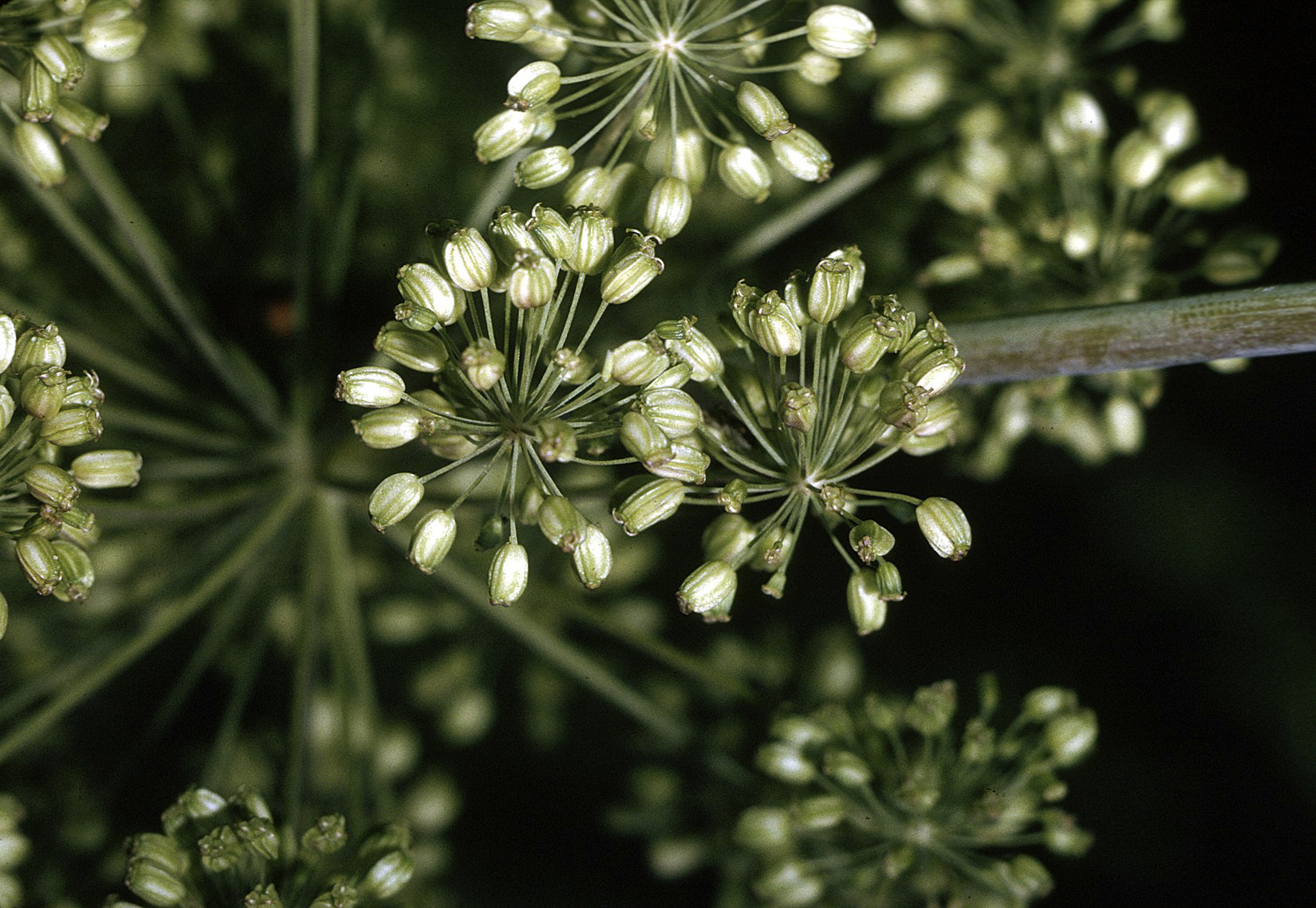 Purple angelicaArchangelica Atropurpurea
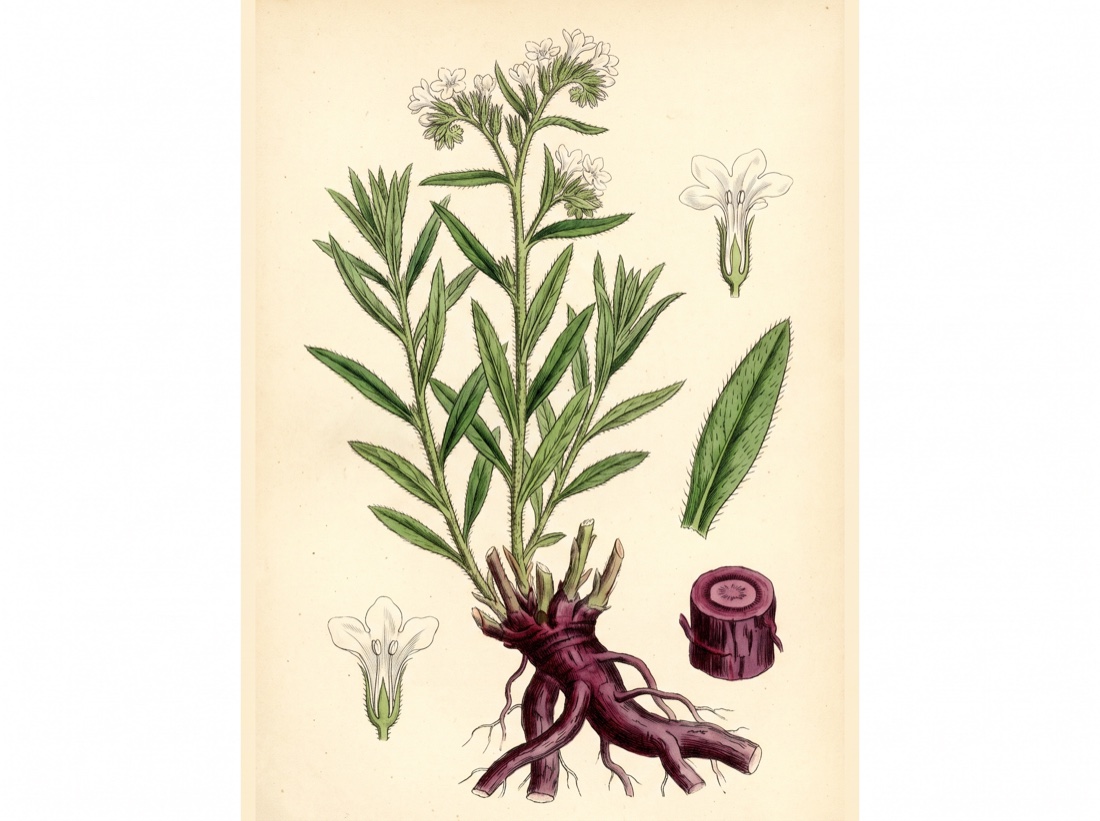 Purple gromwellLithospermum erythrorhizon
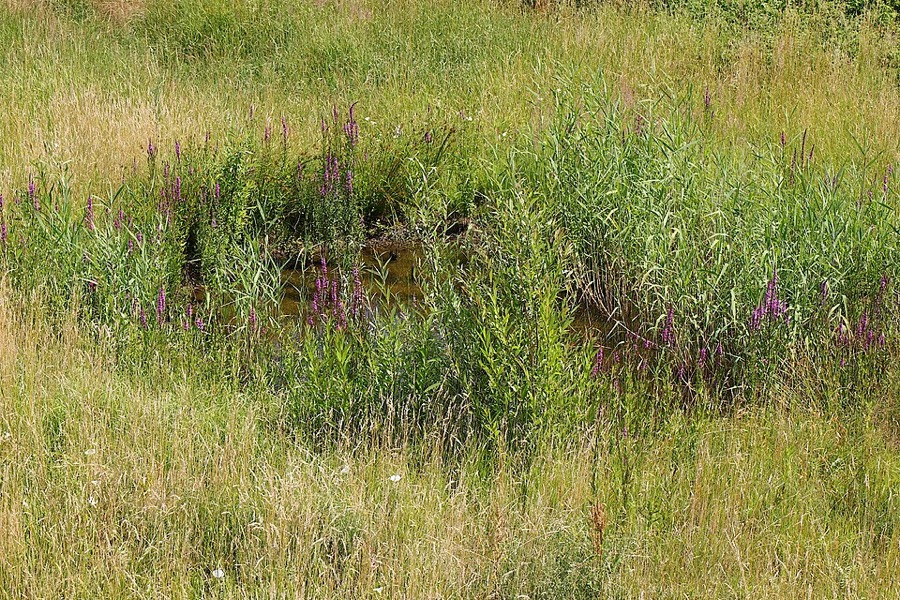 Purple loosestrifeLythrum
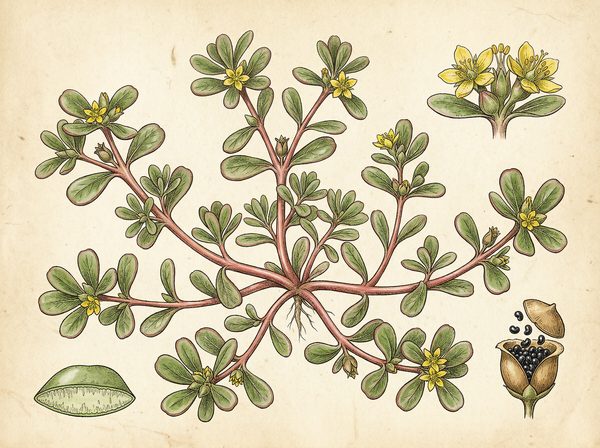 PurslanePortulaca oleracea
 PygeumPrunus africana
The whole plate is in the library. The compass, Compare, the Sky of eleven hundred plants and the formulary open with an email address and a password, free, with the formula builder and its safety engine. Herbert without limit, his formulating, clients, the handouts and the labels are the paid room.
Open the library, free