Western Herbalism
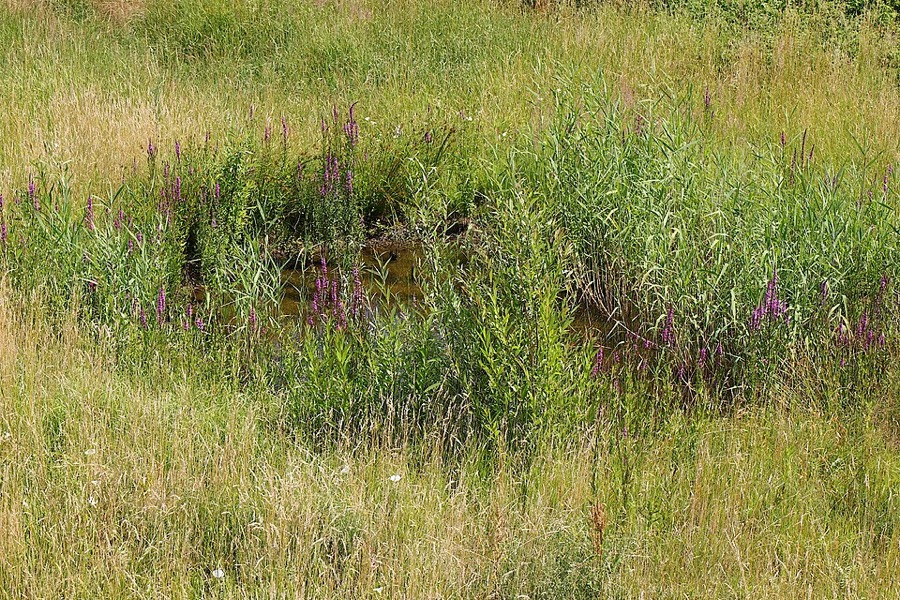
Purple loosestrife
Lythrum
Also known as Spiked loosestrife, Loosestrife, Purple willow-herb, Milk willow-herb, Milk willow-herb (Herba salicariae).
Lythrum salicaria, purple loosestrife, is a tall perennial herb of wet meadows, ditches and riverbanks native across Europe, Asia and parts of Africa, and now widely naturalized (and often invasive) in North American wetlands. The flowering aerial parts are harvested in summer for medicine. It has a long history in European folk medicine and was taken up by American eclectic physicians as a mild, reliable astringent for diarrheal disease and for topical wound care.

Ask Herbert about Purple loosestrife. Herbert is the master herbalist inside Bountiful Herbs: he answers from this plate and eleven hundred others, with dosing, pairing and cautions. Your first ten questions are free.
Ask HerbertActions
Indications what the tradition reached for it in
- Acute diarrhea
- Dysentery
- Enteritis
- Chronic loose stool with mucus
- Menorrhagia
- Wounds and skin ulcers (topical)
- Sore throat (gargle)
- Varicose veins and leg ulcers (topical wash)
- Conjunctivitis (historical eyewash)
- Weeping eczema (topical)
Specific indications
Profuse, watery diarrhea with little cramping pain, particularly in children or elderly patients where a gentle, non-griping astringent is needed
Chronic loose stools with visible mucus but no fever or acute infection, where toning the bowel wall is the priority over antimicrobial treatment
Safety
The record lists 2 contraindications; open the plate in the library to read them in full.
In practice
Purple loosestrife is one of the gentler astringents, useful when a practitioner wants to firm up loose stool without the griping or excessive dryness that stronger tannin-rich herbs can cause. It suits acute, watery diarrhea in children and frail or elderly patients, and is traditionally combined with agrimony, blackberry root bark, or a small amount of cinnamon or ginger to warm and settle the gut at the same time as toning it.
Dosing as the sources wrote it
| Preparation | As written | Metric |
|---|---|---|
| Infusion | 2-4 g dried aerial parts as tea, three times daily | 2000-4000 mg |
| Tincture (1:5, 25%) | 2-4 mL three times daily | 2-4 mL |
| Topical wash or compress | strong decoction (10-20 g per 500 mL water) applied to skin or as a gargle, prepared fresh | 10000-20000 mg |
| decoction | Dose of the decoction, 1, 2, or 3 fluid ounces; of the powder, 30 to 60 grains, repeated every 3 or 4 hours. | 3888 mg |
Doses are reproduced from the sources for practitioners and are not a recommendation for any person.
From the sources
Overview. Lythrum salicaria, purple loosestrife, is a tall perennial herb of wet meadows, ditches and riverbanks native across Europe, Asia and parts of Africa, and now widely naturalized (and often invasive) in North American wetlands. The flowering aerial parts are harvested in summer for medicine. It has a long history in European folk medicine and was taken up by American eclectic physicians as a mild, reliable astringent for diarrheal disease and for topical wound care.
Clinical Notes. Purple loosestrife is one of the gentler astringents, useful when a practitioner wants to firm up loose stool without the griping or excessive dryness that stronger tannin-rich herbs can cause. It suits acute, watery diarrhea in children and frail or elderly patients, and is traditionally combined with agrimony, blackberry root bark, or a small amount of cinnamon or ginger to warm and settle the gut at the same time as toning it.
Drawn from King's American Dispensatory, 18th edition (Felter and Lloyd), and the Bountiful Herbs editorial.
Nearby on the shelf
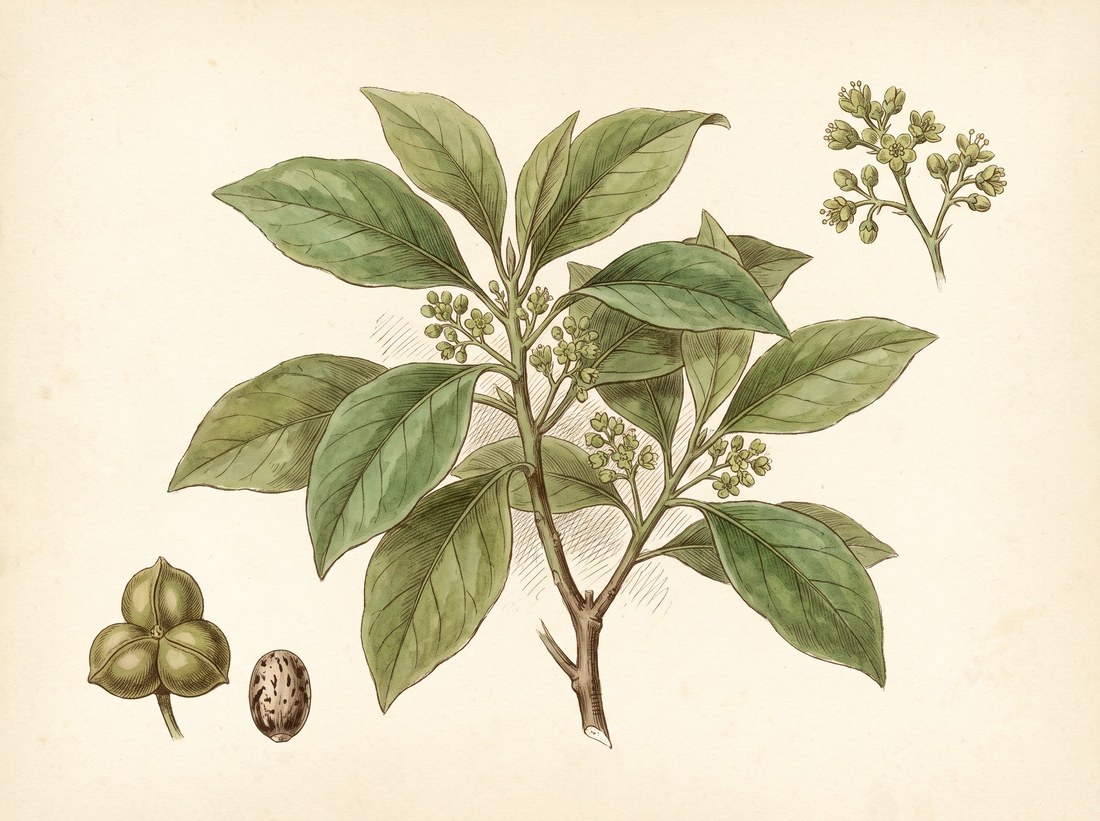 Purging crotonCroton tiglium
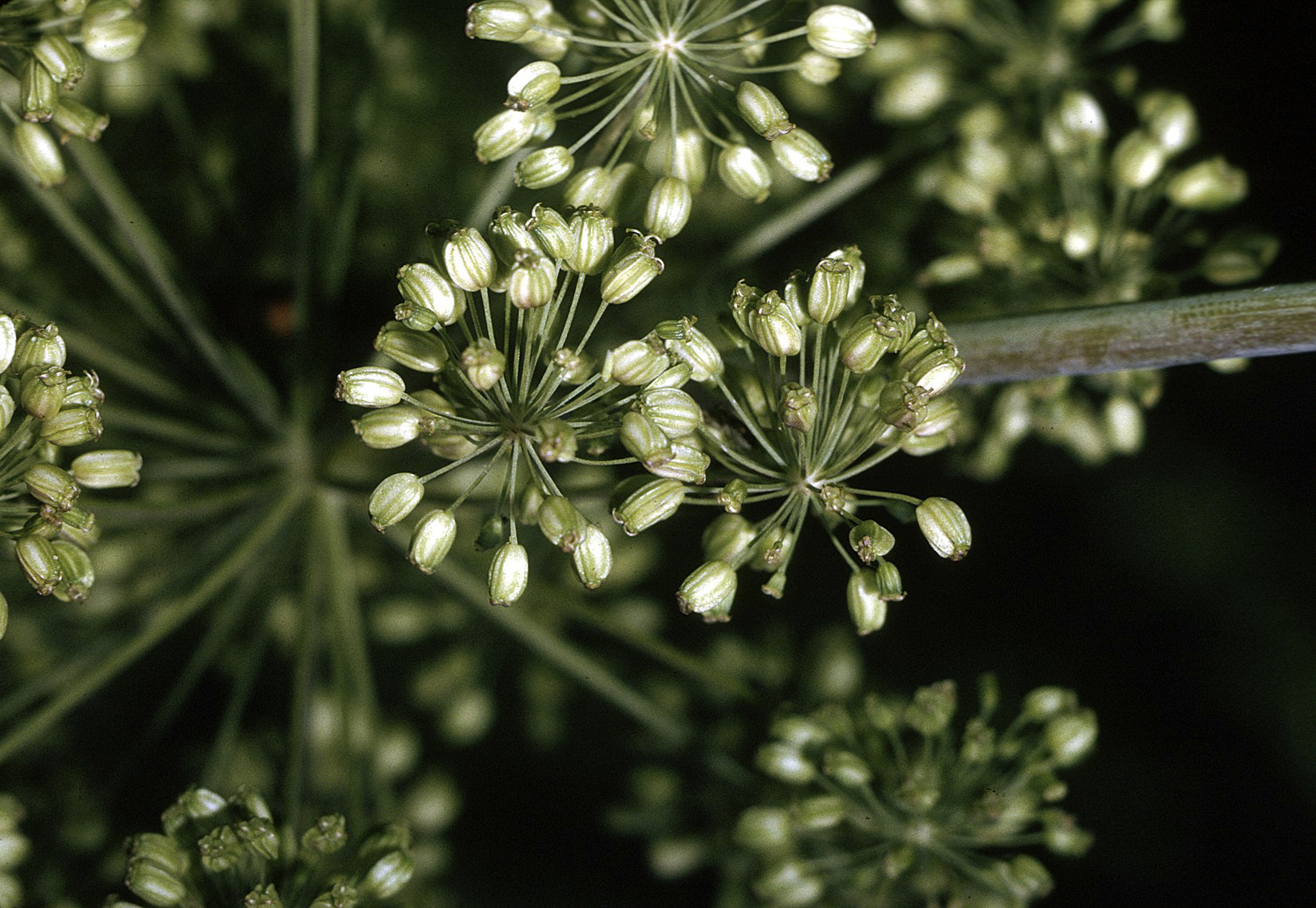 Purple angelicaArchangelica Atropurpurea
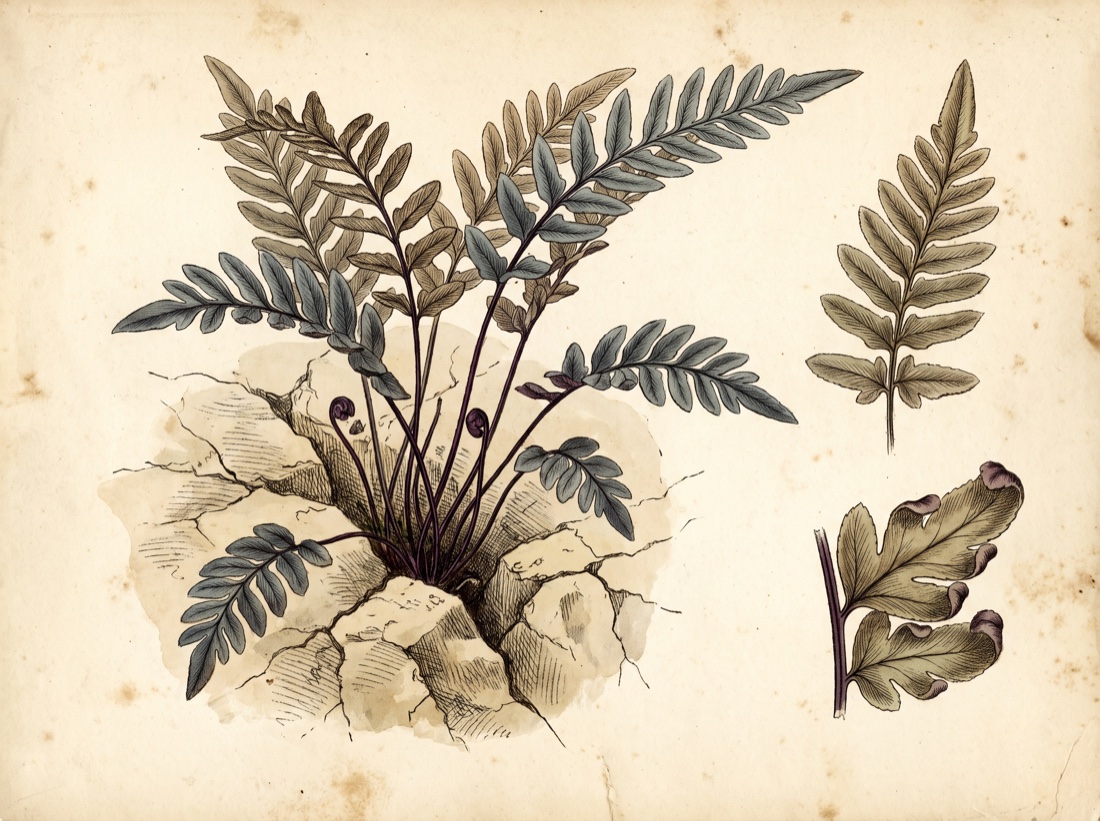 Purple cliff-brakePteris Atropurpurea
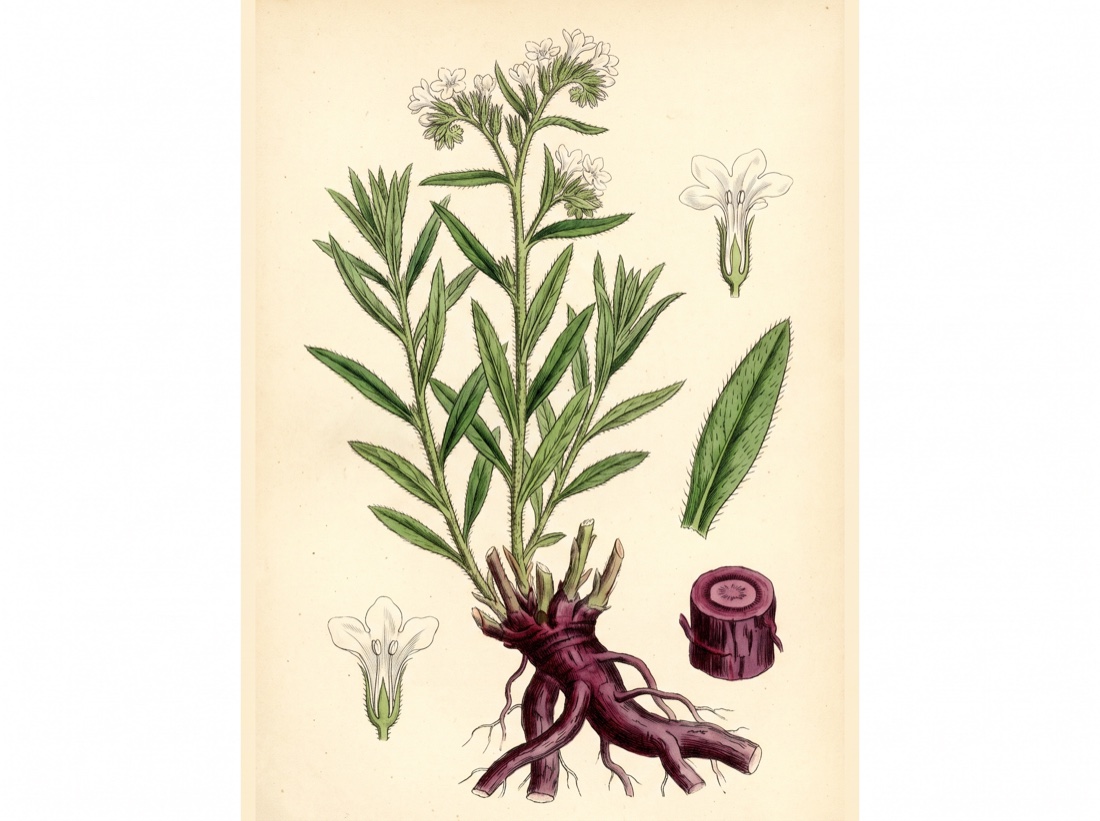 Purple gromwellLithospermum erythrorhizon
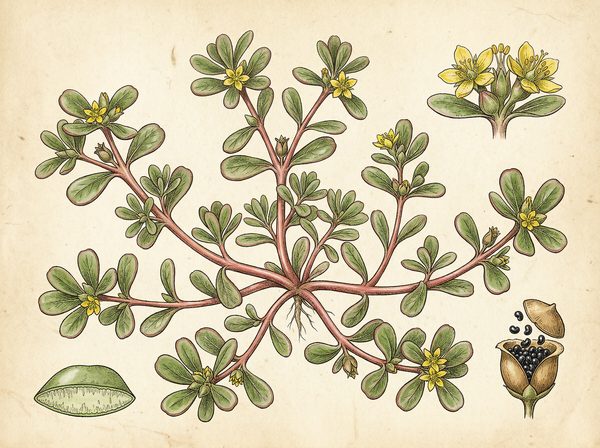 PurslanePortulaca oleracea
 PygeumPrunus africana
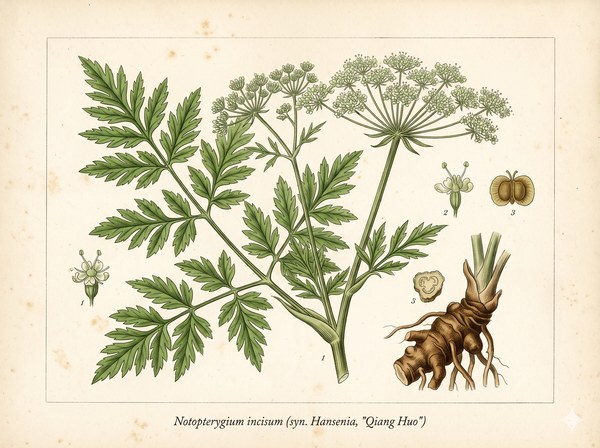 Qiang HuoNotopterygium incisum
 QuassiaQuassia amara
The whole plate is in the library. The compass, Compare, the Sky of eleven hundred plants and the formulary open with an email address and a password, free, with the formula builder and its safety engine. Herbert without limit, his formulating, clients, the handouts and the labels are the paid room.
Open the library, free