Chinese Herbalism
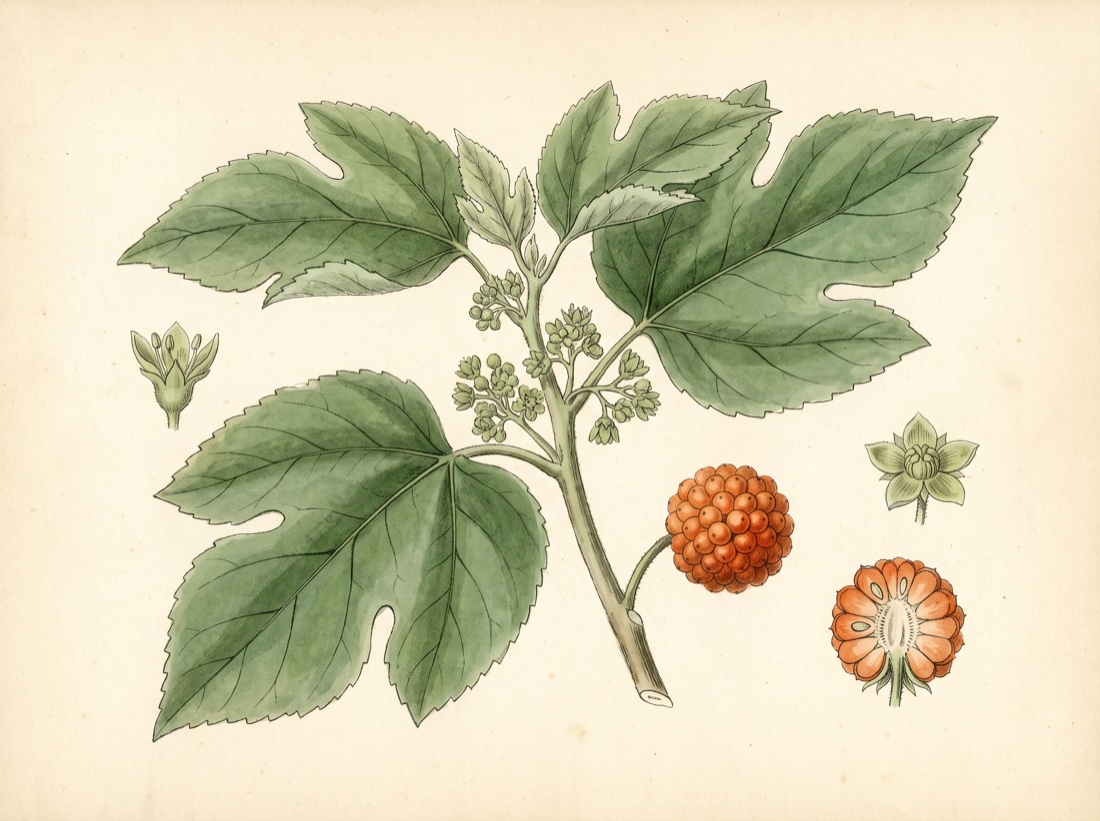
Paper mulberry
Broussonetia papyrifera
Also known as tapa cloth tree, paper mulberry fruit, chu shi zi (fruit), chǔ shí zǐ, gòu shù, chǔ shù.
Broussonetia papyrifera is a fast-growing tree of the mulberry family, native to East Asia and now naturalized across much of the world; its inner bark has been used for paper in China and Japan and for tapa cloth across the Pacific for two thousand years. In Chinese medicine the small red aggregate fruit, dried as chu shi zi, is a sweet cold tonic for the Liver and Kidney used above all for failing eyesight and dizziness in the elderly. The bark, leaf, and milky sap have minor folk uses.

Ask Herbert about Paper mulberry. Herbert is the master herbalist inside Bountiful Herbs: he answers from this plate and eleven hundred others, with dosing, pairing and cautions. Your first ten questions are free.
Ask HerbertActions
Indications what the tradition reached for it in
- Blurred vision, tired eyes, and floaters from Liver and Kidney deficiency
- Early cataract or cloudy vision in older patients (adjunct)
- Dizziness and tinnitus from Kidney deficiency
- Weak, aching lower back and knees
- Impotence or low libido of the deficient, not the hot, type
- Edema and ascites with underlying deficiency (traditional)
- Poor memory and mental fatigue in the elderly (modern interest)
- Premature graying and thinning hair (folk use)
- Bone weakness and slow recovery from fracture (traditional)
Specific indications
An older patient whose eyes are dry, tired, and dim by evening, with dizziness, a weak low back, and a red, thin-coated tongue: nourish rather than clear
Deficiency edema of the legs in someone too weak for strong diuretics, where a gently draining tonic is wanted
Safety
The record lists 5 contraindications; open the plate in the library to read them in full.
In practice
Chu shi zi belongs with lycium fruit, ligustrum, and dodder seed in the group of mild yin tonics that happen to be good for the eyes. It is not dramatic; its value is in long, gentle courses for the older patient with dimming vision, dizziness, and a weak back, where it can be decocted at 6 to 12 g with lycium fruit, chrysanthemum, and cassia seed, or made into pills.
In Chinese medicine
Temperature: cold. Taste: sweet. Channels: Liver, Kidney. Actions: Nourishes the Kidney and clears the Liver; Brightens the eyes and clears mild cloudiness of vision; Promotes urination and reduces swelling; Strengthens the sinews and bones in deficiency (traditional).
Dosing as the sources wrote it
| Preparation | As written | Metric |
|---|---|---|
| Decoction | 6-12 g dried fruit daily in decoction | 6000-12000 mg |
| Pills or powder | 1-3 g dried fruit powder twice daily | 1000-3000 mg |
Doses are reproduced from the sources for practitioners and are not a recommendation for any person.
From the sources
Overview. Broussonetia papyrifera is a fast-growing tree of the mulberry family, native to East Asia and now naturalized across much of the world; its inner bark has been used for paper in China and Japan and for tapa cloth across the Pacific for two thousand years. In Chinese medicine the small red aggregate fruit, dried as chu shi zi, is a sweet cold tonic for the Liver and Kidney used above all for failing eyesight and dizziness in the elderly. The bark, leaf, and milky sap have minor folk uses.
Clinical Notes. Chu shi zi belongs with lycium fruit, ligustrum, and dodder seed in the group of mild yin tonics that happen to be good for the eyes. It is not dramatic; its value is in long, gentle courses for the older patient with dimming vision, dizziness, and a weak back, where it can be decocted at 6 to 12 g with lycium fruit, chrysanthemum, and cassia seed, or made into pills.
Chinese Medicine Profile. Temperature: cold. Taste: sweet. Channels: Liver, Kidney. Actions: Nourishes the Kidney and clears the Liver; Brightens the eyes and clears mild cloudiness of vision; Promotes urination and reduces swelling; Strengthens the sinews and bones in deficiency (traditional).
In formulas
Paper mulberry stands in 1 documented formula in the library, among them zhù jing wán jia jiǎn fang.
Often paired with
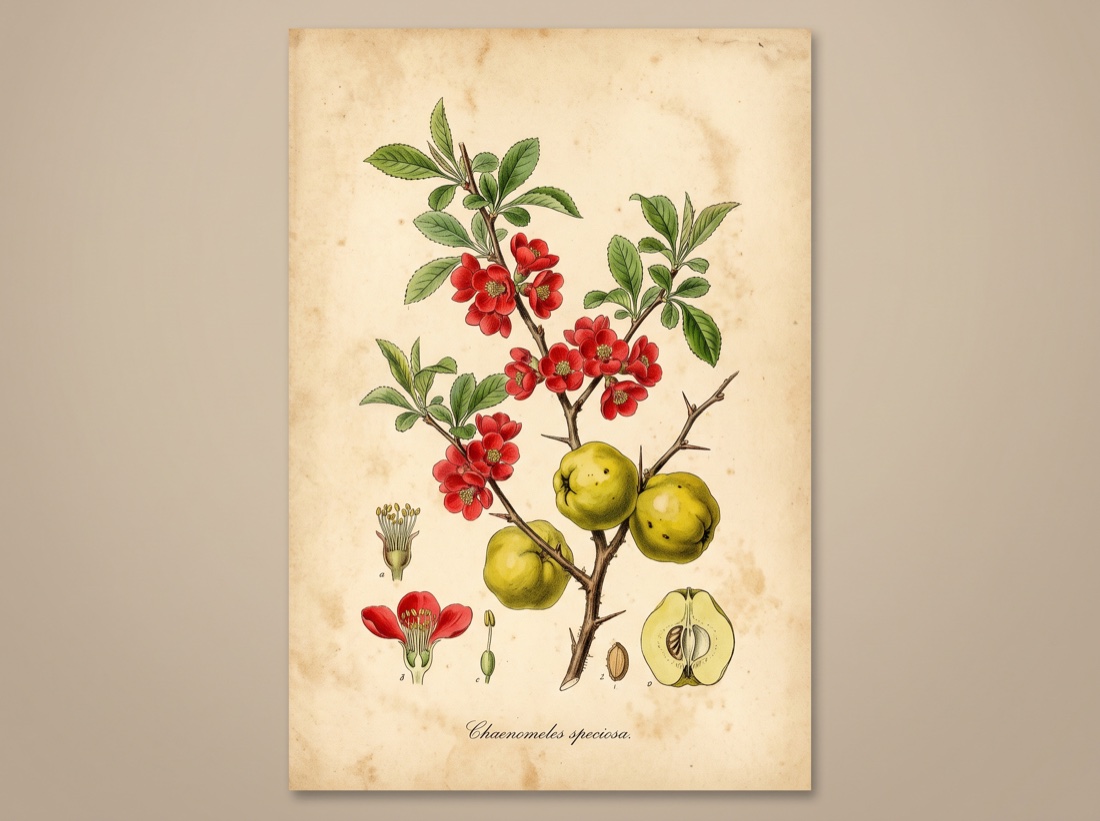 flowering quinceChaenomeles speciosa
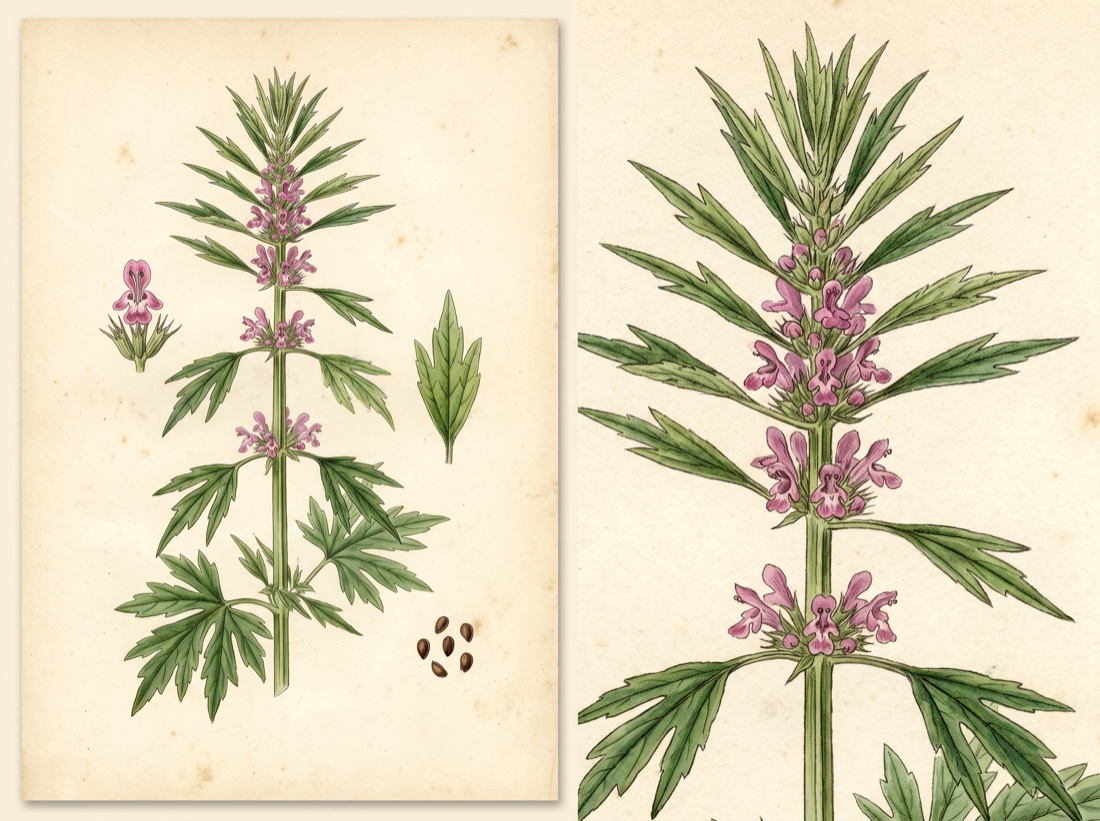 Chinese motherwortLeonurus japonicus
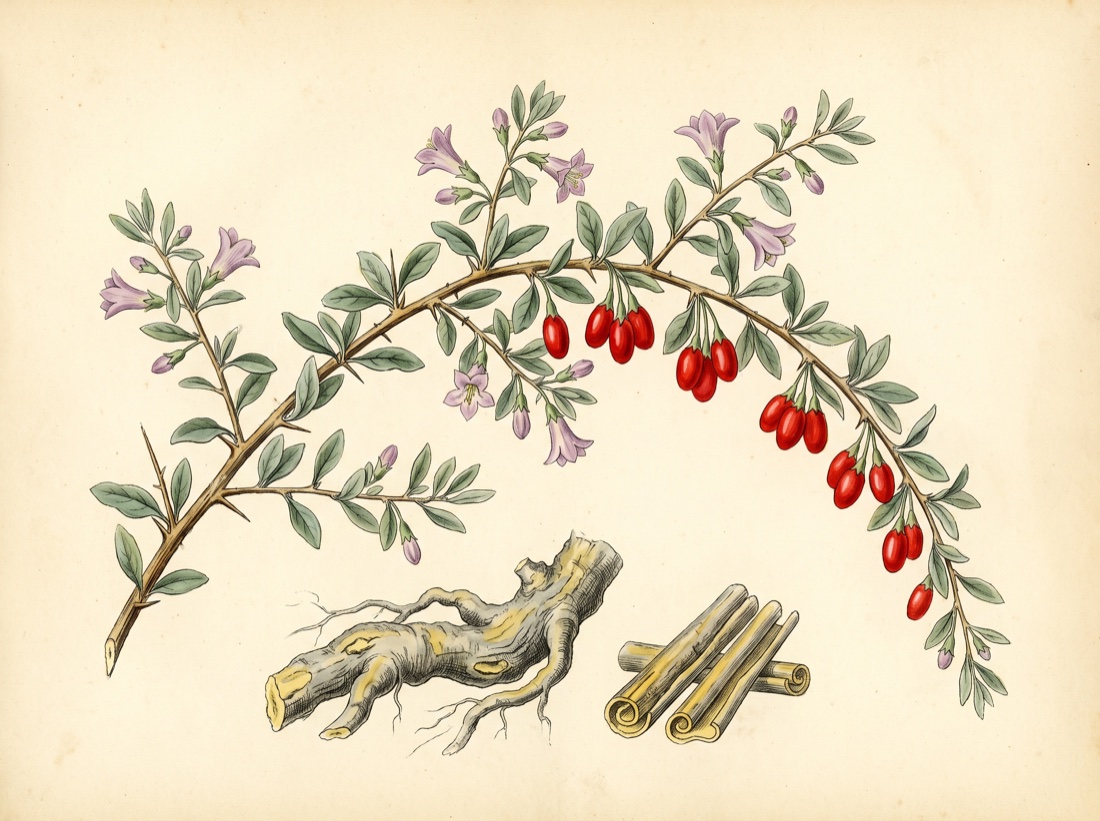 Chinese boxthornLycium chinense
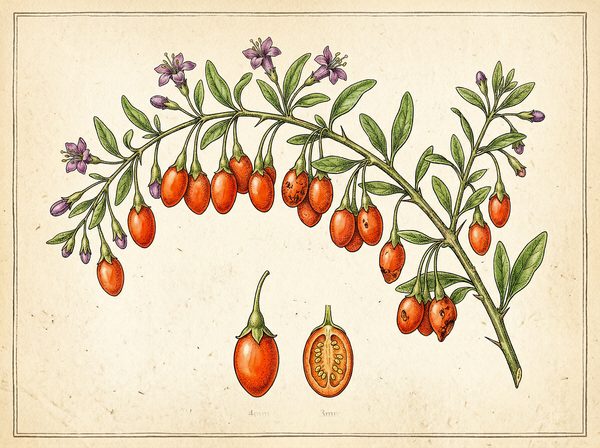 Goji berryLycium barbarum
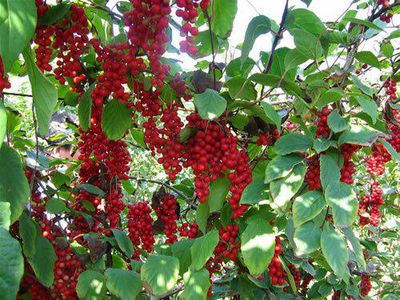 Wu Wei ZiSchisandra chinensis
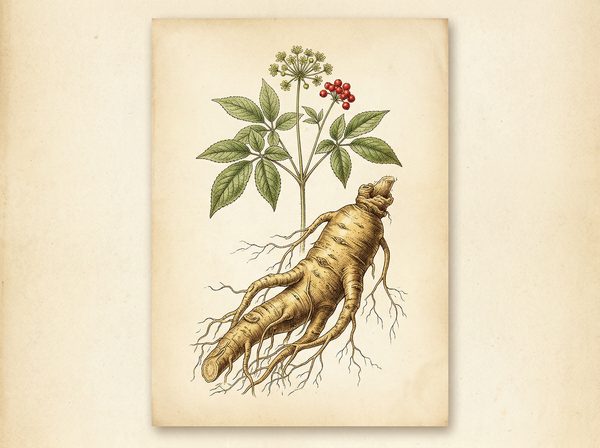 Tienchi GinsengPanax notoginseng
Nearby on the shelf
 PaiglePrimula veris
 PapawAsimina
 PapayaCarica papaya
 Para cressSpilanthes oleracea
 PareiraPareira brava
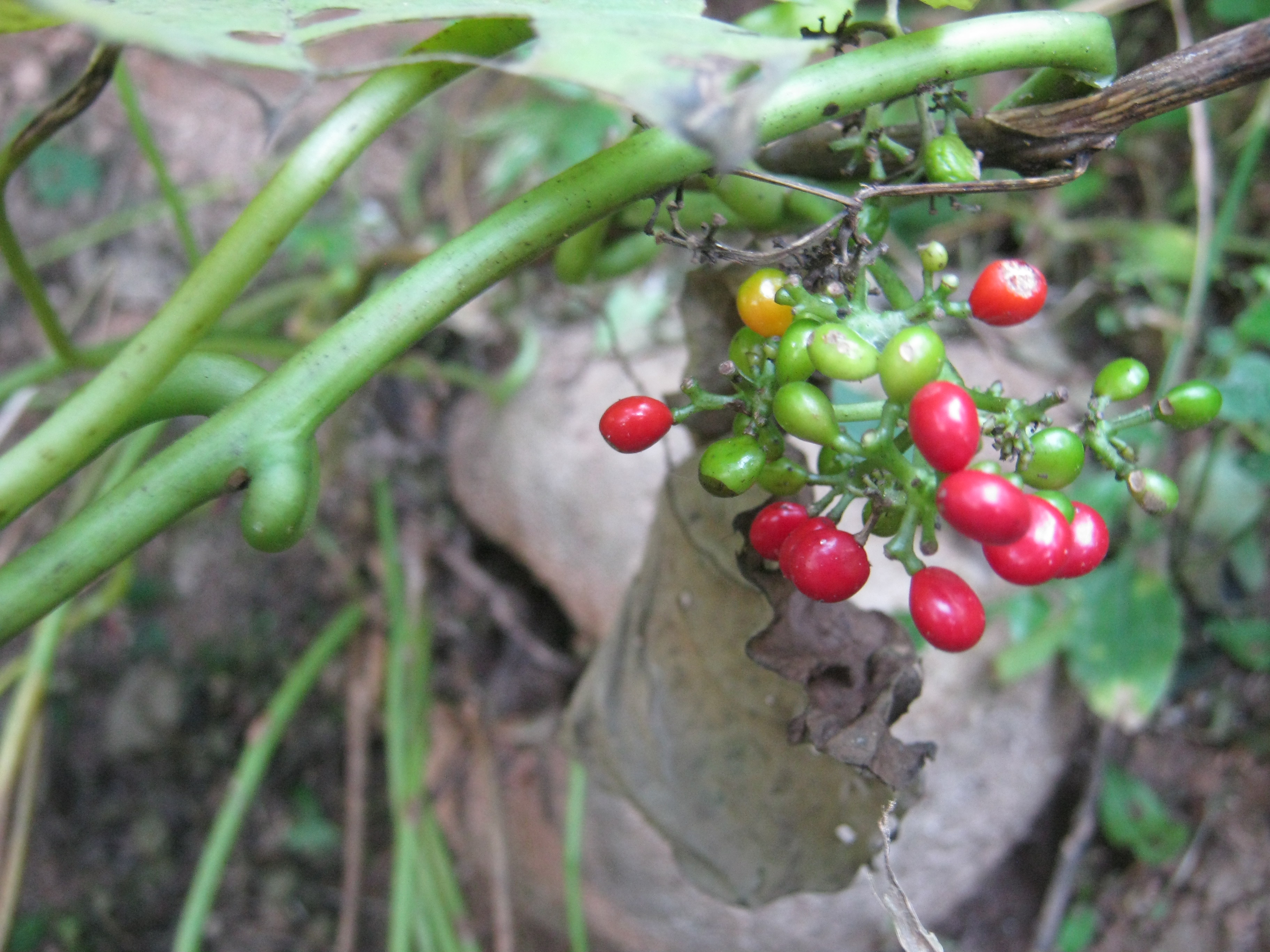 Pareira bravaCissampelos pareira
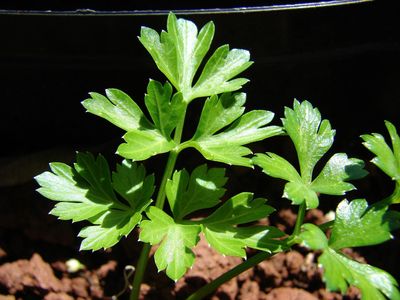 ParsleyPetroselinum crispum
The whole plate is in the library. The compass, Compare, the Sky of eleven hundred plants and the formulary open with an email address and a password, free, with the formula builder and its safety engine. Herbert without limit, his formulating, clients, the handouts and the labels are the paid room.
Open the library, free