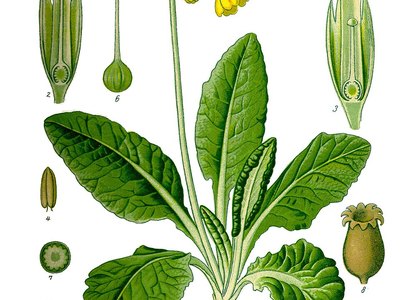
Western Herbalism
Paigle
Primula veris
Also known as Peagle, Primula, Primrose.
This plant constituted an important remedy in the early days of medicine. Under the names Radix paralyseos and Radix arthritica, it was formerly in great repute in paralysis and gout, and the plant was valued as a remedy in muscular rheumatism, neuralgic headache (hemicrania), dysmenorrhoea, toothache, gravel, and insomnia.

Ask Herbert about Paigle. Herbert is the master herbalist inside Bountiful Herbs: he answers from this plate and eleven hundred others, with dosing, pairing and cautions. Your first ten questions are free.
Ask HerbertActions
Indications what the tradition reached for it in
- Insomnia
- Nervous excitability
- Hysteria
- Specifically for anxiety states associated with restlessness
- Irritability
Safety
Pregnancy: Caution. A modern clinical reference: The safety of cowslip has not been established; In view of the lack of toxicity data, use of cowslip during pregnancy and lactation should be avoided.
Breastfeeding: Caution. A modern clinical reference: In view of the lack of toxicity data, use of cowslip during pregnancy and lactation should be avoided.
The record lists 3 contraindications; open the plate in the library to read them in full.
Dosing as the sources wrote it
| Preparation | As written | Metric |
|---|---|---|
| Dried flowers 1-2 g as an infusion three times daily | 1000-2000 mg | |
| Liquid extract 1-2 mL (1 : 1 in 25% alcohol) three times daily. | ||
| suggests a tincture of the fresh plant in bloom (℥viij to alcohol, 98 per cent, Oj), the dose of which should range from the fraction of a drop to 10 drops. | ||
| flowers | He gives the following indications: "Extreme sensitiveness, pain from slight impressions, restlessness, and insomnia." Infusion may be made of 5 to 10 per cent strength, the dose being 1 fluid ounce; dose of the flowers, 5 to 15 grains. |
Doses are reproduced from the sources for practitioners and are not a recommendation for any person.
From the sources
Action, Medical Uses, and Dosage. This plant constituted an important remedy in the early days of medicine. Under the names Radix paralyseos and Radix arthritica, it was formerly in great repute in paralysis and gout, and the plant was valued as a remedy in muscular rheumatism, neuralgic headache (hemicrania), dysmenorrhoea, toothache, gravel, and insomnia.
Botanical Source. The primrose is a perennial, stemless plant, having a short, upright, scaly root-stalk, of a brownish color, and giving off numerous fleshy roots, which contain a yellow meditullium and are covered with a thick and mealy bark.
Chemical Composition. The root of Primula veris, according to Saladin (1830), contains an acrid, neutral principle, which he called arthanitin, and which he had previously discovered in the root of Cyclamen europaeum, Linné.
Related Species. Primula auricula, Linné. Europe, in the mountains and cultivated. Fragrant lemon-yellow flowers. The aqueous distillate of the root deposits fragrant auricula camphor (Hünefeld). This species has, for ages, been used in certain parts of Germany as a remedy for phthisis pulmonalis.
Drawn from King's American Dispensatory, 18th edition (Felter and Lloyd), and the Bountiful Herbs editorial.
Nearby on the shelf
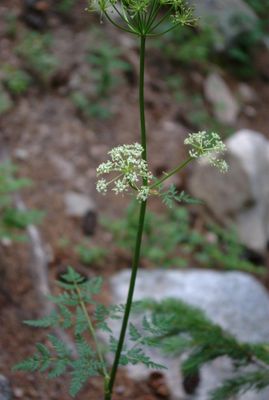 OshaLigusticum porteri
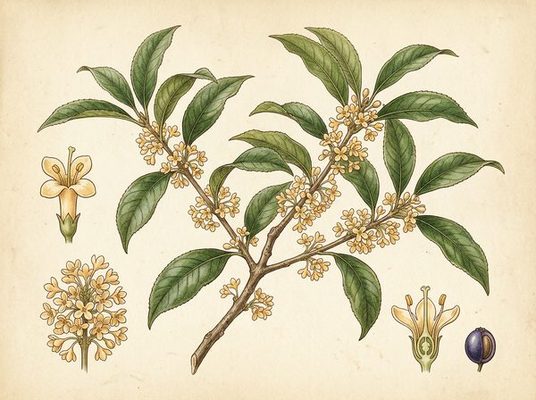 OsmanthusOsmanthus fragrans
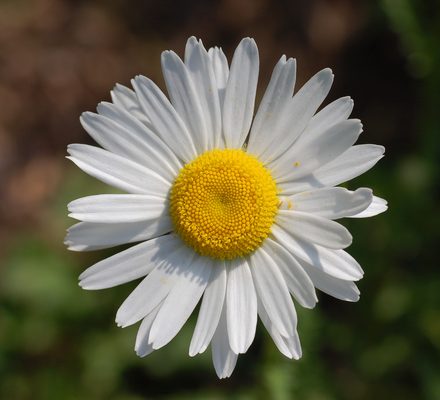 Ox-eye daisyChrysanthemum leucanthemum
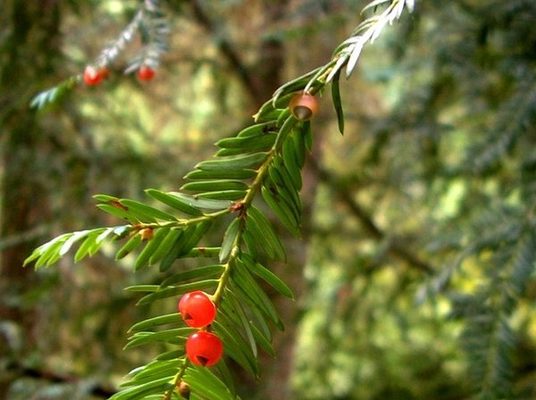 Pacific YewTaxus brevifolia
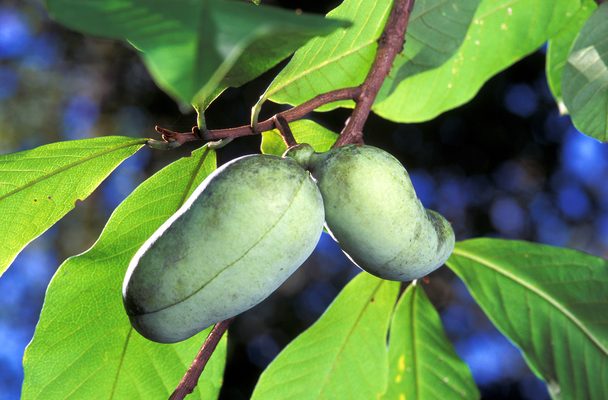 PapawAsimina triloba
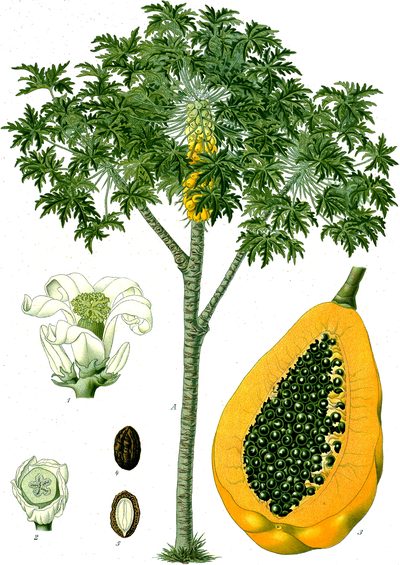 PapayaCarica papaya
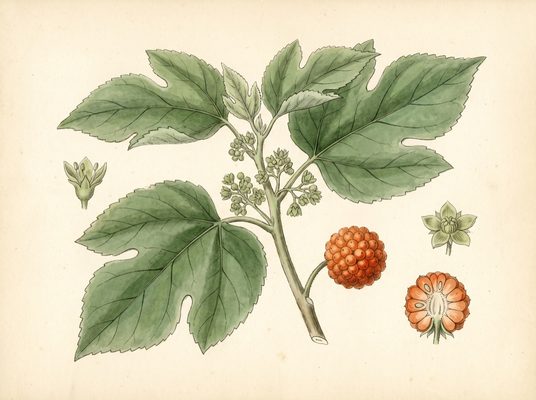 Paper mulberryBroussonetia papyrifera
 Para cressSpilanthes oleracea
The whole plate is in the library. The compass, Compare, the Sky of eleven hundred plants and the formulary open with an email address and a password, free, with the formula builder and its safety engine. Herbert in full, his formulating, clients, the handouts and the labels are the paid room.
Open the library, free