Ayurvedic Herbalism
Egyptian riverhemp
Sesbania sesban
Also known as common sesban, jayanti, sesban, Egyptian pea, Jayanti, Jaya, Vijaya.
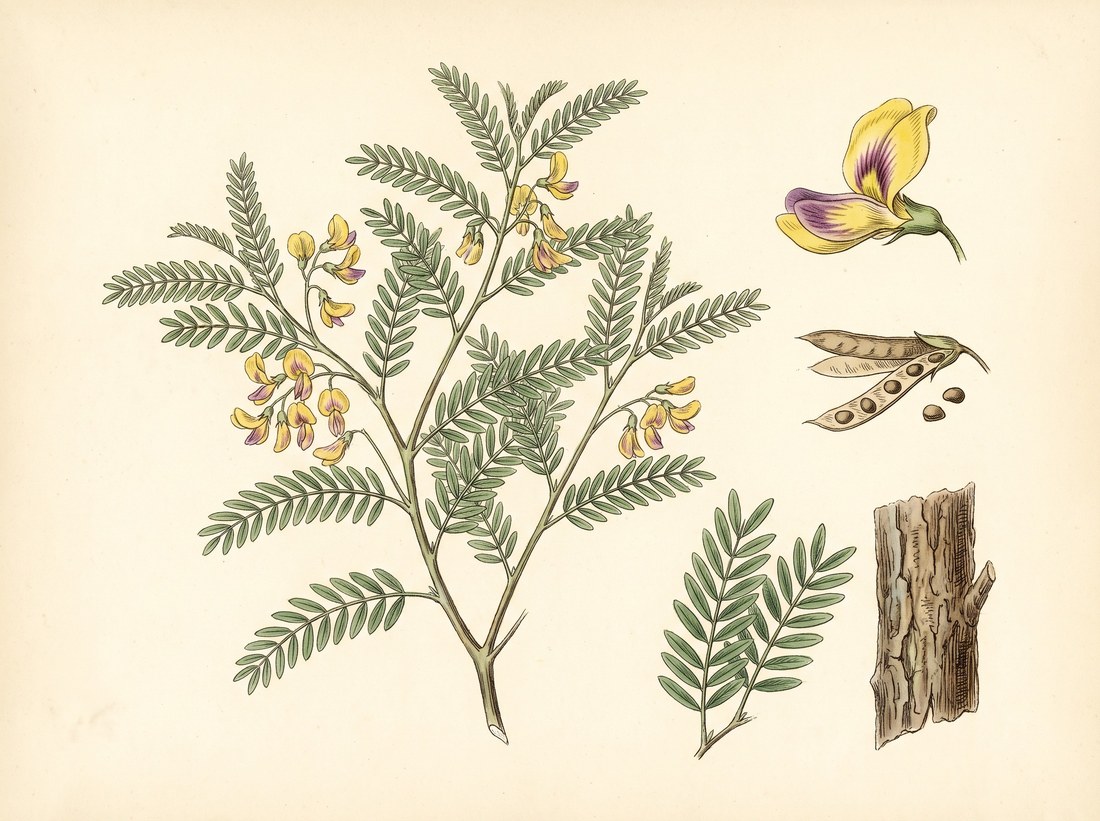
Sesbania sesban is a short-lived, fast-growing shrub or small tree of the pea family with feathery leaves and yellow flowers streaked with purple, native to tropical Africa and Asia and grown throughout India along field margins, canals and tank bunds as a green manure, fodder and living fence. Ayurveda knows it as Jayanti, a bitter, cooling plant whose leaves are the village remedy for worms, boils and stings and whose seeds are used for diarrhea. Leaf, seed, bark and root are all used, the leaf most of all.

Ask Herbert about Egyptian riverhemp. Herbert is the master herbalist inside Bountiful Herbs: he answers from this plate and eleven hundred others, with dosing, pairing and cautions. Your first ten questions are free.
Ask HerbertActions
Indications what the tradition reached for it in
- Intestinal worms, especially tapeworm and threadworm
- Boils, abscesses and inflamed glands (poultice)
- Scorpion and insect stings (leaf paste, traditional)
- Sprains, joint swelling and bruises (warm poultice)
- Diarrhea and dysentery (seed powder)
- Fever with digestive upset in children (leaf juice, traditional)
- Itchy skin eruptions and scabies (seed or leaf paste)
- Conjunctivitis and sore eyes (diluted leaf juice, traditional)
- Delayed or scanty menses (traditional, leaf decoction)
- Rheumatic swelling (topical)
Specific indications
A child with worms, a swollen belly, itching around the anus and a poor appetite, given fresh leaf juice with a pinch of rock salt for a few mornings
A hot, red, painful boil or abscess that has not yet pointed, dressed with a warm leaf poultice to bring it to a head or disperse it
A sprained ankle or a swollen, hot joint in a kapha-pitta patient where a cooling, drawing leaf poultice is wanted rather than a warming oil
Loose stool with mucus in a damp, sluggish patient, given the astringent seed powder with buttermilk
Safety
The record lists 6 contraindications; open the plate in the library to read them in full.
In practice
Jayanti is a folk and regional herb, and the Ayurvedic practitioner uses it mostly fresh and mostly on the outside. The fresh leaf juice, 10 to 20 mL with a little rock salt on an empty stomach for three to five mornings, is a household anthelmintic for children, often followed by a mild purgative such as castor oil.
In Ayurveda
Rasa: tikta (bitter), kashaya (astringent). Virya: sheeta (cooling). Vipaka: katu (pungent). Guna: laghu (light), ruksha (dry). Dosha: pacifies kapha and pitta; may aggravate vata in excess. Karma: krimighna (anthelmintic); vishaghna (counters poison); shothahara (reduces swelling); vranaropana (heals wounds); vranashodhana (cleans wounds); jvarahara (reduces fever); grahi (binds loose stool, seed); kaphapittahara (reduces kapha and pitta); vedanasthapana (relieves pain, topical). Classical indications: krimi (worms); visha (poisoning, especially scorpion and insect stings); vrana (wounds and ulcers); vidradhi (abscess); shotha (swelling); jvara (fever); atisara (diarrhea, seed); pravahika (dysentery, seed); netraroga (eye disorders, leaf juice); kandu (itching). The leaves are the main part, used fresh as swarasa for worms and fever and as a warm kalka or poultice for abscesses, swellings and stings; the seeds are powdered for diarrhea and applied as a paste to skin eruptions; the bark and root are used as decoctions in regional practice. The plant is mostly a single-herb and folk remedy rather than a member of the great compound formulas. Classical formulations: Jayanti patra swarasa, Jayanti patra kalka (poultice), Jayanti beeja churna, Jayantyadi kwatha (regional). Described in: Bhavaprakasha Nighantu, Raja Nighantu, Dhanvantari Nighantu.
Dosing as the sources wrote it
| Preparation | As written | Metric |
|---|---|---|
| Swarasa (leaf) | 10-20 mL fresh leaf juice once daily on an empty stomach for three to five days | 10-20 mL |
| Churna (leaf) | 3-6 g powdered leaf twice daily | 3000-6000 mg |
| Churna (seed) | 1-3 g powdered seed twice daily with buttermilk | 1000-3000 mg |
| Kalka, topical | 10-20 g warm leaf paste applied as a poultice once or twice daily | 10000-20000 mg |
| Kwatha (bark or root) | 50-100 mL decoction twice daily | 50-100 mL |
Doses are reproduced from the sources for practitioners and are not a recommendation for any person.
From the sources
Overview. Sesbania sesban is a short-lived, fast-growing shrub or small tree of the pea family with feathery leaves and yellow flowers streaked with purple, native to tropical Africa and Asia and grown throughout India along field margins, canals and tank bunds as a green manure, fodder and living fence. Ayurveda knows it as Jayanti, a bitter, cooling plant whose leaves are the village remedy for worms, boils and stings and whose seeds are used for diarrhea. Leaf, seed, bark and root are all used, the leaf most of all.
Clinical Notes. Jayanti is a folk and regional herb, and the Ayurvedic practitioner uses it mostly fresh and mostly on the outside. The fresh leaf juice, 10 to 20 mL with a little rock salt on an empty stomach for three to five mornings, is a household anthelmintic for children, often followed by a mild purgative such as castor oil.
Ayurvedic Profile. Rasa: tikta (bitter), kashaya (astringent). Virya: sheeta (cooling). Vipaka: katu (pungent). Guna: laghu (light), ruksha (dry). Dosha: pacifies kapha and pitta; may aggravate vata in excess. Karma: krimighna (anthelmintic); vishaghna (counters poison); shothahara (reduces swelling); vranaropana (heals wounds); vranashodhana (cleans wounds); jvarahara (reduces fever); grahi (binds loose stool, seed); kaphapittahara (reduces kapha and pitta); vedanasthapana (relieves pain, topical).
In formulas
Egyptian riverhemp stands in 4 documented formulas in the library, among them Viṣatinduka Taila, Muktā Bhasma, Ratnagiri Rasa, Vajrakapāṭa Rasa.
Often paired with
 false daisyEclipta prostrata
 moringaMoringa oleifera
 Ceylon leadwortPlumbago zeylanica
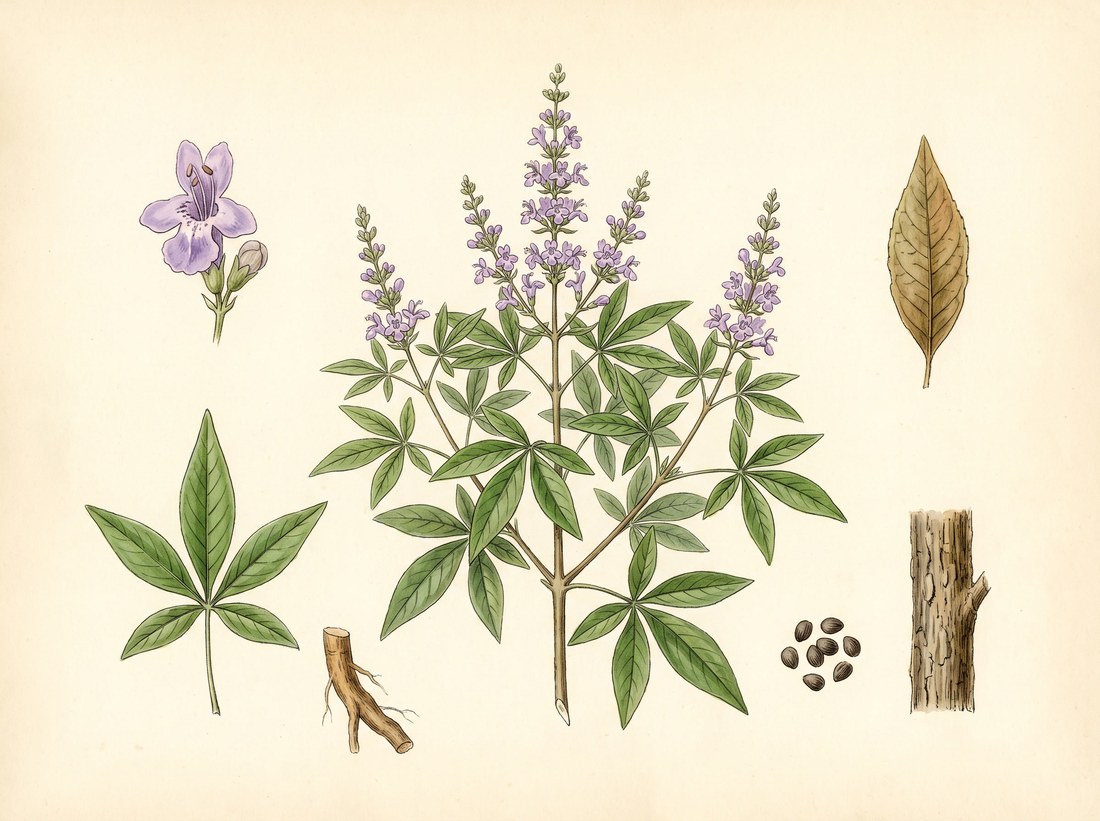 nirgundiVitex negundo
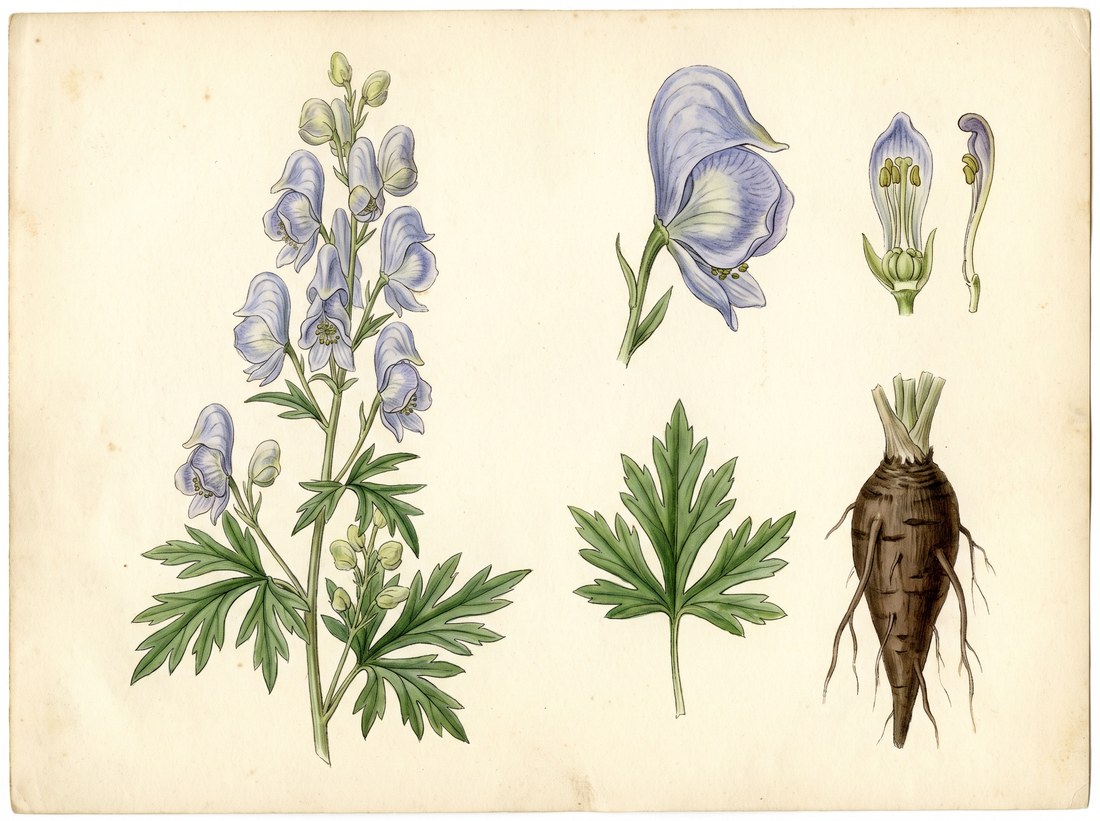 Indian ateesAconitum heterophyllum
 nut grassCyperus rotundus
Nearby on the shelf
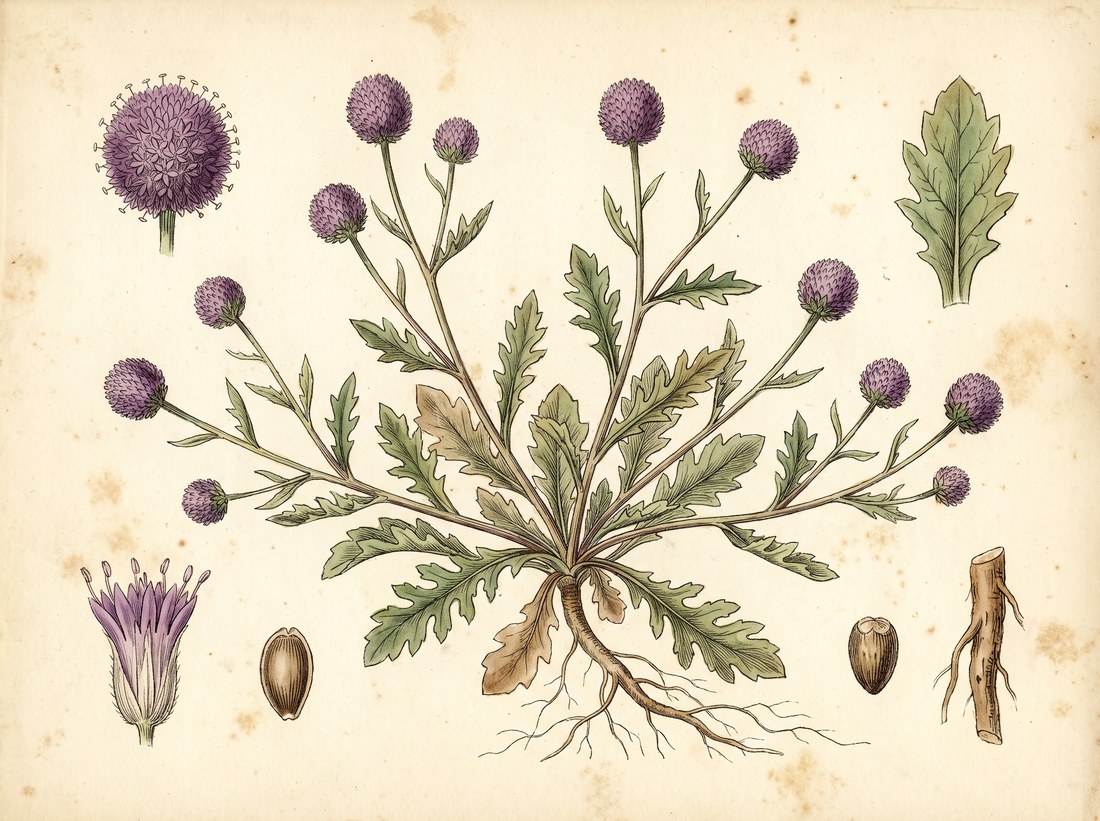 East Indian globe thistleSphaeranthus indicus
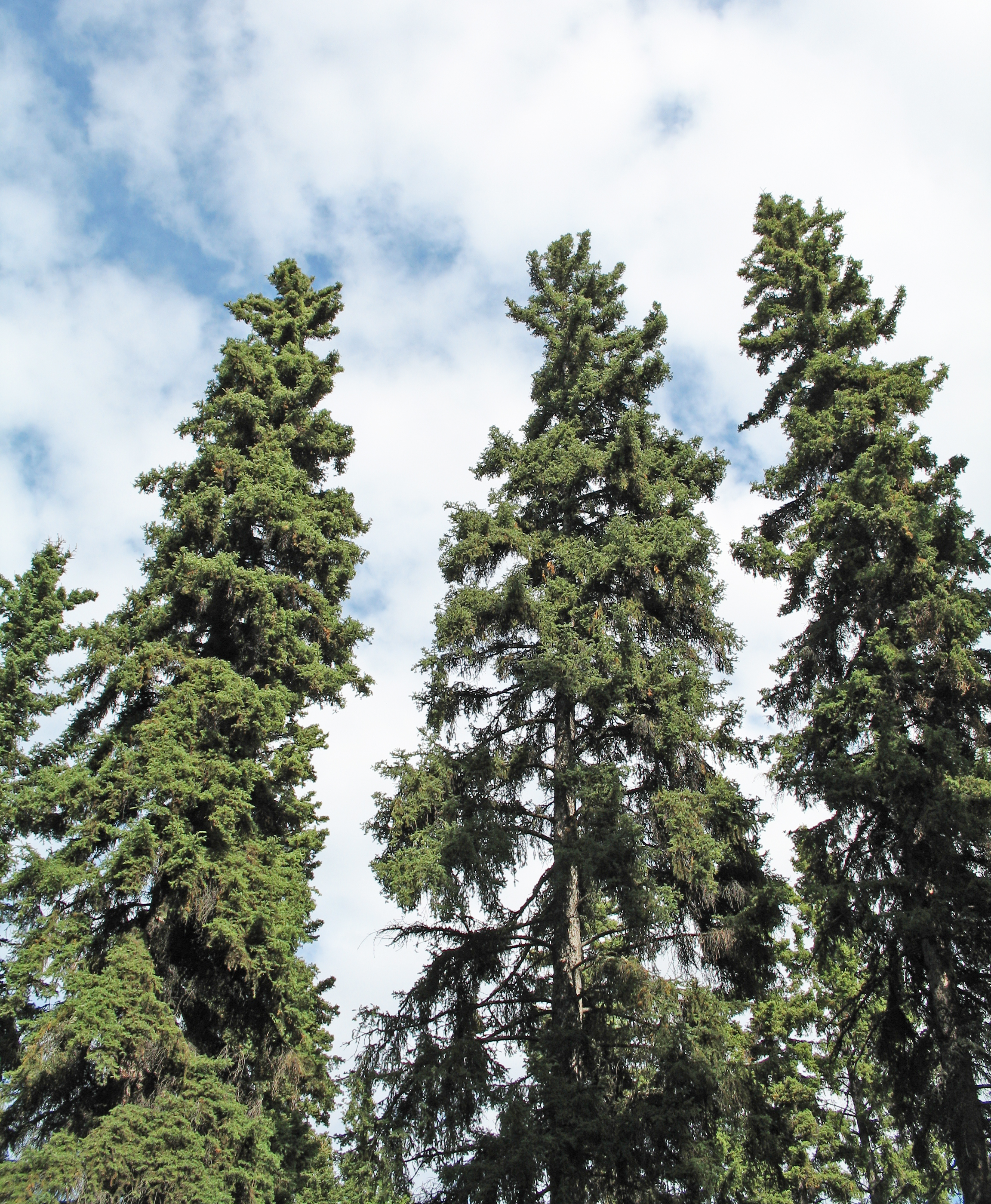 Eastern HemlockAbies Canadensis
 Eastern red cedarJuniperus virginiana
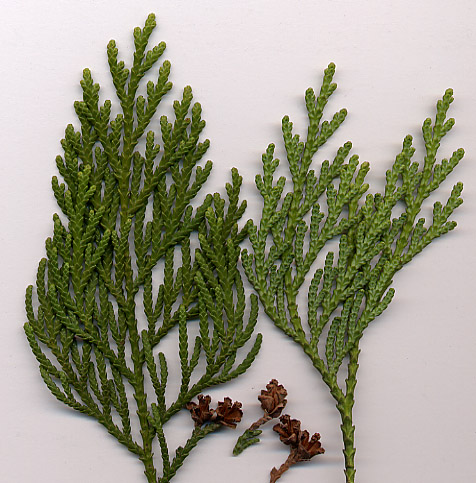 Eastern white cedarThuja occidentalis
 ElateriumEcballium elaterium
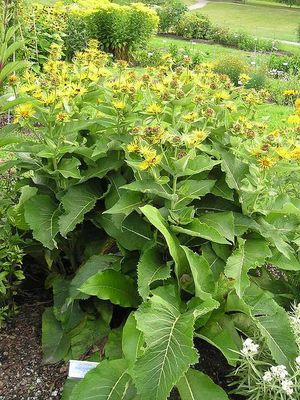 ElecampaneInula helenium
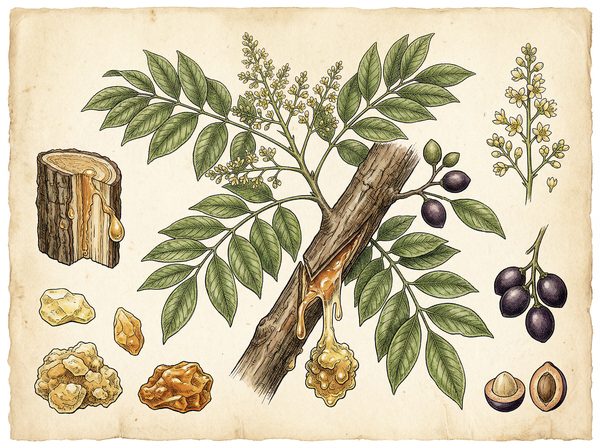 ElemiCanarium luzonicum
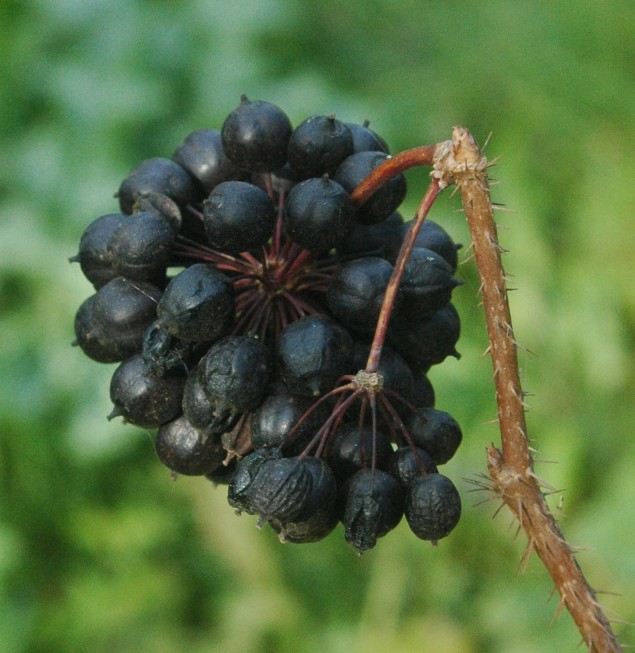 EleutheroEleutherococcus senticosus
The whole plate is in the library. The compass, Compare, the Sky of eleven hundred plants and the formulary open with an email address and a password, free, with the formula builder and its safety engine. Herbert without limit, his formulating, clients, the handouts and the labels are the paid room.
Open the library, free