Chinese Herbalism
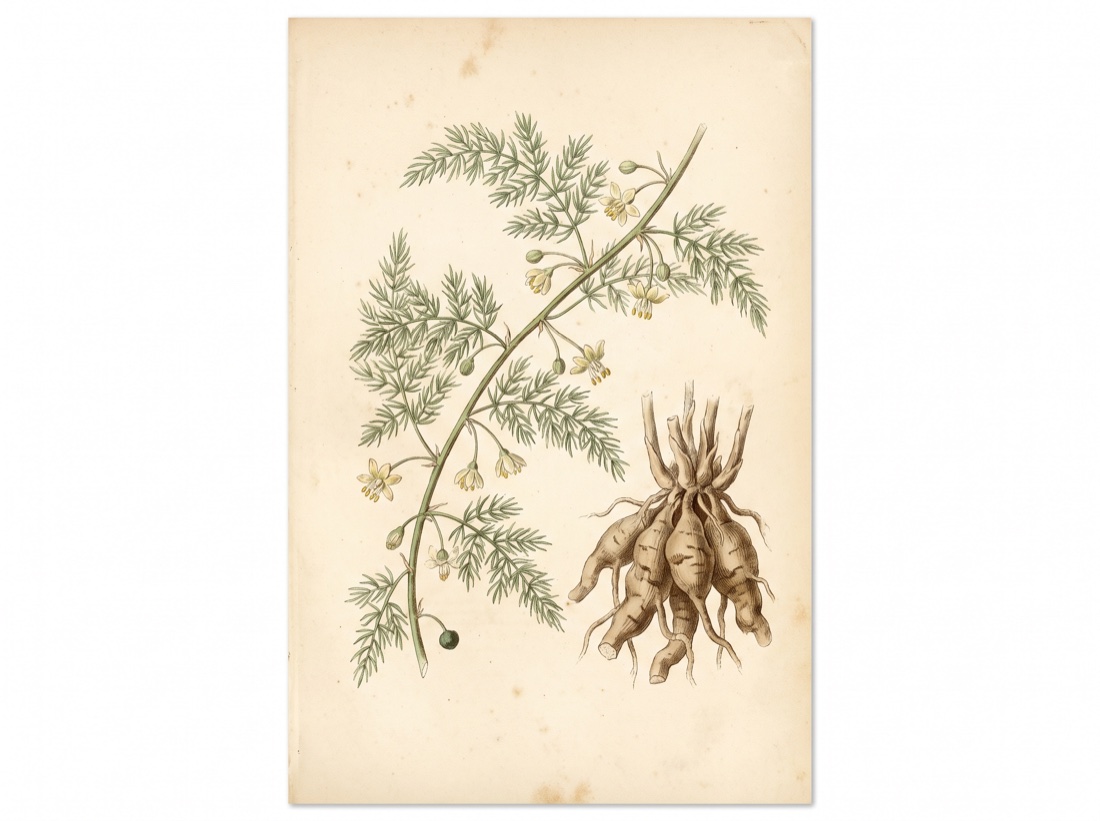
Chinese asparagus
Asparagus cochinchinensis
Also known as Chinese asparagus tuber, cochinchinese asparagus, tian men dong, tian dong, tiān mén dōng, tiān dōng.
Tian men dong is the dried, peeled and steamed tuberous root of Asparagus cochinchinensis, a climbing asparagus native to China, Japan, Korea and Vietnam and grown commercially in Guizhou, Sichuan and Guangxi. It is one of the classic yin-nourishing herbs of Chinese medicine, cold and sweet, entering the lung and kidney, and is the stronger, colder partner of mai men dong (Ophiopogon) in formulas for dry cough and consumptive disorders. It has also been eaten as a health food and used in cosmetics.

Ask Herbert about Chinese asparagus. Herbert is the master herbalist inside Bountiful Herbs: he answers from this plate and eleven hundred others, with dosing, pairing and cautions. Your first ten questions are free.
Ask HerbertActions
Indications what the tradition reached for it in
- Dry cough with scant sticky sputum
- Chronic cough with blood-streaked sputum
- Dry mouth and throat with thirst
- Low-grade afternoon fever and night sweats of yin deficiency
- Wasting and thirsting (xiao ke) with dryness
- Constipation from dryness in the elderly
- Dry sore throat and hoarseness in speakers and singers
- Restlessness and insomnia with heat from deficiency
- Dry skin and mucosa after fever or chemotherapy
Specific indications
A hacking, dry, tickling cough worse in the evening with a parched throat and a red, dry tongue
An elderly person with dry stools, dry mouth and a thin, rapid pulse who needs moistening rather than purging
Safety
The record lists 7 contraindications; open the plate in the library to read them in full.
In practice
Reach for tian men dong when lung and kidney yin are both depleted and the picture is dry, hot and thin: the dry cough that lingers after a fever or a long winter of indoor heating, the parched throat of a teacher, the night sweats and low fever of chronic illness.
In Chinese medicine
Temperature: very cold. Taste: sweet, bitter. Channels: Lung, Kidney. Actions: Nourishes yin and clears heat from the lung; Moistens dryness and generates fluids; Nourishes kidney yin and settles deficiency fire; Moistens the intestines to relieve constipation.
Dosing as the sources wrote it
| Preparation | As written | Metric |
|---|---|---|
| Decoction | 6-12 g dried tuber daily | 6000-12000 mg |
| Syrup or paste | 10-15 g equivalent dried tuber daily in divided doses | 10000-15000 mg |
| Tincture (1:5, 30%) | 2-4 mL three times daily | 2-4 mL |
Doses are reproduced from the sources for practitioners and are not a recommendation for any person.
From the sources
Overview. Tian men dong is the dried, peeled and steamed tuberous root of Asparagus cochinchinensis, a climbing asparagus native to China, Japan, Korea and Vietnam and grown commercially in Guizhou, Sichuan and Guangxi. It is one of the classic yin-nourishing herbs of Chinese medicine, cold and sweet, entering the lung and kidney, and is the stronger, colder partner of mai men dong (Ophiopogon) in formulas for dry cough and consumptive disorders. It has also been eaten as a health food and used in cosmetics.
Clinical Notes. Reach for tian men dong when lung and kidney yin are both depleted and the picture is dry, hot and thin: the dry cough that lingers after a fever or a long winter of indoor heating, the parched throat of a teacher, the night sweats and low fever of chronic illness.
Chinese Medicine Profile. Temperature: very cold. Taste: sweet, bitter. Channels: Lung, Kidney. Actions: Nourishes yin and clears heat from the lung; Moistens dryness and generates fluids; Nourishes kidney yin and settles deficiency fire; Moistens the intestines to relieve constipation.
In formulas
Chinese asparagus stands in 43 documented formulas in the library, among them dà zào wán, shí hú yè guāng wán, gǎn lù yìn, tiãn wáng bũ xin dàn, thèn gàn xì fêng tāng, lóng dǎn xiè gǎn tāng.
Often paired with
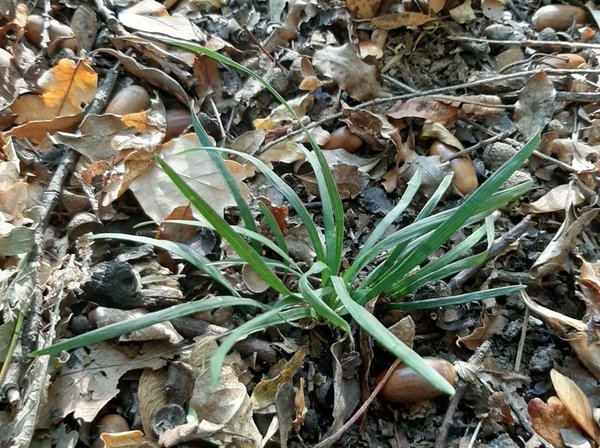 Mai Men DongOphiopogon japonicus
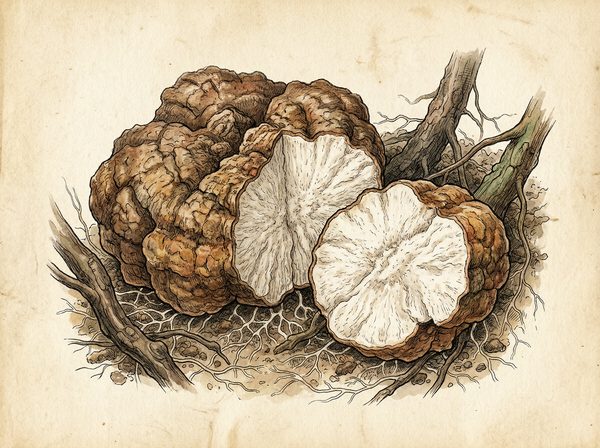 PoriaWolfiporia extensa
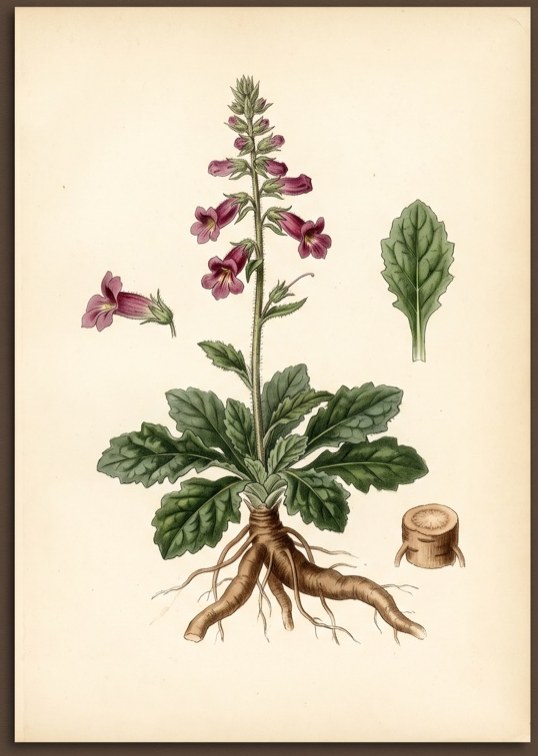 RehmanniaRehmannia glutinosa
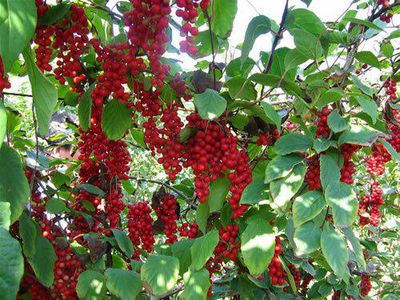 Wu Wei ZiSchisandra chinensis
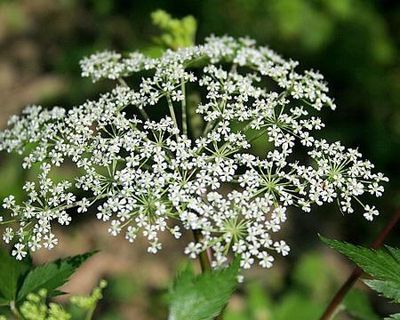 Dong QuaiAngelica sinensis
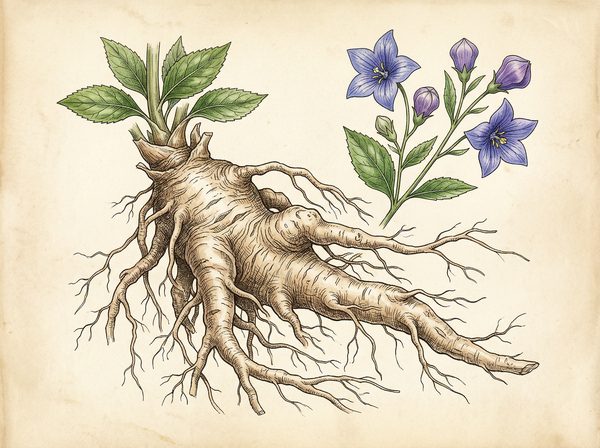 Balloon Flower RootPlatycodon grandiflorus
Nearby on the shelf
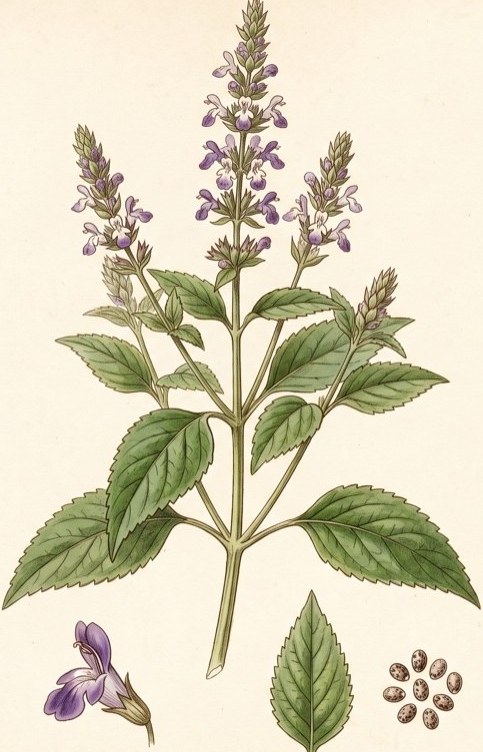 ChiaSalvia hispanica
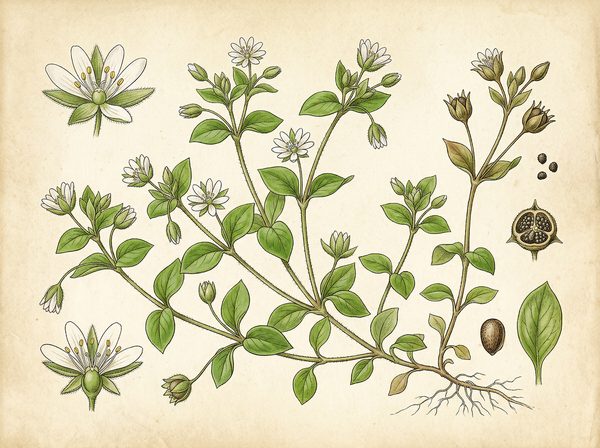 ChickweedStellaria media
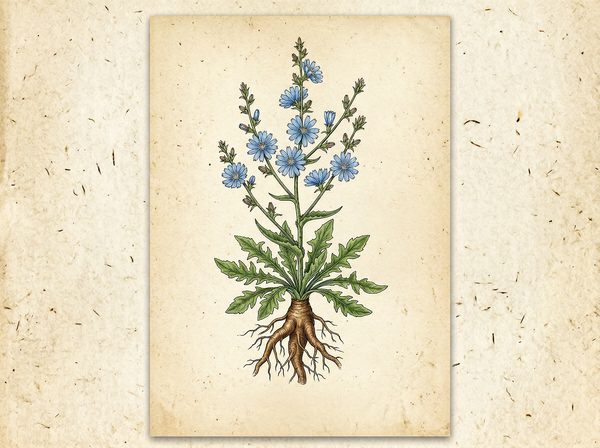 ChicoryCichorium intybus
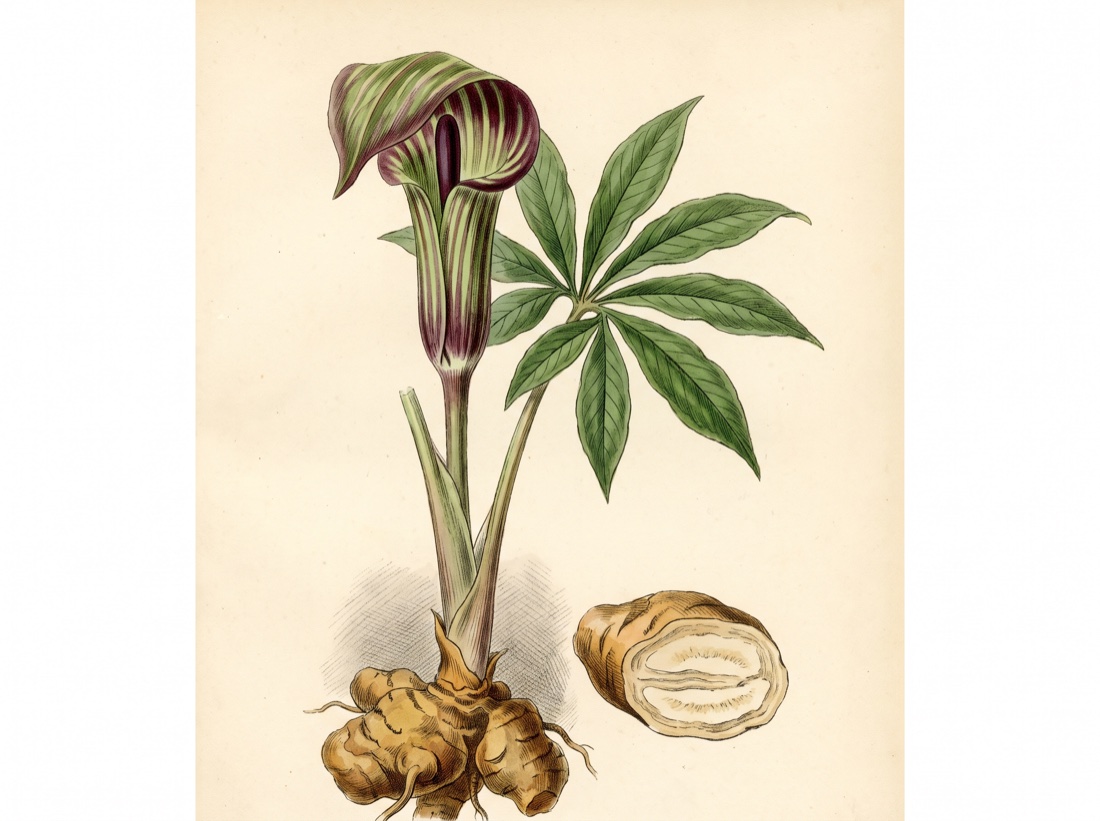 Chinese arisaemaArisaema erubescens
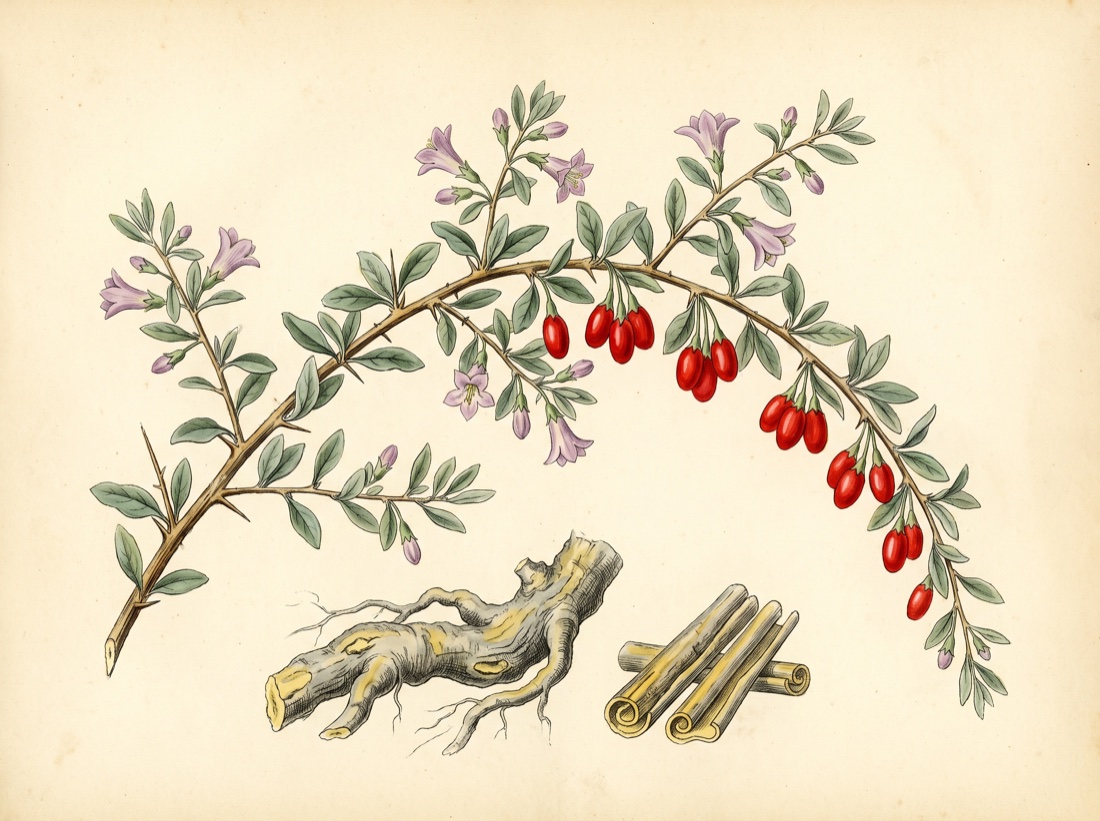 Chinese boxthornLycium chinense
 Chinese bush cherryPrunus japonica
 Chinese clematisClematis chinensis
 Chinese goldthreadCoptis chinensis
The whole plate is in the library. The compass, Compare, the Sky of eleven hundred plants and the formulary open with an email address and a password, free, with the formula builder and its safety engine. Herbert without limit, his formulating, clients, the handouts and the labels are the paid room.
Open the library, free