Western and Ayurvedic herbalism
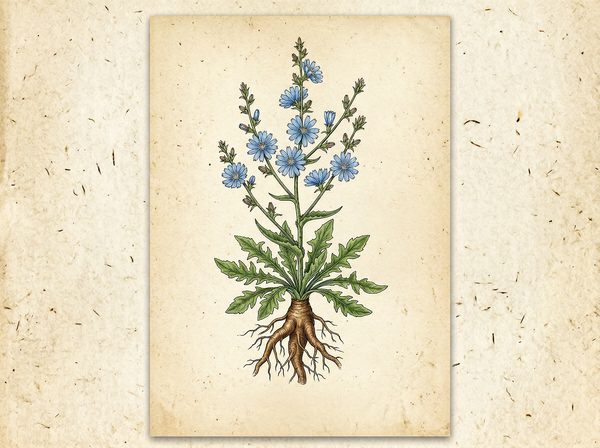
Chicory
Cichorium intybus
Also known as wild chicory, blue sailors, succory, coffeeweed, Wild succory, Kasani, Kasni, Kasni beeja (the seed).
Cichorium intybus is chicory, a perennial of the daisy family with a deep tap root and sky blue flowers, native to Europe and West Asia and now naturalized across the northern Indian plains and cultivated in Punjab, Uttar Pradesh and Kashmir for its seed and root. In India the plant is Kasani or Kasni, a cooling bitter that Unani medicine made famous as a liver and fever remedy and that modern Ayurvedic pharmacy has adopted into its hepatoprotective formulas. The seed, root and leaf are used, and the roasted root is a coffee substitute.

Ask Herbert about Chicory. Herbert is the master herbalist inside Bountiful Herbs: he answers from this plate and eleven hundred others, with dosing, pairing and cautions. Your first ten questions are free.
Ask HerbertActions
Indications what the tradition reached for it in
- Sluggish liver with poor appetite and bitter taste
- Fatty liver and raised liver enzymes (adjunct)
- Jaundice in convalescence (adjunct)
- Constipation with hard stool and poor bile flow
- Dyspepsia with fullness after fatty meals
- Mild edema and scanty urine
- Low-grade fever with liver involvement
- Type 2 diabetes with dyslipidemia (adjunct)
- Gout and uric acid retention (traditional)
- Skin eruptions linked to liver heat
- Gut dysbiosis needing a prebiotic root
- Dyspepsia
- Abdominal fullness
- Slow digestion
- Indigestion
- Loss of appetite
- Mild digestive disorders
- Flatulence
- Bloating
- Constipation
- Debility
- Edema
- Fatigue
- Fluid retention
- Gallbladder disorders
- Liver disease
- Urinary disorders
- Weakness
- Digestive complaints
- Sluggish bile production
Specific indications
A heavy, hot, sluggish pitta-kapha patient with fullness under the right ribs, a bitter morning taste, poor appetite and greasy stool who needs a cooling bitter to move bile
A patient with fatty liver, borderline glucose and high triglycerides who wants a food-grade daily herb alongside diet change
Constipation with hard, dry stool in a hot, irritable person where a warming laxative would aggravate, taken as seed powder or root decoction at night
Mild fluid retention and scanty burning urine in summer, given as a cold infusion of the seed
Safety
The record lists 6 contraindications; open the plate in the library to read them in full.
In practice
Kasni is the Indian practitioner's cooling liver bitter, prescribed where the liver is hot, sluggish or recovering: jaundice in convalescence, fatty liver, fever with a coated tongue and bitter taste, and constipation from poor bile flow.
In Ayurveda
Rasa: tikta (bitter), kashaya (astringent). Virya: sheeta (cooling). Vipaka: katu (pungent). Guna: laghu (light), ruksha (dry). Dosha: pacifies pitta and kapha; may aggravate vata in excess. Karma: yakrituttejaka (stimulates the liver); pittasaraka (promotes bile flow); deepana (kindles digestion); pachana (digestive); mutrala (diuretic); jvarahara (reduces fever); shothahara (reduces swelling); raktashodhana (purifies the blood); kaphapittahara (reduces kapha and pitta); anulomana (regulates bowel movement). Classical indications: yakrit vikara (liver disorders); kamala (jaundice); pliha vriddhi (enlarged spleen); jvara (fever); shotha (edema); mutrakricchra (painful urination); agnimandya (weak digestion); arochaka (loss of appetite); vibandha (constipation); prameha (urinary disorders including diabetes); netradaha (burning eyes, traditional wash). The seed and the root are the parts dispensed in Indian practice, as churna, kwatha and cold infusion, and as arka, the distilled water that Unani pharmacy favors; the fresh leaves are eaten as a bitter green and pressed for swarasa. The root and seed stand in many compound liver and fever preparations of the Unani and modern Ayurvedic pharmacies. Classical formulations: Kasni arka, Kasni beeja churna, Kasni kwatha, Sharbat Kasni, Compound liver churnas and syrups containing Kasni.
Dosing as the sources wrote it
| Preparation | As written | Metric |
|---|---|---|
| Churna (seed or root) | 3-6 g powdered seed or root twice daily with warm water | 3000-6000 mg |
| Kwatha (root) | 50-100 mL decoction twice daily | 50-100 mL |
| Hima (seed cold infusion) | 50-100 mL cold infusion twice daily | 50-100 mL |
| Arka | 20-40 mL distillate twice daily | 20-40 mL |
| Swarasa (leaf) | 10-20 mL fresh leaf juice daily | 10-20 mL |
| Herbal tea: 2-4 g comminuted root in 250 ml boiling water as infusion or decoction, once daily | 2000-4000 mg |
Doses are reproduced from the sources for practitioners and are not a recommendation for any person.
From the sources
Overview. Cichorium intybus is chicory, a perennial of the daisy family with a deep tap root and sky blue flowers, native to Europe and West Asia and now naturalized across the northern Indian plains and cultivated in Punjab, Uttar Pradesh and Kashmir for its seed and root. In India the plant is Kasani or Kasni, a cooling bitter that Unani medicine made famous as a liver and fever remedy and that modern Ayurvedic pharmacy has adopted into its hepatoprotective formulas. The seed, root and leaf are used, and the roasted root is a coffee substitute.
Clinical Notes. Traditionally used root primarily Leaf used in mixtures but insufficient data for standalone monograph. Primarily documented for mild digestive support based on traditional use. Hepatoprotective in preclinical studies.
Clinical Notes. Kasni is the Indian practitioner's cooling liver bitter, prescribed where the liver is hot, sluggish or recovering: jaundice in convalescence, fatty liver, fever with a coated tongue and bitter taste, and constipation from poor bile flow.
indications. Chicory is traditionally indicated for: Dyspepsia, Abdominal fullness, Slow digestion, Indigestion, Loss of appetite, Mild digestive disorders, Flatulence, Bloating, Constipation, Debility, Edema, Fatigue, Fluid retention, Gallbladder disorders, Liver disease, and 6 further conditions.
Drawn from King's American Dispensatory, 18th edition (Felter and Lloyd), and the Bountiful Herbs editorial.
Nearby on the shelf
 Cherry-Laurel LeavesLaurocerasi Folia
 ChervilAnthriscus cerefolium
 ChiaSalvia hispanica
 ChickweedStellaria media
 Chinese arisaemaArisaema erubescens
 Chinese asparagusAsparagus cochinchinensis
 Chinese boxthornLycium chinense
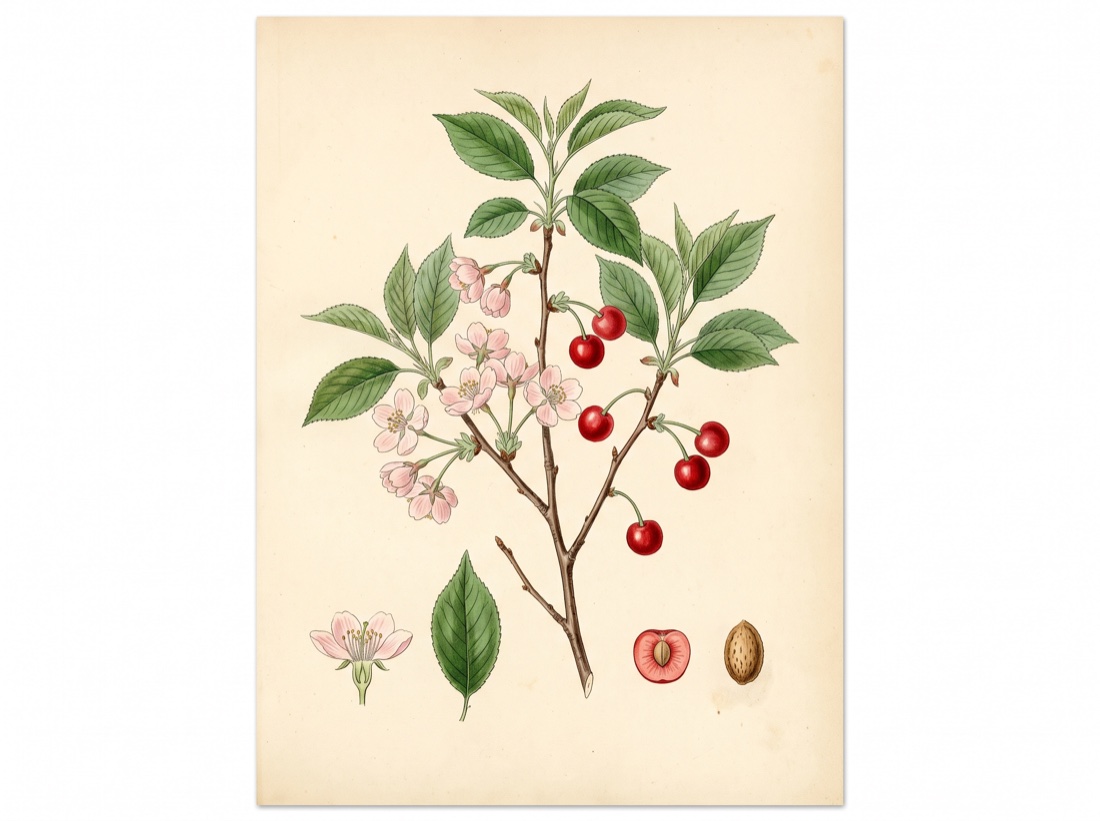 Chinese bush cherryPrunus japonica
The whole plate is in the library. The compass, Compare, the Sky of eleven hundred plants and the formulary open with an email address and a password, free, with the formula builder and its safety engine. Herbert without limit, his formulating, clients, the handouts and the labels are the paid room.
Open the library, free