Western Herbalism
Goa Powder
Araroba
Also known as Bahia powder, Brazil powder, Ringworm powder, Araroba, Chrysarobine, Chrysarobin (improperly so-called).
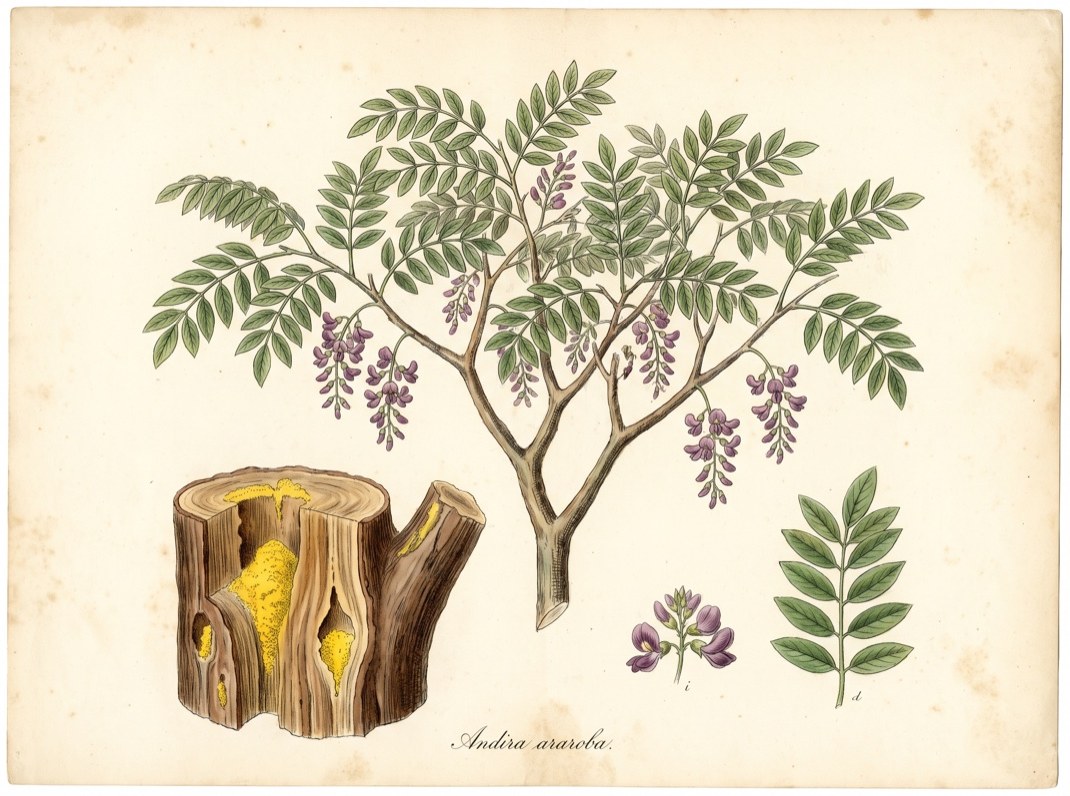
Araroba, better known in commerce as Goa powder or Bahia powder, is a yellow, crystalline deposit that forms naturally in cavities and fissures within the heartwood of Vataireopsis araroba, a large leguminous tree of the Brazilian forests. The name Goa powder is a historical misnomer, arising because early European supplies were shipped through the Indian port of Goa rather than from any tree growing there. The purified active fraction, chrysarobin, contains chrysophanic acid derivatives and was a mainstay of nineteenth and early twentieth century dermatology, applied exclusively as an external ointment for scaling, proliferative skin conditions.

Ask Herbert about Goa Powder. Herbert is the master herbalist inside Bountiful Herbs: he answers from this plate and eleven hundred others, with dosing, pairing and cautions. Your first ten questions are free.
Ask HerbertActions
Indications what the tradition reached for it in
- Chronic plaque psoriasis
- Ringworm of the smooth skin (tinea corporis)
- Tinea capitis
- Chronic thickened eczema
- Seborrheic scaling of the scalp
- Herpes circinatus (old term for annular ringworm)
- Acne rosacea (historical use)
- Localized pityriasis-type scaling
Specific indications
Thick, well-demarcated, silvery scaling psoriatic plaques that have resisted milder topical measures
Sharply circumscribed, spreading ringworm patches on the trunk or limbs with an active advancing edge
Safety
Recognised toxicity. This plant carries a toxicity flag in the record; it is for trained practitioners only.
Low dose botanical. Used in drop doses in the classical practice; not a plant to dose freely.
Pregnancy: Avoid: there is no safety data on topical absorption in pregnancy and the agent is a known skin irritant with historical concerns about anthranone-class mutagenicity.
Breastfeeding: Avoid, particularly on or near the breast, given the irritant and staining nature of the preparation and lack of safety data.
The record lists 6 contraindications; open the plate in the library to read them in full.
In practice
Eclectic and orthodox physicians alike valued araroba preparations for stubborn psoriasis and ringworm that failed to respond to milder remedies. The crude or purified chrysarobin was incorporated into a lard or petrolatum base at concentrations that varied widely with the severity and site of the lesion, and treatment was always local: the affected skin was cleaned, scales softened and removed, and the ointment worked in once or twice daily.
Dosing as the sources wrote it
| Preparation | As written | Metric |
|---|---|---|
| Chrysarobin ointment, historical strength | 2-28% chrysarobin in soft paraffin or lard, applied to affected skin once or twice daily | |
| Modern short-contact analogy | Not used in current practice; historically applied for short, closely supervised courses only, discontinued at first sign of excess irritation | |
| Action, Medical Uses, and Dosage: In the Indies this agent has been employed for the removal of taenia solium, and in the treatment of certain cutaneous maladies. Attfield, Fayrer, Da Silva Lima, Squire, Hebra, Bernier, Blanc, Thin, and many other medical men have successfully employed this powder in the treatment of herpes circinatus, porrigo scutulata, porrigo decalvans, sycosis, favus, psoriasis, eczema, lichen, acne, and other diseases of the skin. The powder is mixed with vinegar or lemon juice to form a thin, pasty mass, or is well incorporated with glycerin or starch paste, and then applied over the eruption once or twice a day, for from 5 to 8 days successively, in which period of time the cure is generally affected. Its application causes, after some length of time, a temporary uneasy sensation in the part to which it is applied, the eruption assumes a whitish appearance, and the surrounding tegument presents the appearance as of a dark stain | ||
| as the cure progresses, the skin assumes its normal color. For internal use, it may be taken in the form of pills, made by incorporating it with medicinal soap. For external application, it may be used as above stated, by means of a small brush, or a tincture of the powder may be painted upon the affected parts. It may be also used in the form of an ointment, consisting of from 15 to 60 grains of the powder, from 15 to 30 drops of acetic acid, all thoroughly mixed with an ounce of benzoinated lard. At the present time, however, chrysophanic acid and chiefly chrysarobin (which see) are used in preference to the goa powder. | 972-3888 mg |
Doses are reproduced from the sources for practitioners and are not a recommendation for any person.
From the sources
Overview. Araroba, better known in commerce as Goa powder or Bahia powder, is a yellow, crystalline deposit that forms naturally in cavities and fissures within the heartwood of Vataireopsis araroba, a large leguminous tree of the Brazilian forests. The name Goa powder is a historical misnomer, arising because early European supplies were shipped through the Indian port of Goa rather than from any tree growing there. The purified active fraction, chrysarobin, contains chrysophanic acid derivatives and was a mainstay of nineteenth and early twentieth century dermatology, applied exclusively as an external ointment for scaling, proliferative skin conditions.
Clinical Notes. Eclectic and orthodox physicians alike valued araroba preparations for stubborn psoriasis and ringworm that failed to respond to milder remedies. The crude or purified chrysarobin was incorporated into a lard or petrolatum base at concentrations that varied widely with the severity and site of the lesion, and treatment was always local: the affected skin was cleaned, scales softened and removed, and the ointment worked in once or twice daily.
Action, Medical Uses, and Dosage. Cabbage tree bark is emetic, purgative, and anthelmintic. It is thought by some to be a dangerous acro-narcotic in large doses, causing troublesome sickness, fever, and delirium, on which account it is not much used in practice, although it has proved effectual in removing the lumbricoid worms. The bark in powder may be given in doses of from 10 to 30 grains; of the decoction, 1 tablespoonful 2, 3, or 4 times a day. Any unpleasant symptoms resulting from its administration may be obviated by a dose of castor oil, and a free use of lemon juice or lime juice.
History, Description, and Chemical Composition. This tree inhabits the West Indies, especially Jamaica. The bark, as met with in commerce, is in pieces of various sizes, which are thick, whitish, or grayish-brown externally, covered with scales and eroded by lichens; yellow-brown interiorly; furrowed: of a resinous fracture, nauseous odor, mucilaginous and sweetish taste, and pulverulent, the powder resembling that of jalap.
Drawn from King's American Dispensatory, 18th edition (Felter and Lloyd), and the Bountiful Herbs editorial.
Often paired with
 Chinese RhubarbRheum palmatum
Nearby on the shelf
 Globe artichokeCynara scolymus
 Glory lilyGloriosa superba
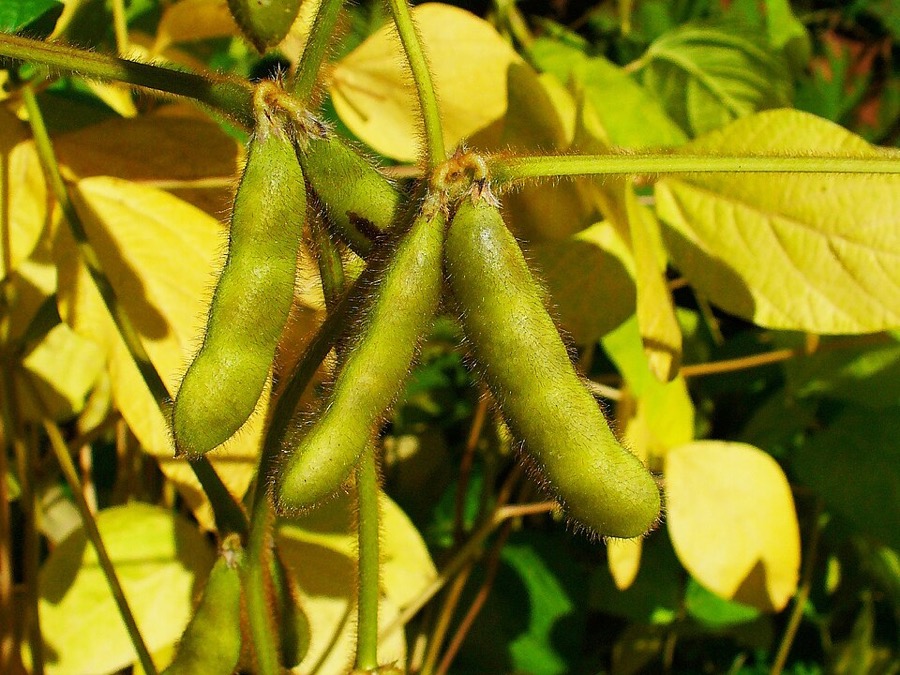 Glycine maxGlycine max
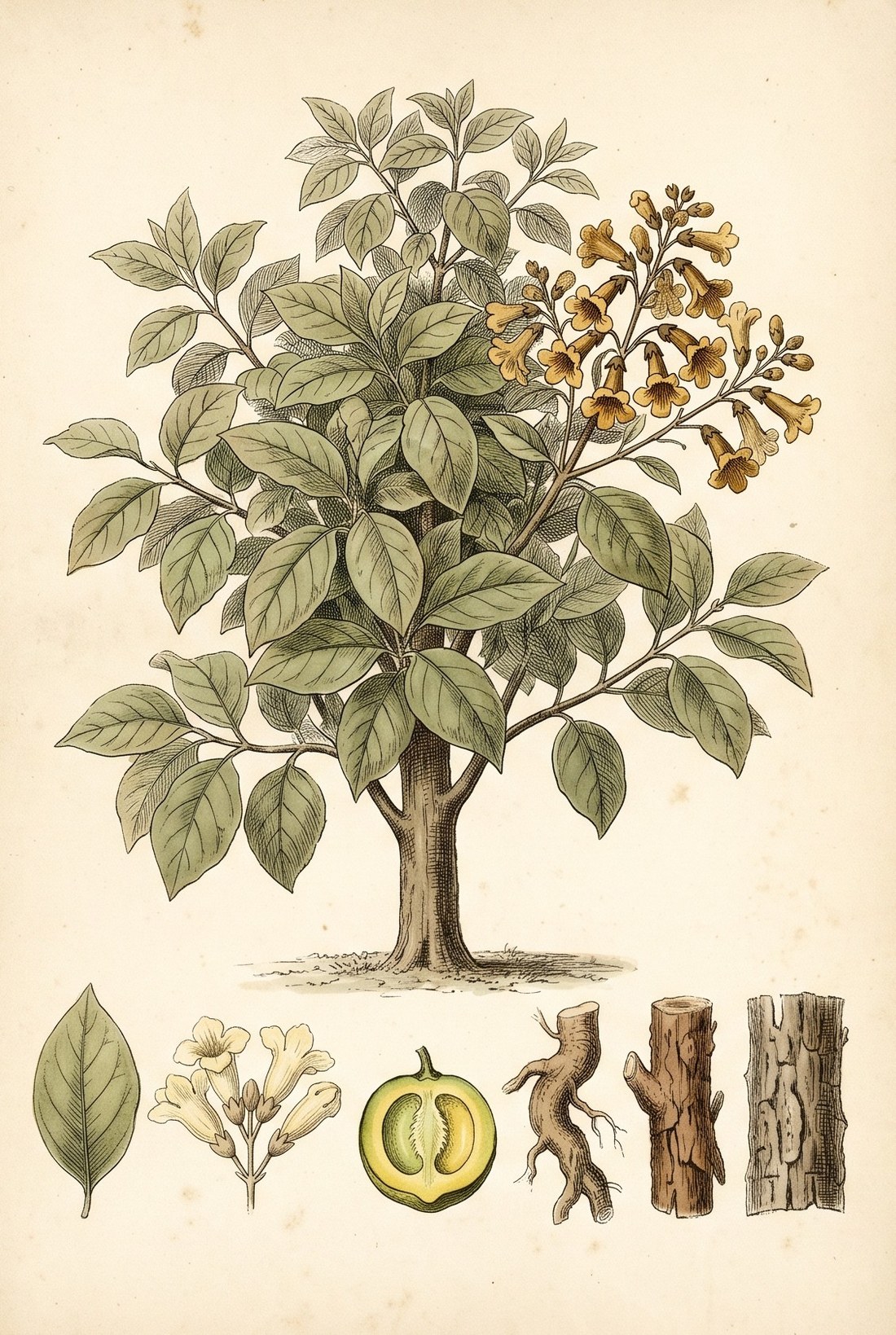 GmelinaGmelina arborea
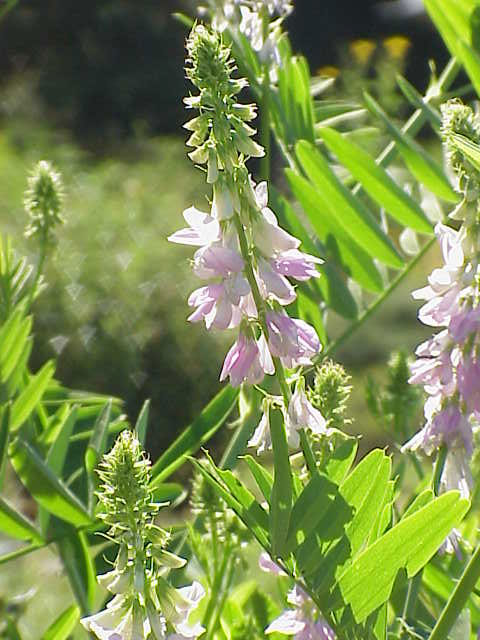 Goat's RueGalega officinalis
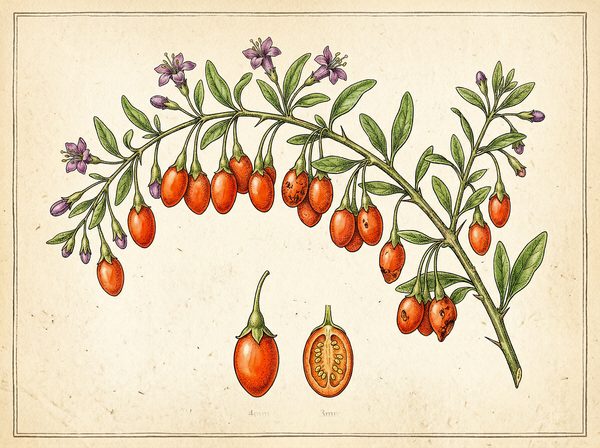 Goji berryLycium barbarum
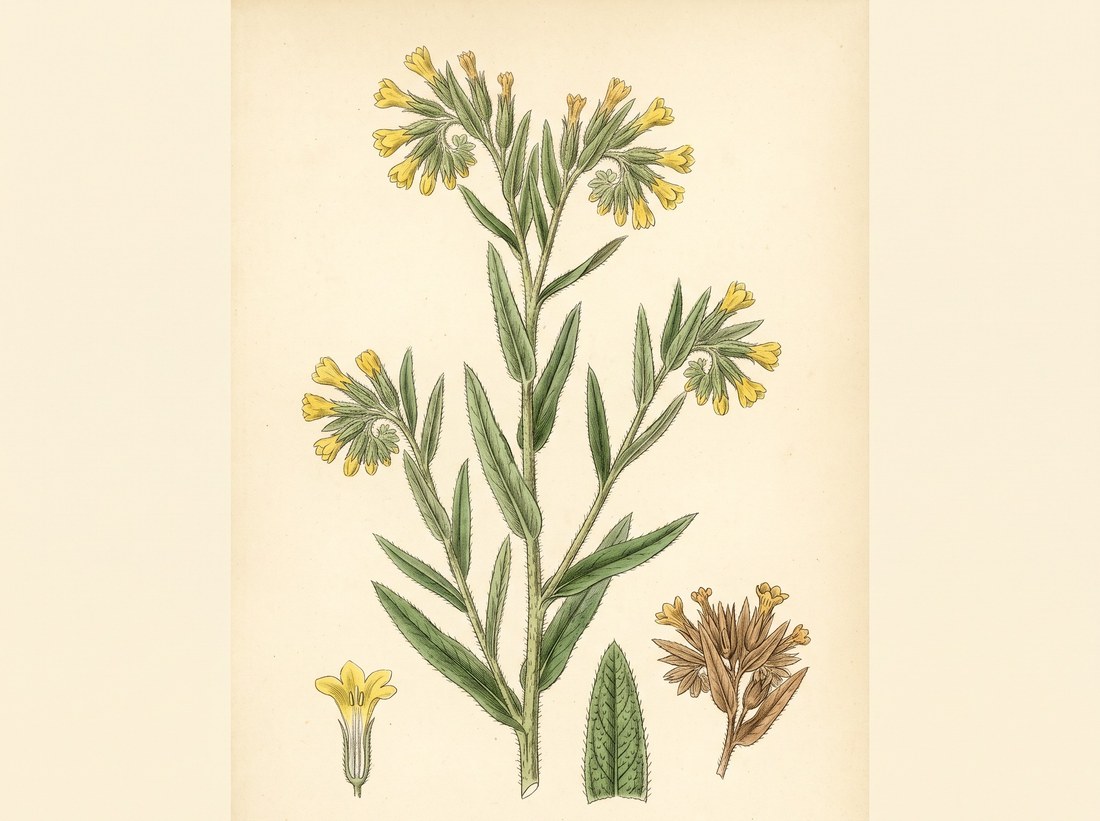 GojihvaOnosma bracteatum
 Golden RagwortSenecio aureus
The whole plate is in the library. The compass, Compare, the Sky of eleven hundred plants and the formulary open with an email address and a password, free, with the formula builder and its safety engine. Herbert without limit, his formulating, clients, the handouts and the labels are the paid room.
Open the library, free