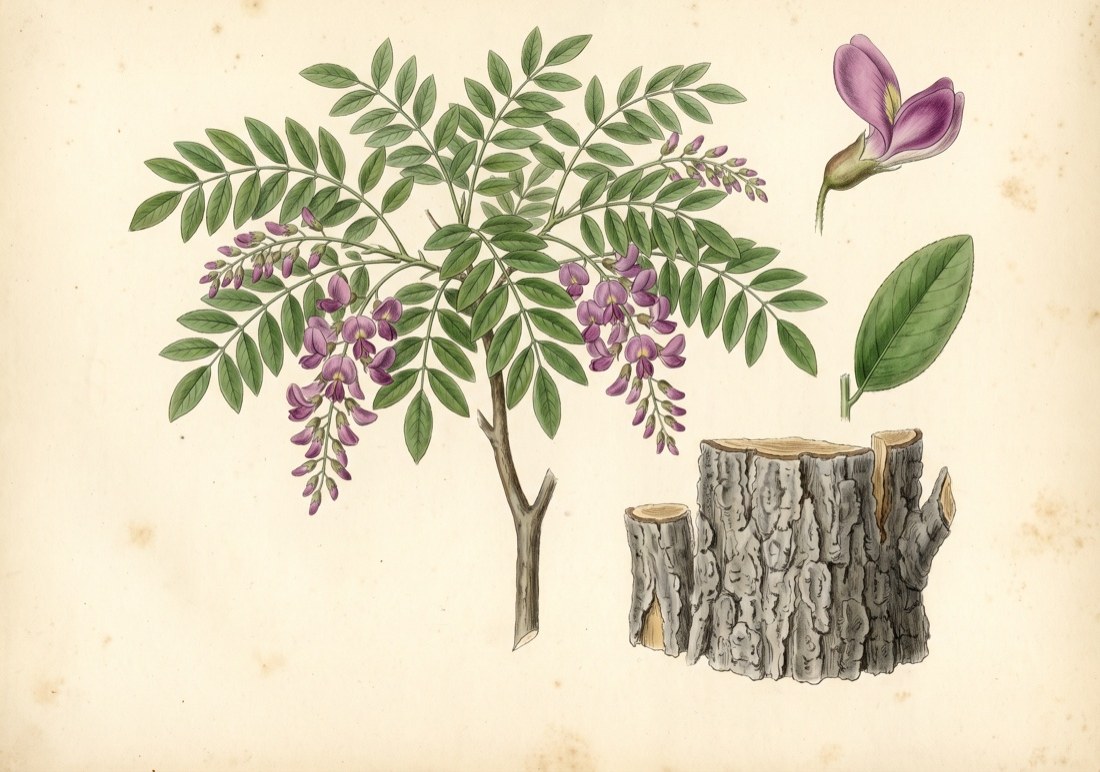
Western Herbalism
Cabbage tree bark
Andira
Also known as Jamaica cabbage tree, Cabbage tree, Worm bark, Angelin tree.
Andira inermis is a leguminous tree of tropical America and the Caribbean, long known in Jamaica and the West Indies as cabbage tree or cabbage bark. The stem and root bark were used by the enslaved and free populations of the region, and later adopted into Eclectic and colonial medical practice, chiefly as a powerful vermifuge for tapeworm and as a topical remedy for stubborn skin eruptions. Its historical reputation rests heavily on nineteenth century clinical reports rather than modern pharmacological study.

Ask Herbert about Cabbage tree bark. Herbert is the master herbalist inside Bountiful Herbs: he answers from this plate and eleven hundred others, with dosing, pairing and cautions. Your first ten questions are free.
Ask HerbertActions
Indications what the tradition reached for it in
- Tapeworm infestation
- Intestinal worms in general
- Ringworm and other tinea infections
- Psoriasis (historical topical use)
- Chronic scaling skin eruptions
- Favus
- Sycosis
- Lichen
- Acne (historical topical use)
Specific indications
Confirmed tapeworm (Taenia solium) where a single strong purgative-vermifuge dose is wanted to expel the worm
Chronic, well-demarcated scaling skin eruption treated topically as a paste for several days until the lesion whitens and resolves
Safety
Recognised toxicity. This plant carries a toxicity flag in the record; it is for trained practitioners only.
Low dose botanical. Used in drop doses in the classical practice; not a plant to dose freely.
Pregnancy: Avoid: the strong purgative and emetic action carries risk of significant gastrointestinal upset and possible systemic toxicity, and there is no modern safety data.
Breastfeeding: Avoid: no safety data exists and the purgative, potentially toxic action makes internal use inappropriate while breastfeeding.
The record lists 7 contraindications; open the plate in the library to read them in full.
In practice
Cabbage tree bark was given historically as a decoction or as the powdered bark to bring away tapeworm segments, working as much by its cathartic and purgative action as by any specific anthelmintic effect.
Dosing as the sources wrote it
| Preparation | As written | Metric |
|---|---|---|
| Historical decoction (vermifuge, single dose, obsolete use) | reported historically as a single strong dose, not standardized for modern use | |
| Topical paste (historical, skin eruptions) | powdered bark mixed with vinegar or glycerin applied once or twice daily for 5 to 8 days | |
| The bark in powder may be given in doses of from 10 to 30 grains; of the decoction, 1 tablespoonful 2, 3, or 4 times a day. | 648-1944 mg |
Doses are reproduced from the sources for practitioners and are not a recommendation for any person.
From the sources
Overview. Andira inermis is a leguminous tree of tropical America and the Caribbean, long known in Jamaica and the West Indies as cabbage tree or cabbage bark. The stem and root bark were used by the enslaved and free populations of the region, and later adopted into Eclectic and colonial medical practice, chiefly as a powerful vermifuge for tapeworm and as a topical remedy for stubborn skin eruptions. Its historical reputation rests heavily on nineteenth century clinical reports rather than modern pharmacological study.
Clinical Notes. Cabbage tree bark was given historically as a decoction or as the powdered bark to bring away tapeworm segments, working as much by its cathartic and purgative action as by any specific anthelmintic effect.
Action, Medical Uses, and Dosage. In the Indies this agent has been employed for the removal of taenia solium, and in the treatment of certain cutaneous maladies. Attfield, Fayrer, Da Silva Lima, Squire, Hebra, Bernier, Blanc, Thin, and many other medical men have successfully employed this powder in the treatment of herpes circinatus, porrigo scutulata, porrigo decalvans, sycosis, favus, psoriasis, eczema, lichen, acne, and other diseases of the skin.
Botanical Source, History, and Description. This drug must not be confused with Arariba rubra, a Brazilian plant, the bark of which was investigated by Rieth, in 1861, and has been used as a red dye for wool in its native country. Dr. Fayrer was the first to call attention to Goa powder in the Med.
Drawn from King's American Dispensatory, 18th edition (Felter and Lloyd), and the Bountiful Herbs editorial.
Nearby on the shelf
 ButternutJuglans cinerea
 Button snakerootLiatris spicata
 ButtonbushCephalanthus occidentalis
 Cabbage roseRosa Centifolia
 CacaoTheobroma cacao
 Cahinca rootCahinca
 CajeputMelaleuca cajuputi
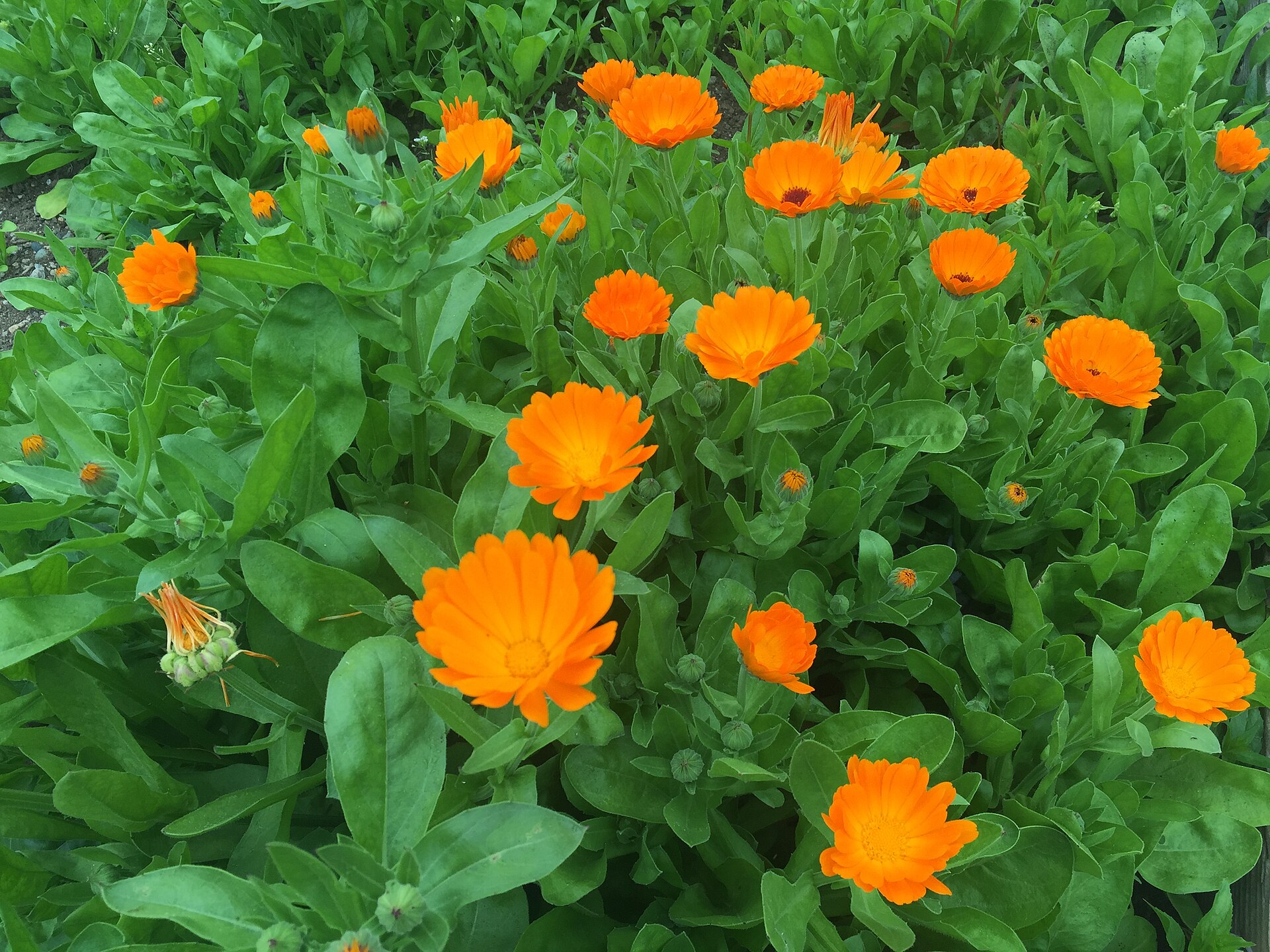 CalendulaCalendula officinalis
The whole plate is in the library. The compass, Compare, the Sky of eleven hundred plants and the formulary open with an email address and a password, free, with the formula builder and its safety engine. Herbert without limit, his formulating, clients, the handouts and the labels are the paid room.
Open the library, free