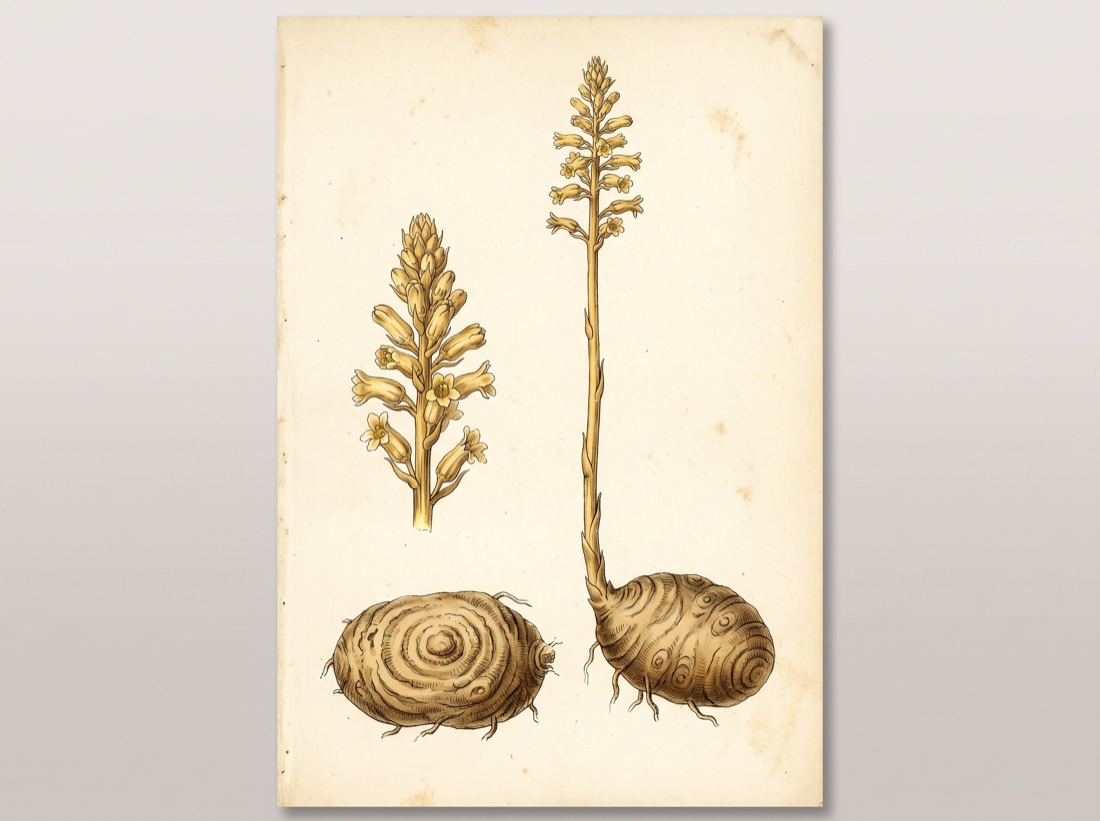
Chinese Herbalism
Gastrodia
Gastrodia elata
Also known as tall gastrodia, heavenly hemp, tian ma, tiān má.
Tian ma is the dried tuber of a leafless, chlorophyll-free orchid that lives entirely on the fungus Armillaria mellea, so it can only be grown by cultivating the fungus alongside it. It comes from mountain forests of Yunnan, Sichuan, Guizhou, Shaanxi and Hubei, with Yunnan material (Zhaotong) the most prized. The tuber is steamed, dried and sliced; good pieces are translucent, yellowish and horn-like with a parrot-beak bud scar at one end. In Chinese medicine it is the principal herb for internal wind, used for dizziness, headache, convulsions and numbness across two thousand years of records.

Ask Herbert about Gastrodia. Herbert is the master herbalist inside Bountiful Herbs: he answers from this plate and eleven hundred others, with dosing, pairing and cautions. Your first ten questions are free.
Ask HerbertActions
Indications what the tradition reached for it in
- Dizziness and vertigo
- Migraine and tension-type headache
- Liver yang rising headache with hypertension
- Phlegm-turbid dizziness with heavy head and nausea
- Childhood febrile convulsions (with other herbs)
- Epilepsy (adjunctive, traditional)
- Tremor and Parkinsonian rigidity (supportive)
- Post-stroke hemiplegia and numbness (with other herbs)
- Wind-damp painful obstruction with numbness of the limbs
- Tetanus and opisthotonos (classical, with other herbs)
- Insomnia and restlessness with dizziness
- Cognitive decline in the elderly (supportive, emerging)
Specific indications
Recurrent dizziness with a throbbing or tight headache, irritability, a red face and a wiry pulse, often in someone with raised blood pressure
Heavy, muzzy dizziness with nausea, a thick greasy tongue coating and a slippery pulse, the phlegm picture, where it is paired with ban xia and bai zhu
Migraine that returns with stress or the menstrual cycle in a person whose neck and jaw are held tight
Safety
The record lists 4 contraindications; open the plate in the library to read them in full.
In practice
Reach for tian ma when the complaint is dizziness, headache or tremor and the tongue and pulse suggest that wind is moving in the Liver channel. It is unusually flexible: neutral and sweet, so it fits both the red-faced hypertensive with rising yang (Tian Ma Gou Teng Yin, with gou teng, shi jue ming, du zhong and huang qin) and the pale, tired patient whose dizziness comes from phlegm and Spleen weakness (Ban Xia Bai Zhu Tian Ma Tang).
In Chinese medicine
Temperature: neutral. Taste: sweet. Channels: Liver. Actions: Extinguishes internal wind and stops spasms and tremor; Calms and anchors ascendant Liver yang; Dispels wind and unblocks the collaterals; Relieves headache and dizziness of both excess and deficiency type.
Dosing as the sources wrote it
| Preparation | As written | Metric |
|---|---|---|
| Decoction | 3-10 g dried tuber daily | 3000-10000 mg |
| Powder, swallowed or stirred into strained decoction | 1-1.5 g dried tuber powder two to three times daily | 1000-1500 mg |
| Food therapy (stewed with chicken or fish) | 10-15 g dried tuber slices per pot | 10000-15000 mg |
Doses are reproduced from the sources for practitioners and are not a recommendation for any person.
From the sources
Overview. Tian ma is the dried tuber of a leafless, chlorophyll-free orchid that lives entirely on the fungus Armillaria mellea, so it can only be grown by cultivating the fungus alongside it. It comes from mountain forests of Yunnan, Sichuan, Guizhou, Shaanxi and Hubei, with Yunnan material (Zhaotong) the most prized. The tuber is steamed, dried and sliced; good pieces are translucent, yellowish and horn-like with a parrot-beak bud scar at one end. In Chinese medicine it is the principal herb for internal wind, used for dizziness, headache, convulsions and numbness across two thousand years of records.
Clinical Notes. Reach for tian ma when the complaint is dizziness, headache or tremor and the tongue and pulse suggest that wind is moving in the Liver channel. It is unusually flexible: neutral and sweet, so it fits both the red-faced hypertensive with rising yang (Tian Ma Gou Teng Yin, with gou teng, shi jue ming, du zhong and huang qin) and the pale, tired patient whose dizziness comes from phlegm and Spleen weakness (Ban Xia Bai Zhu Tian Ma Tang).
Chinese Medicine Profile. Temperature: neutral. Taste: sweet. Channels: Liver. Actions: Extinguishes internal wind and stops spasms and tremor; Calms and anchors ascendant Liver yang; Dispels wind and unblocks the collaterals; Relieves headache and dizziness of both excess and deficiency type.
Conservation. Wild populations have been severely overharvested and the species, like all orchids, is listed on CITES Appendix II; all commercial supply should be cultivated (grown with its Armillaria symbiont).
In formulas
Gastrodia stands in 29 documented formulas in the library, among them hui chùn dàn, wũ hũ zhui fêng sắn, gõu téng yin, tiàn má gòu tếng yìn, bàn xia bái zhú tiān má tāng, bàn xià bái zhú tiān má tāng.
Often paired with
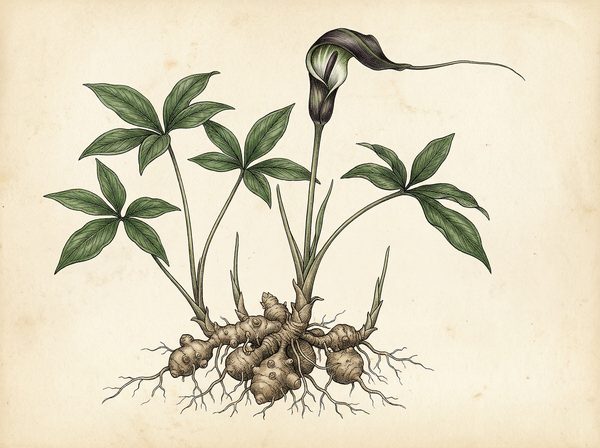 PinelliaPinellia ternata
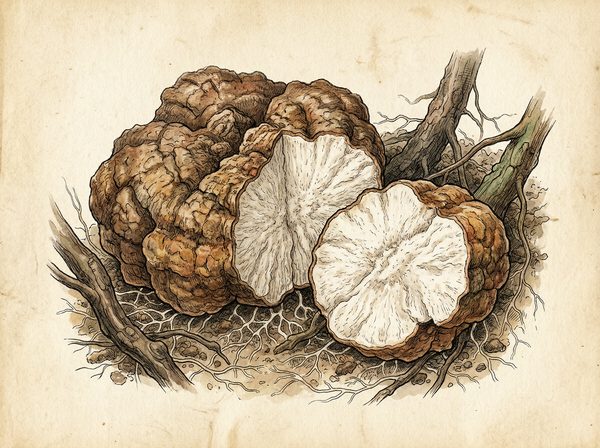 PoriaWolfiporia extensa
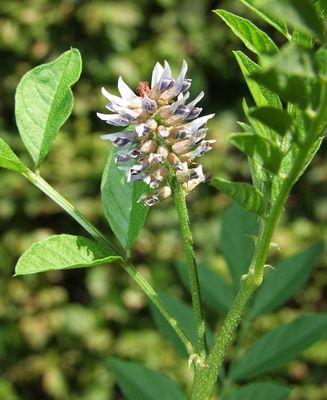 Licorice rootGlycyrrhiza glabra
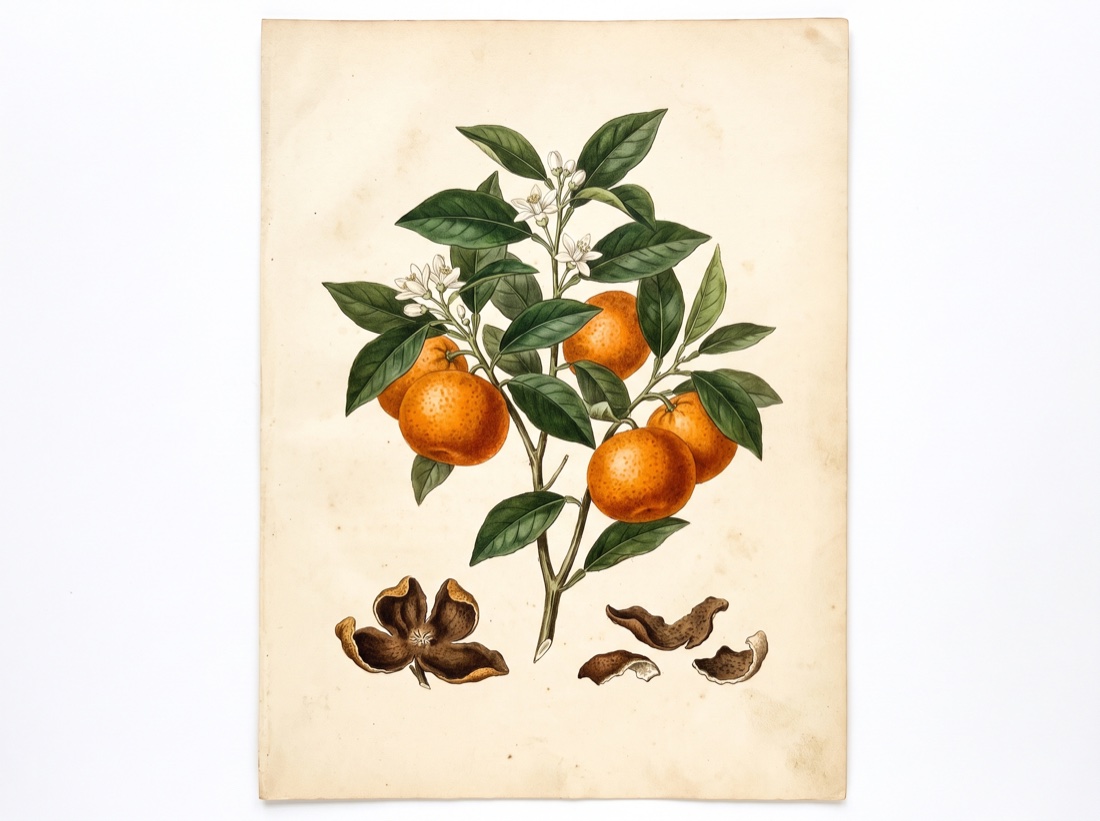 tangerineCitrus reticulata
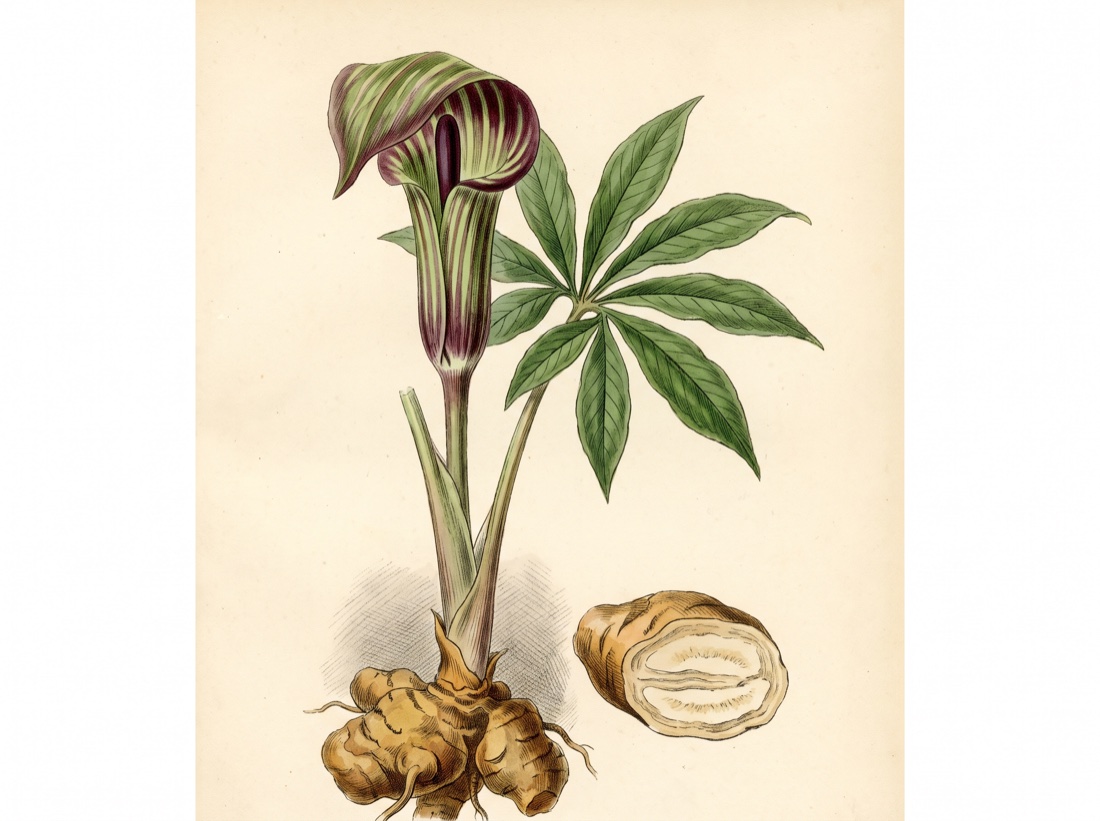 Chinese arisaemaArisaema erubescens
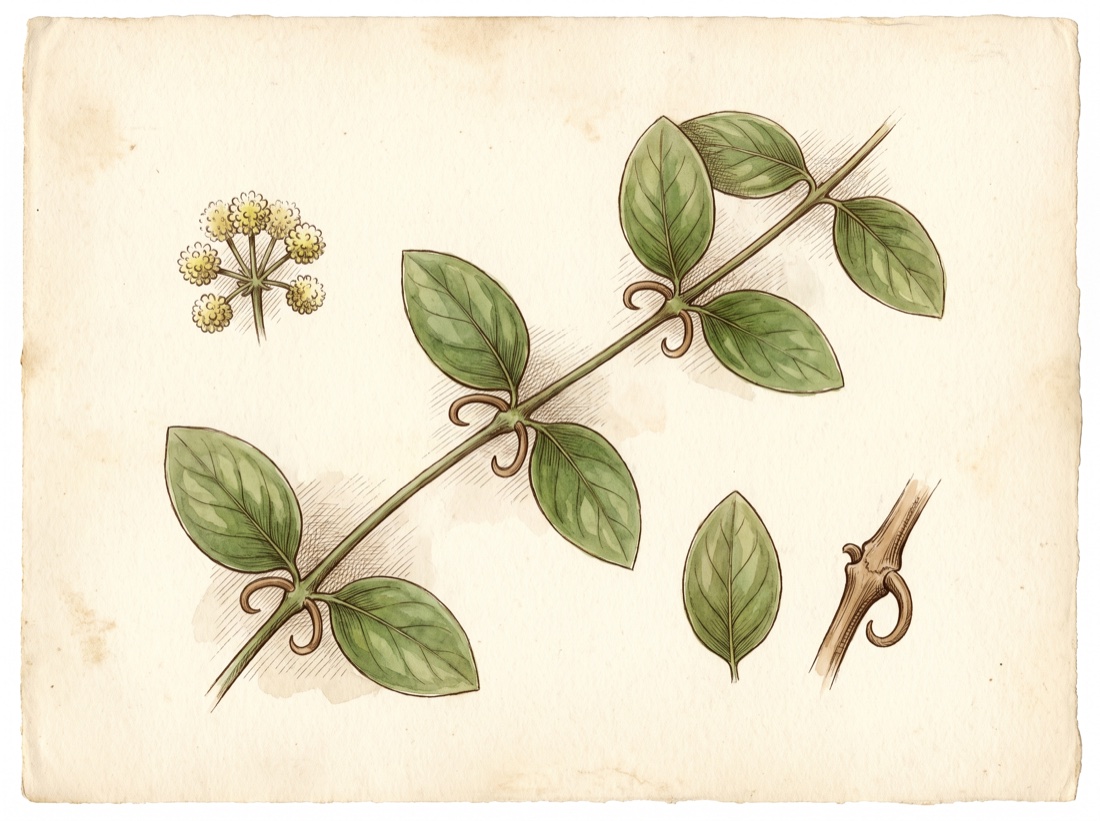 gou tengUncaria rhynchophylla
Nearby on the shelf
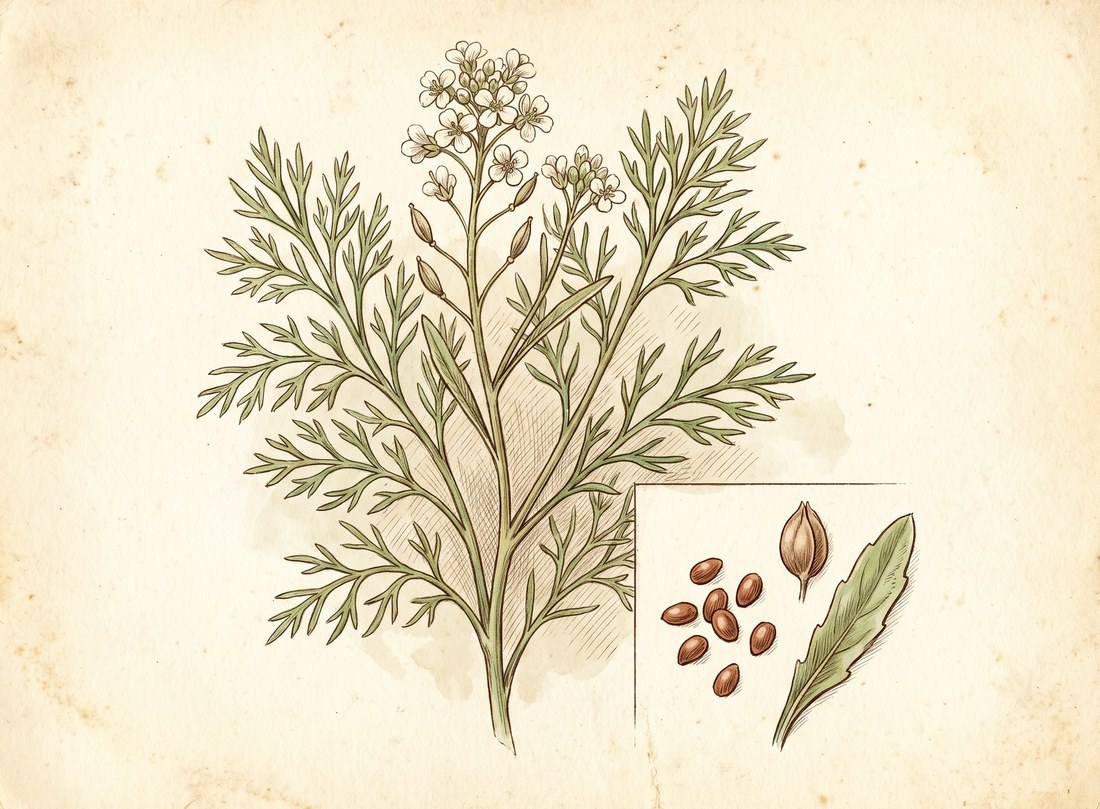 Garden cressLepidium sativum
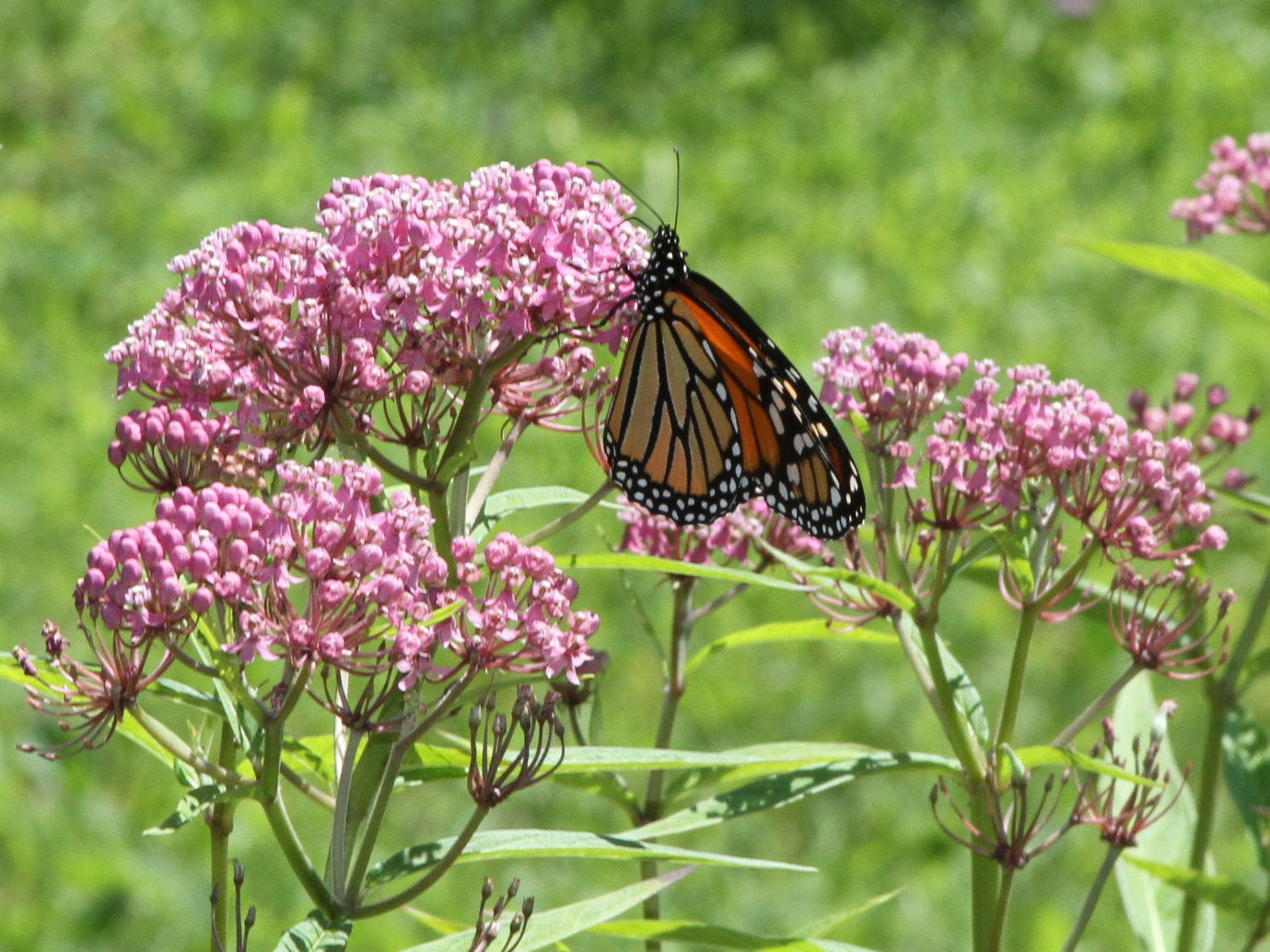 Garden silkweedAsclepias currasavica
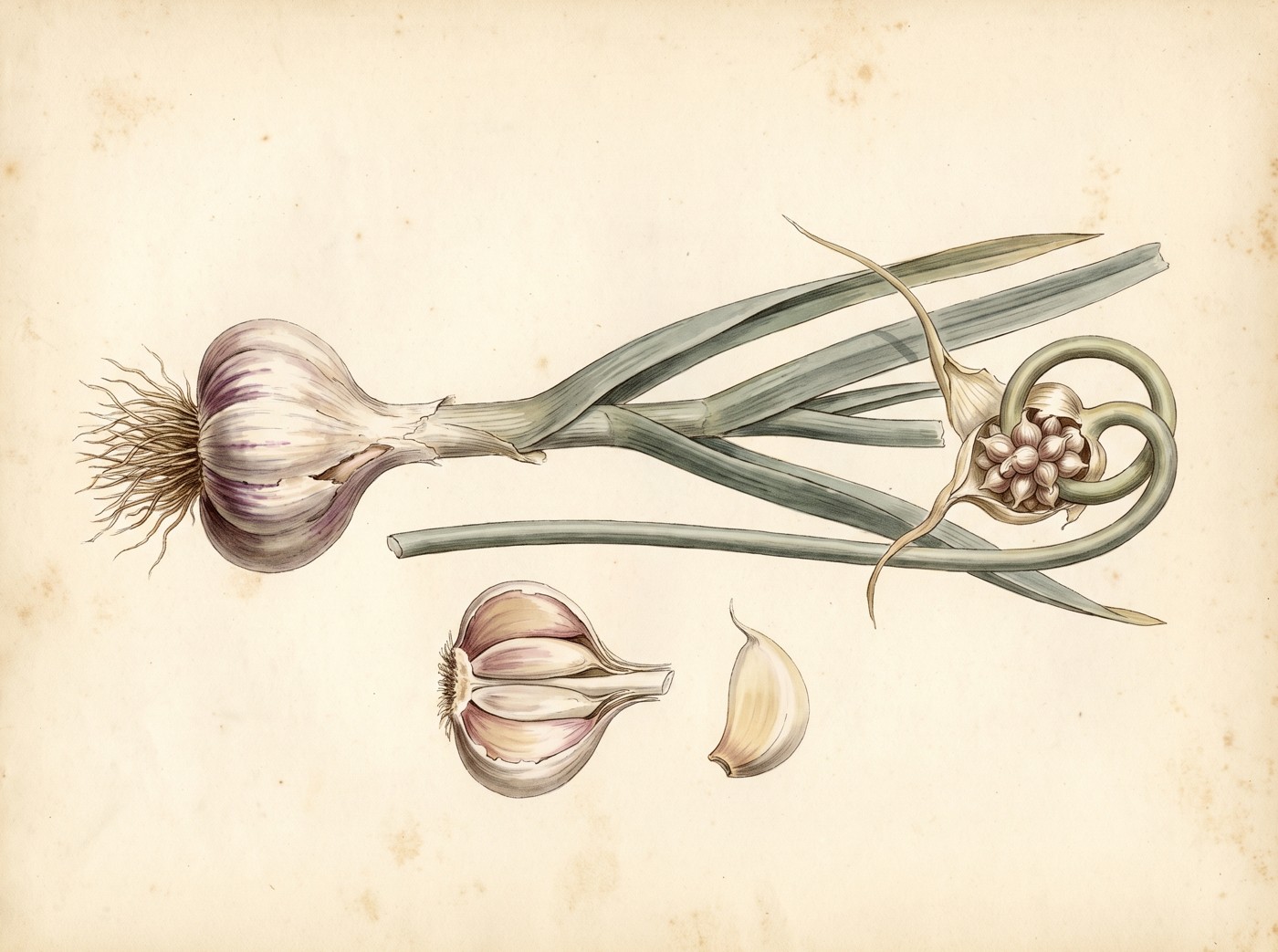 GarlicAllium sativum
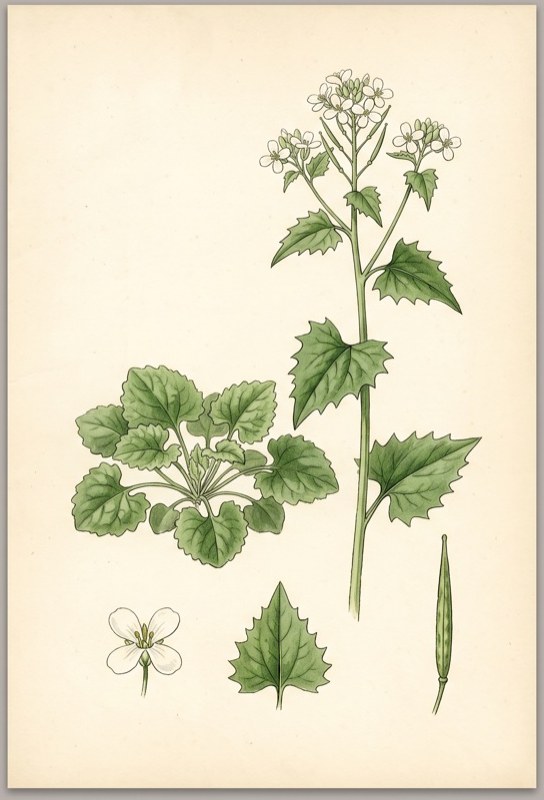 Garlic MustardAlliaria petiolata
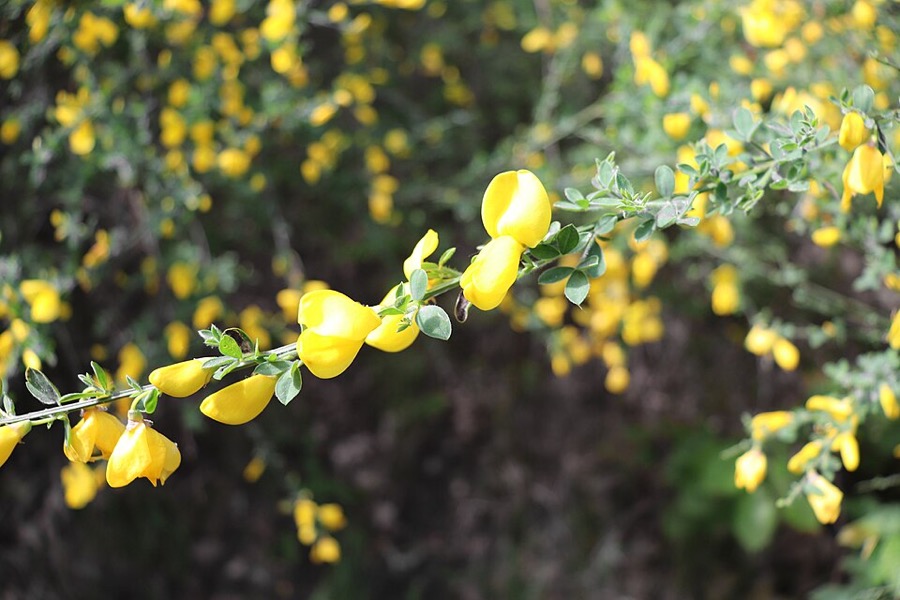 GenistaGenista
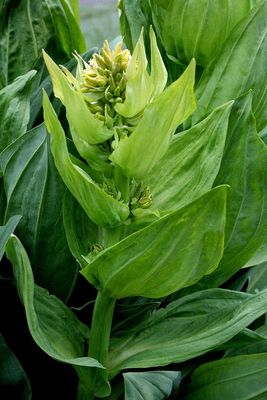 GentianGentiana lutea
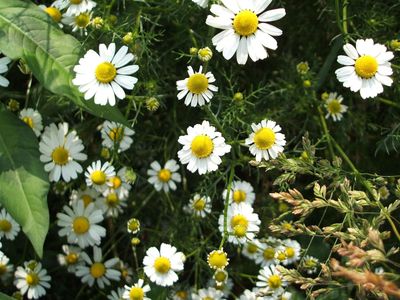 German chamomileMatricaria recutita
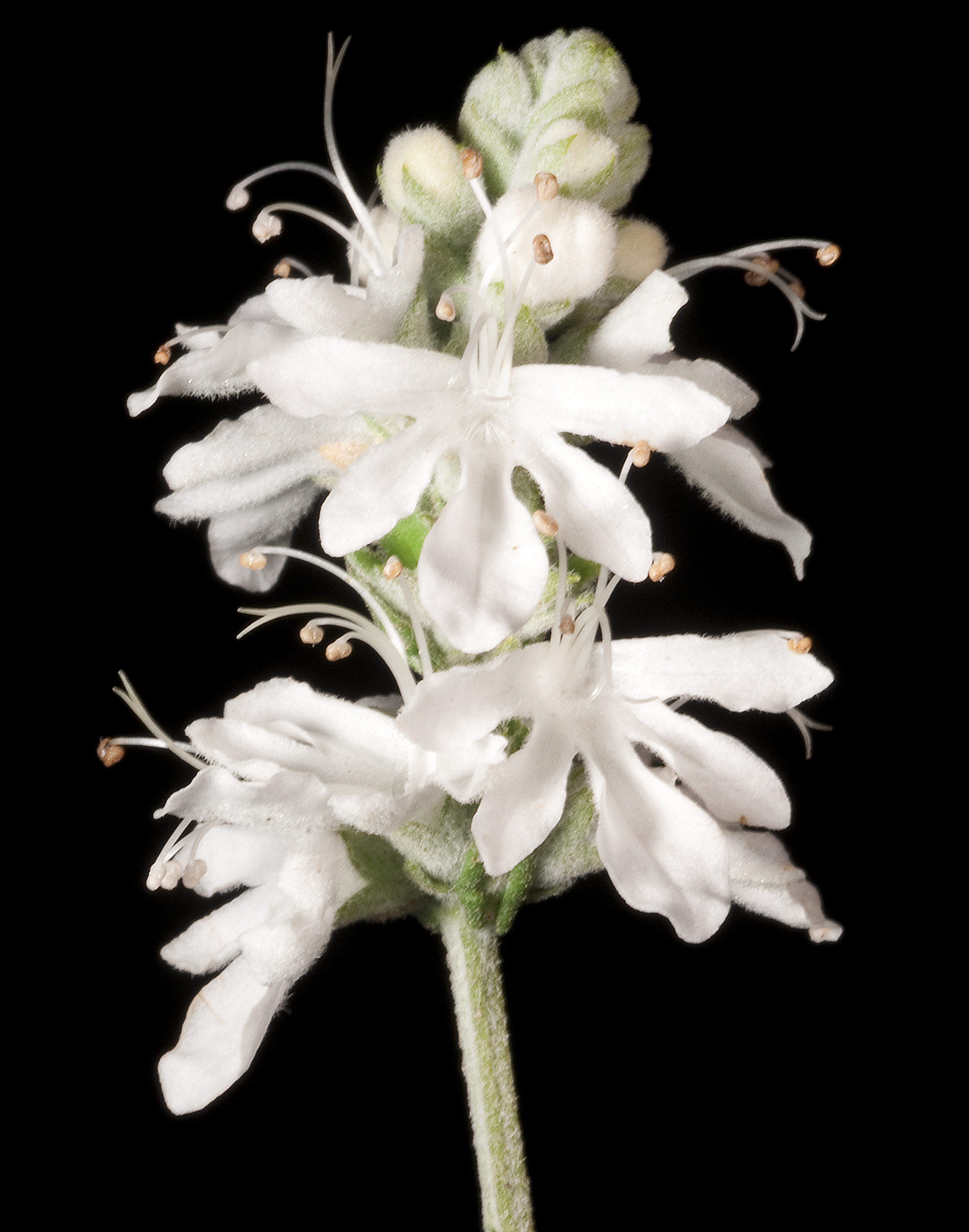 GermanderTeucrium
The whole plate is in the library. The compass, Compare, the Sky of eleven hundred plants and the formulary open with an email address and a password, free, with the formula builder and its safety engine. Herbert without limit, his formulating, clients, the handouts and the labels are the paid room.
Open the library, free