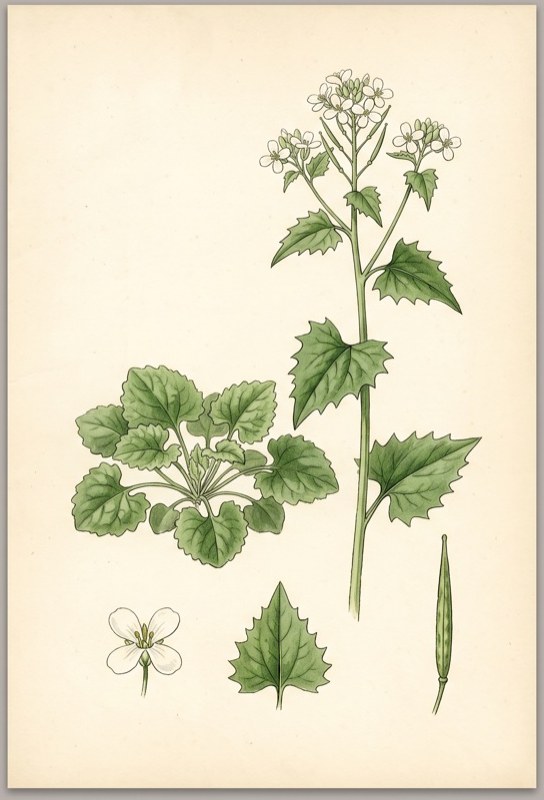
Western Herbalism
Garlic Mustard
Alliaria petiolata
Invasive species in North America used traditionally as food and medicine in Europe limited clinical data, mostly traditional and in vitro antimicrobial from glucosinolates high in vitamins A and C

Ask Herbert about Garlic Mustard. Herbert is the master herbalist inside Bountiful Herbs: he answers from this plate and eleven hundred others, with dosing, pairing and cautions. Your first ten questions are free.
Ask HerbertActions
Indications what the tradition reached for it in
- Phlegm in lungs
- Bladder infections
- Stuffy head
- Bruises
- Nutritional deficiency
- Colic
- Infection
- Mouth ulcer
- Sores
- Respiratory infection
- Inflammation
- Bronchitis
- Slow healing wounds
- Asthma
- Gangrenous skin
- Foot cramp
- Leg ulcer
- Diuresis
- Cough
- Colds
- Eczema
- Scurvy
- Mucus build-up
- Wounds
- Itching
- Detoxification
- Fever
- Blood cleansing
- Kidney stone
- Digestion
Safety
The record lists 3 contraindications; open the plate in the library to read them in full.
From the sources
Clinical Notes. Invasive species in North America used traditionally as food and medicine in Europe limited clinical data, mostly traditional and in vitro antimicrobial from glucosinolates high in vitamins A and C
primary-actions. Garlic Mustard acts primarily as: Expectorant, Diaphoretic, Antiseptic, Diuretic. Secondary actions include Antiasthmatic, Vulnerary, Anthelmintic, Nutritive, Stimulant, Anti-inflammatory.
indications. Garlic Mustard is traditionally indicated for: Phlegm in lungs, Bladder infections, Stuffy head, Bruises, Nutritional deficiency, Colic, Infection, Mouth ulcer, Sores, Respiratory infection, Inflammation, Bronchitis, Slow healing wounds, Asthma, Gangrenous skin, and 29 further conditions.
dose-reference. Reference preparation/dosing for Garlic Mustard: Poultice (external for wounds, infections); chewed leaves (mouth ulcers); ointment from root in oil (bronchitis chest rub); tea (respiratory, urinary, inflammation); fresh leaves in salads, pesto, sauce; no specific dosages documented
Nearby on the shelf
 Garden BurnetSanguisorba officinalis
 Garden cressLepidium sativum
 Garden silkweedAsclepias currasavica
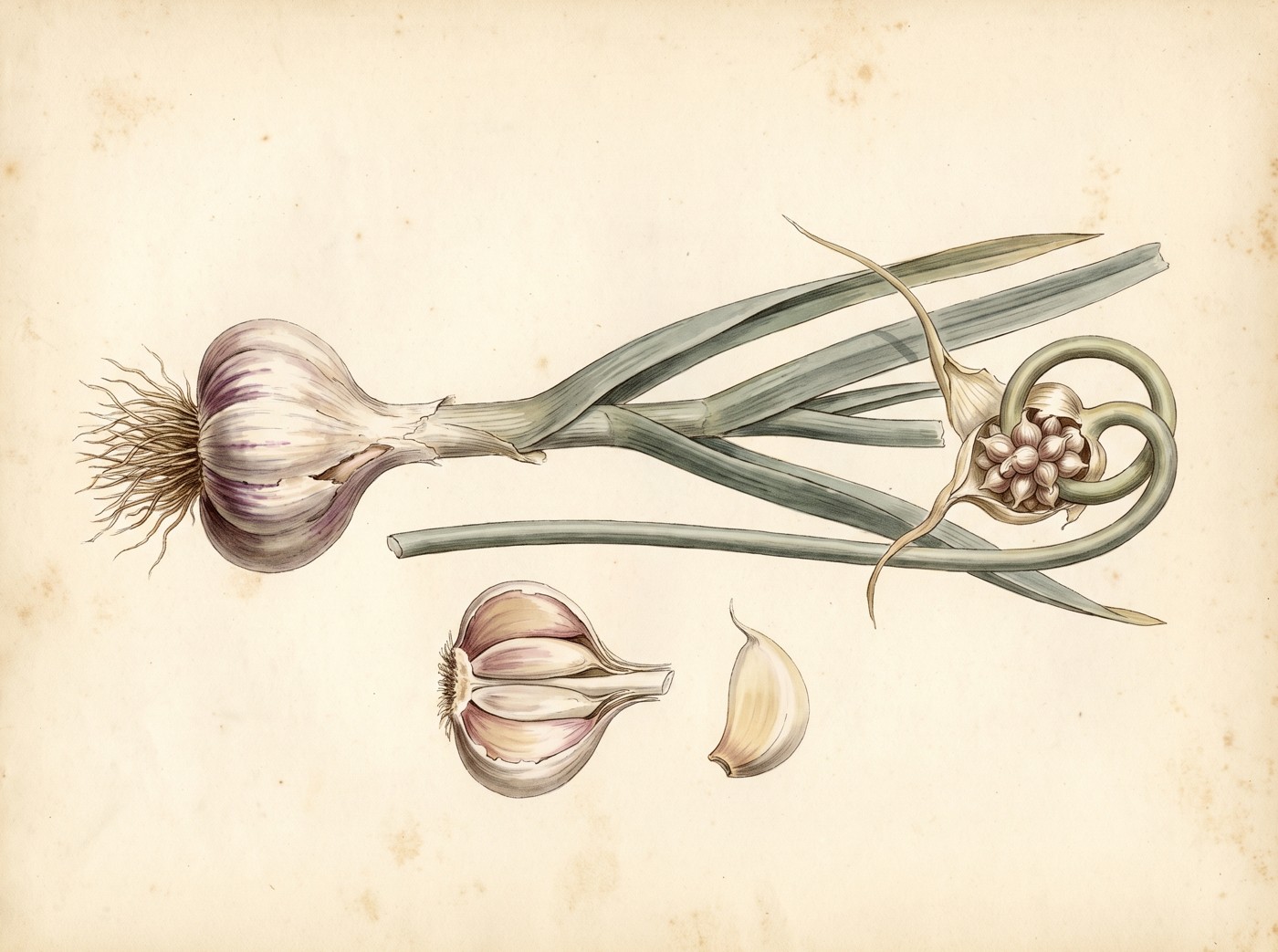 GarlicAllium sativum
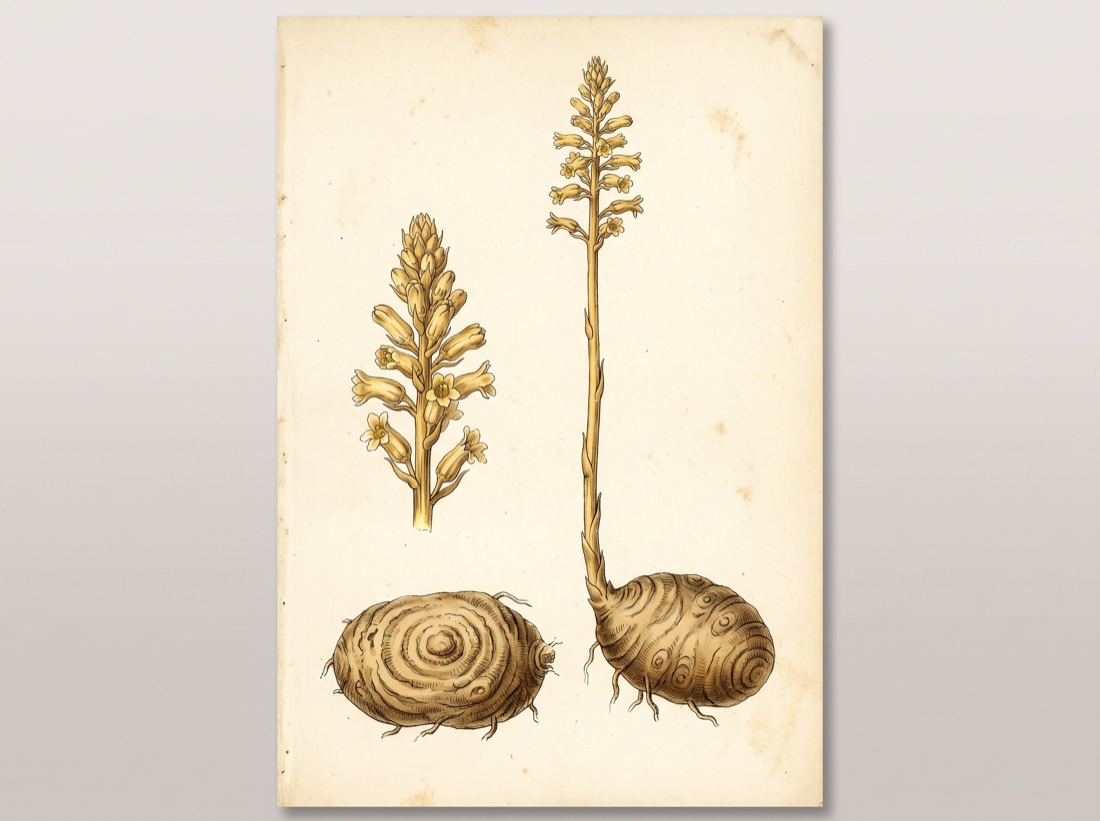 GastrodiaGastrodia elata
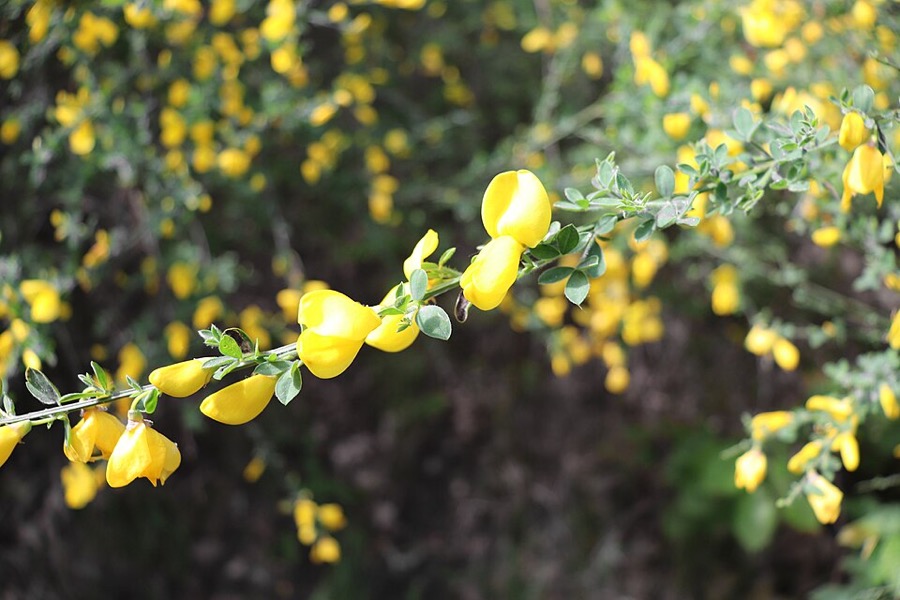 GenistaGenista
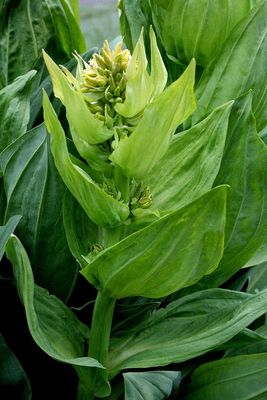 GentianGentiana lutea
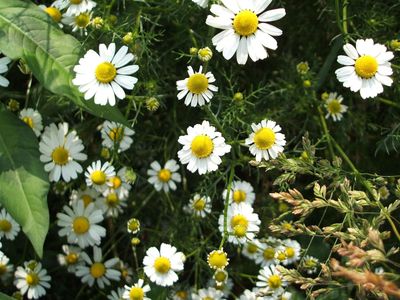 German chamomileMatricaria recutita
The whole plate is in the library. The compass, Compare, the Sky of eleven hundred plants and the formulary open with an email address and a password, free, with the formula builder and its safety engine. Herbert without limit, his formulating, clients, the handouts and the labels are the paid room.
Open the library, free