Western Herbalism
Devil's walking stick
Aralia Spinosa
Also known as Hercules' club, Prickly elder, Prickly ash (improperly so-called), Southern prickly ash (improperly so-called), Angelica tree, Toothache bush, Toothache tree, Southern prickly ash.
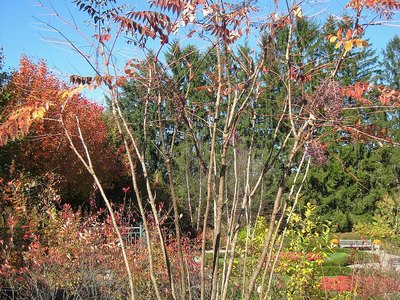
Aralia spinosa is a spiny, palm-like shrub or small tree of the eastern and southern United States, long known as devil's walking stick or Hercules' club for its heavily armed trunk and branches. The root bark, stem bark, and ripe berries have been used medicinally, most prominently in nineteenth century American eclectic and physiomedicalist practice, where the plant was valued as a pungent, warming stimulant and alterative. It was often confused in commerce with true prickly ash (Zanthoxylum species), a separate plant with similar folk uses, and this confusion persists in some older common names.

Ask Herbert about Devil's walking stick. Herbert is the master herbalist inside Bountiful Herbs: he answers from this plate and eleven hundred others, with dosing, pairing and cautions. Your first ten questions are free.
Ask HerbertActions
Indications what the tradition reached for it in
- Chronic rheumatism
- Toothache
- Sluggish digestion with gas and bloating
- Chronic skin disease attributed to poor elimination
- Syphilitic and scrofulous conditions (historical use)
- Dyspepsia
- Chronic diarrhea
- Low-grade circulatory sluggishness with cold extremities
- Snakebite (historical folk use)
- Dropsy (historical use, as a diuretic adjunct)
Specific indications
Aching, cold, poorly circulated joints in chronic rheumatism that respond to a warming, stimulating alterative
Toothache with local irritation, where the fresh bark or tincture is applied topically or chewed for its pungent, numbing bite
Safety
Low dose botanical. Used in drop doses in the classical practice; not a plant to dose freely.
Pregnancy: Limited safety data in pregnancy
Breastfeeding: Use with care while breastfeeding
The record lists 6 contraindications; open the plate in the library to read them in full.
In practice
Historically the root bark was the preferred part, taken as a tincture or decoction for chronic rheumatic complaints where circulation seemed sluggish and joints felt cold and heavy, often alongside other alteratives of the era such as burdock or yellow dock for a broader eliminative effect.
Dosing as the sources wrote it
| Preparation | As written | Metric |
|---|---|---|
| Tincture of root bark (1:5, 45%) | 0.5-2 mL up to three times daily | 0.5-2 mL |
| Decoction of dried root bark | 1-3 g dried bark daily, short courses only | 1000-3000 mg |
| Given in powder, in half-teaspoonful doses; or the powder was infused in half a pint of boiling water, of which infusion, when cold, a tablespoonful was given every half hour. | ||
| tincture | The dose of tincture (bark ℥viij to dilute alcohol Oj) is from 5 to 60 drops, of the infusion (℥ss to aqua Oj) a tablespoonful to a wineglassful. | 0.25-3 mL |
Doses are reproduced from the sources for practitioners and are not a recommendation for any person.
From the sources
Overview. Aralia spinosa is a spiny, palm-like shrub or small tree of the eastern and southern United States, long known as devil's walking stick or Hercules' club for its heavily armed trunk and branches. The root bark, stem bark, and ripe berries have been used medicinally, most prominently in nineteenth century American eclectic and physiomedicalist practice, where the plant was valued as a pungent, warming stimulant and alterative. It was often confused in commerce with true prickly ash (Zanthoxylum species), a separate plant with similar folk uses, and this confusion persists in some older common names.
Clinical Notes. Historically the root bark was the preferred part, taken as a tincture or decoction for chronic rheumatic complaints where circulation seemed sluggish and joints felt cold and heavy, often alongside other alteratives of the era such as burdock or yellow dock for a broader eliminative effect.
Properties and Uses. The bark of this shrub is a strong and rather bitter stimulant, very pungent to the taste, and acrid when fresh. It yields its properties to alcohol and water. It is usually sold in the markets under the common name of Southern Prickly Ash, and is considered to possess the same therapeutic properties as the xanthoxylum of the North.
Action, Medical Uses, and Dosage. The leaves in warm infusion are sudorific. It has a marked influence upon the secretions, and the circulation. The bark is diuretic and alterative, and has an especial action on the kidneys, increasing secretion and allaying irritation. Very valuable in dropsy, gravel, and suppression of urine, and other urinary disorders. The juice and decoction of the fresh roots are said to be emetic and hydragogue, and have been found efficient in dropsy. Dose of decoction (℥ss to aqua Oj), 2 to 4 ounces, 3 times a day. Specific aralia hispida, 1 to 30 drops.
Drawn from Cook's Physio-Medical Dispensatory; King's American Dispensatory, 18th edition (Felter and Lloyd), and the Bountiful Herbs editorial.
In formulas
Devil's walking stick stands in 17 documented formulas in the library, among them Léi shì ging liáng dí shu fǎ, Léi shì ging liáng di shu tàng, cán shĩ tǎng, qing fei yín zi, èr jia jiǎn zhèng gì sǎn, sàn rén tàng.
Often paired with
 Magnolia BarkMagnolia officinalis
 PinelliaPinellia ternata
 lophatherumLophatherum gracile
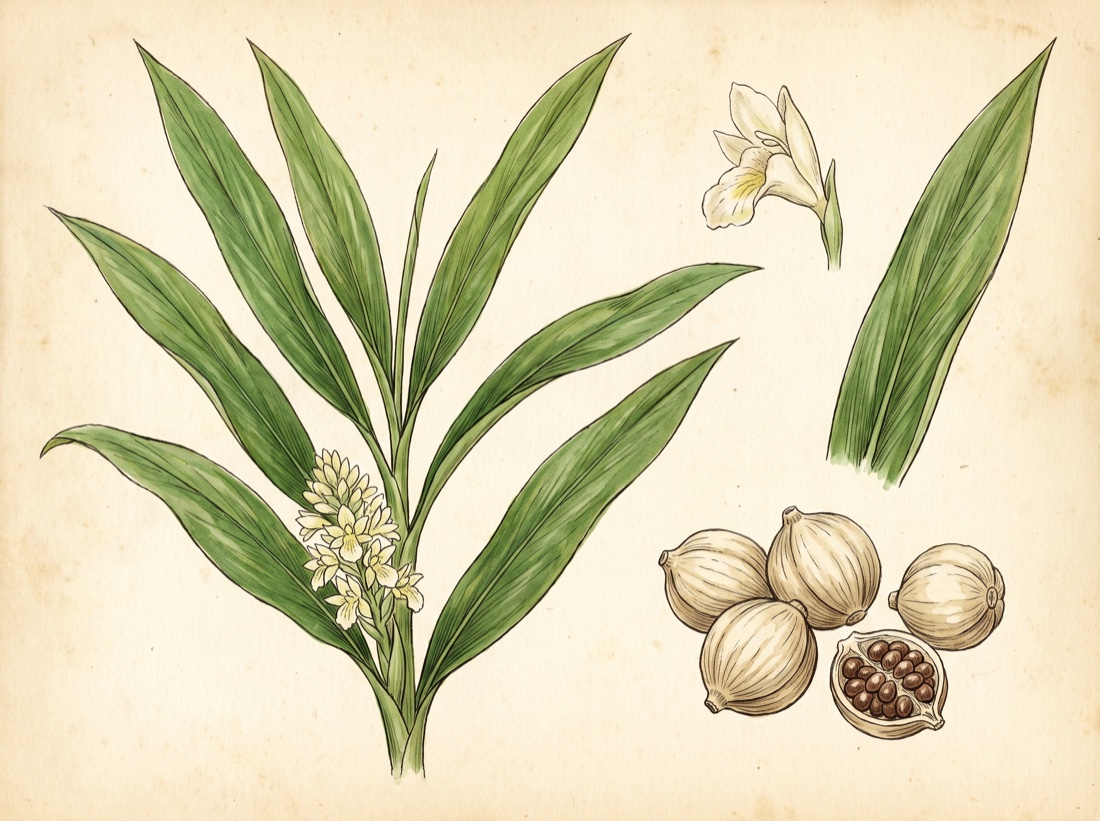 round cardamomWurfbainia compacta
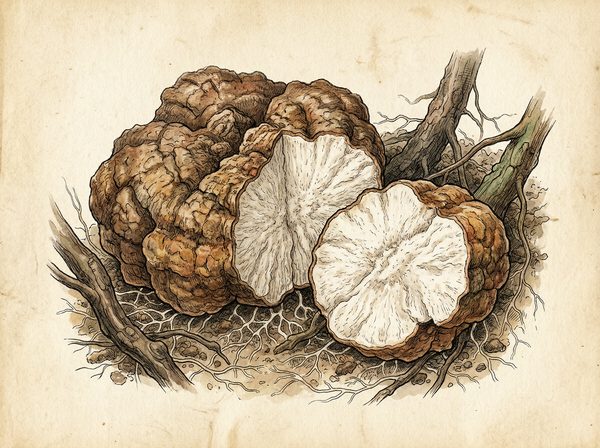 PoriaWolfiporia extensa
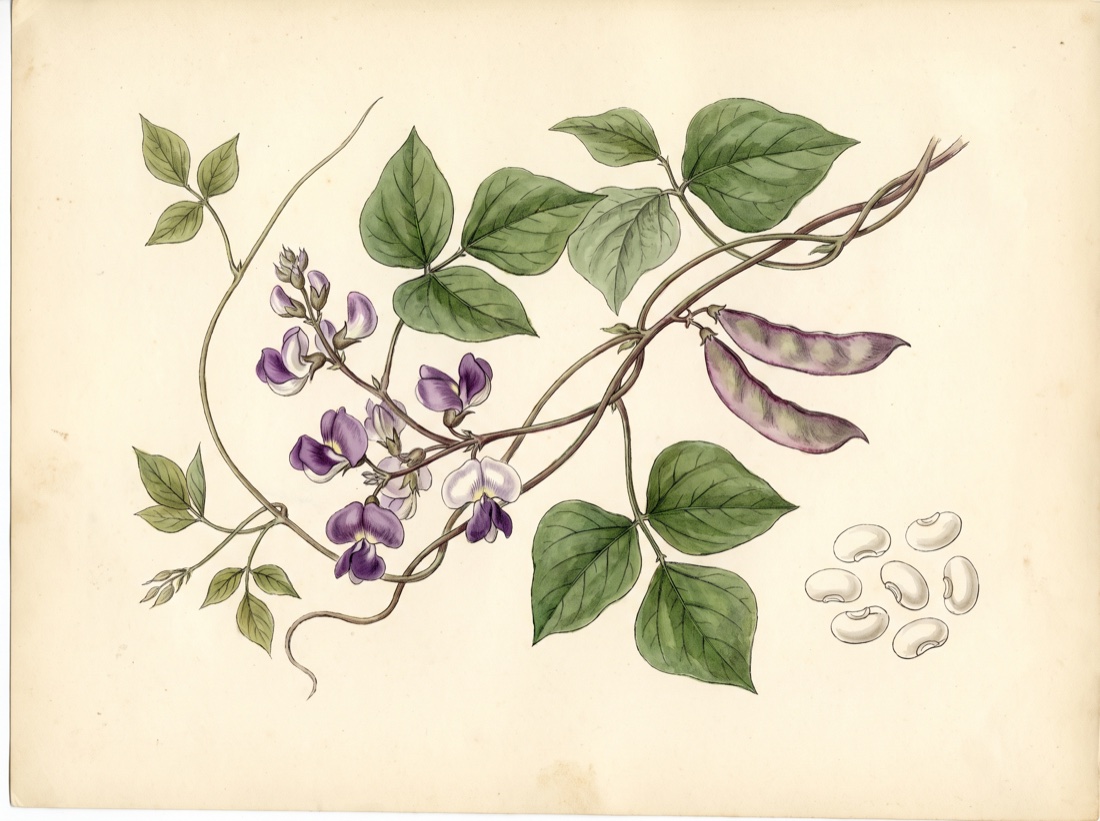 hyacinth beanLablab purpureus
Nearby on the shelf
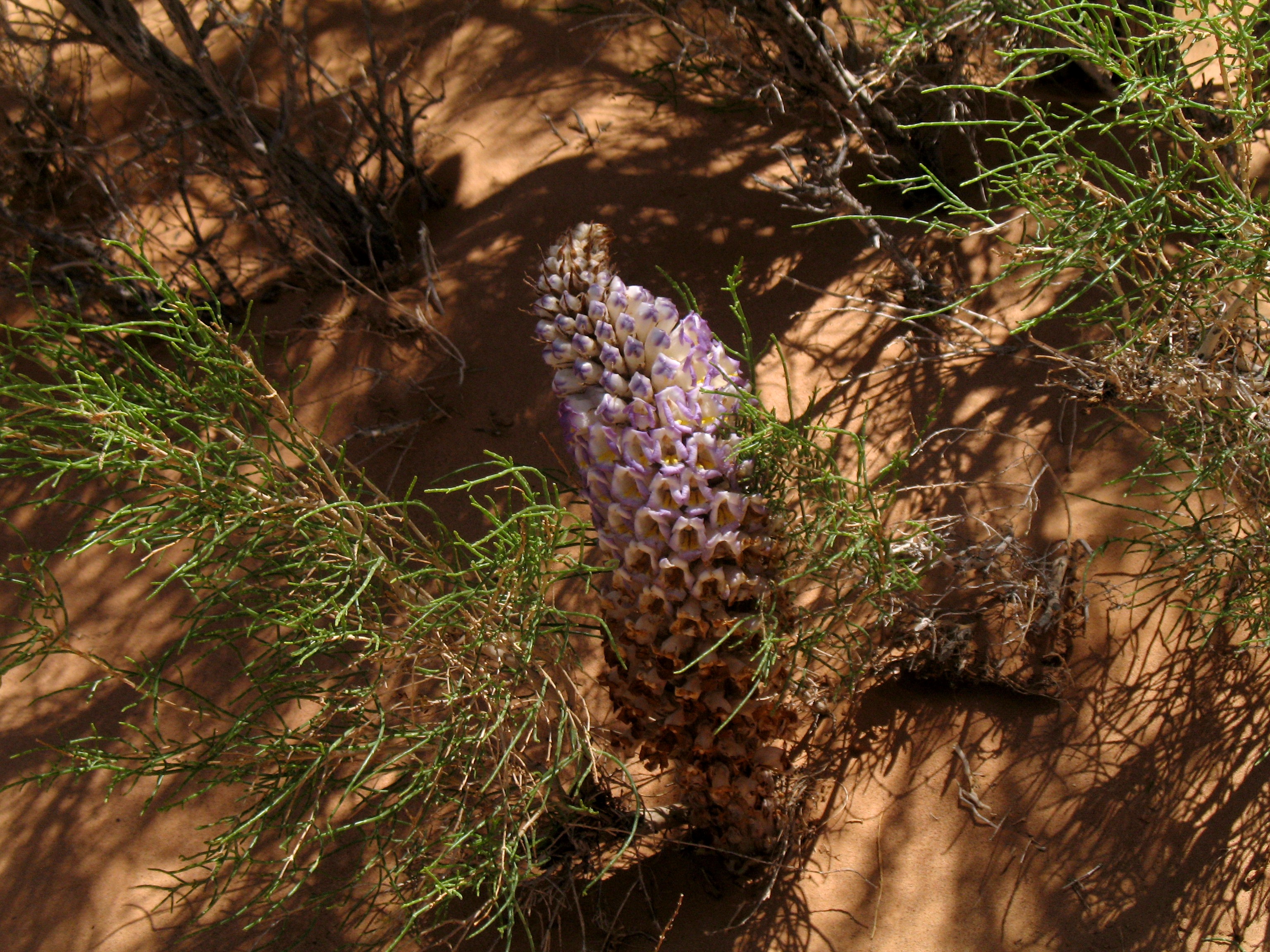 Desert GinsengCistanche deserticola
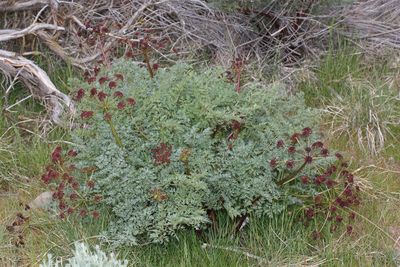 Desert parsleyLomatium dissectum
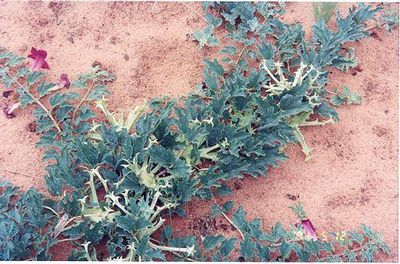 Devil's clawHarpagophytum procumbens
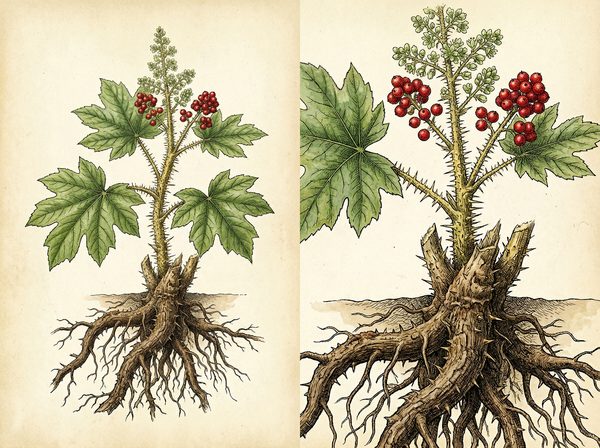 Devil's ClubOplopanax horridus
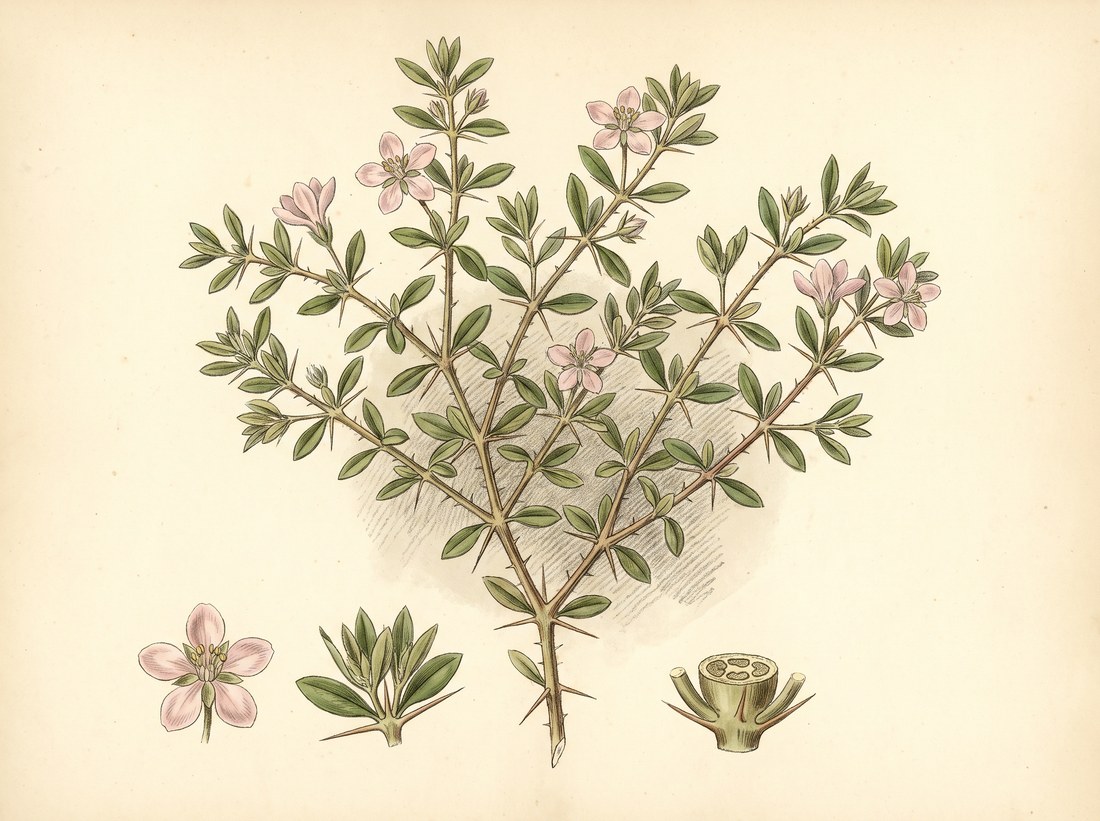 DhamasaFagonia cretica
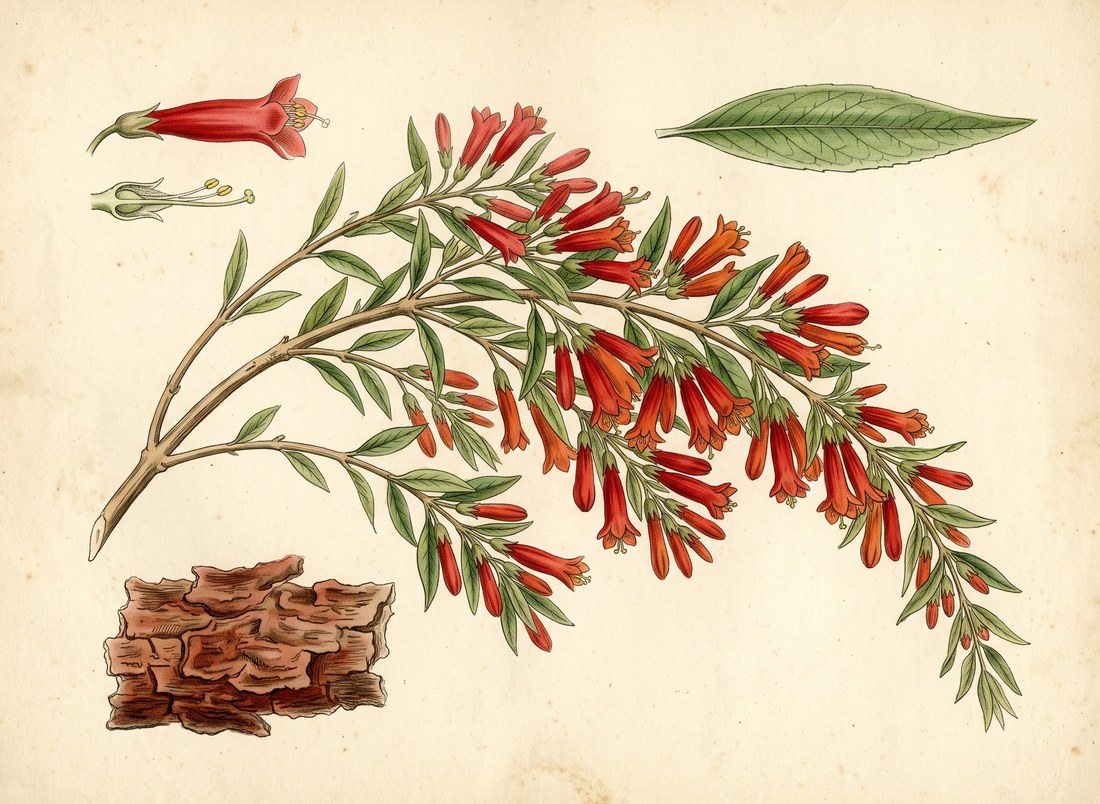 DhatakiWoodfordia fruticosa
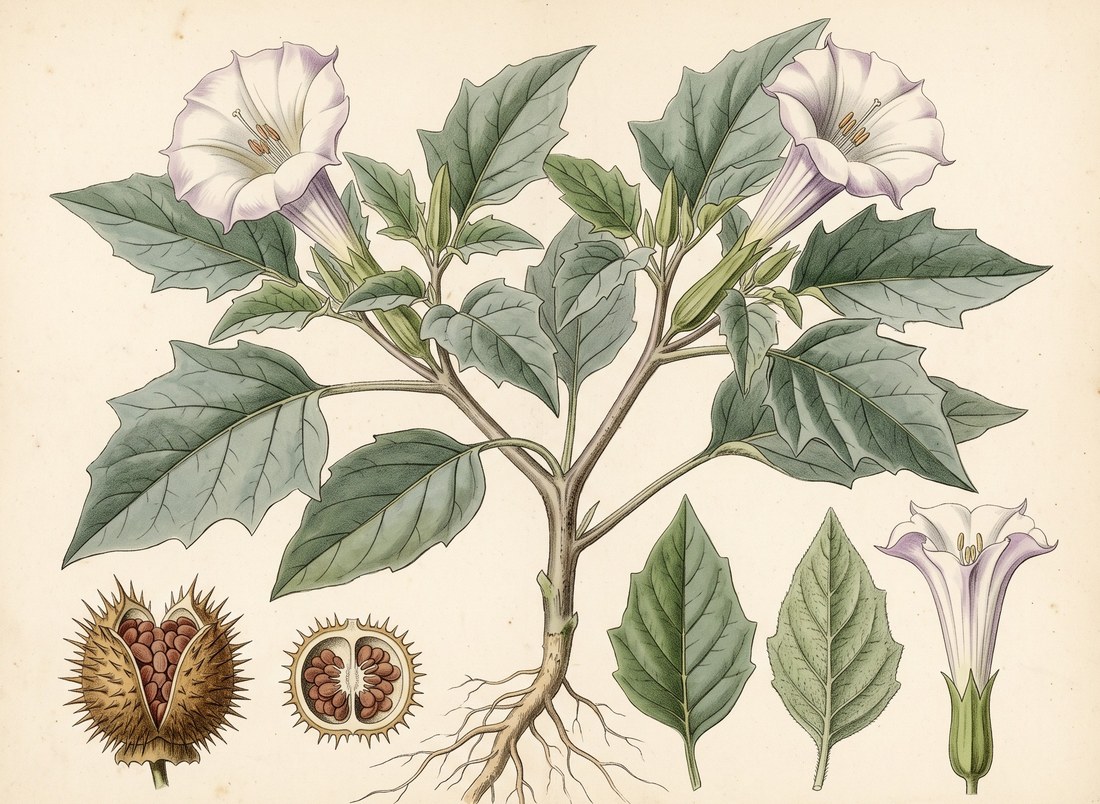 DhatturaDatura metel
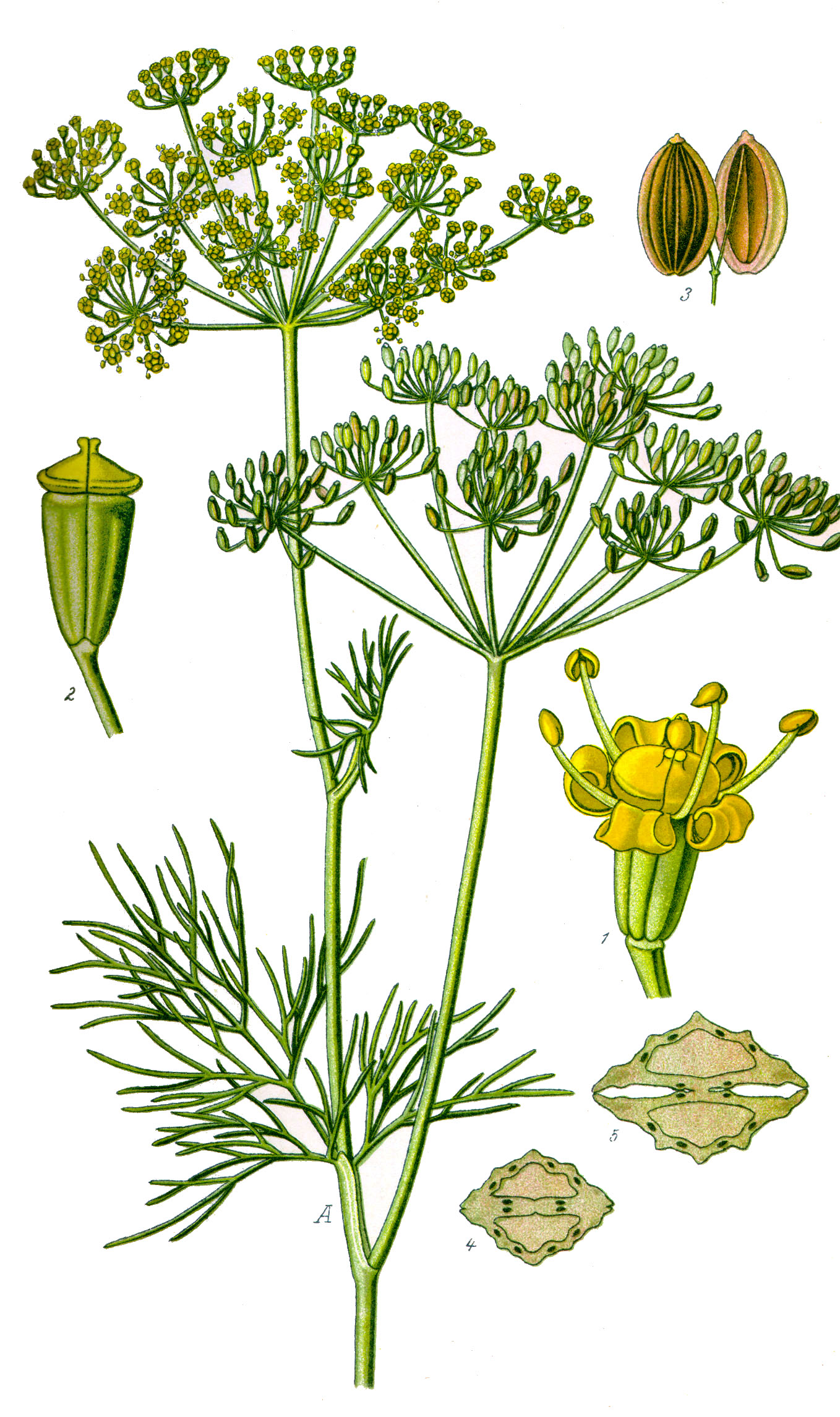 DillAnethum graveolens
The whole plate is in the library. The compass, Compare, the Sky of eleven hundred plants and the formulary open with an email address and a password, free, with the formula builder and its safety engine. Herbert without limit, his formulating, clients, the handouts and the labels are the paid room.
Open the library, free