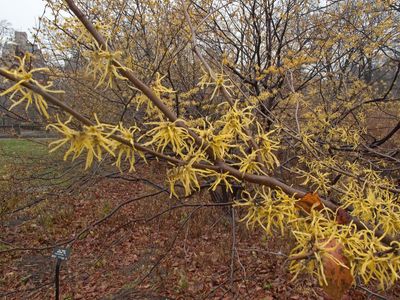
Western Herbalism
Witch hazel
Hamamelis virginiana
Also known as Virginian Witch Hazel, Witchazel, Winter-bloom, Spotted alder, Hamamelis, Snapping Hazelnut, Winterbloom, etc.
External. Witch-hazel bark and its fluid preparations are astringent. The distillate and the specific medicine are sedative and slightly astringent. The latter two form agreeably grateful and soothing applications to the skin and mucous surface in irritated and inflamed conditions and where venous relaxation is present.

Ask Herbert about Witch hazel. Herbert is the master herbalist inside Bountiful Herbs: he answers from this plate and eleven hundred others, with dosing, pairing and cautions. Your first ten questions are free.
Ask HerbertActions
Indications what the tradition reached for it in
- Mucus discharge (purulent)
- Cuts
- Eczema (weeping)
- Venous insufficiency (chronic)
- Sprain
- Bruises
- Bleeding (external)
- Inflammation (musculoskeletal)
- Tonsillitis
- Uterine hemorrhage (mild)
- Phlebitis
- Pain
- Gum ulcers
- Wounds (purulent/oozing)
- Varicose veins
- Burns
- Bleeding (internal)
- Musculoskeletal swelling
- Musculoskeletal injury
- Leg ulcer
- Insect bite
- Connective tissue inflammation
- Leukorrhea
- Connective tissue swelling
- Musculoskeletal soreness
- Diarrhea
- Skin abrasions
- Menorrhagia (mild)
- Hemorrhoids
- Sore throat
Safety
Pregnancy: Pregnancy and Lactation=lack of data, topical use considered safe
Breastfeeding: Pregnancy and Lactation=lack of data, topical use considered safe
The record lists 2 contraindications; open the plate in the library to read them in full.
Dosing as the sources wrote it
| Preparation | As written | Metric |
|---|---|---|
| Tincture (1:3-1:5) | 1-3 ml TID | 1-3 mL |
| Infusion/decoction | 2 tsp/c BID-TID | |
| (G6) Hamamelis Liquid Extract (BPC 1973) 2 -4 mL (1 : 1 in 45% alcohol) three times daily .(G6) Hamamelis Water (BPC 1973) for local application, undiluted or 1 : 3 dilution for external use | 2-4 mL | |
| (G3) Decoction 5-10 g in 250 mL water for compresses | 5000-10000 mg | |
| Extractum Hamamelis Fluidum, Fluid Extract of Hamamelis | Dose, from ton to sixty minims. | 3.7 mL |
| Distilled Extract of Hamamelis | Dose, from ten to sixty minims. | 0.62-3.7 mL |
Doses are reproduced from the sources for practitioners and are not a recommendation for any person.
From the sources
Action and Therapy. External. Witch-hazel bark and its fluid preparations are astringent. The distillate and the specific medicine are sedative and slightly astringent. The latter two form agreeably grateful and soothing applications to the skin and mucous surface in irritated and inflamed conditions and where venous relaxation is present.
Therapy. Internally it is given with the above indications as a remedy for sore throat of whatever kind, with feeling of extreme soreness, and with dark-colored membranes. It is used in tonsillitis and diphtheria, in phlegmonous ulcerations of the mouth and throat, and in acute catarrh.
Properties and Uses. The leaves of this shrub are a mild but reliable astringent, with gentle tonic qualities. It is quite soothing in its influence; and is one in a small list of plants which combine diffusive relaxant properties with astringency.
Properties and Uses. This plant is relaxant and stimulant, diffusive in its action, gratefully warming to the stomach, and more effective than most of the mints. A warm infusion is a popular remedy in securing perspiration and breaking up recent colds-especially in the case of females who have suffered a sudden obstruction of menstruation.
Drawn from Cook's Physio-Medical Dispensatory; Scudder's Specific Medication and Specific Medicines; King's American Dispensatory, 18th edition (Felter and Lloyd); Ellingwood's American Materia Medica, Therapeutics and Pharmacognosy, and the Bountiful Herbs editorial.
Often paired with
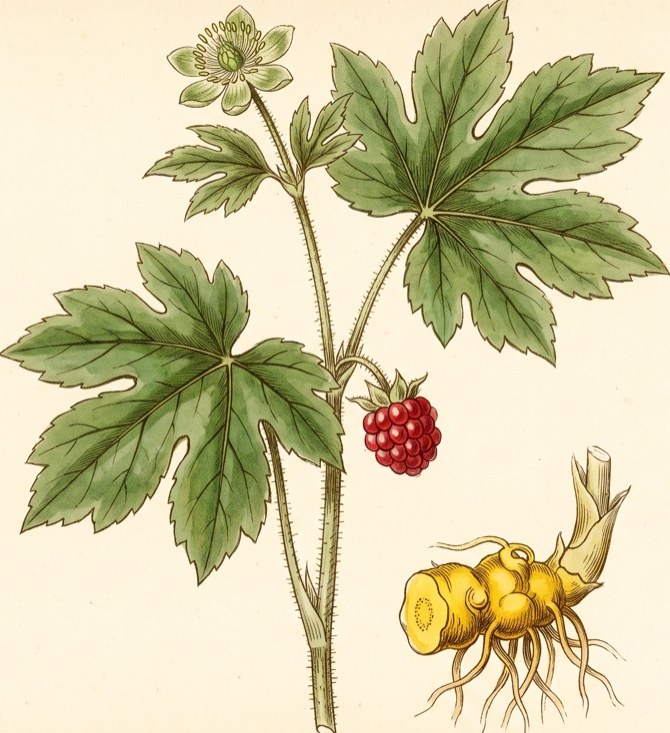 GoldensealHydrastis canadensis
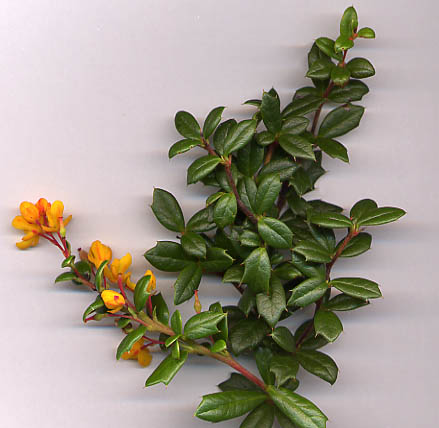 BarberryBerberis vulgaris
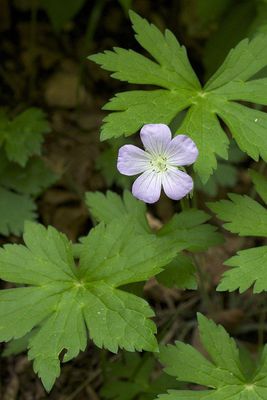 CranesbillGeranium maculatum
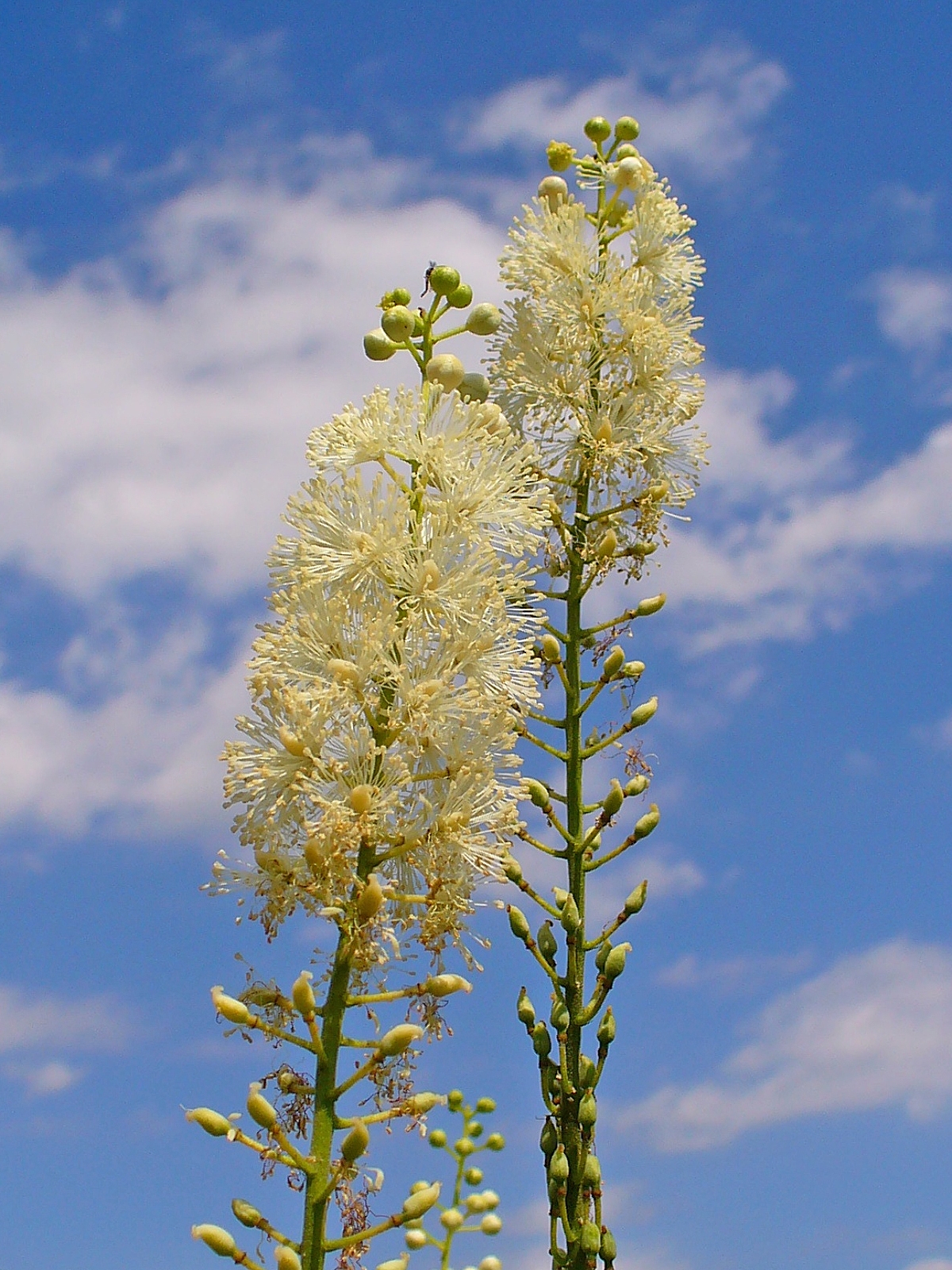 Black cohoshActaea racemosa
 Blue cohoshCaulophyllum thalictroides
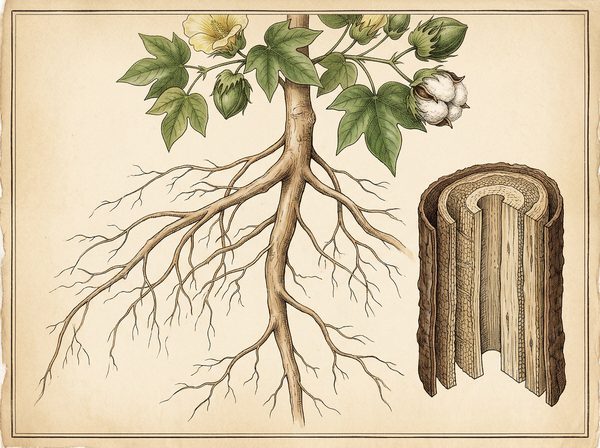 Levant cottonGossypium herbaceum
Nearby on the shelf
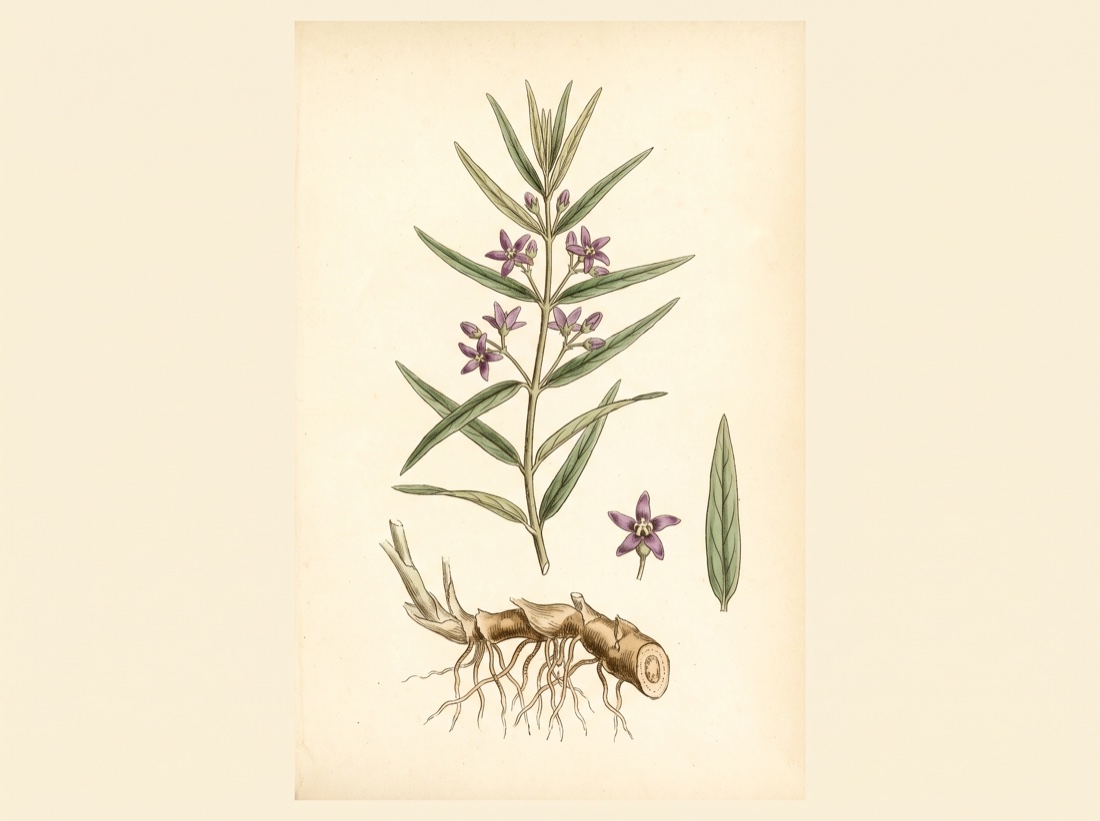 Willowleaf swallowwortVincetoxicum stauntonii
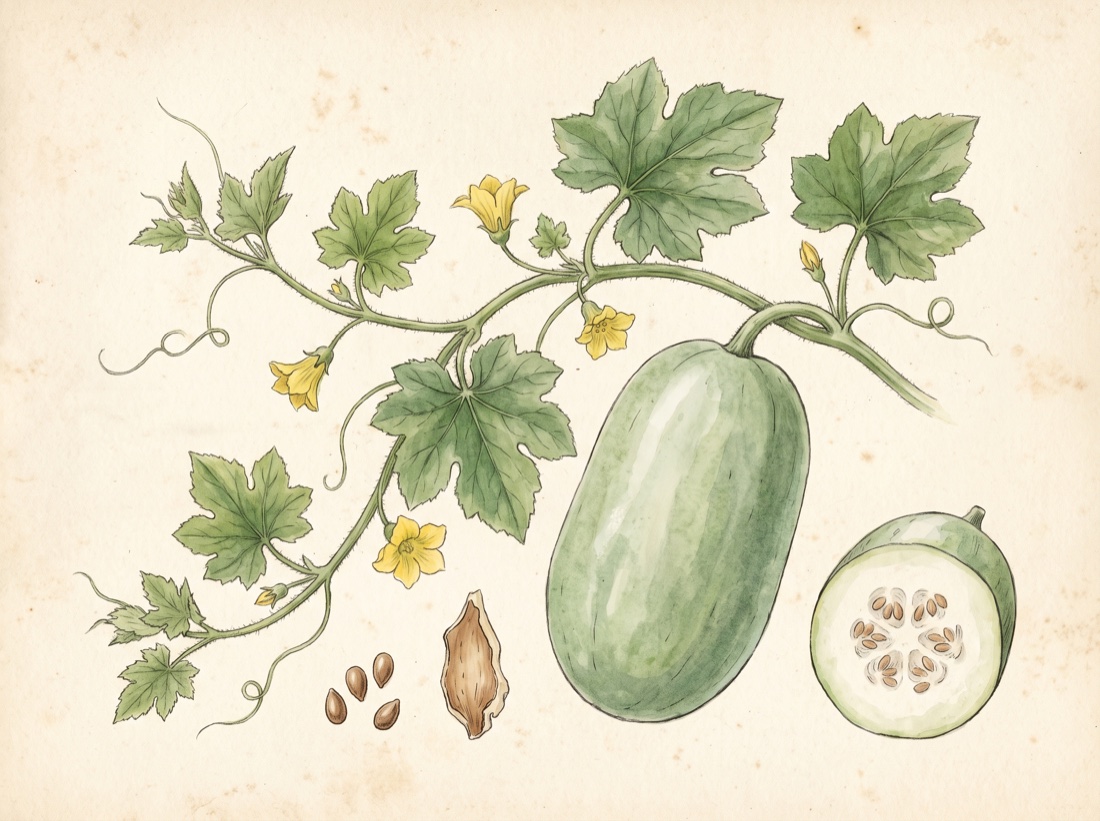 Winter melonBenincasa hispida
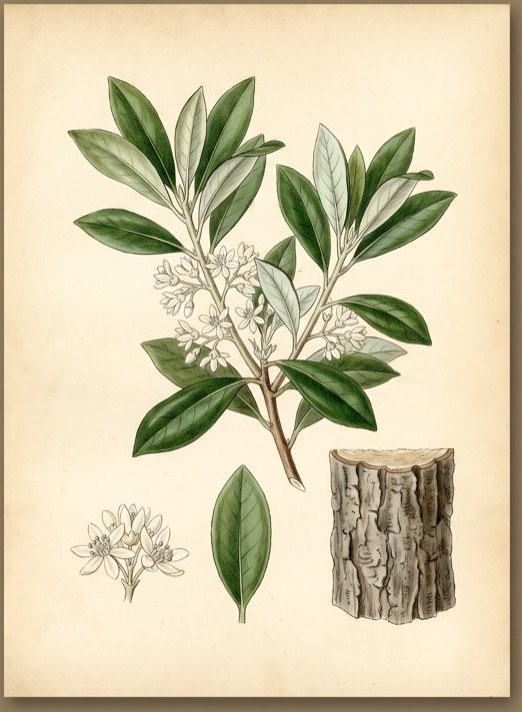 Winter's barkWintera
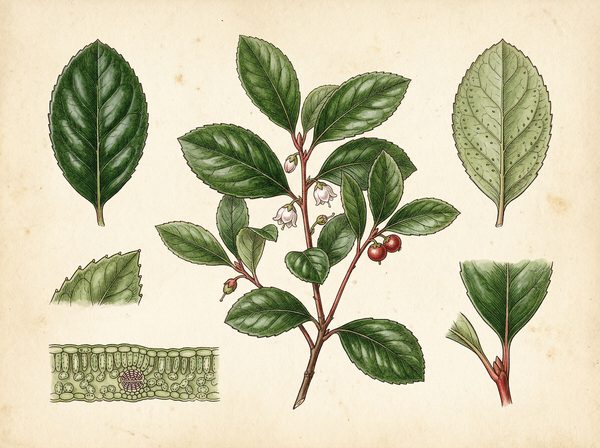 WintergreenGaultheria procumbens
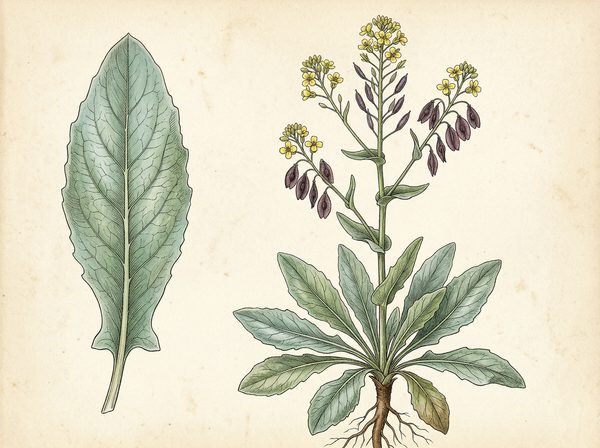 WoadIsatis tinctoria
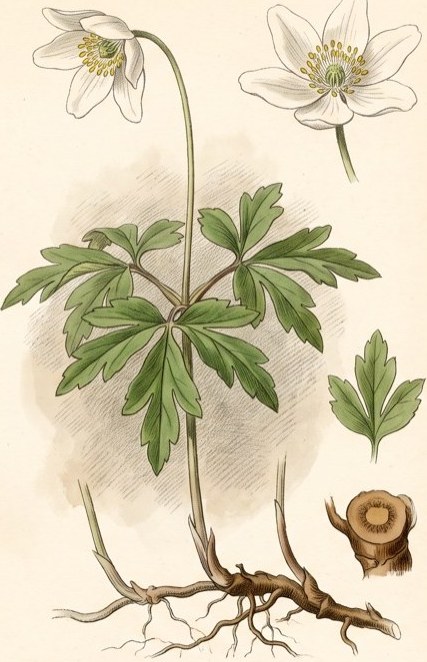 Wood AnemoneAnemone nemorosa
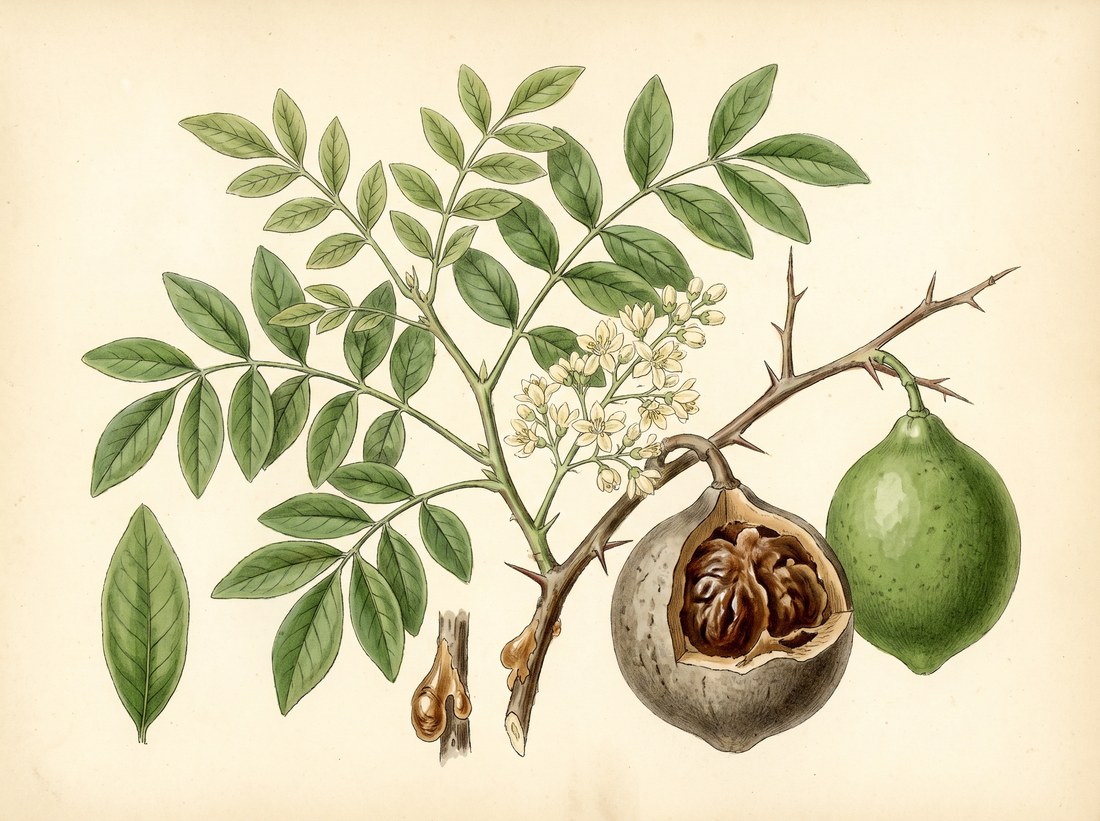 Wood appleLimonia acidissima
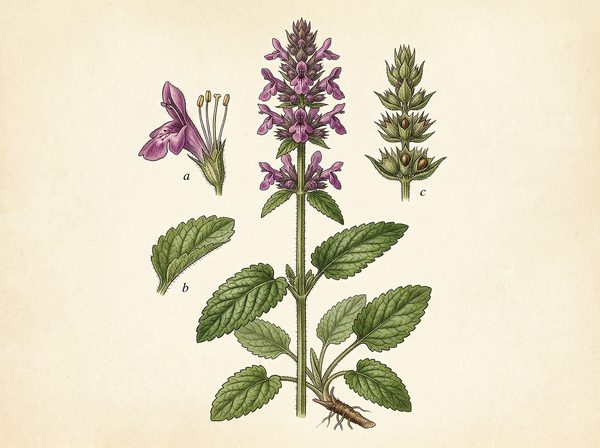 Wood BetonyStachys officinalis
The whole plate is in the library. The compass, Compare, the Sky of eleven hundred plants and the formulary open with an email address and a password, free, with the formula builder and its safety engine. Herbert without limit, his formulating, clients, the handouts and the labels are the paid room.
Open the library, free