Western Herbalism
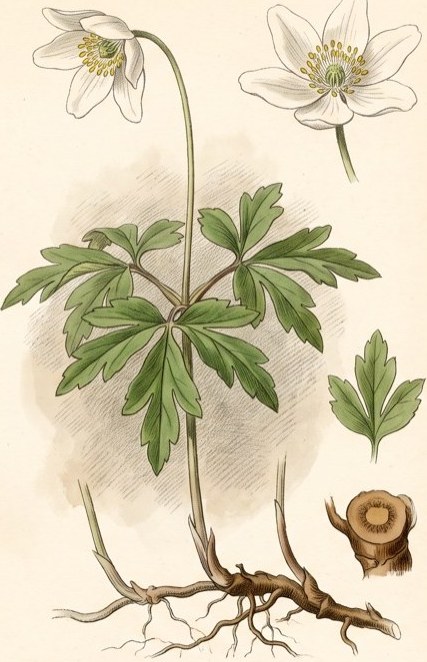
Wood Anemone
Anemone nemorosa
Also known as Wind Flower, Wind crowfoot.
Used in traditional Russian folk medicine and European herbalism Fresh plant only for medicinal value (dries lose potency) Low-dose botanical due to toxicity Non-officinal Regional rarity in some areas limits harvest RxList ScienceRise Henriette's Herbal

Ask Herbert about Wood Anemone. Herbert is the master herbalist inside Bountiful Herbs: he answers from this plate and eleven hundred others, with dosing, pairing and cautions. Your first ten questions are free.
Ask HerbertActions
Indications what the tradition reached for it in
- Gout
- Indolent ulcers
- Whooping cough
- Tinea capitis
- Eye inflammation
- Malignant ulcers
- Rheumatism
- Asthma
- Chronic eruptions
- Delayed menstruation
- Indurated glands
- Melancholy
- Headache
- Suppressed menses
- Corns
- Stomach pain
- Palsies
- Fever
- Bone pain
- Anxiety
- Bronchitis
- Colic
- Cough
- Cramps
- Edema
- Fluid retention
- Fungal infections
- Infection
- Inflammation
- Insomnia
Safety
Recognised toxicity. This plant carries a toxicity flag in the record; it is for trained practitioners only.
Low dose botanical. Used in drop doses in the classical practice; not a plant to dose freely.
Pregnancy: Use with care in pregnancy
Breastfeeding: Not for use while breastfeeding
The record lists 7 contraindications; open the plate in the library to read them in full.
Dosing as the sources wrote it
| Preparation | As written | Metric |
|---|---|---|
| Fresh tincture | Fresh tincture (leaves/flowers) 1:2 95%, 1-5 drops initially, up to 15 drops 4x daily | 0.02-0.1 mL |
| Tincture fresh root, 10 drops in 120ml water, 5ml q2-4h Chestnut Herbs | 0.2 mL | |
| It has been recommended in amaurosis and other diseases of the eye, secondary syphilis, cutaneous diseases, and whooping-cough, in doses of 1 or 2 grains daily. | 130-130 mg | |
| A tincture of the fresh plant in fruit (℥viij to alcohol Oj) may be tried in doses of a fraction of 1 drop to 5 drops. | 0.02-0.1 mL | |
| Anemone virginiana, Linné. Wood flower, Wind flower, Thimble weed. An herb growing from 2 to 3 feet high, having from 2 to 4 greenish-white flowers |
Doses are reproduced from the sources for practitioners and are not a recommendation for any person.
From the sources
Clinical Notes. Used in traditional Russian folk medicine and European herbalism Fresh plant only for medicinal value (dries lose potency) Low-dose botanical due to toxicity Non-officinal Regional rarity in some areas limits harvest RxList ScienceRise Henriette's Herbal
Action, Medical Uses, and Dosage. This plant has been found useful in many chronic cases of ophthalmic maladies, as cataract, amaurosis, and corneal opacity; also in cutaneous eruptions and secondary syphilitic diseases. It has likewise effected cures in uncomplicated amenorrhoea, leucorrhoea, pains in the testes, or ovaries, and along the spermatic chord, sharp, cutting gastric pains, frontal headache in onanists, and in chronic irritation of the nerves.
primary-actions. Wood Anemone acts primarily as: Antispasmodic, Nervine, Sedative, Anti-inflammatory, Rubefacient, Antirheumatic. Secondary actions include Antineoplastic, Diaphoretic, Expectorant, Diuretic, Antimicrobial, Antifungal.
Botanical Source and History. "Anemone patens is a very conspicuous flower in early spring, found in prairie regions of Illinois, thence west to the Rocky Mountains, and northwest. The stem rises about 4 inches out of the ground, and is terminated by a large, erect, solitary, light bluish-purple flower.
Drawn from Scudder's Specific Medication and Specific Medicines; King's American Dispensatory, 18th edition (Felter and Lloyd), and the Bountiful Herbs editorial.
Nearby on the shelf
 Winter's barkWintera
 WintergreenGaultheria procumbens
 Witch hazelHamamelis virginiana
 WoadIsatis tinctoria
 Wood appleLimonia acidissima
 Wood BetonyStachys officinalis
 Wood sorrelOxalis acetosella
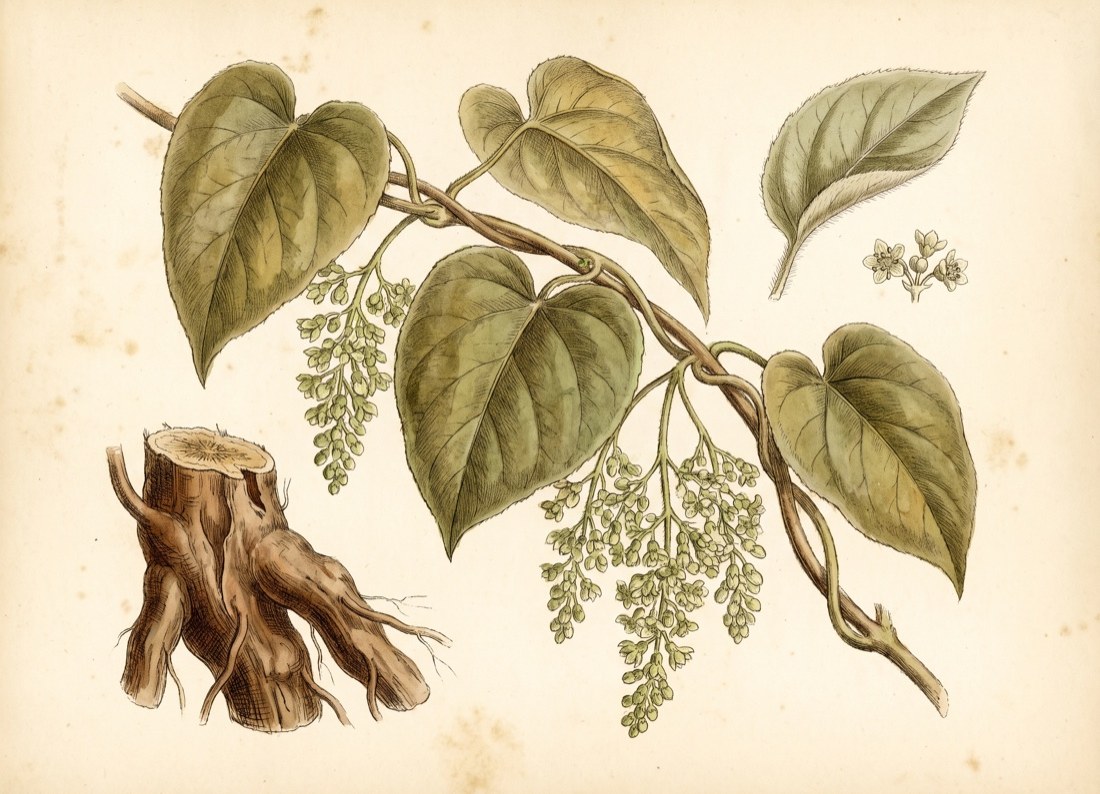 WoorariCurare
The whole plate is in the library. The compass, Compare, the Sky of eleven hundred plants and the formulary open with an email address and a password, free, with the formula builder and its safety engine. Herbert without limit, his formulating, clients, the handouts and the labels are the paid room.
Open the library, free