Western Herbalism
Pine tar
Pix Liquida
Also known as Wood tar, Tar, Stockholm tar, Norway pine tar.
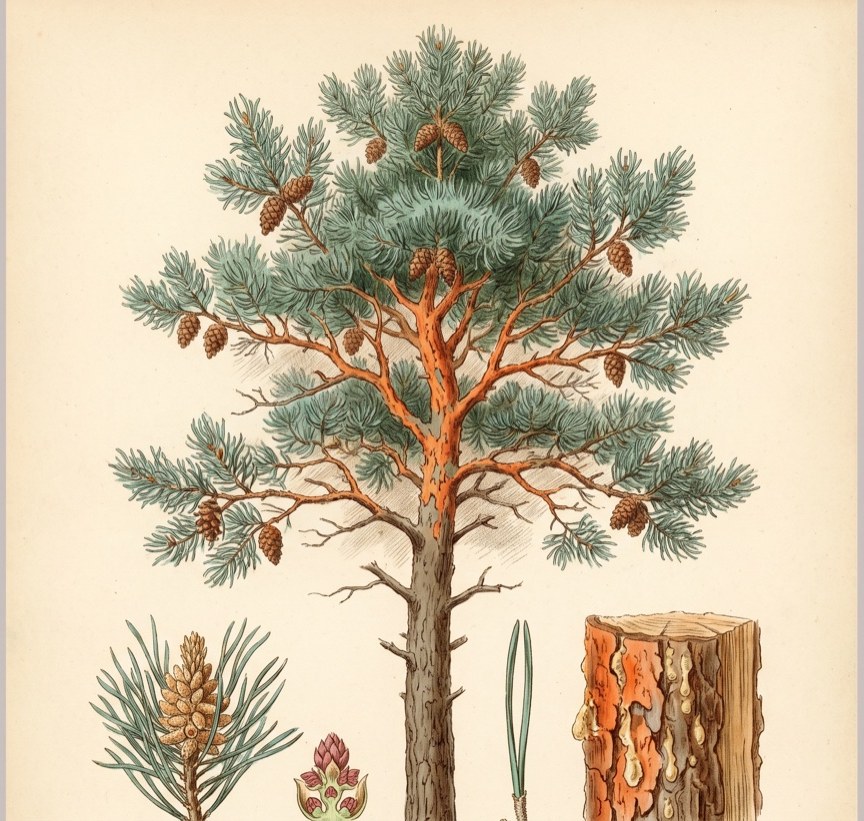
Pine tar is a dark, viscid, semiliquid substance obtained by the destructive (dry) distillation of the wood and roots of pine trees, historically Pinus palustris in North America and Pinus sylvestris in northern Europe. It has been used for centuries as a topical dressing for chronic skin disease and, in smaller measure, as an internal stimulant to the mucous membranes of the lungs and urinary tract. Eclectic physicians of the nineteenth century valued it chiefly as an external application for obstinate skin conditions and, cautiously, as an internal antiseptic expectorant, while noting its capacity to irritate and, in overdose, to poison much like phenol.

Ask Herbert about Pine tar. Herbert is the master herbalist inside Bountiful Herbs: he answers from this plate and eleven hundred others, with dosing, pairing and cautions. Your first ten questions are free.
Ask HerbertActions
Indications what the tradition reached for it in
- Chronic eczema
- Psoriasis
- Seborrheic dermatitis and dandruff
- Chronic pruritic skin conditions
- Scabies and other parasitic skin infestations
- Chronic bronchitis with copious expectoration
- Chronic laryngitis (historic inhalation use)
- Chronic cystitis with mucoid discharge (historic internal use)
Specific indications
Thickened, scaly, lichenified plaques with intense itching, worse with heat and better for scratching
Chronic bronchitis with profuse, tenacious, sometimes fetid sputum where a stimulating expectorant is wanted
Safety
Low dose botanical. Used in drop doses in the classical practice; not a plant to dose freely.
Pregnancy: Avoid internal use in pregnancy given historic reports of toxicity; topical use in limited areas is generally considered low risk but should be discussed with a physician.
Breastfeeding: Avoid application to the breast and areola area; otherwise limited topical use on other skin sites is considered low risk.
The record lists 3 contraindications; open the plate in the library to read them in full.
In practice
Pine tar's modern place is almost entirely topical. It is prepared as a soap, shampoo, or ointment (commonly 1 to 20 percent tar) for chronic plaque psoriasis, seborrheic dermatitis of the scalp, and lichenified eczema, where its combination of mild antiproliferative, antipruritic, and antiseptic effects can settle stubborn, scaling lesions that have not responded to gentler measures.
Dosing as the sources wrote it
| Preparation | As written | Metric |
|---|---|---|
| Pine tar ointment | 5-20% ointment applied to affected skin once or twice daily | |
| Pine tar soap or shampoo | 1-5% preparation used topically as directed for scalp or skin | |
| Historic internal dose (obsolete, not recommended) | 0.1-0.3 mL tar in pill or emulsion once daily, as recorded in older Eclectic practice | 0.1-0.3 mL |
| Dose, 5 to 15 grains. | 324-972 mg | |
| Dose, 3 to 5 minims. | 0.18-0.31 mL | |
| Dose, 1 to 3 fluidounces every four to six hours. | 29.57-88.72 mL |
Doses are reproduced from the sources for practitioners and are not a recommendation for any person.
From the sources
Overview. Pine tar is a dark, viscid, semiliquid substance obtained by the destructive (dry) distillation of the wood and roots of pine trees, historically Pinus palustris in North America and Pinus sylvestris in northern Europe. It has been used for centuries as a topical dressing for chronic skin disease and, in smaller measure, as an internal stimulant to the mucous membranes of the lungs and urinary tract. Eclectic physicians of the nineteenth century valued it chiefly as an external application for obstinate skin conditions and, cautiously, as an internal antiseptic expectorant, while noting its capacity to irritate and, in overdose, to poison much like phenol.
Clinical Notes. Pine tar's modern place is almost entirely topical. It is prepared as a soap, shampoo, or ointment (commonly 1 to 20 percent tar) for chronic plaque psoriasis, seborrheic dermatitis of the scalp, and lichenified eczema, where its combination of mild antiproliferative, antipruritic, and antiseptic effects can settle stubborn, scaling lesions that have not responded to gentler measures.
Therapy. External. Tar is chiefly used as an antipruritic and antiparasitic. It is of use in scaly skin diseases, and in various preparations it has been applied in psoriasis, chronic eczema, prurigo, porrigo, lichen, sycosis, lupus vulgaris and erythematosus, pemphigus, tinea capitis and other forms of ringworm, scabies, and boils.
Action. Tar is irritant and antiseptic. Upon prolonged application tar acne may ensue, and in some instances it has produced poisoning similar to that of phenol. Internally it excites the circulation and the secretions, especially of the kidneys and lungs, and acts as an antiseptic to those tracts, thus proving diuretic, disinfectant and expectorant. Overdoses produce headache, indigestion, black vomit and stools, and blackish urine with blood and albumen and a decided tar-like odor.
Drawn from Scudder's Specific Medication and Specific Medicines; Felter's Eclectic Materia Medica, Pharmacology and Therapeutics, and the Bountiful Herbs editorial.
Often paired with
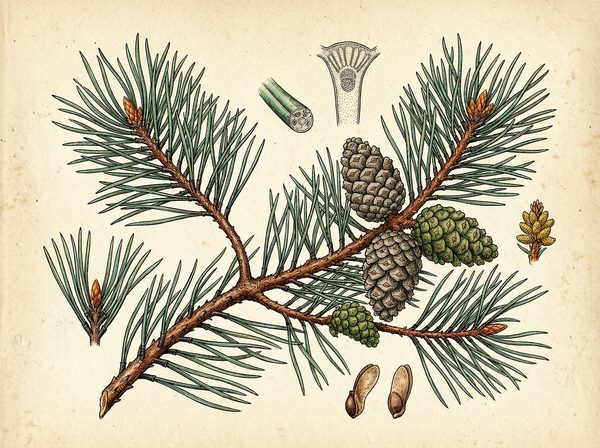 Scotch PinePinus sylvestris
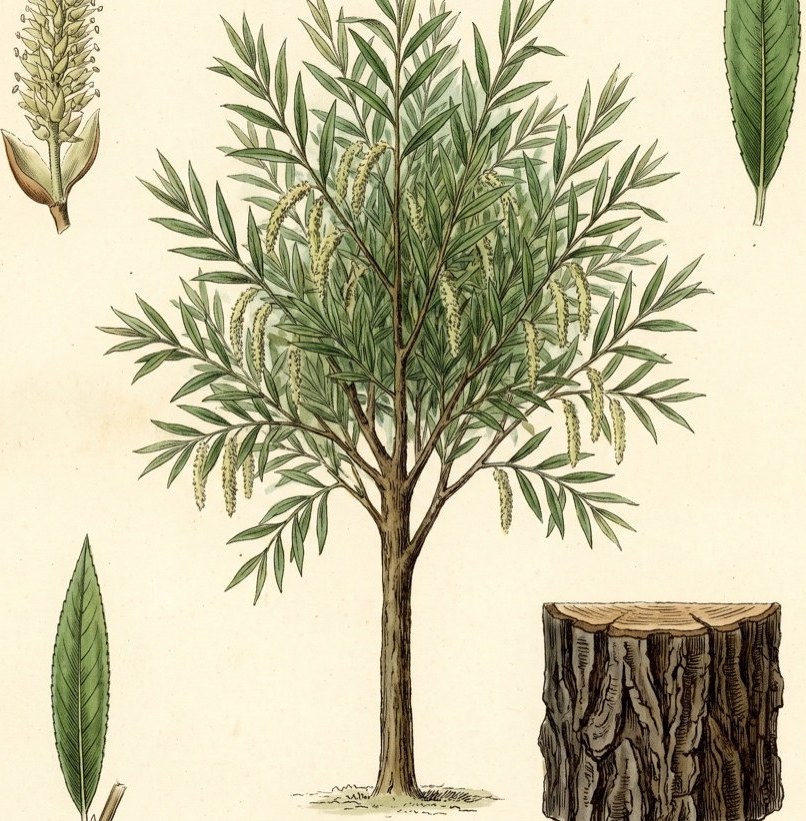 Black willowSalix Nigra
Nearby on the shelf
 PichiFabiana imbricata
 Pillbearing SpurgeChamaesyce hirta
 PiluSalvadora persica
 Pine BarkPinus pinaster
 PineappleweedMatricaria discoidea
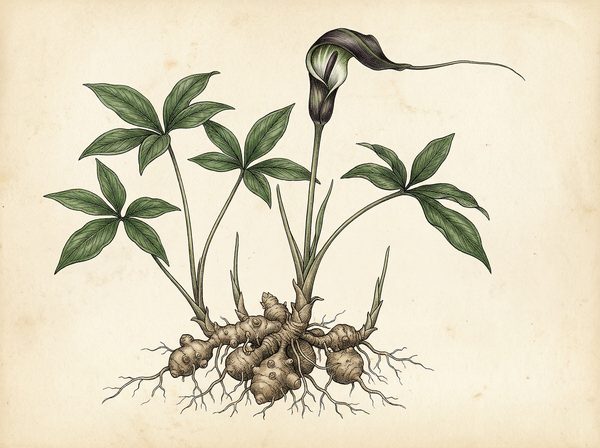 PinelliaPinellia ternata
 Pink rootSpigelia marilandica
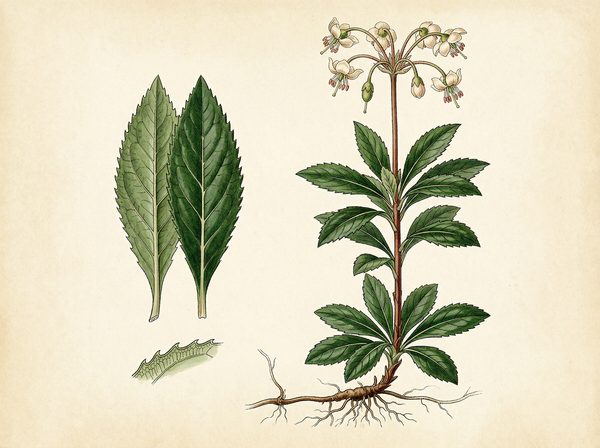 PipsissewaChimaphila umbellata
The whole plate is in the library. The compass, Compare, the Sky of eleven hundred plants and the formulary open with an email address and a password, free, with the formula builder and its safety engine. Herbert without limit, his formulating, clients, the handouts and the labels are the paid room.
Open the library, free