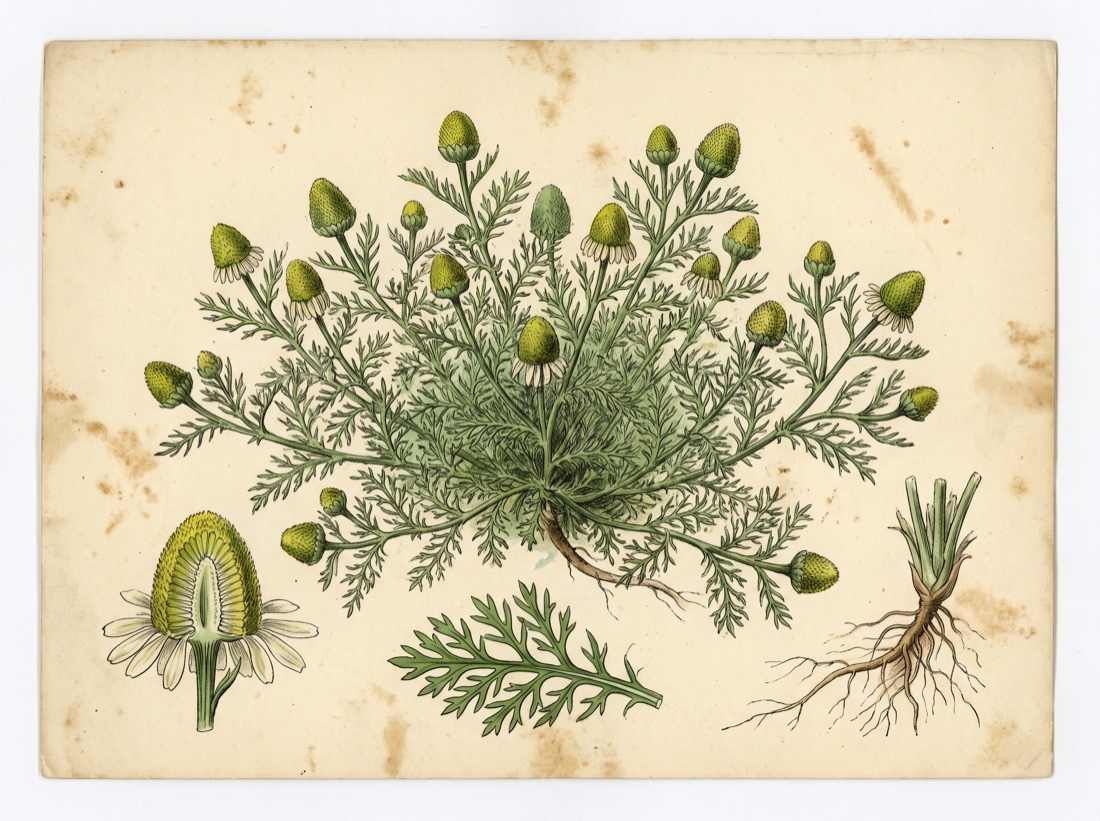
Western Herbalism
Pineappleweed
Matricaria discoidea
Also known as pineapple weed, pineapple mayweed, wild chamomile, disc mayweed, rayless chamomile.
Pineappleweed is a low, ferny annual of trodden ground, driveways and path edges, with cone-shaped yellow-green flower heads that lack the white ray florets of German chamomile and release a sweet pineapple scent when crushed. Native to northeast Asia and northwestern North America, it has spread across the temperate world. The flowering tops are used, fresh or dried. It is the people's chamomile of the northern countryside, used for the same run of digestive, nervous and feverish complaints, and Native communities of the Pacific Northwest used it for stomach upset, colds and as an insect repellent.

Ask Herbert about Pineappleweed. Herbert is the master herbalist inside Bountiful Herbs: he answers from this plate and eleven hundred others, with dosing, pairing and cautions. Your first ten questions are free.
Ask HerbertActions
Indications what the tradition reached for it in
- Colic and bloating
- Nervous dyspepsia
- Restlessness and fretfulness in children
- Mild insomnia
- Menstrual cramping
- Common cold with mild fever
- Sore throat (gargle)
- Minor skin irritation and wounds (wash)
- Teething discomfort (weak tea)
- Tension headache with stomach upset
- Mosquito bites and repellent (topical)
Specific indications
The fretful, gassy child who cannot settle, where chamomile would be chosen but pineappleweed is what grows in the yard
Tension headache that comes with a knotted stomach in an anxious adult, taken as a hot tea
Camping or trailside use: a fresh-crushed handful rubbed on the skin to deter mosquitoes, or a quick tea for a queasy stomach
Safety
Breastfeeding: Use with care while breastfeeding
The record lists 3 contraindications; open the plate in the library to read them in full.
In practice
Treat pineappleweed as a milder, more aromatic chamomile. The tea is pleasant, fruity and slightly bitter, which children take readily, and it does the same work: settling a gassy, colicky belly, easing the cramping of a period, quieting a wound-up nervous system before sleep, and taken hot, opening the pores at the start of a cold.
Dosing as the sources wrote it
| Preparation | As written | Metric |
|---|---|---|
| Infusion | 2-4 g dried flowering tops three times daily | 2000-4000 mg |
| Tincture (1:5, 40%) | 2-4 mL three times daily | 2-4 mL |
| Topical wash or gargle | strong infusion used as needed |
Doses are reproduced from the sources for practitioners and are not a recommendation for any person.
From the sources
Overview. Pineappleweed is a low, ferny annual of trodden ground, driveways and path edges, with cone-shaped yellow-green flower heads that lack the white ray florets of German chamomile and release a sweet pineapple scent when crushed. Native to northeast Asia and northwestern North America, it has spread across the temperate world. The flowering tops are used, fresh or dried. It is the people's chamomile of the northern countryside, used for the same run of digestive, nervous and feverish complaints, and Native communities of the Pacific Northwest used it for stomach upset, colds and as an insect repellent.
Clinical Notes. Treat pineappleweed as a milder, more aromatic chamomile. The tea is pleasant, fruity and slightly bitter, which children take readily, and it does the same work: settling a gassy, colicky belly, easing the cramping of a period, quieting a wound-up nervous system before sleep, and taken hot, opening the pores at the start of a cold.
Nearby on the shelf
 Pillbearing SpurgeChamaesyce hirta
 PiluSalvadora persica
 Pine BarkPinus pinaster
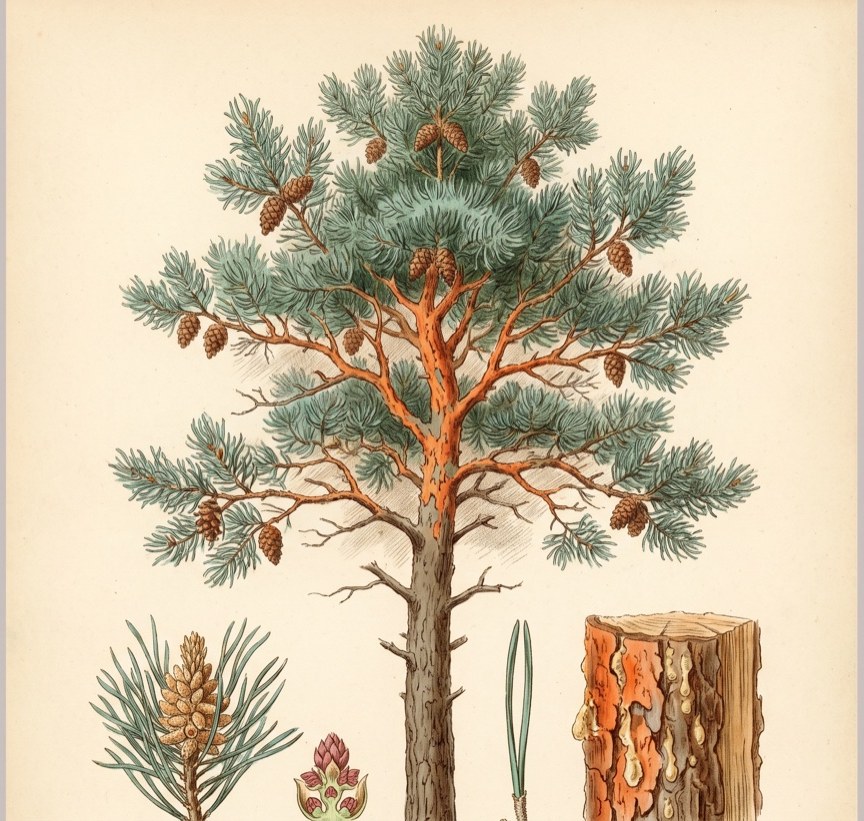 Pine tarPix Liquida
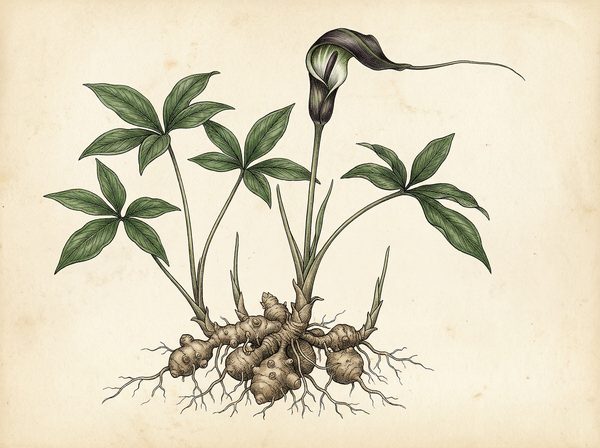 PinelliaPinellia ternata
 Pink rootSpigelia marilandica
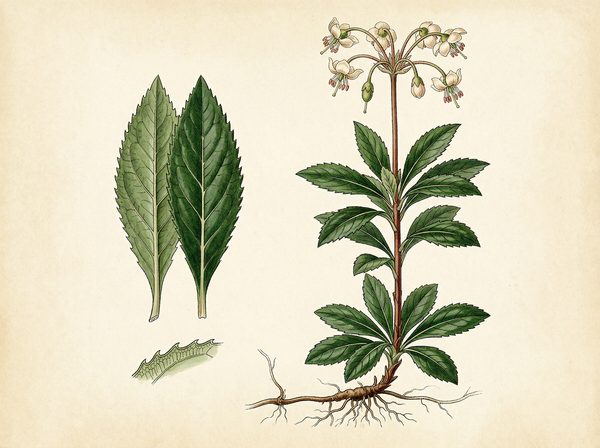 PipsissewaChimaphila umbellata
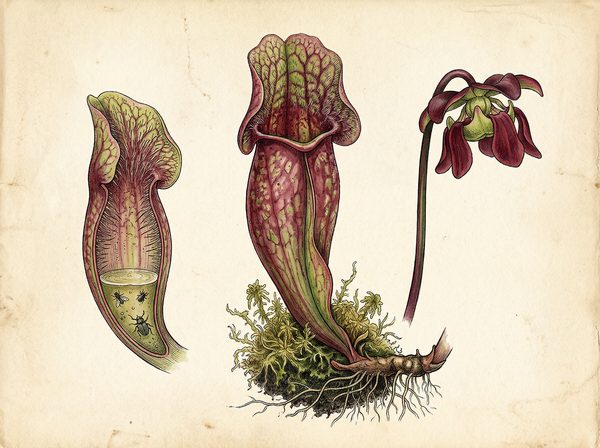 Pitcher PlantSarracenia purpurea
The whole plate is in the library. The compass, Compare, the Sky of eleven hundred plants and the formulary open with an email address and a password, free, with the formula builder and its safety engine. Herbert without limit, his formulating, clients, the handouts and the labels are the paid room.
Open the library, free