Western Herbalism
Pichi
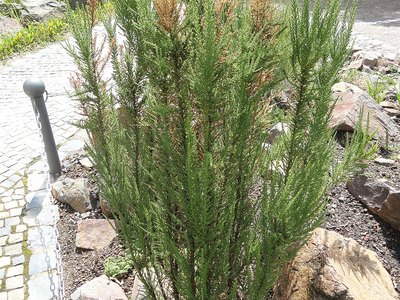
Fabiana imbricata
Also known as Pichi-pichi, Chilean false heath, Fabiana.
Fabiana imbricata is a resinous, heath-like shrub of the Solanaceae family, native to the arid slopes of Chile and neighboring Argentina, where its small scale-like leaves give it the outward appearance of a conifer or ericaceous plant. The dried leaves and young twigs are the part used, and the plant entered western herbal practice through eclectic physicians of the late nineteenth century, who valued it chiefly as a genito-urinary and hepatic remedy imported from South American folk use.

Ask Herbert about Pichi. Herbert is the master herbalist inside Bountiful Herbs: he answers from this plate and eleven hundred others, with dosing, pairing and cautions. Your first ten questions are free.
Ask HerbertActions
Indications what the tradition reached for it in
- Cystitis
- Urethritis
- Chronic catarrh of the bladder
- Renal calculi and gravel
- Uric acid diathesis
- Gout
- Rheumatism
- Hepatic congestion
- Mild jaundice
- Dyspepsia with sluggish liver
Specific indications
Chronic cystitis with thick, ropy, mucoid urine and a dull dragging ache over the bladder
Sluggish liver with dull right-sided discomfort, constipation and a background uric acid diathesis
Safety
Pregnancy: Avoid in pregnancy: traditional use only and no modern safety data exist to support use during gestation.
Breastfeeding: Avoid in lactation: insufficient safety data to support use while breastfeeding.
The record lists 5 contraindications; open the plate in the library to read them in full.
In practice
Pichi was reached for in the eclectic era mainly as a remedy for chronic irritable states of the urinary tract, particularly where the urine was thick, mucoid or turbid and the bladder felt heavy and sore rather than acutely inflamed.
Dosing as the sources wrote it
| Preparation | As written | Metric |
|---|---|---|
| Fluid extract (1:1) in glycerine or syrup | 0.5-2 mL three times daily | 0.5-2 mL |
| Tincture (1:5, 45%) | 2-4 mL three times daily | 2-4 mL |
| Dried leaf, as prepared infusion (with care for resin precipitation) | 1-2 g dried leaf three times daily | 1000-2000 mg |
| Extractum Pichi, Extract of Pichi | Dose, from two to ten grains. | 130-648 mg |
| Fluid extract of Pichi | Dose, from ten to sixty minims. | 0.62-3.7 mL |
| It should be given in full doses, from twenty to forty-five minims of a strong fluid extract. | 1.23-2.77 mL |
Doses are reproduced from the sources for practitioners and are not a recommendation for any person.
From the sources
Overview. Fabiana imbricata is a resinous, heath-like shrub of the Solanaceae family, native to the arid slopes of Chile and neighboring Argentina, where its small scale-like leaves give it the outward appearance of a conifer or ericaceous plant. The dried leaves and young twigs are the part used, and the plant entered western herbal practice through eclectic physicians of the late nineteenth century, who valued it chiefly as a genito-urinary and hepatic remedy imported from South American folk use.
Clinical Notes. Pichi was reached for in the eclectic era mainly as a remedy for chronic irritable states of the urinary tract, particularly where the urine was thick, mucoid or turbid and the bladder felt heavy and sore rather than acutely inflamed.
Action and Therapy. A remedy for functional catarrhal diseases of the stomach, kidneys, and bladder. Like all the terebinthinates when given in small doses, it is of some value in vesical pain with frequent urination, cystic irritation, with dysuria and vesical tenesmus, and in nocturnal urinal incontinence. It is asserted useful in acute albuminuria, with blood in the urine, and due chiefly to renal hyperemia, but should be avoided in chronic nephritis. Pichi has no curative effects upon pathologic tissues, but is a remedy for functional defects alone.
Therapy. It relieves general distress or discomfort in all the urinary organs, and in the prostate gland. In vesical tenesmus and in dysuria from any cause it is almost specific. In lithemia or the uric acid diathesis, it stimulates the liver to more perfect action, greatly increases the action of the kidneys, reduces the specific gravity of the urine, and permanently reduces the excess of uric acid.
Drawn from King's American Dispensatory, 18th edition (Felter and Lloyd); Ellingwood's American Materia Medica, Therapeutics and Pharmacognosy; Felter's Eclectic Materia Medica, Pharmacology and Therapeutics, and the Bountiful Herbs editorial.
Nearby on the shelf
 PeyoteLophophora williamsii
 Pheasants eyeAdonis vernalis
 Physic NutCurcas Purgans
 PhysostigmaPhysostigma venenosum
 Pillbearing SpurgeChamaesyce hirta
 PiluSalvadora persica
 Pine BarkPinus pinaster
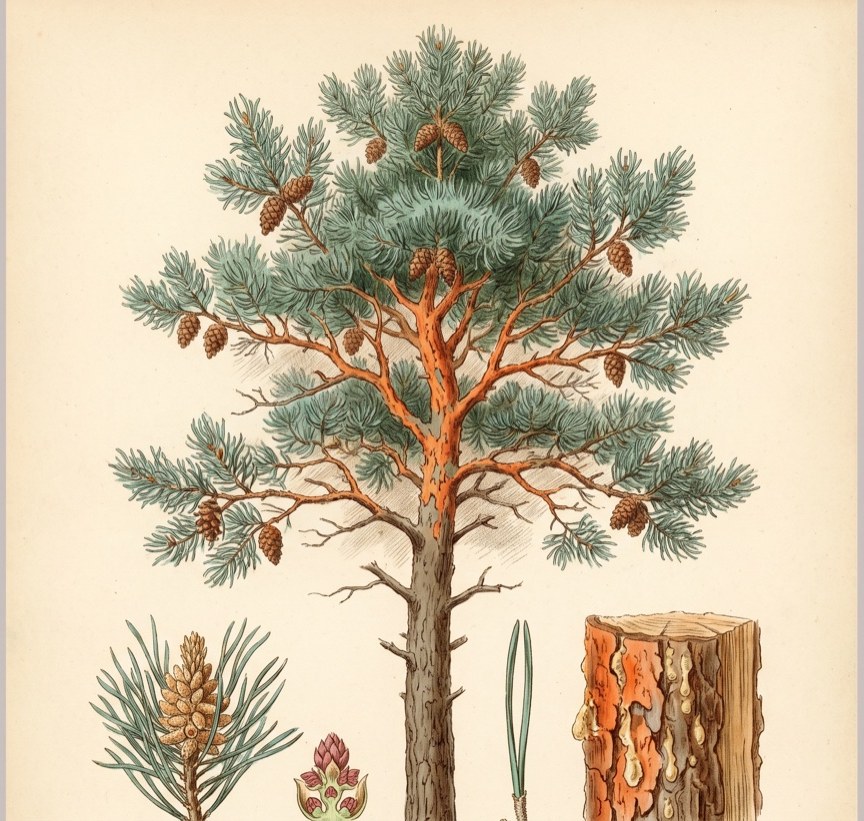 Pine tarPix Liquida
The whole plate is in the library. The compass, Compare, the Sky of eleven hundred plants and the formulary open with an email address and a password, free, with the formula builder and its safety engine. Herbert without limit, his formulating, clients, the handouts and the labels are the paid room.
Open the library, free