Chinese Herbalism
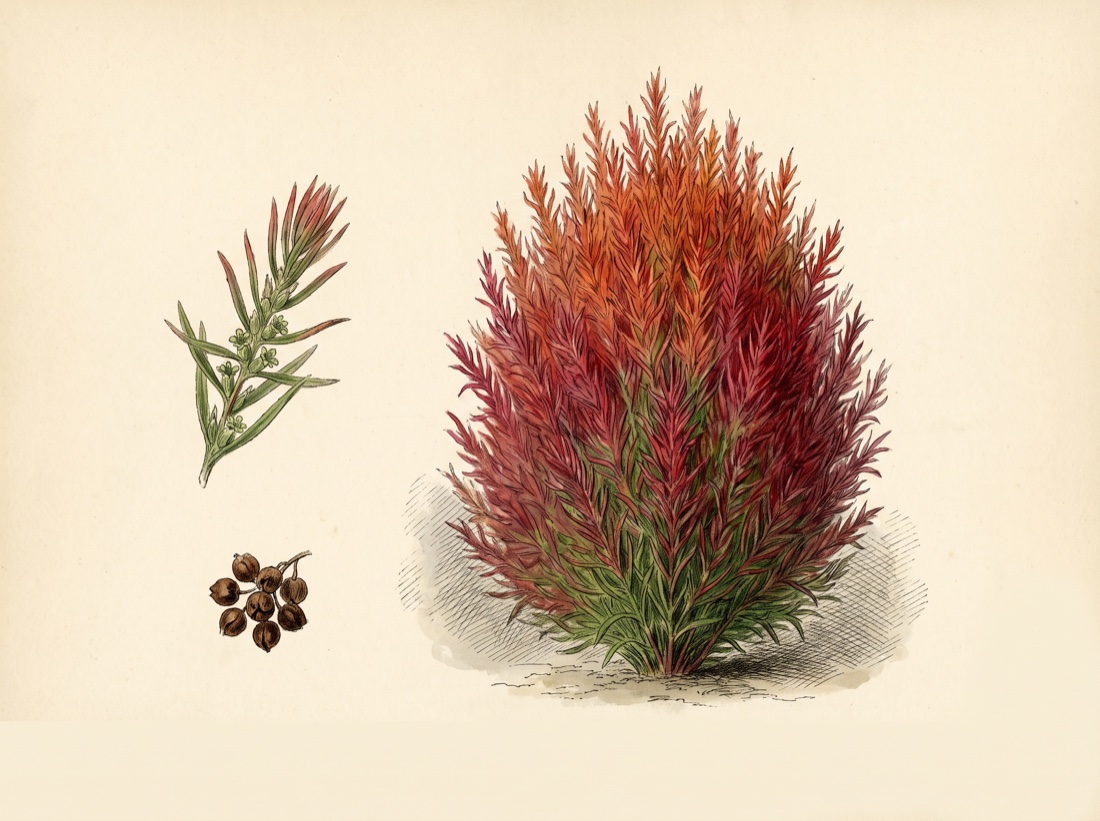
Kochia
Bassia scoparia
Also known as summer cypress, burning bush, belvedere, Mexican fireweed, broom cypress, di fu zi, dì fū zǐ.
Di fu zi is the dried ripe fruit of Bassia scoparia, an annual of the amaranth family long known as Kochia scoparia and grown as an ornamental (summer cypress, burning bush) for its dense form and red autumn color. Native from eastern Europe across temperate Asia, it is now a weed on most continents. The tiny grey-green fruits with their star-shaped winged calyx are gathered in autumn; in Japan the seeds are eaten as tonburi. In Chinese medicine di fu zi clears damp-heat from the bladder and the skin and is one of the main itch-relieving herbs, used internally and as a wash.

Ask Herbert about Kochia. Herbert is the master herbalist inside Bountiful Herbs: he answers from this plate and eleven hundred others, with dosing, pairing and cautions. Your first ten questions are free.
Ask HerbertActions
Indications what the tradition reached for it in
- Painful, burning or difficult urination
- Urinary tract infection with damp-heat (adjunct)
- Itchy eczema and urticaria
- Genital itching and vaginal discharge (internal and as a wash)
- Tinea and damp skin rashes (wash)
- Scabies-type itching (wash)
- Wind-damp itching of the skin in the elderly
- Prickly heat and heat rash
- Allergic dermatitis with damp-heat
Specific indications
Intensely itchy, red, weeping skin eruptions with scanty dark urine in a hot, damp constitution
Burning frequent urination together with genital itching or discharge
Safety
The record lists 6 contraindications; open the plate in the library to read them in full.
In practice
Think of di fu zi whenever itching and damp-heat travel together: red, wet, itchy eczema, urticaria, genital or perianal itching, or the burning, frequent urination of a bladder damp-heat pattern. It is the itching partner of bai xian pi, and the two are usually prescribed together; add ku shen and cang zhu when the skin is weeping, jing jie and fang feng when wind is prominent, and che qian zi and qu mai when the urinary symptoms dominate.
In Chinese medicine
Temperature: cold. Taste: acrid, bitter. Channels: Kidney, Bladder. Actions: Clears damp-heat and promotes urination; Dispels wind and relieves itching; Clears damp-heat from the skin and the lower burner.
Dosing as the sources wrote it
| Preparation | As written | Metric |
|---|---|---|
| Decoction | 9-15 g dried fruit daily | 9000-15000 mg |
| External wash | 30-60 g dried fruit decocted in 1-2 L water, applied twice daily | 30000-60000 mg |
| Tincture (1:5, 45%) | 2-4 mL three times daily | 2-4 mL |
Doses are reproduced from the sources for practitioners and are not a recommendation for any person.
From the sources
Overview. Di fu zi is the dried ripe fruit of Bassia scoparia, an annual of the amaranth family long known as Kochia scoparia and grown as an ornamental (summer cypress, burning bush) for its dense form and red autumn color. Native from eastern Europe across temperate Asia, it is now a weed on most continents. The tiny grey-green fruits with their star-shaped winged calyx are gathered in autumn; in Japan the seeds are eaten as tonburi. In Chinese medicine di fu zi clears damp-heat from the bladder and the skin and is one of the main itch-relieving herbs, used internally and as a wash.
Clinical Notes. Think of di fu zi whenever itching and damp-heat travel together: red, wet, itchy eczema, urticaria, genital or perianal itching, or the burning, frequent urination of a bladder damp-heat pattern. It is the itching partner of bai xian pi, and the two are usually prescribed together; add ku shen and cang zhu when the skin is weeping, jing jie and fang feng when wind is prominent, and che qian zi and qu mai when the urinary symptoms dominate.
Chinese Medicine Profile. Temperature: cold. Taste: acrid, bitter. Channels: Kidney, Bladder. Actions: Clears damp-heat and promotes urination; Dispels wind and relieves itching; Clears damp-heat from the skin and the lower burner.
In formulas
Kochia stands in 7 documented formulas in the library, among them kù shẽn tàng.
Often paired with
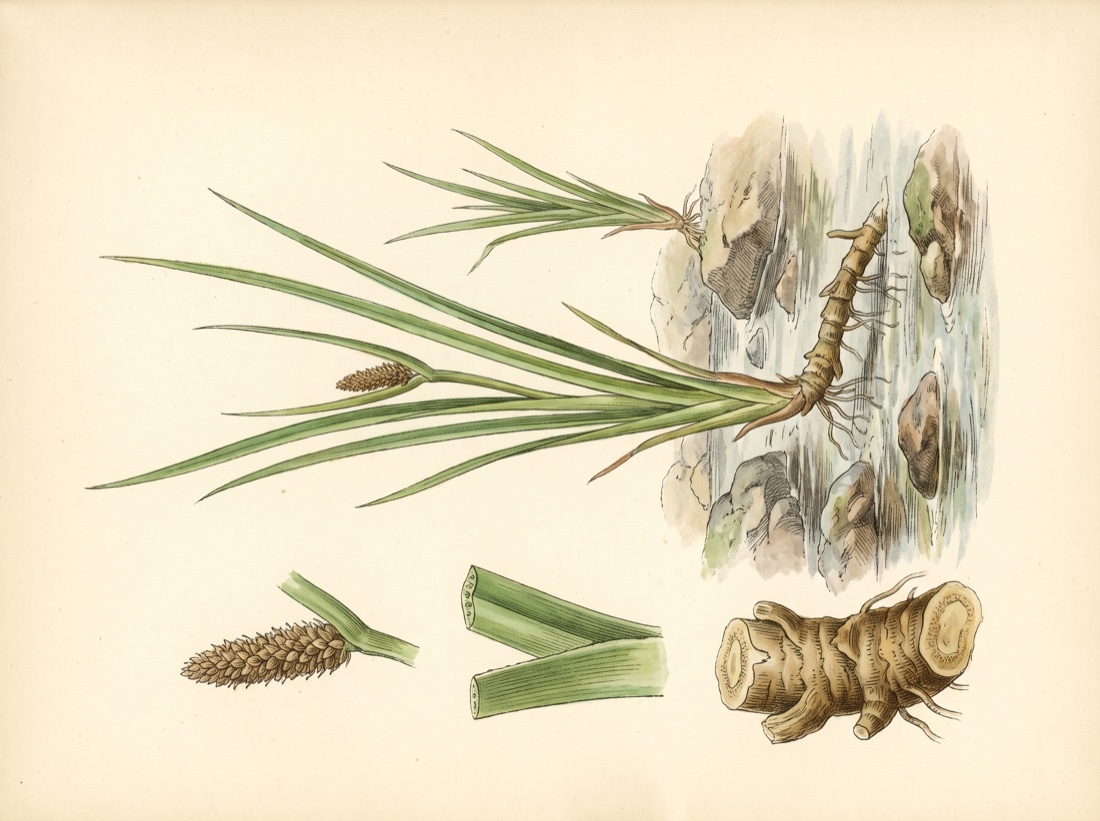 grass-leaf sweet flagAcorus gramineus
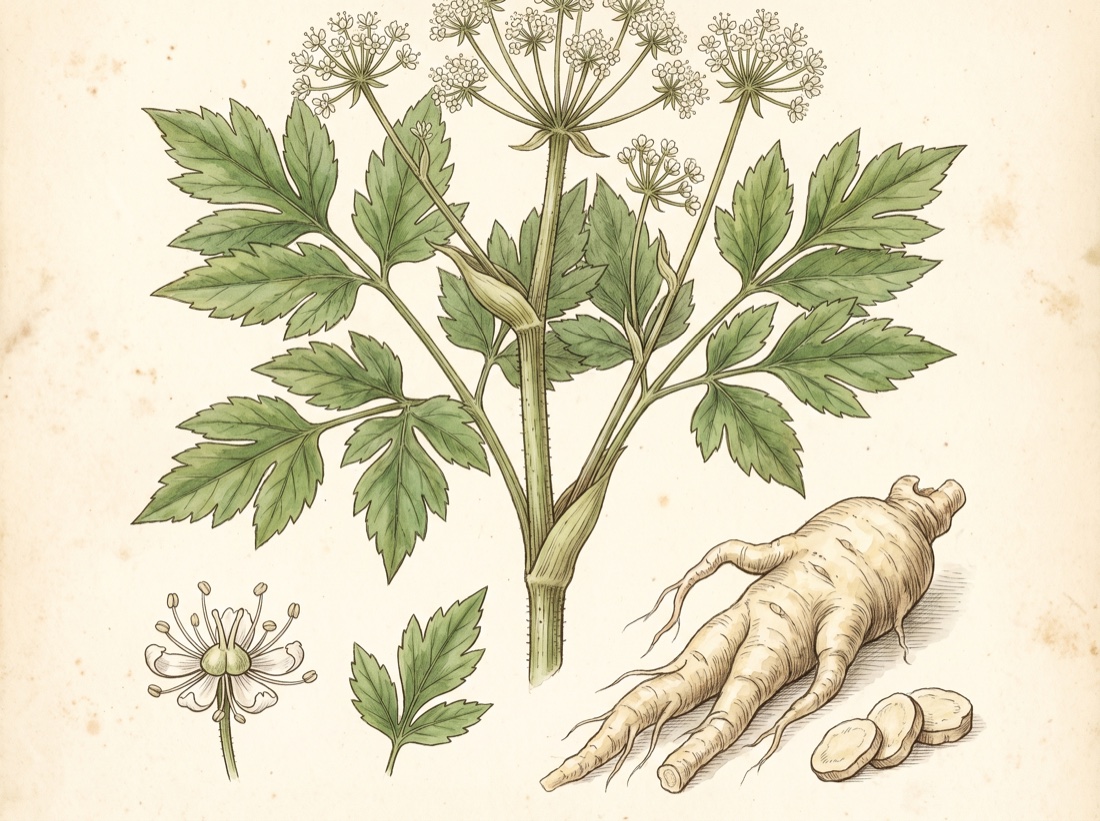 Dahurian angelicaAngelica dahurica
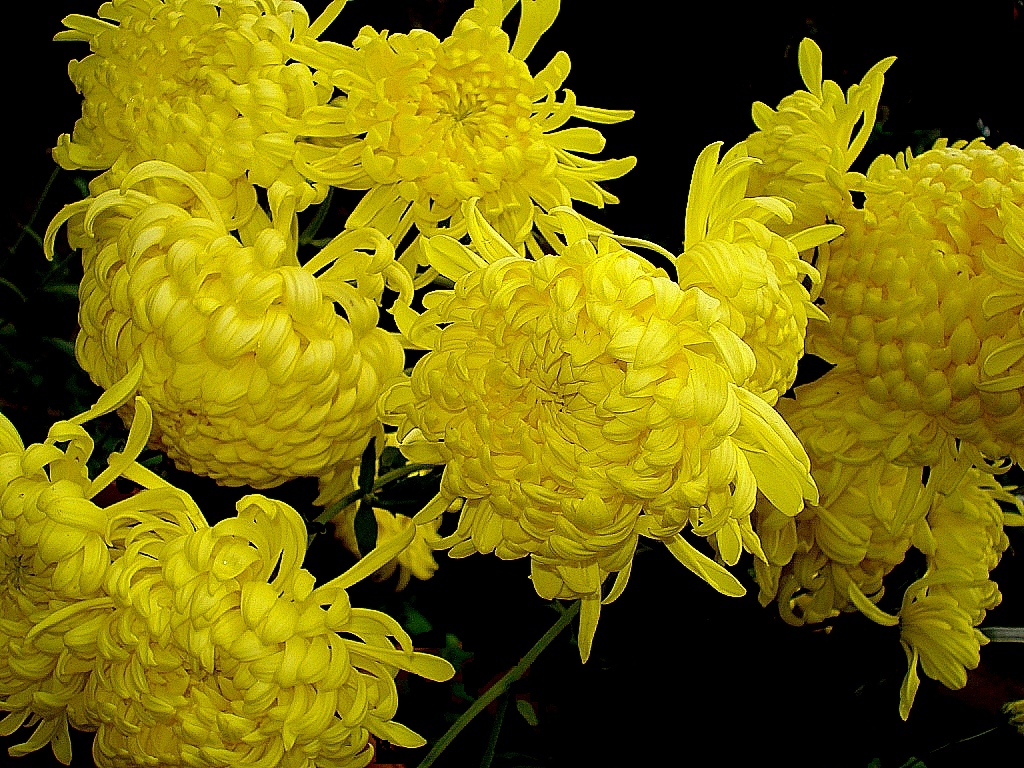 ChrysanthemumChrysanthemum × morifolium
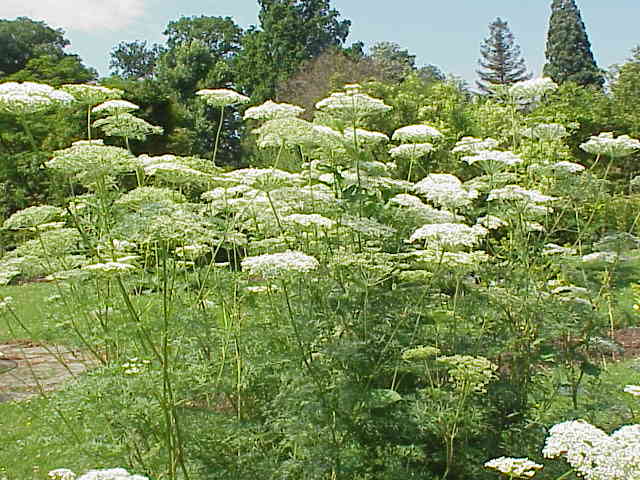 Cnidium SeedCnidium monnieri
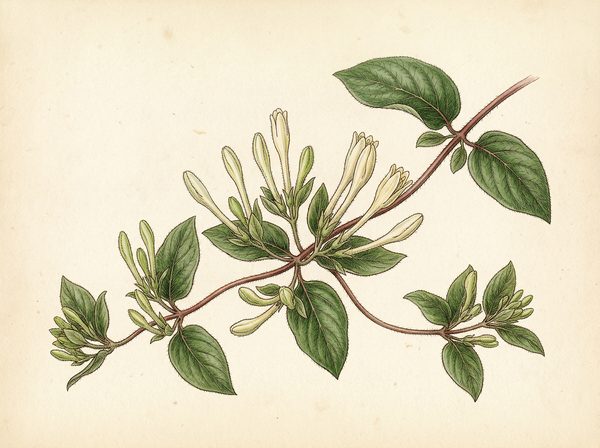 HoneysuckleLonicera japonica
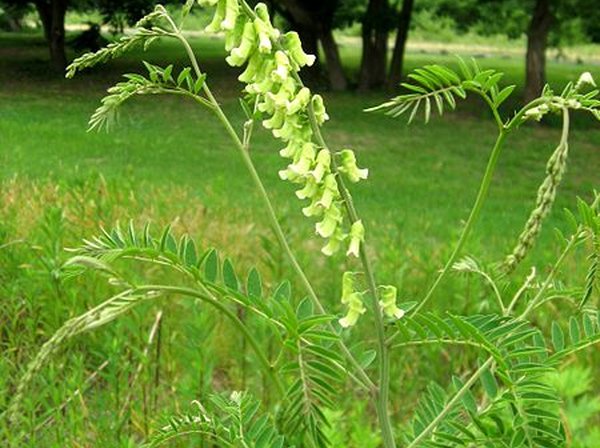 Ku ShenSophora flavescens
Nearby on the shelf
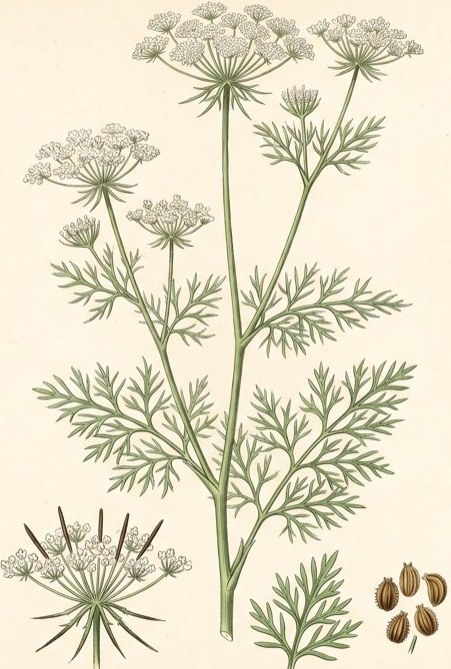 KhellaAmmi visnaga
 KinoPterocarpus marsupium
 Klip daggaLeonotis nepetifolia
 KnotgrassPolygonum aviculare
 KokumGarcinia indica
 Kola NutCola acuminata
 KonjacAmorphophallus konjac
 Korean MintAgastache rugosa
The whole plate is in the library. The compass, Compare, the Sky of eleven hundred plants and the formulary open with an email address and a password, free, with the formula builder and its safety engine. Herbert without limit, his formulating, clients, the handouts and the labels are the paid room.
Open the library, free