Chinese Herbalism
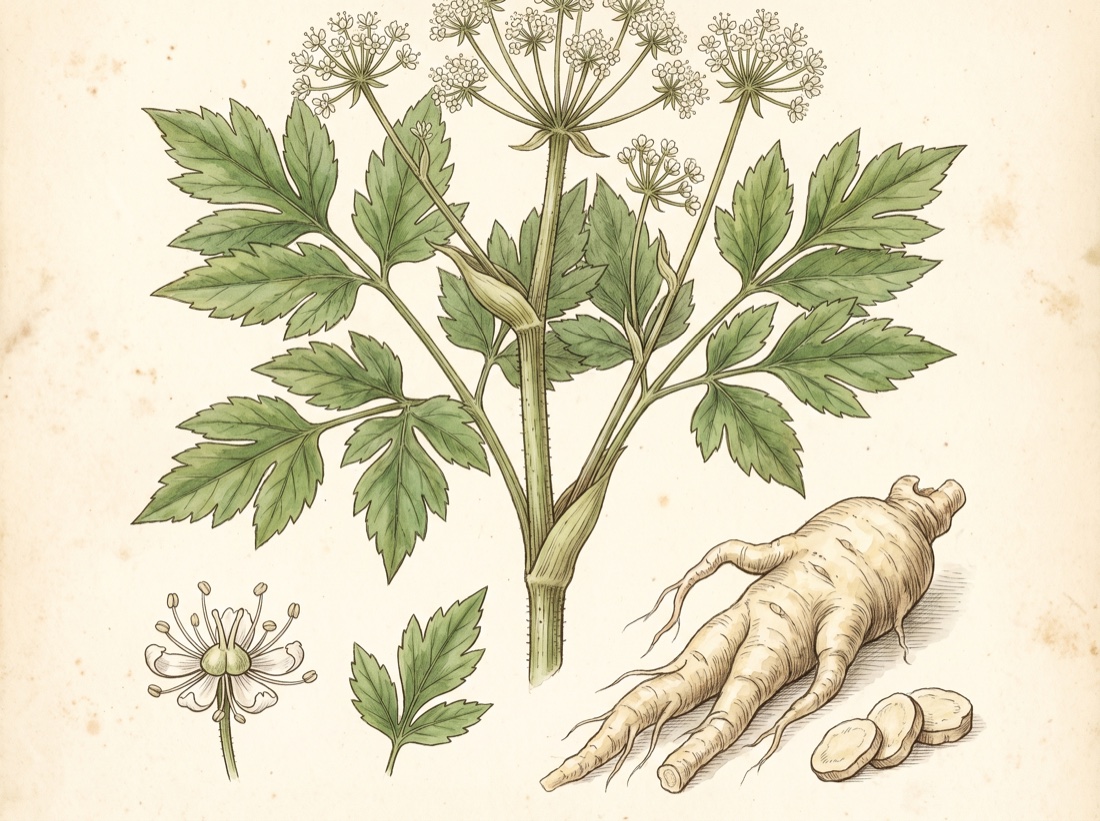
Dahurian angelica
Angelica dahurica
Also known as fragrant angelica, Chinese angelica root (bai zhi), white angelica, bái zhǐ.
Angelica dahurica, bai zhi, is a stout biennial or short-lived perennial of the family Apiaceae native to Siberia, northern China, Korea and Japan, and cultivated on a large scale in Sichuan, Henan and Zhejiang. The thick, cream-colored, powerfully fragrant root is dug in late summer, sliced and dried. Chinese medicine classes it with the warm, acrid herbs that release the exterior, and it is the leading remedy for headache and congestion along the Yangming channel: the forehead, brow, nose, cheeks and upper teeth. It is also a traditional surgical herb for boils and abscesses, and a drier of dampness in leukorrhea.

Ask Herbert about Dahurian angelica. Herbert is the master herbalist inside Bountiful Herbs: he answers from this plate and eleven hundred others, with dosing, pairing and cautions. Your first ten questions are free.
Ask HerbertActions
Indications what the tradition reached for it in
- Wind-cold headache, especially frontal and supraorbital
- Acute and chronic sinusitis with thick discharge
- Nasal congestion with loss of smell
- Toothache and facial pain of wind-cold type
- Trigeminal neuralgia (adjunct)
- Leukorrhea of cold-damp type
- Early stage boils, abscesses and mastitis
- Wind-damp itching of the skin
- Sinus headache with heaviness after cold exposure
- Rhinitis with clear discharge and sneezing
Specific indications
Frontal headache with a heavy, blocked sinus feeling and thin or thick white discharge, worse in cold wind
Pain along the cheek, brow or upper teeth on one side, with a cold, stuffy head and a pale tongue
A red, painful swelling that has not yet come to a head, in a patient who is chilly rather than feverish
Safety
The record lists 7 contraindications; open the plate in the library to read them in full.
In practice
Bai zhi is the first herb to think of for frontal and sinus headache with congestion, whatever the cause, provided the picture is cold or neutral rather than hot. It combines with xin yi hua and cang er zi for blocked sinuses, with chuan xiong and fang feng for wind-cold headache, and with xi xin for toothache and facial neuralgia.
In Chinese medicine
Temperature: warm. Taste: acrid. Channels: Lung, Stomach, Spleen. Actions: Expels wind and dispels cold from the Yangming channel; Opens the nasal passages and relieves frontal headache and toothache; Dries dampness and stops leukorrhea; Reduces swelling, expels pus and relieves pain in sores and abscesses.
Dosing as the sources wrote it
| Preparation | As written | Metric |
|---|---|---|
| Decoction | 3-10 g dried root daily | 3000-10000 mg |
| Powder | 1-3 g dried root daily | 1000-3000 mg |
| Tincture (1:5, 45%) | 1-3 mL three times daily | 1-3 mL |
| Topical paste | powdered root mixed with water or honey applied to early boils |
Doses are reproduced from the sources for practitioners and are not a recommendation for any person.
From the sources
Overview. Angelica dahurica, bai zhi, is a stout biennial or short-lived perennial of the family Apiaceae native to Siberia, northern China, Korea and Japan, and cultivated on a large scale in Sichuan, Henan and Zhejiang. The thick, cream-colored, powerfully fragrant root is dug in late summer, sliced and dried. Chinese medicine classes it with the warm, acrid herbs that release the exterior, and it is the leading remedy for headache and congestion along the Yangming channel: the forehead, brow, nose, cheeks and upper teeth. It is also a traditional surgical herb for boils and abscesses, and a drier of dampness in leukorrhea.
Clinical Notes. Bai zhi is the first herb to think of for frontal and sinus headache with congestion, whatever the cause, provided the picture is cold or neutral rather than hot. It combines with xin yi hua and cang er zi for blocked sinuses, with chuan xiong and fang feng for wind-cold headache, and with xi xin for toothache and facial neuralgia.
Chinese Medicine Profile. Temperature: warm. Taste: acrid. Channels: Lung, Stomach, Spleen. Actions: Expels wind and dispels cold from the Yangming channel; Opens the nasal passages and relieves frontal headache and toothache; Dries dampness and stops leukorrhea; Reduces swelling, expels pus and relieves pain in sores and abscesses.
In formulas
Dahurian angelica stands in 71 documented formulas in the library, among them chái gé lie ji tāng, wu ji sǎn, shũ jing huo xuè tàng, wù yào shùn qì sǎn, chuan xiong ch tiáo sǎn, dà qin jiào tàng.
Often paired with
 Licorice rootGlycyrrhiza glabra
 Sichuan Lovage RhizomeLigusticum chuanxiong
 Fang FengSaposhnikovia divaricata
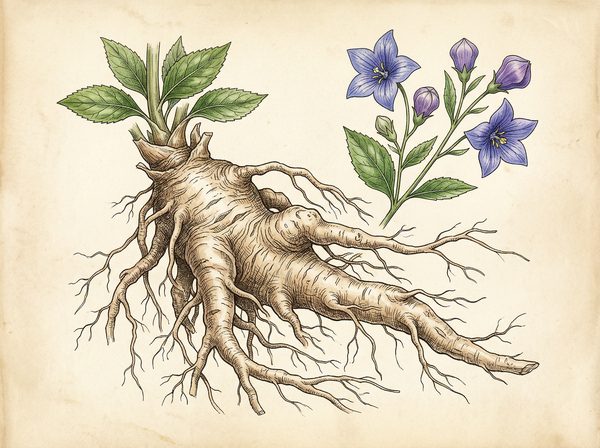 Balloon Flower RootPlatycodon grandiflorus
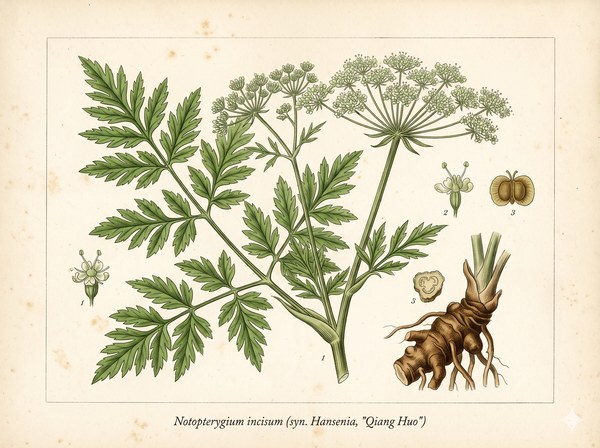 Qiang HuoNotopterygium incisum
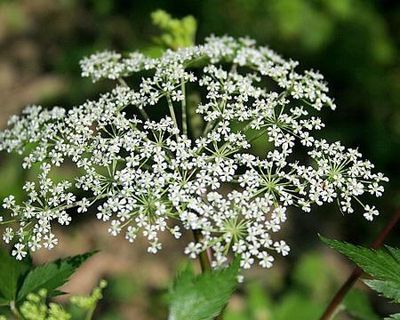 Dong QuaiAngelica sinensis
Nearby on the shelf
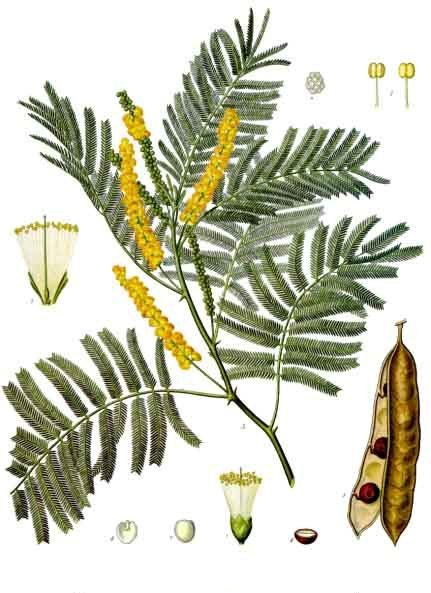 Cutch treeAcacia catechu
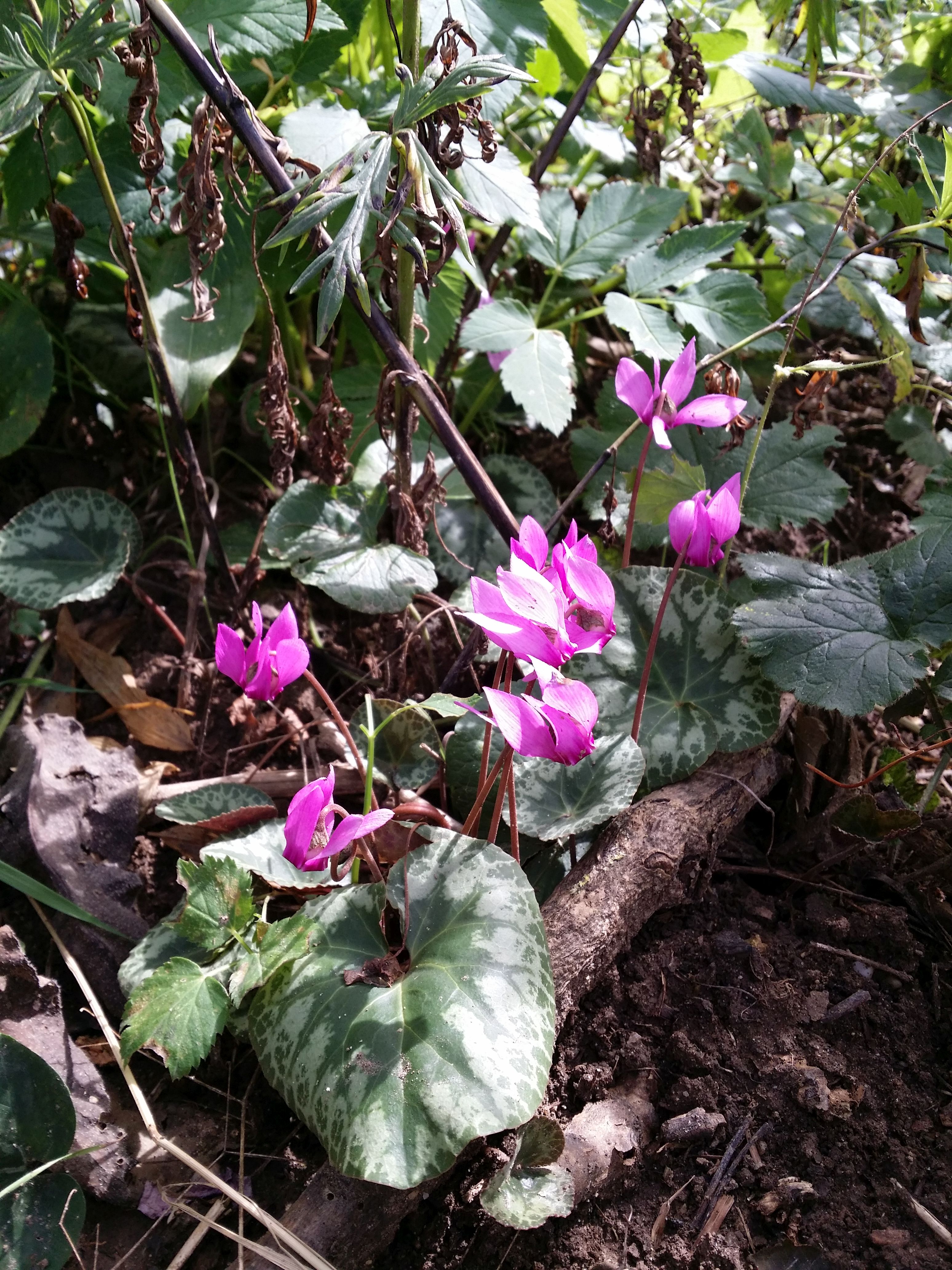 CyclamenCyclamen
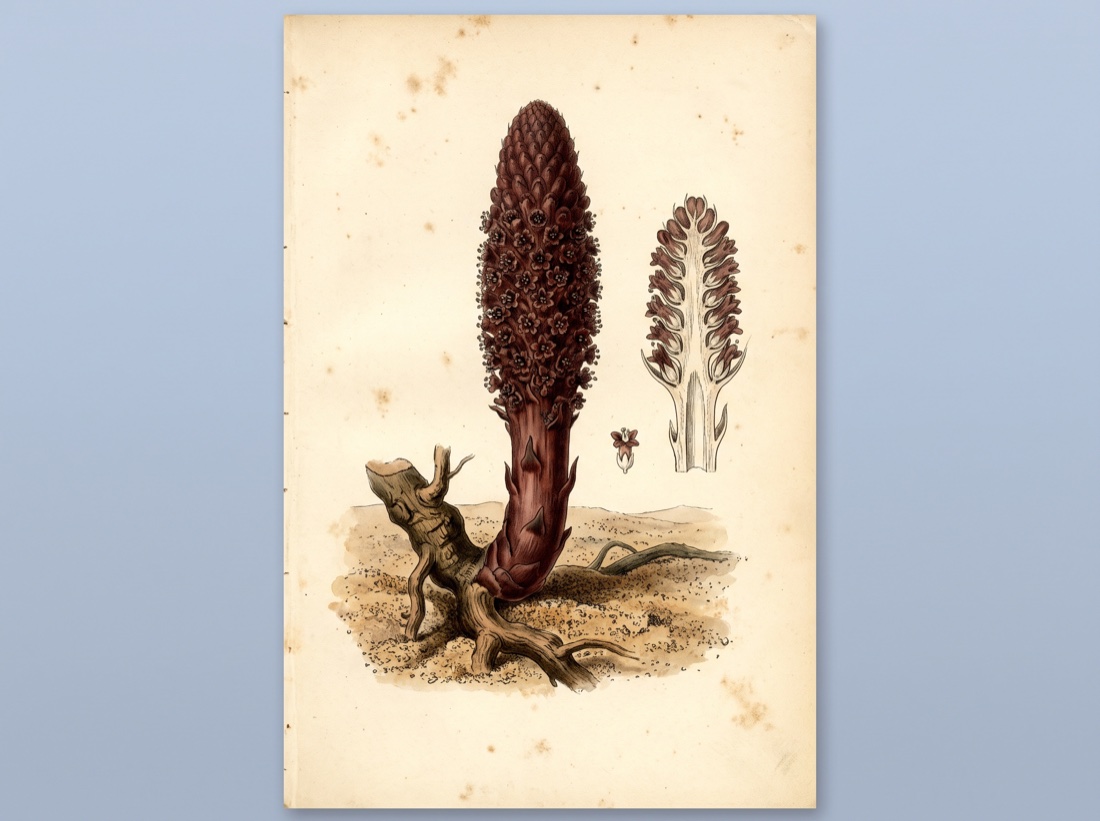 CynomoriumCynomorium songaricum
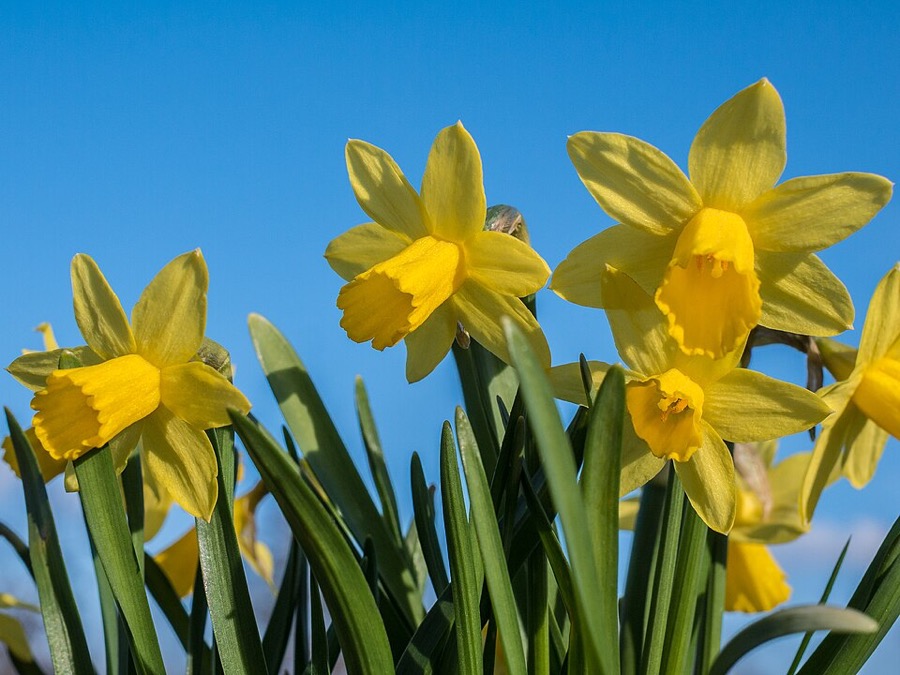 DaffodilNarcissus
 Damask RoseRosa x damascena
 DamianaTurnera diffusa
 Dan ShenSalvia miltiorrhiza
 DandelionTaraxacum officinale
The whole plate is in the library. The compass, Compare, the Sky of eleven hundred plants and the formulary open with an email address and a password, free, with the formula builder and its safety engine. Herbert without limit, his formulating, clients, the handouts and the labels are the paid room.
Open the library, free