Western Herbalism
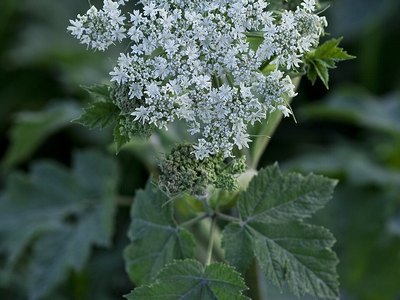
Cow parsnip
Heracleum lanatum
Also known as Masterwort, Heracleum, American masterwort, Indian celery.
Cow parsnip is a tall, coarse perennial of the carrot family native to wet meadows and streambanks across much of North America, closely resembling and often confused with the true masterwort, Angelica. Eclectic and physiomedical physicians of the nineteenth century used the fresh or dried root as a warming antispasmodic and carminative, though even contemporary writers such as Cook expressed uncertainty about its safety and true identity. Modern herbal practice makes little use of the plant internally, and it is now better known in botany and toxicology for the phototoxic furanocoumarins in its sap.

Ask Herbert about Cow parsnip. Herbert is the master herbalist inside Bountiful Herbs: he answers from this plate and eleven hundred others, with dosing, pairing and cautions. Your first ten questions are free.
Ask HerbertActions
Indications what the tradition reached for it in
- Flatulent colic
- Nervous dyspepsia
- Hysteria (historical term for functional nervous complaints)
- Suppressed menstruation
- Bronchial congestion with wheeze
- Nervous asthma
- Cold, sluggish digestion
- Muscular spasm
- Topical use for rheumatic aches (historical)
Specific indications
Colicky, gripping abdominal pain with gas and a cold, sluggish gut
Suppressed or scanty menses in a person with a cold, tense, nervous constitution
Wheezy, spasmodic breathing worsened by nervous tension
Safety
Low dose botanical. Used in drop doses in the classical practice; not a plant to dose freely.
Pregnancy: Avoid: it was traditionally used as an emmenagogue for suppressed menses and has no modern safety data in pregnancy.
Breastfeeding: Avoid: no safety data exist for use during lactation.
The record lists 6 contraindications; open the plate in the library to read them in full.
In practice
Historical Eclectic sources reached for cow parsnip root in cases of cold, gripping abdominal colic, suppressed menses in a tense and nervous patient, and spasmodic or nervous asthma, generally as a tincture of the dried root alongside other warming carminatives such as fennel or angelica.
Dosing as the sources wrote it
| Preparation | As written | Metric |
|---|---|---|
| Tincture of dried root (1:5, 45%), historical Eclectic use | 1-2 mL up to three times daily | 1-2 mL |
| Decoction of dried root, historical use | 1-3 g dried root daily, short term only | 1000-3000 mg |
| Recommended also in asthma, colic, amenorrhoea, dysmenorrhoea, palsy, apoplexy, intermittents, etc., in doses of 1 drachm. | 3888-3888 mg | |
| a strong tincture | The dose of a strong tincture (℥viii of root to Oj of alcohol), ranges from 5 to 60 minims. | 0.31-3.7 mL |
| Related Species: Imperatoria Ostruthium. The rootstock of Peucedanum Ostruthium, Koch (Imperatoria Ostruthium, Linné), Nat. Ord: Umbelliferae. Masterwort. This drug consists of a somewhat flattened, subconical rootstock, of about a finger's thickness, and ranging from 2 to 4 inches in length. Its surface is wrinkled, scarred, and warty | ||
| internally dirty white. It has a large central pith, while its bark is thin, and all parts abound in resin cells of a brownish-yellow hue. Its taste is pungent, aromatic, and bitter, giving a prolonged sense of warmth to the mouth. Its odor is markedly balsamic, somewhat resembling angelica. Masterwort is scarcely at all used in America, and is noticed here chiefly on account of its having been used as an adulterant of aconite (Holmes). In former years it was much esteemed as a medicine, being known, on account of its extensive uses, as divinum remedium. It grows in the mountains of central and south Europe. It contains from 0.2 to 0.7 per cent of volatile oil. Osann and Wackenroder, in 1831, obtained from it imperatorin, a principle believed by R. Wagner (1854) to be identical with peucedanin, obtained from Peucedanum officinale, Linné, an allied species, by Schlatter in 1833. However, more recent authors (A. Jassoy, 1890) believe it to be identical with ostruthin (see below). Peucedanin forms colorless, rhombic prisms, or plates, or fine needles, which are odorless and tasteless when pure |
Doses are reproduced from the sources for practitioners and are not a recommendation for any person.
From the sources
Overview. Cow parsnip is a tall, coarse perennial of the carrot family native to wet meadows and streambanks across much of North America, closely resembling and often confused with the true masterwort, Angelica. Eclectic and physiomedical physicians of the nineteenth century used the fresh or dried root as a warming antispasmodic and carminative, though even contemporary writers such as Cook expressed uncertainty about its safety and true identity. Modern herbal practice makes little use of the plant internally, and it is now better known in botany and toxicology for the phototoxic furanocoumarins in its sap.
Clinical Notes. Historical Eclectic sources reached for cow parsnip root in cases of cold, gripping abdominal colic, suppressed menses in a tense and nervous patient, and spasmodic or nervous asthma, generally as a tincture of the dried root alongside other warming carminatives such as fennel or angelica.
Therapy. It is given in general spasm in puerperal convulsions, and in epilepsy. While Doctor Vassar has not used it in meningitis. his knowledge of its influence suggests that it would be a valuable remedy in that disease.
Properties and Uses. The root of this plant is rank and acrid when fresh, but less acrid when dry. It is pronounced a strong antispasmodic, stimulant, and carminative, and has been reputed of much efficacy in hysteria, suppressed menstruation, colic, asthma, and even epilepsy. From personal experience, I can say nothing of the article; but the accounts of it lead me to suspect that it is an aero-narcotic poison. It is usually confounded with the angelica, which is the true masterwort; and it seems probable that the repute associated with heracleum, really belongs to the other article. Medical Herbalism journal and medherb.com The Physiomedical Dispensatory by William Cook, M.D., 1869
Drawn from Cook's Physio-Medical Dispensatory; King's American Dispensatory, 18th edition (Felter and Lloyd); Ellingwood's American Materia Medica, Therapeutics and Pharmacognosy, and the Bountiful Herbs editorial.
Nearby on the shelf
 CorydalisDicentra canadensis
 CostusSaussurea costus
 Coto barkCoto Bark
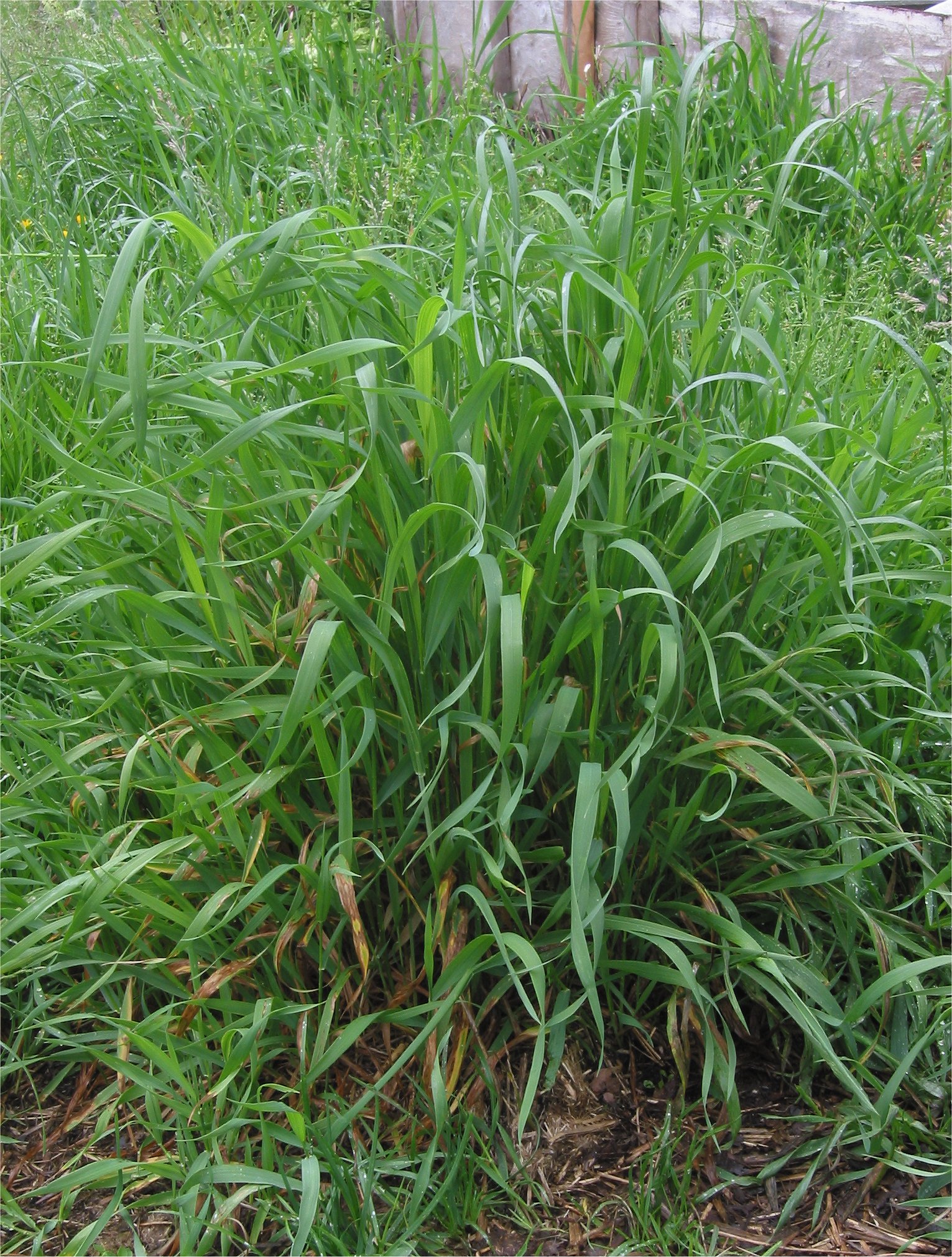 Couch GrassElymus repens
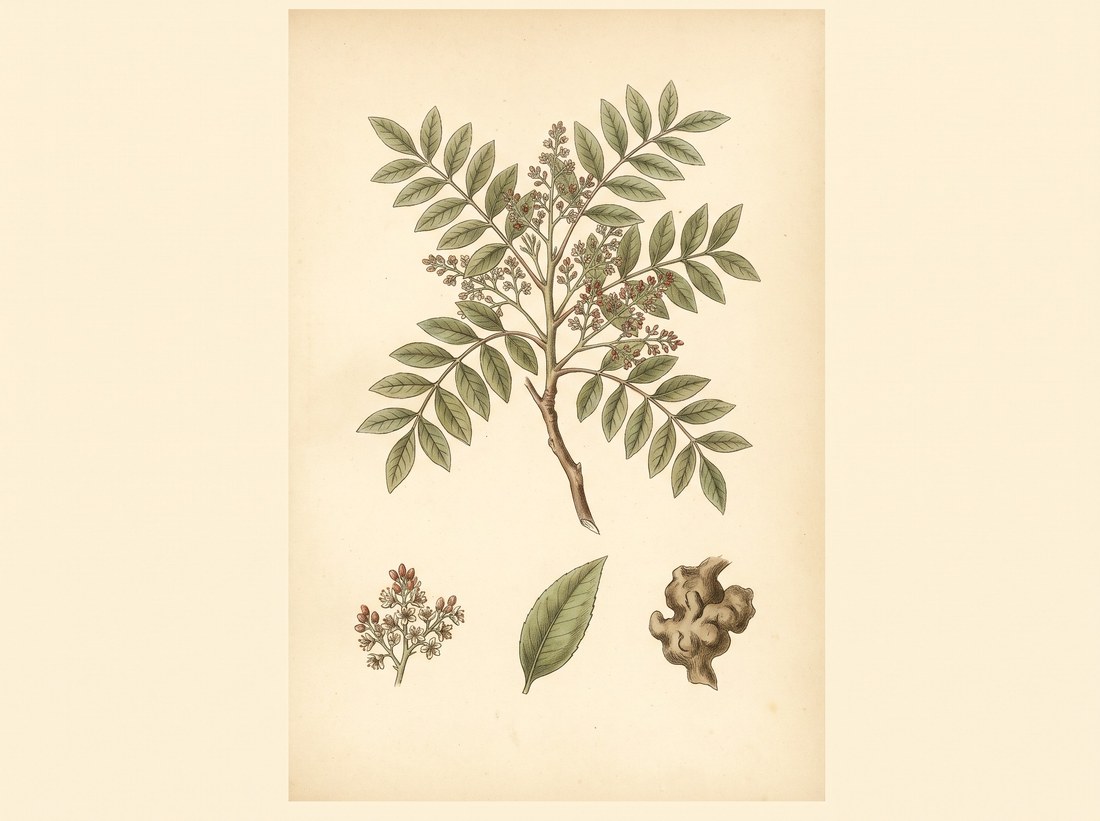 Crab's clawPistacia integerrima
 Cramp barkViburnum opulus
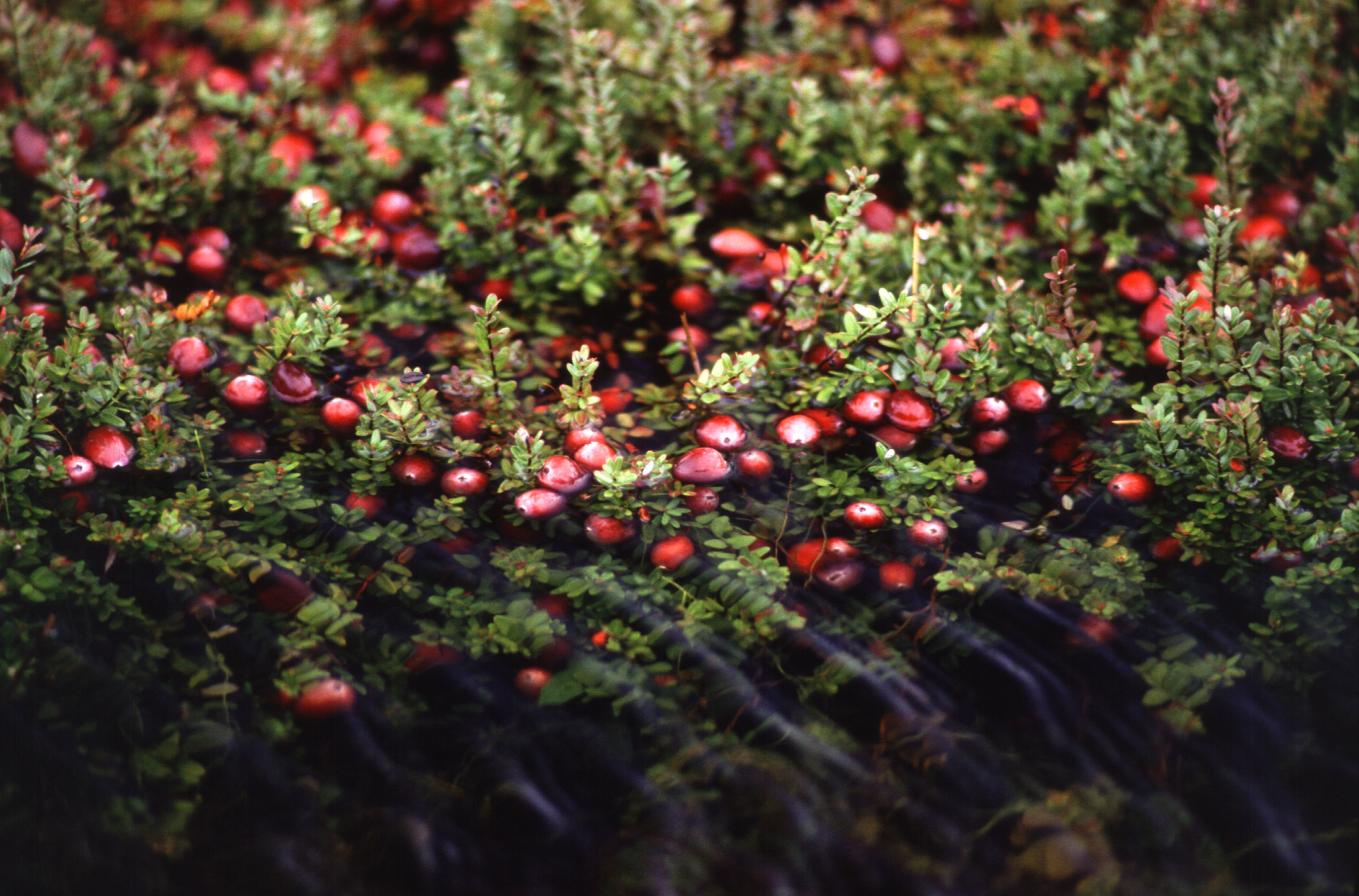 CranberryVaccinium oxycoccus
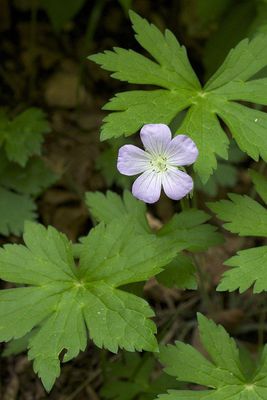 CranesbillGeranium maculatum
The whole plate is in the library. The compass, Compare, the Sky of eleven hundred plants and the formulary open with an email address and a password, free, with the formula builder and its safety engine. Herbert without limit, his formulating, clients, the handouts and the labels are the paid room.
Open the library, free