Western Herbalism
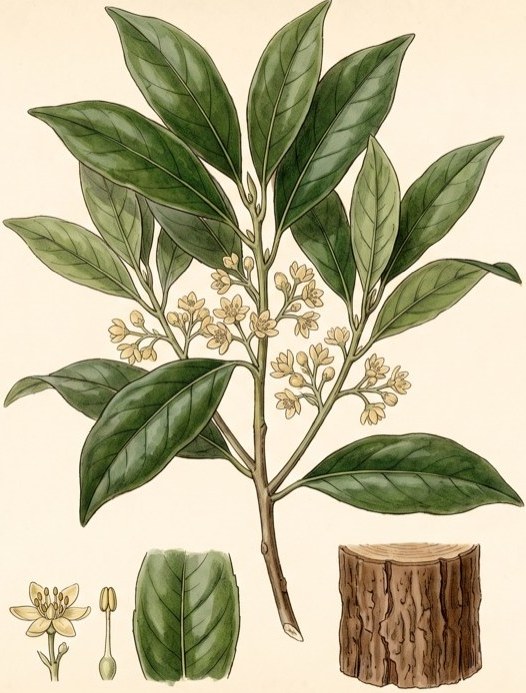
Coto bark
Coto Bark
Also known as Para coto bark.
Coto bark is a historical remedy of the 19th and early 20th century eclectic and physiomedicalist traditions, obtained from the bark of a tree said to grow in Bolivia and long assumed, though never firmly confirmed, to belong to the genus Nectandra or Aniba within the Lauraceae. The bark was dried and prepared as a powder or fluid extract and was prized by eclectic physicians chiefly for its astringent and reputed antiseptic action on the bowel, and for its ability to check profuse sweating in wasting illness. It has largely fallen out of use and modern botanical and pharmacological confirmation of its source and constituents remains incomplete.

Ask Herbert about Coto bark. Herbert is the master herbalist inside Bountiful Herbs: he answers from this plate and eleven hundred others, with dosing, pairing and cautions. Your first ten questions are free.
Ask HerbertActions
Indications what the tradition reached for it in
- Chronic diarrhea
- Profuse night sweats
- Diarrhea of typhoid fever
- Diarrhea associated with pulmonary tuberculosis
- Dyspepsia with flatulence
- Intestinal atony
- Colic
- Debility with excessive perspiration
Specific indications
Profuse, watery, chronic diarrhea that is painless and not accompanied by tenesmus
Night sweats of debility or phthisis in a weakened patient
Safety
Low dose botanical. Used in drop doses in the classical practice; not a plant to dose freely.
Pregnancy: Avoid in pregnancy, there is no safety data and the botanical source itself is unconfirmed.
Breastfeeding: Avoid during lactation for the same reasons of unconfirmed identity and absent safety data.
The record lists 5 contraindications; open the plate in the library to read them in full.
In practice
Coto bark was reached for in the old eclectic practice mainly for chronic, watery, painless diarrhea, particularly the diarrhea that accompanied typhoid fever or pulmonary consumption, where it was said to firm the stool without griping.
Dosing as the sources wrote it
| Preparation | As written | Metric |
|---|---|---|
| Fluid extract (historical) | 0.3-1.2 mL (5-20 minims) as needed | 0.3-1.2 mL |
| Powdered bark (historical) | 0.3-1 g up to three times daily | 300-1000 mg |
| Fluid Extract of Coto Bark | Dose, from five to twenty minims. | 0.31-1.23 mL |
| It may be given in ten drop doses of the fluid extract, repeated according to the urgency of the case. | 0.2 mL | |
| The tincture made by percolating | The tincture made by percolating 1 part of the coarsely powdered bark with 9 parts of alcohol, may be given in doses of 10 drops, repeated every 2 hours; the powder, in doses of ½ grain, repeated 4, 5, or 6 times a day. | |
| Cotoin is especially useful in cases in which opium and its preparations are contraindicated; its dose is very small, thus: In 4 fluid ounces of distilled water dissolve 7/10 of a grain, or 1 ⅕ grains of cotoin, and to this add 10 drops of alcohol and 1 ounce of syrup. | 45.36 mg |
Doses are reproduced from the sources for practitioners and are not a recommendation for any person.
From the sources
Overview. Coto bark is a historical remedy of the 19th and early 20th century eclectic and physiomedicalist traditions, obtained from the bark of a tree said to grow in Bolivia and long assumed, though never firmly confirmed, to belong to the genus Nectandra or Aniba within the Lauraceae. The bark was dried and prepared as a powder or fluid extract and was prized by eclectic physicians chiefly for its astringent and reputed antiseptic action on the bowel, and for its ability to check profuse sweating in wasting illness. It has largely fallen out of use and modern botanical and pharmacological confirmation of its source and constituents remains incomplete.
Clinical Notes. Coto bark was reached for in the old eclectic practice mainly for chronic, watery, painless diarrhea, particularly the diarrhea that accompanied typhoid fever or pulmonary consumption, where it was said to firm the stool without griping.
Therapy. It is a carminative, stimulant and astringent. It has a specific effect on the alimentary canal but is not a suitable remedy where inflammation exists or is threatened, but rather should be employed in relaxed states, and where some poisonous element has been taken into the system in the food or drinking water.
Specific Symptomatology. Epidemic diarrhea, attacks occurring at night suddenly, or in early morning stools frequent, ten to twenty in a few hours; colliquative, rice-water stools, nausea and vomiting with great distress, sharp, cutting pain in the bowels, involuntary evacuations, extreme prostration, surface bathed in cold clammy perspiration, collapse, febrile reaction.
Drawn from King's American Dispensatory, 18th edition (Felter and Lloyd); Ellingwood's American Materia Medica, Therapeutics and Pharmacognosy, and the Bountiful Herbs editorial.
Nearby on the shelf
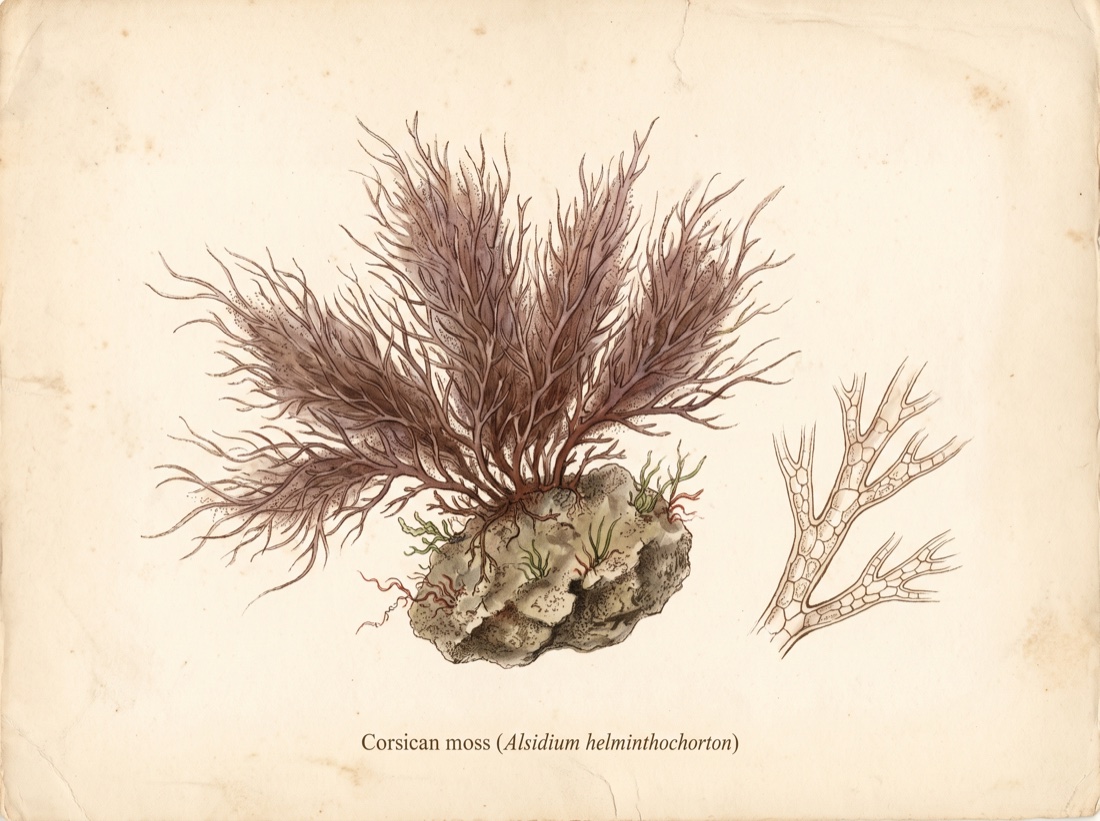 Corsican mossFucus Helminthocorton
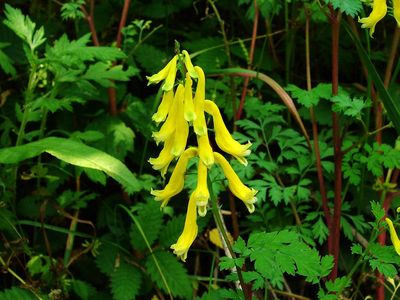 CorydalisCorydalis spp.
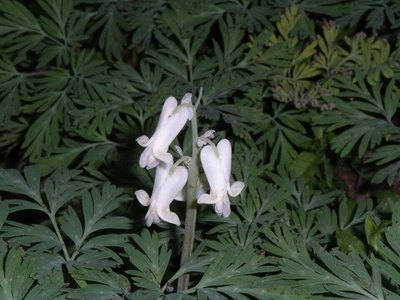 CorydalisDicentra canadensis
 CostusSaussurea costus
 Couch GrassElymus repens
 Cow parsnipHeracleum lanatum
 Crab's clawPistacia integerrima
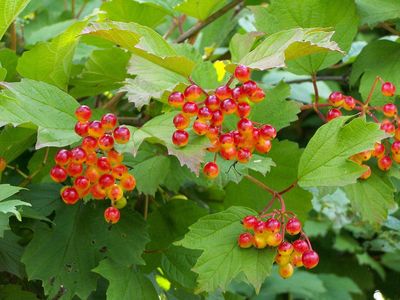 Cramp barkViburnum opulus
The whole plate is in the library. The compass, Compare, the Sky of eleven hundred plants and the formulary open with an email address and a password, free, with the formula builder and its safety engine. Herbert without limit, his formulating, clients, the handouts and the labels are the paid room.
Open the library, free