Western Herbalism
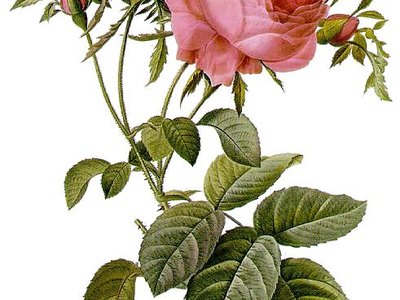
Cabbage rose
Rosa Centifolia
Also known as Provence rose, Pale rose, Hundred-leaved rose, Rose des Peintres, AND SYNONYM: Hundred-leaved rose, Cabbage rose-petals; Flores rosarum incarnatarum.
Rosa centifolia, the cabbage or Provence rose, is a many-petaled garden rose of long horticultural standing, cultivated widely in Europe for perfumery and traditional pharmacy. The fragrant pale pink petals are the part used, taken fresh or dried, or distilled into rose water. In nineteenth century eclectic and earlier European pharmacy the pale rose was distinguished from the more astringent red rose (Rosa gallica) and used chiefly as a mild, cooling remedy and as an agreeable vehicle for other medicines.

Ask Herbert about Cabbage rose. Herbert is the master herbalist inside Bountiful Herbs: he answers from this plate and eleven hundred others, with dosing, pairing and cautions. Your first ten questions are free.
Ask HerbertActions
Indications what the tradition reached for it in
- Sore throat
- Mild diarrhea
- Mouth ulcers
- Conjunctivitis and eye irritation
- Mild atonic constipation
- Feverish thirst
- Nervous tension and mild anxiety
- As a pleasant vehicle for bitter or astringent medicines
Specific indications
Sore, watering, inflamed eyes soothed by a mild rose water lotion.
Mild atonic constipation in children or the elderly, addressed with confection of rose petals as a gentle, pleasant-tasting laxative base.
Safety
The record lists 3 contraindications; open the plate in the library to read them in full.
In practice
Pale rose petals are gentle rather than powerfully medicinal, and this is exactly their value: a mildly astringent, cooling infusion or rose water can be used as a soothing gargle for a sore throat or as an eye lotion for tired, irritated, or mildly inflamed eyes, prepared as a dilute distillate rather than a strong decoction.
Dosing as the sources wrote it
| Preparation | As written | Metric |
|---|---|---|
| Infusion | 1-2 g dried petals as infusion, up to three times daily | 1000-2000 mg |
| Rose water (distilled) | diluted rose water as gargle or eye lotion, applied two to three times daily | |
| Confection of rose petals | 5-10 g as a mild laxative vehicle, once or twice daily | 5000-10000 mg |
| Tincture (1:5, 45%) | 2-4 mL three times daily | 2-4 mL |
Doses are reproduced from the sources for practitioners and are not a recommendation for any person.
From the sources
Overview. Rosa centifolia, the cabbage or Provence rose, is a many-petaled garden rose of long horticultural standing, cultivated widely in Europe for perfumery and traditional pharmacy. The fragrant pale pink petals are the part used, taken fresh or dried, or distilled into rose water. In nineteenth century eclectic and earlier European pharmacy the pale rose was distinguished from the more astringent red rose (Rosa gallica) and used chiefly as a mild, cooling remedy and as an agreeable vehicle for other medicines.
Clinical Notes. Pale rose petals are gentle rather than powerfully medicinal, and this is exactly their value: a mildly astringent, cooling infusion or rose water can be used as a soothing gargle for a sore throat or as an eye lotion for tired, irritated, or mildly inflamed eyes, prepared as a dilute distillate rather than a strong decoction.
Pharmaceutical Uses. The conserve made by beating the pulp with sugar, is called conserve of dog rose, or conserve of hips (Confectio Rosae Caninae, Br.), and is tenacious, retaining its softness for a long time, even under exposure to the air. It is a useful material for forming pill masses, and, as it contains less tannic acid, may be used as a substitute for the conserve of red roses, when preparations of iron are to enter into the pill mass.
History, Description, and Chemical Composition. This plant is indigenous to Europe, and introduced into this country; it usually attains the height of 6 or 10 feet, and flowers in June and July. The flowers are succeeded by a scarlet fruit called hip.
Drawn from King's American Dispensatory, 18th edition (Felter and Lloyd), and the Bountiful Herbs editorial.
Nearby on the shelf
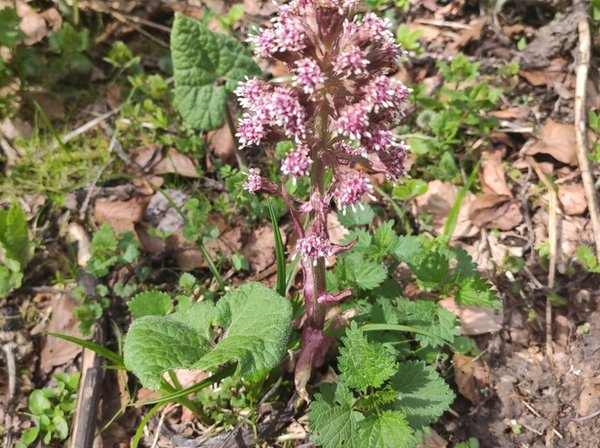 ButterburPetasites hybridus
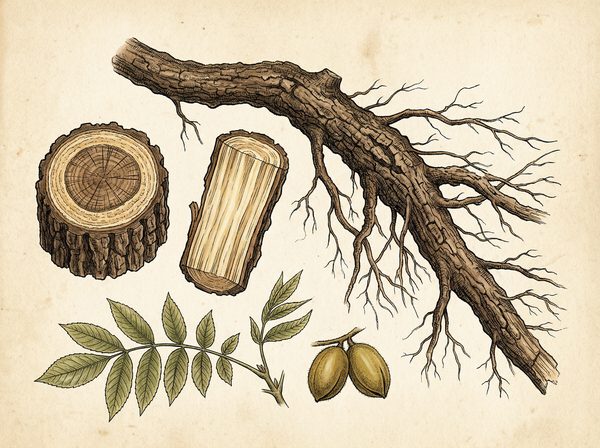 ButternutJuglans cinerea
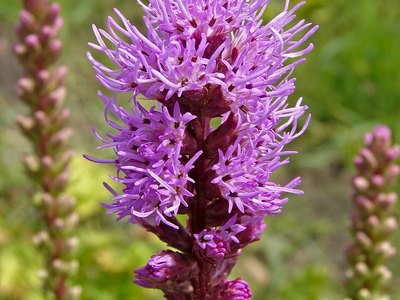 Button snakerootLiatris spicata
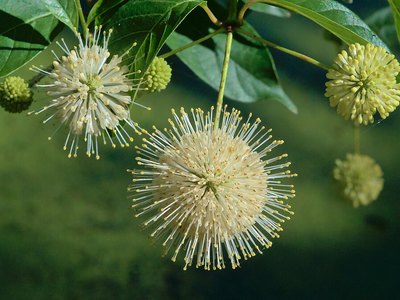 ButtonbushCephalanthus occidentalis
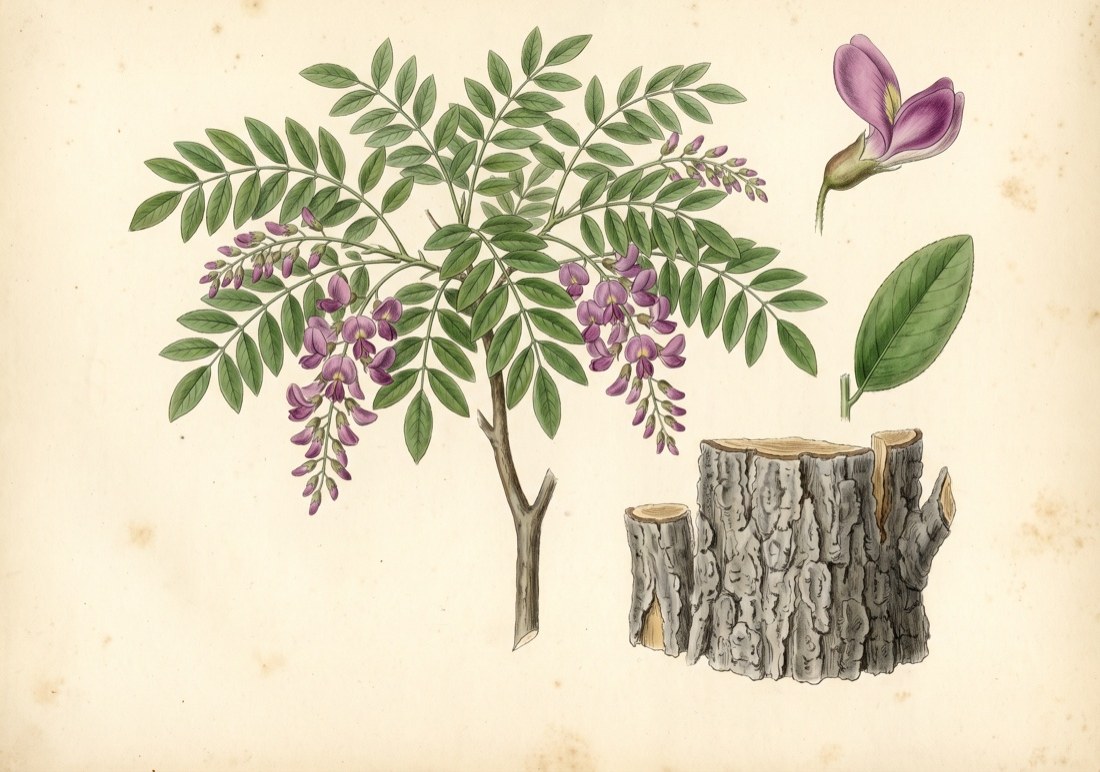 Cabbage tree barkAndira
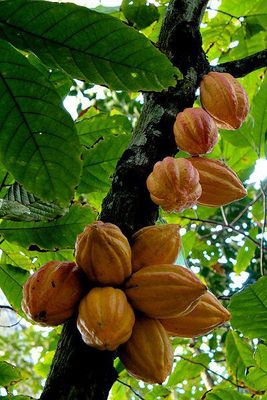 CacaoTheobroma cacao
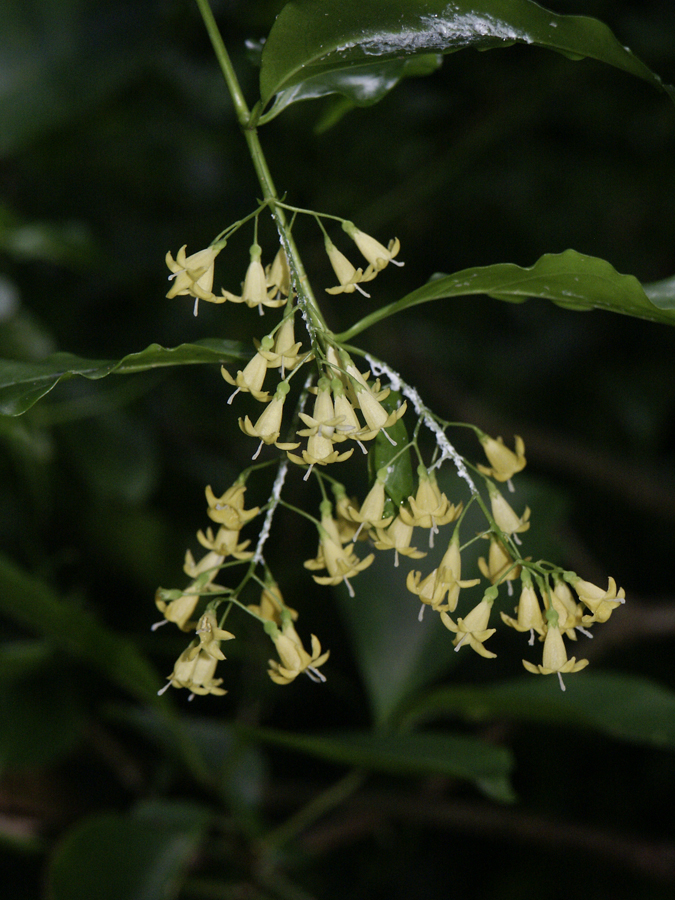 Cahinca rootCahinca
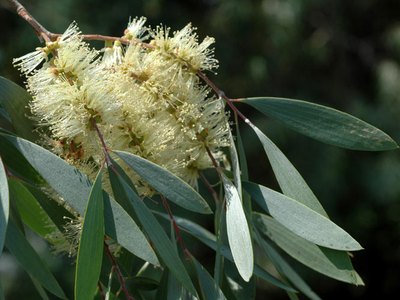 CajeputMelaleuca cajuputi
The whole plate is in the library. The compass, Compare, the Sky of eleven hundred plants and the formulary open with an email address and a password, free, with the formula builder and its safety engine. Herbert without limit, his formulating, clients, the handouts and the labels are the paid room.
Open the library, free