Western Herbalism
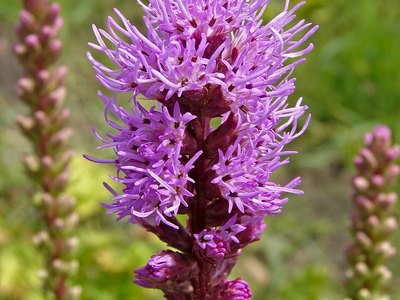
Button snakeroot
Liatris spicata
Also known as Blazing star, Gayfeather, Dense blazing star, Marsh blazing star, Button Snake Root ( L, Liatris.
Liatris spicata is a native North American prairie perennial in the daisy family, recognizable by its tall spikes of purple, feathery flowers that bloom from the top downward, an unusual habit among composites. The root was used by Eclectic physicians of the nineteenth century, who valued it as a gentle stimulant to the kidneys, skin, and reproductive organs. It has largely fallen out of modern clinical use but retains a place in the historical American botanical materia medica and is now more often grown as a garden and pollinator plant than harvested medicinally.

Ask Herbert about Button snakeroot. Herbert is the master herbalist inside Bountiful Herbs: he answers from this plate and eleven hundred others, with dosing, pairing and cautions. Your first ten questions are free.
Ask HerbertActions
Indications what the tradition reached for it in
- Scanty or difficult urination
- Chronic urinary tract irritation
- Delayed or scanty menses
- Amenorrhea
- Sore throat (gargle)
- Flatulent colic
- General debility with sluggish elimination
- Chronic skin conditions attributed to poor elimination
Specific indications
Scanty, high-colored urine with a sense of pelvic or genitourinary sluggishness
Delayed menses in a person with generally torpid eliminative function
Safety
Low dose botanical. Used in drop doses in the classical practice; not a plant to dose freely.
Pregnancy: Limited safety data in pregnancy
The record lists 4 contraindications; open the plate in the library to read them in full.
In practice
Historical Eclectic writers reached for Liatris root when a patient showed generally sluggish elimination, particularly when urinary output was scanty and the menses were late or scant, viewing it as a broad-spectrum support to the emunctories rather than a remedy for a single sharply defined picture. It was often folded into alterative combinations alongside other diuretic and depurative roots rather than used alone, reflecting the era's preference for building formulas that addressed the whole eliminative economy. It is rarely used today, and modern practitioners who wish to explore it should do so cautiously and in the context of well-established diuretic and emmenagogue alternatives with more contemporary safety data, since Liatris has had almost no modern pharmacological or clinical scrutiny.
Dosing as the sources wrote it
| Preparation | As written | Metric |
|---|---|---|
| Tincture (1:5, fresh root, 76% alcohol, historical Eclectic preparation) | 0.3-2.5 mL (historical dose range, use cautiously given lack of modern data) | 0.3-2.5 mL |
| Decoction (dried root) | 2-4 g dried root daily, short courses only | 2000-4000 mg |
| Dose, 10 to 60 grains. | 648-3888 mg | |
| Dose, 1 to 4 fluidounces. | 29.57-118 mL | |
| A decoction of them is very efficient in gonorrhoea, gleet, and nephritic diseases, in doses of from 2 to 4 fluid ounces, 3 or 4 times a day. | 59.15-118 mL | |
| Dose, 1 fluid drachm to 4 fluid ounces. | 3.7-118 mL |
Doses are reproduced from the sources for practitioners and are not a recommendation for any person.
From the sources
Overview. Liatris spicata is a native North American prairie perennial in the daisy family, recognizable by its tall spikes of purple, feathery flowers that bloom from the top downward, an unusual habit among composites. The root was used by Eclectic physicians of the nineteenth century, who valued it as a gentle stimulant to the kidneys, skin, and reproductive organs. It has largely fallen out of modern clinical use but retains a place in the historical American botanical materia medica and is now more often grown as a garden and pollinator plant than harvested medicinally.
Clinical Notes. Historical Eclectic writers reached for Liatris root when a patient showed generally sluggish elimination, particularly when urinary output was scanty and the menses were late or scant, viewing it as a broad-spectrum support to the emunctories rather than a remedy for a single sharply defined picture.
Action and Therapy. This drug is stimulant, bitter tonic, diuretic, and emmenagogue. It is sometimes used as a gastric tonic in dyspeptic conditions associated with renal inactivity. Rarely it is used to relieve pain in spasmodic bowel complaints and colic in children, in backache in adults, and to relieve dysmenorrhea. It is seldom employed. Button snake root derives its name from its traditional Indian reputation as a local alexipharmic (freshly-bruised root) for rattle-snake bite, a myth, it is needless to say, as yet unverified.
Specific indications and reasoning. (BUTTON SNAKEROOT.) Preparation.-Prepare a tincture from the recent root, §vij. to Alcohol 76° Uj. Dose from gtts. v. to 388. The Liatris is gently tonic, and stimulates secretion from all the emunctories. Hence it has been added to various alterative combinations, and with some practitioners is very highly esteemed. It acts more directly upon the urinary apparatus, and probably upon the reproductive apparatus of both male and female.
Drawn from Scudder's Specific Medication and Specific Medicines; King's American Dispensatory, 18th edition (Felter and Lloyd); Felter's Eclectic Materia Medica, Pharmacology and Therapeutics, and the Bountiful Herbs editorial.
Nearby on the shelf
 Bushy GerardiaGerardia
 Butcher's BroomRuscus aculeatus
 ButterburPetasites hybridus
 ButternutJuglans cinerea
 ButtonbushCephalanthus occidentalis
 Cabbage roseRosa Centifolia
 Cabbage tree barkAndira
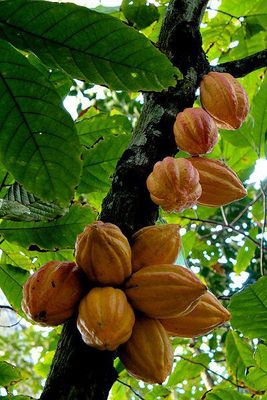 CacaoTheobroma cacao
The whole plate is in the library. The compass, Compare, the Sky of eleven hundred plants and the formulary open with an email address and a password, free, with the formula builder and its safety engine. Herbert without limit, his formulating, clients, the handouts and the labels are the paid room.
Open the library, free