Western Herbalism
Buttonbush
Cephalanthus occidentalis
Also known as Button bush, Pond dogwood, Swamp dogwood, Globe flower, Honey balls, Pond or swamp dogwood, Buttonwood, Crane willow.
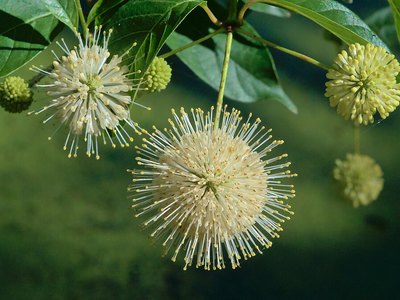
Buttonbush is a wetland shrub of the coffee family, native throughout eastern and central North America, recognized by its distinctive spherical white flower heads. The bark, particularly root bark, was the part used by nineteenth century American physiomedicalist and eclectic practitioners, who valued its pronounced bitterness as a tonic and mild febrifuge. It has no significant place in contemporary herbal practice and is rarely used today, its history preserved mainly in historical texts rather than modern clinical use.

Ask Herbert about Buttonbush. Herbert is the master herbalist inside Bountiful Herbs: he answers from this plate and eleven hundred others, with dosing, pairing and cautions. Your first ten questions are free.
Ask HerbertActions
Indications what the tradition reached for it in
- Intermittent fever
- Low-grade continued fever
- Sluggish digestion with poor appetite
- Chronic dysentery
- Mild constipation associated with debility
- Edema with scanty urine
- General debility during convalescence
- Malarial-type fevers (historical use)
Specific indications
Recurring low fevers with a coated tongue and sluggish appetite, calling for a bitter tonic before more stimulating remedies are considered
Watery, low-grade edema with scant urination in an otherwise debilitated patient
Safety
Low dose botanical. Used in drop doses in the classical practice; not a plant to dose freely.
Pregnancy: Avoid in pregnancy: no safety data exist and historical toxicity reports in animals warrant caution.
Breastfeeding: Avoid in lactation: no safety data available.
The record lists 5 contraindications; open the plate in the library to read them in full.
In practice
Historical physiomedicalist and eclectic writers reached for buttonbush root bark chiefly as a bitter tonic to rouse a sluggish digestion and as a mild agent for low, lingering fevers, sometimes likened in this narrow role to other bitter febrifuges of the period such as boneset or dogwood bark.
Dosing as the sources wrote it
| Preparation | As written | Metric |
|---|---|---|
| Decoction (root bark, historical) | 2-4 g dried root bark daily in decoction | 2000-4000 mg |
| Tincture (1:5, historical use) | 1-2 mL tincture up to three times daily | 1-2 mL |
| and the inner bark of the root forms an agreeable bitter, which is often employed in coughs, and as a diuretic in gravel. The plant deserves further investigation. Tincture, 10 to 30 drops | 0.2-0.6 mL | |
| infusion, fl℥ss to fl℥i. | 29.57 mL |
Doses are reproduced from the sources for practitioners and are not a recommendation for any person.
From the sources
Overview. Buttonbush is a wetland shrub of the coffee family, native throughout eastern and central North America, recognized by its distinctive spherical white flower heads. The bark, particularly root bark, was the part used by nineteenth century American physiomedicalist and eclectic practitioners, who valued its pronounced bitterness as a tonic and mild febrifuge. It has no significant place in contemporary herbal practice and is rarely used today, its history preserved mainly in historical texts rather than modern clinical use.
Clinical Notes. Historical physiomedicalist and eclectic writers reached for buttonbush root bark chiefly as a bitter tonic to rouse a sluggish digestion and as a mild agent for low, lingering fevers, sometimes likened in this narrow role to other bitter febrifuges of the period such as boneset or dogwood bark.
Properties and Uses. The bark is a slow, but quite decided tonic, of the stimulating and moderately relaxing class. It gives vigor to the stomach and bowels in atonic conditions, and slightly promotes the alvine and hepatic functions, and also that of the kidneys.
Description. Natural Order, Rubiaceae. Shrubs, common in wet places, throughout the United States and Canada, five to fifteen feet high. Leaves opposite, or sometimes in whorls of three, without stipules; ovate-oblong, acute at both extremities, on short red petioles, with a tumid base; two to four inches in length. Flowers terminal, in densely aggregated, globose heads; creamy white; calyx tubular, four-toothed; corolla tubular, four-toothed. Blossoms in July and August, when its pretty and somewhat fragrant heads of flowers, more than an inch in diameter, make an attractive appearance. The bark is quite bitter, and yields its properties to water, and to water and alcohol.
Drawn from Cook's Physio-Medical Dispensatory; King's American Dispensatory, 18th edition (Felter and Lloyd), and the Bountiful Herbs editorial.
Nearby on the shelf
 Butcher's BroomRuscus aculeatus
 ButterburPetasites hybridus
 ButternutJuglans cinerea
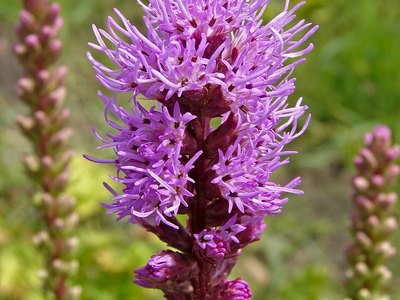 Button snakerootLiatris spicata
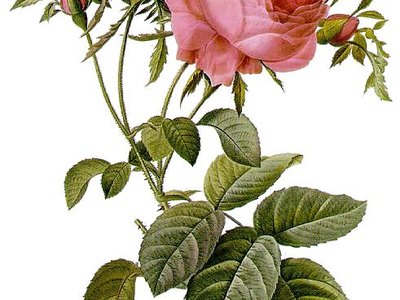 Cabbage roseRosa Centifolia
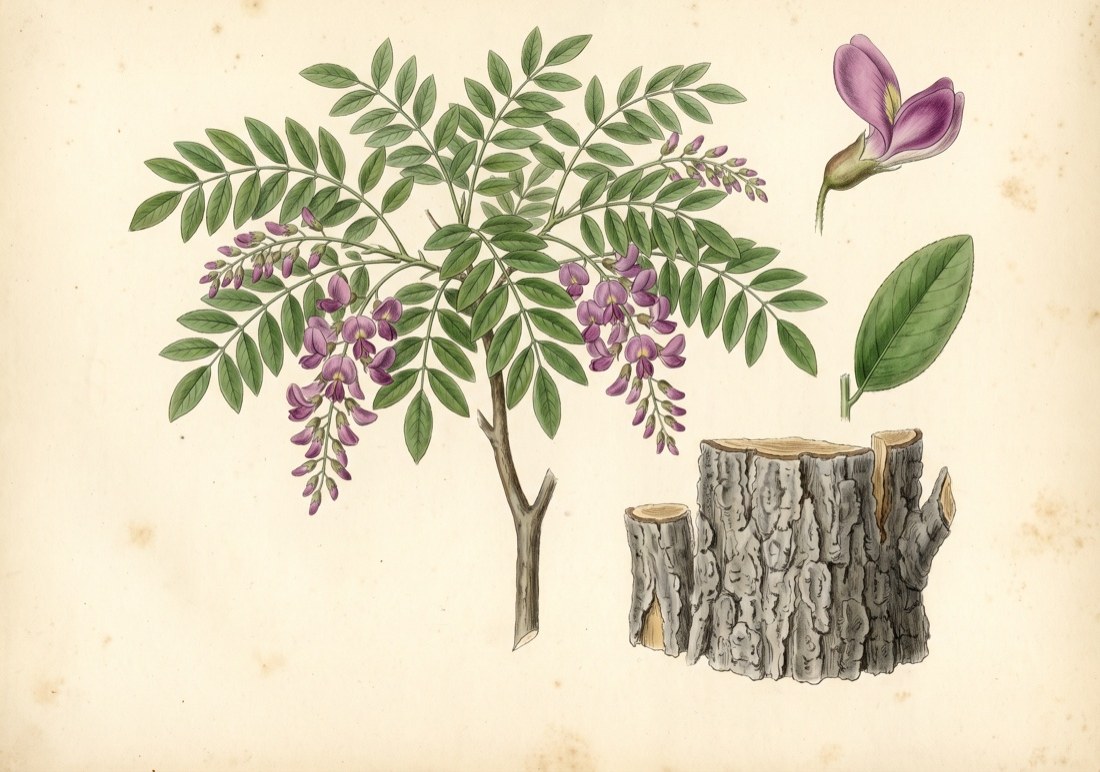 Cabbage tree barkAndira
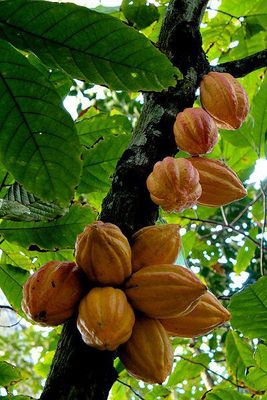 CacaoTheobroma cacao
 Cahinca rootCahinca
The whole plate is in the library. The compass, Compare, the Sky of eleven hundred plants and the formulary open with an email address and a password, free, with the formula builder and its safety engine. Herbert without limit, his formulating, clients, the handouts and the labels are the paid room.
Open the library, free