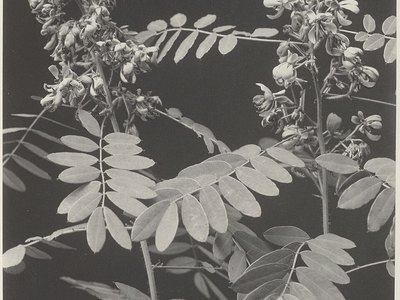
Western Herbalism
American senna
Cassia Marilandica
Also known as Wild senna, Maryland senna.
Wild senna, or American senna, is a native North American perennial of the pea family found through the eastern and central United States, historically gathered for its leaflets, which were used much like the Old World sennas as a dependable cathartic. Eclectic physicians valued it as a domestic substitute for imported Alexandrian and Tinnevelly senna, considering it milder in griping but still effective. The dried leaflets are the part used, prepared as an infusion, tincture, or powdered extract.

Ask Herbert about American senna. Herbert is the master herbalist inside Bountiful Herbs: he answers from this plate and eleven hundred others, with dosing, pairing and cautions. Your first ten questions are free.
Ask HerbertActions
Indications what the tradition reached for it in
- Constipation
- Occasional atonic bowel
- Bowel preparation prior to procedures
- Postpartum constipation
- Constipation with hard, dry stool
- Habitual constipation needing short-term relief
- Sluggish bowel in convalescence
- Intestinal parasites (traditional adjunct use)
Specific indications
Simple constipation with dry, hard stool and no acute inflammation, when a reliable stimulant laxative is wanted
Short courses for occasional constipation where gentler bulk laxatives have failed
Safety
Low dose botanical. Used in drop doses in the classical practice; not a plant to dose freely.
Pregnancy: Avoid routine use in pregnancy; anthraquinone laxatives may stimulate uterine and pelvic congestion, and use should be limited to short-term, practitioner-supervised courses only if gentler measures fail.
The record lists 7 contraindications; open the plate in the library to read them in full.
In practice
Wild senna behaves clinically much like its Old World relatives (Senna alexandrina), since it shares the same class of anthraquinone glycosides responsible for stimulant laxative action. Practitioners reach for it when a short course of reliable, predictable purgation is needed, for example ahead of a procedure, or for a few days of occasional constipation that has not responded to dietary fiber and hydration.
Dosing as the sources wrote it
| Preparation | As written | Metric |
|---|---|---|
| Infusion (cold or hot) | 1-2 g dried leaflet steeped, once daily as needed | 1000-2000 mg |
| Tincture (1:5, 40%) | 1-3 mL once daily as needed | 1-3 mL |
| Powdered leaf | 0.5-1 g once daily as needed | 500-1000 mg |
| Dose, 4 to 5 fluidounces. | 118-148 mL | |
| The dose in powder is from ½ to 2 ½ drachms. | 1944-9720 mg | |
| Macerate for an hour in a covered vessel and strain; dose, 4 or 5 fluid ounces. | 148-148 mL |
Doses are reproduced from the sources for practitioners and are not a recommendation for any person.
From the sources
Overview. Wild senna, or American senna, is a native North American perennial of the pea family found through the eastern and central United States, historically gathered for its leaflets, which were used much like the Old World sennas as a dependable cathartic. Eclectic physicians valued it as a domestic substitute for imported Alexandrian and Tinnevelly senna, considering it milder in griping but still effective. The dried leaflets are the part used, prepared as an infusion, tincture, or powdered extract.
Clinical Notes. Wild senna behaves clinically much like its Old World relatives (Senna alexandrina), since it shares the same class of anthraquinone glycosides responsible for stimulant laxative action. Practitioners reach for it when a short course of reliable, predictable purgation is needed, for example ahead of a procedure, or for a few days of occasional constipation that has not responded to dietary fiber and hydration.
Description. "Cylindrical, 40 to 60 Cm. (16 to 24 inches) long, nearly 25 Mm. (1 inch) in diameter, blackish-brown, somewhat veined, the sutures smooth, forming two longitudinal bands; indehiscent, internally divided transversely into numerous cells, each containing a reddish-brown, glossy, flattish-ovate seed imbedded in a blackish-brown sweet pulp; odor resembling that of prunes" ... (U.S. P.).
History. Purging cassia inhabits Egypt and the Indies, and has become extensively diffused in various tropical countries, as China, Hindustan, West Indies, Brazil, etc. The part used in medicine is the fruit or pods, and those are to be preferred which are heavy and new, and do not, when shaken, make a rattling noise from the seeds being loose within them.
Drawn from King's American Dispensatory, 18th edition (Felter and Lloyd); Felter's Eclectic Materia Medica, Pharmacology and Therapeutics, and the Bountiful Herbs editorial.
Nearby on the shelf
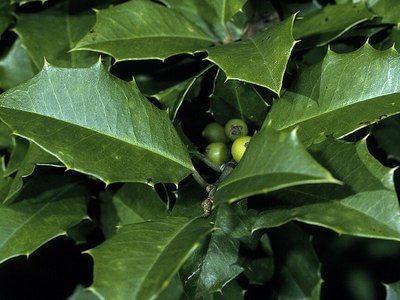 American HollyIlex Opaca
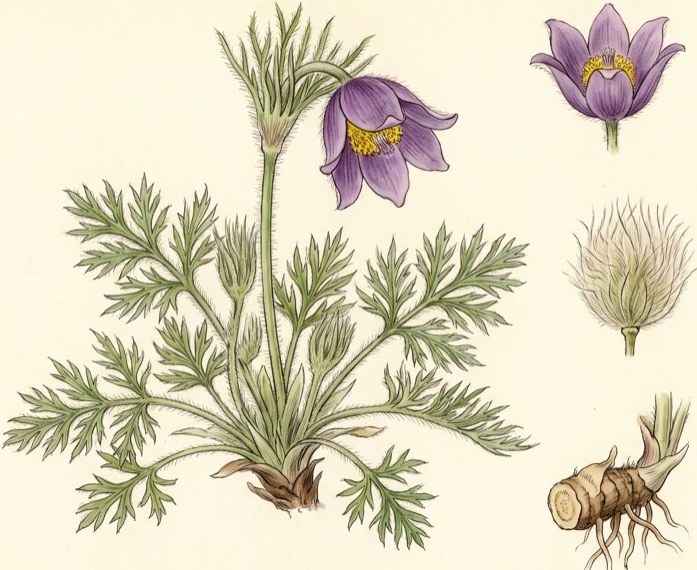 American pasque flowerAnemone Patens
 American pennyroyalHedeoma pulegioides
 American persimmonDiospyros virginiana
 American SkullcapScutellaria lateriflora
 Amlavetasa (in the Ayurvedic sense)Garcinia pedunculata
 AndrographisAndrographis paniculata
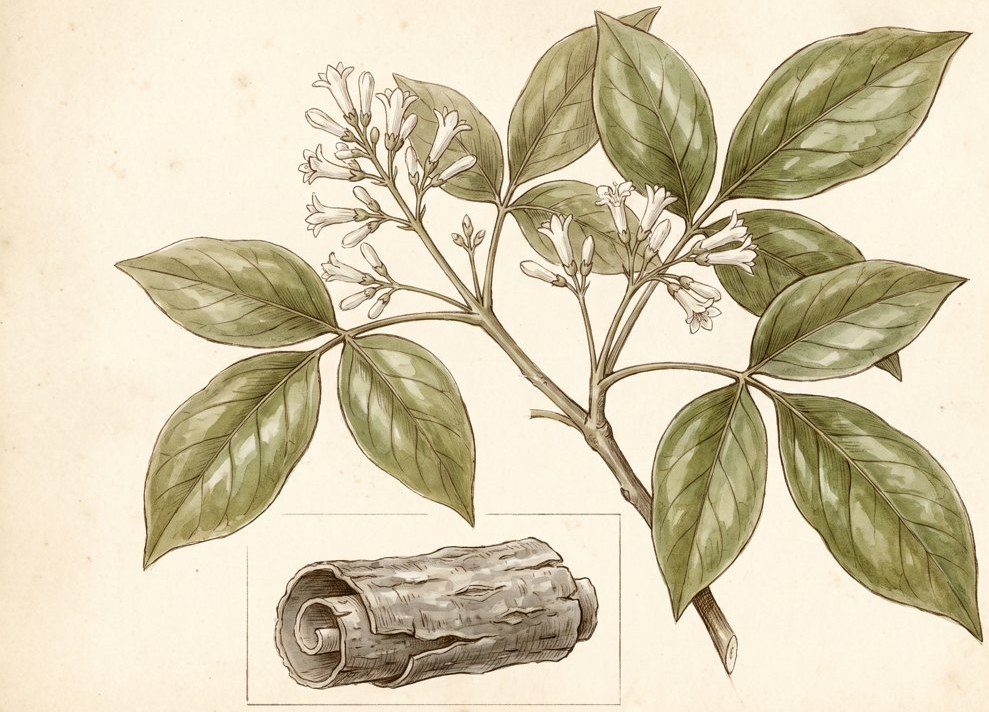 AngusturaGalipea cusparia
The whole plate is in the library. The compass, Compare, the Sky of eleven hundred plants and the formulary open with an email address and a password, free, with the formula builder and its safety engine. Herbert without limit, his formulating, clients, the handouts and the labels are the paid room.
Open the library, free