Western Herbalism
Angustura
Galipea cusparia
Also known as Angostura bark, Cusparia bark.
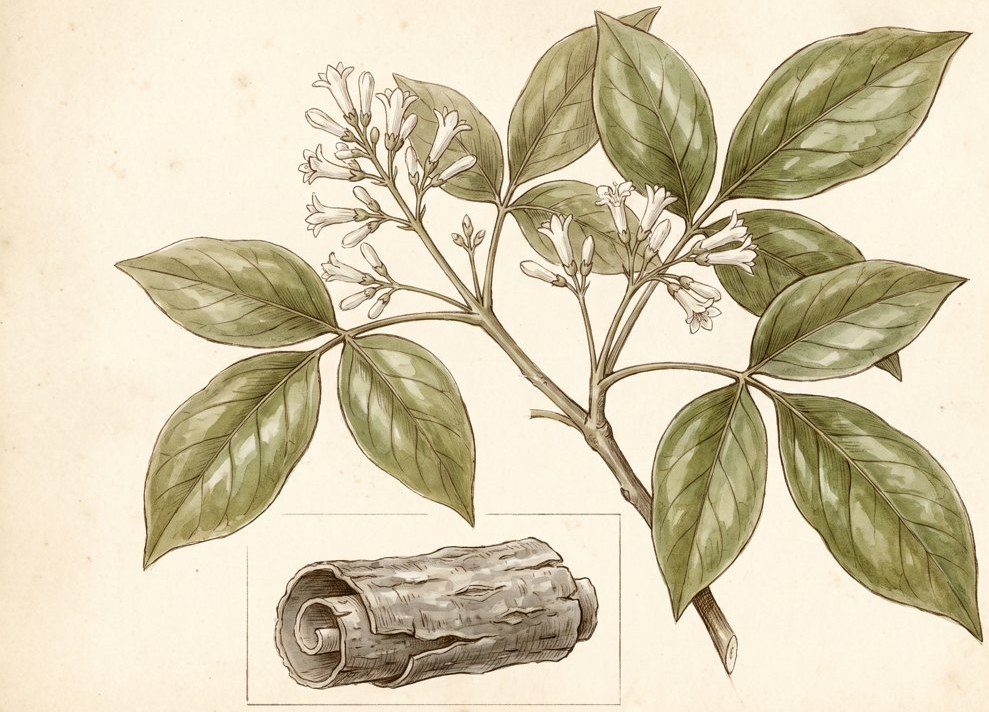
Angustura bark comes from a moderate to tall tropical tree of the Rutaceae family, native to the forested lowlands and foothills of northern South America, particularly Venezuela and Colombia. The dried bark of the trunk and branches is the part used, valued since the eighteenth century as an aromatic bitter tonic for the digestive tract and as a remedy for diarrhea and low fevers. In the physiomedicalist tradition it was regarded as a stimulant to the mucous membranes, restoring tone to a relaxed and atonic digestive tract, and it found a place alongside other Rutaceae bitters such as xanthoxylum and ptelea in that materia medica.

Ask Herbert about Angustura. Herbert is the master herbalist inside Bountiful Herbs: he answers from this plate and eleven hundred others, with dosing, pairing and cautions. Your first ten questions are free.
Ask HerbertActions
Indications what the tradition reached for it in
- Atonic dyspepsia
- Poor appetite
- Flatulent colic
- Chronic diarrhea
- Dysentery
- Convalescent debility after fever
- Intermittent fever
- Sluggish digestion with gas and discomfort
Specific indications
Atonic dyspepsia with a sluggish appetite and gas or discomfort after eating
Chronic diarrhea with general debility following a febrile illness
Safety
Low dose botanical. Used in drop doses in the classical practice; not a plant to dose freely.
Pregnancy: Avoid in pregnancy: traditional sources note uterine stimulant activity for aromatic Rutaceae bitters and safety data are insufficient.
Breastfeeding: Avoid in lactation due to lack of safety data and the risk of adulteration with toxic false angustura bark.
The record lists 4 contraindications; open the plate in the library to read them in full.
In practice
Angustura bark is reached for when the digestive tract is sluggish and relaxed rather than inflamed, with poor appetite, slow digestion, gas, and a general lack of tone. Physiomedical practitioners valued it as a warming, stimulating bitter that could be combined with more relaxant or astringent agents depending on the tissue state presented, using it to rouse a torpid stomach and bowel rather than to sedate an irritated one.
Dosing as the sources wrote it
| Preparation | As written | Metric |
|---|---|---|
| Infusion | 0.5-1 g dried bark as infusion, up to three times daily | 500-1000 mg |
| Tincture (1:5, 45%) | 0.5-2 mL three times daily before meals | 0.5-2 mL |
| Powdered bark | 0.3-1 g up to three times daily | 300-1000 mg |
| Dose of the powder, ten to twenty grains, three to five times a day | 648-1296 mg |
Doses are reproduced from the sources for practitioners and are not a recommendation for any person.
From the sources
Overview. Angustura bark comes from a moderate to tall tropical tree of the Rutaceae family, native to the forested lowlands and foothills of northern South America, particularly Venezuela and Colombia. The dried bark of the trunk and branches is the part used, valued since the eighteenth century as an aromatic bitter tonic for the digestive tract and as a remedy for diarrhea and low fevers. In the physiomedicalist tradition it was regarded as a stimulant to the mucous membranes, restoring tone to a relaxed and atonic digestive tract, and it found a place alongside other Rutaceae bitters such as xanthoxylum and ptelea in that materia medica.
Clinical Notes. Angustura bark is reached for when the digestive tract is sluggish and relaxed rather than inflamed, with poor appetite, slow digestion, gas, and a general lack of tone. Physiomedical practitioners valued it as a warming, stimulating bitter that could be combined with more relaxant or astringent agents depending on the tissue state presented, using it to rouse a torpid stomach and bowel rather than to sedate an irritated one.
Properties and Uses. The bark of angustura, as above distinguished from that of nux vomica is an excellent tonic, aromatically stimulating and somewhat relaxing, and gently diffusive in its action. It is not irritating to the stomach, but usually is well received.
Description. This is a South American representative of the Natural Order Rutaceae, of which xanthoxylum and ptelea are among the North American genera. Its best known synonyms are Galipea officinalis, and Bonplanida trifoliata.
Drawn from Cook's Physio-Medical Dispensatory, and the Bountiful Herbs editorial.
Nearby on the shelf
 American sennaCassia Marilandica
 American SkullcapScutellaria lateriflora
 Amlavetasa (in the Ayurvedic sense)Garcinia pedunculata
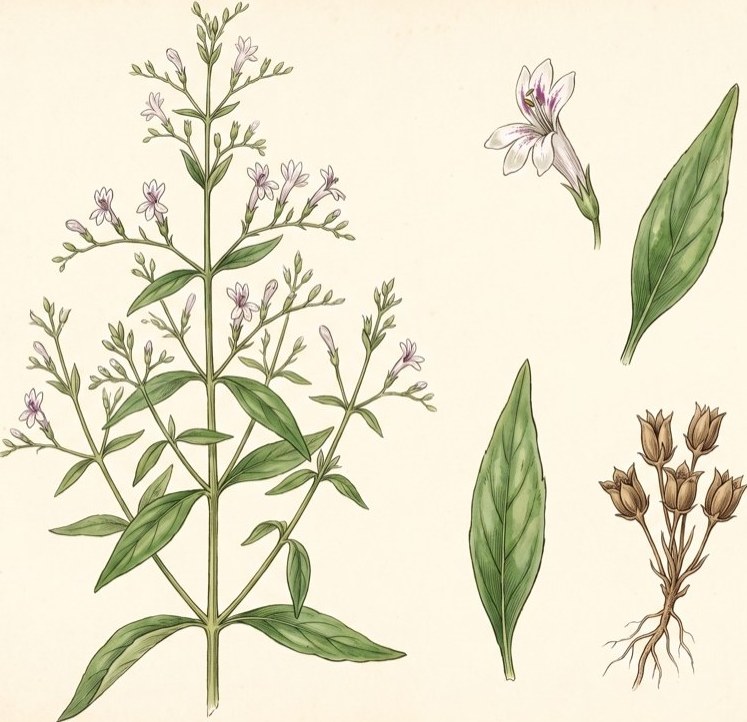 AndrographisAndrographis paniculata
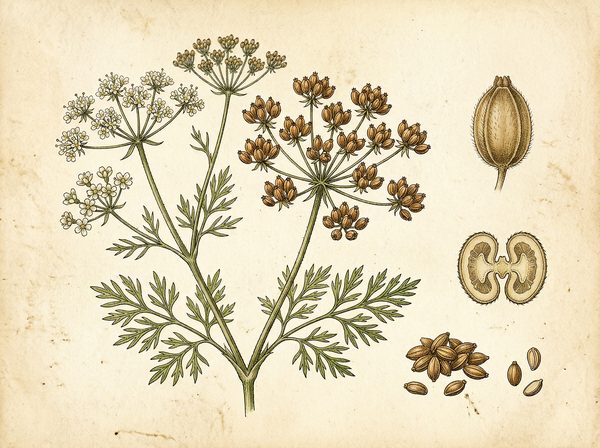 AnisePimpinella anisum
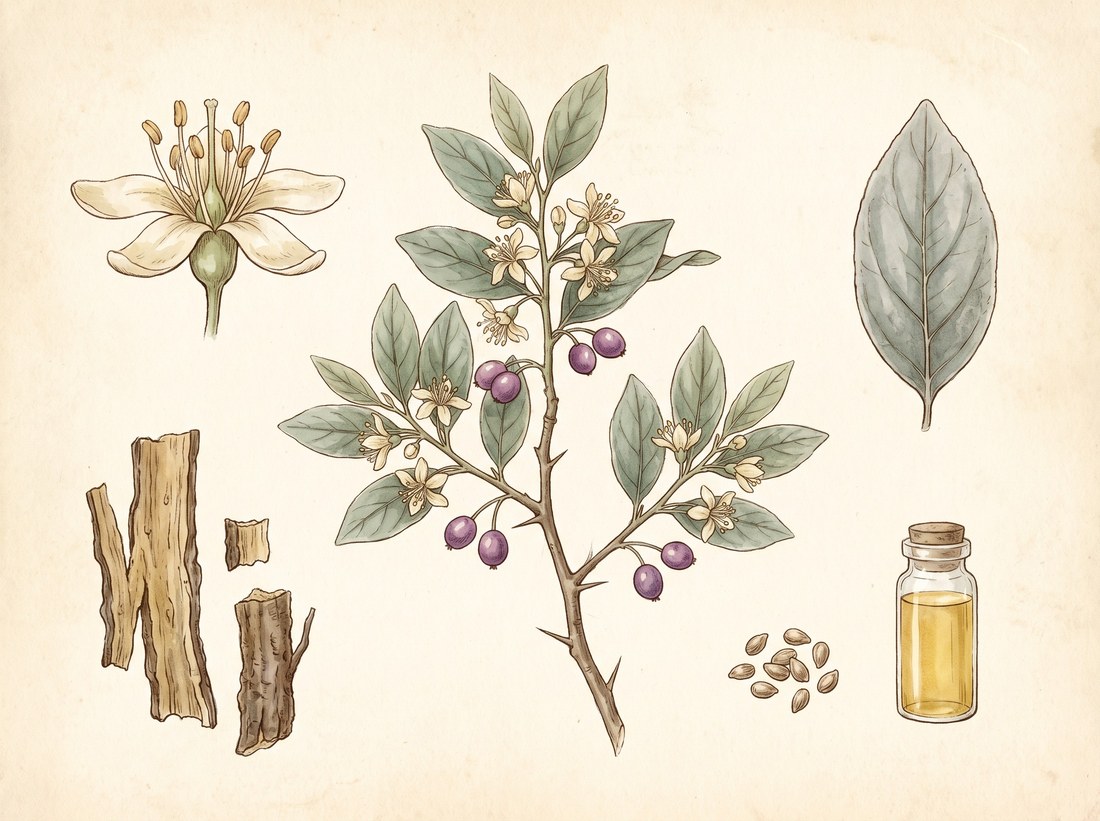 AnkolaAlangium salviifolium
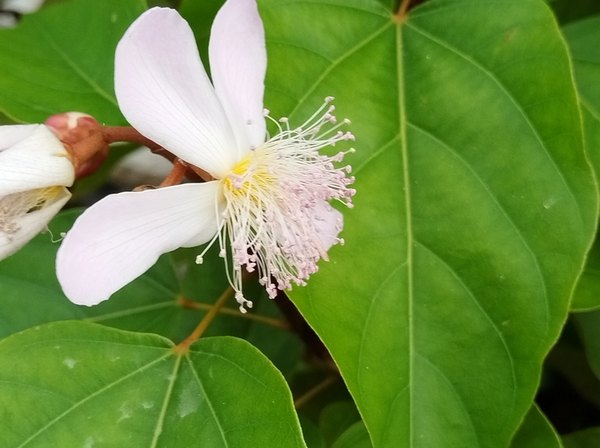 AnnattoBixa orellana
The whole plate is in the library. The compass, Compare, the Sky of eleven hundred plants and the formulary open with an email address and a password, free, with the formula builder and its safety engine. Herbert without limit, his formulating, clients, the handouts and the labels are the paid room.
Open the library, free