Western Herbalism
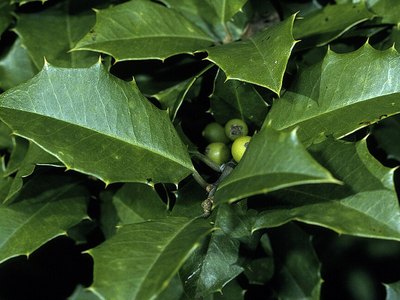
American Holly
Ilex opaca
Also known as Christmas holly, Evergreen holly.
American holly is a medium-sized evergreen tree native to the eastern and southeastern United States, closely related to the European holly and sharing much of its traditional reputation. Physiomedicalist and eclectic writers of the nineteenth century used the leaves, dried and prepared as an infusion, valuing them as a diffusive stimulant to the circulation with a secondary tonic and diaphoretic effect. The bright scarlet berries, prized for winter decoration, were never used as medicine and were regarded as unsafe to eat.

Ask Herbert about American Holly. Herbert is the master herbalist inside Bountiful Herbs: he answers from this plate and eleven hundred others, with dosing, pairing and cautions. Your first ten questions are free.
Ask HerbertActions
Indications what the tradition reached for it in
- Intermittent fever (ague) with chills and poor peripheral circulation
- Common cold with sluggish surface circulation
- Dyspepsia with poor appetite
- Mild edema and reduced urine output
- Catarrh with a feeling of internal chill
- Low-grade continued fevers
- Convalescent debility calling for a bitter tonic
- Rheumatic complaints associated with sluggish circulation (traditional use)
Specific indications
Low-grade intermittent fever with cold extremities and a sluggish surface circulation, calling for a warm diffusive leaf infusion to restore capillary action and encourage sweating
Poor appetite and slow digestion with a bitter taste indicated, given as a cold infusion for its tonic, non-diaphoretic effect
Safety
Low dose botanical. Used in drop doses in the classical practice; not a plant to dose freely.
Pregnancy: Not safe. Avoid in pregnancy: traditional use only, no modern safety data exist to support use.
Pregnancy, our record's flag: Caution. Use with care in pregnancy (our record's flag)
Breastfeeding: Not safe. Avoid in lactation: insufficient safety data, no established modern dosing.
Breastfeeding, our record's flag: Caution. Use with care while breastfeeding (our record's flag)
The record lists 3 contraindications; open the plate in the library to read them in full.
In practice
In the older physiomedical literature, American holly leaf was reached for much as boneset or yarrow were, as a warming diaphoretic to bring on sweating and rouse a sluggish peripheral circulation in the early, chilly stage of a cold or intermittent fever.
Dosing as the sources wrote it
| Preparation | As written |
|---|---|
| Warm leaf infusion (diaphoretic use) | 1-2 g dried leaf as infusion, repeated in small cupfuls several times daily during acute chill |
| Cold leaf infusion (bitter tonic use) | 1-2 g dried leaf as cold infusion, taken before meals |
| Action, Medical Uses, and Dosage: Holly leaves are tonic and febrifuge; said to be very efficient in the treatment of intermittent fevers, in doses of 60 grains of their powder administered 1 or 2 hours previous to the chill. | |
| Its dose is 10 grains in pill form, gradually increased to 30 grains. |
Doses are reproduced from the sources for practitioners and are not a recommendation for any person.
From the sources
Overview. American holly is a medium-sized evergreen tree native to the eastern and southeastern United States, closely related to the European holly and sharing much of its traditional reputation. Physiomedicalist and eclectic writers of the nineteenth century used the leaves, dried and prepared as an infusion, valuing them as a diffusive stimulant to the circulation with a secondary tonic and diaphoretic effect. The bright scarlet berries, prized for winter decoration, were never used as medicine and were regarded as unsafe to eat.
Clinical Notes. In the older physiomedical literature, American holly leaf was reached for much as boneset or yarrow were, as a warming diaphoretic to bring on sweating and rouse a sluggish peripheral circulation in the early, chilly stage of a cold or intermittent fever.
Properties and Uses. The leaves of the European holly have had much attention directed to them, and those of the several American species seem to be in all respects similar. They are stimulating and relaxing, and of a peculiar bitter and somewhat balsamic taste.
Action, Medical Uses, and Dosage. Holly leaves are tonic and febrifuge; said to be very efficient in the treatment of intermittent fevers, in doses of 60 grains of their powder administered 1 or 2 hours previous to the chill. The infusion has also proved beneficial in icterus, pleuritis, catarrh, variola, arthritis, etc. The berries are said to be emeto-cathartic and cholagogue; from 8 to 15 of them will act as a hydragogue. According to Dr. Rousseau, ilicin acts decidedly upon the spleen, liver, and pancreas, producing a sedative effect, and is a cheap substitute for quinine. Its dose is 10 grains in pill form, gradually increased to 30 grains.
Drawn from Cook's Physio-Medical Dispensatory; King's American Dispensatory, 18th edition (Felter and Lloyd), and the Bountiful Herbs editorial.
Also mentioned under
Also mentioned under Black alder
Also mentioned under Cacao
Nearby on the shelf
 American figwortScrophularia marilandica
 American GinsengPanax quinquefolius
 American Greek ValerianPolemonium reptans
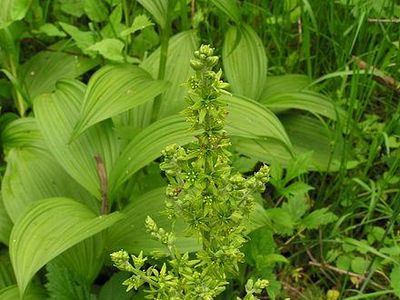 American helleboreVeratrum viride
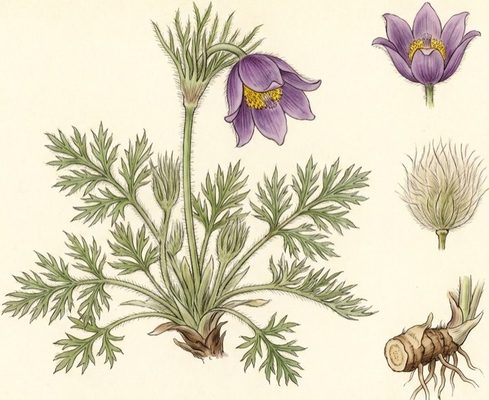 American pasque flowerPulsatilla patens
 American pennyroyalHedeoma pulegioides
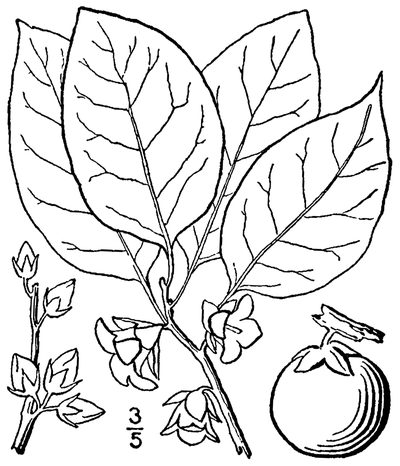 American persimmonDiospyros virginiana
 American sennaCassia marilandica
The whole plate is in the library. The compass, Compare, the Sky of eleven hundred plants and the formulary open with an email address and a password, free, with the formula builder and its safety engine. Herbert in full, his formulating, clients, the handouts and the labels are the paid room.
Open the library, free