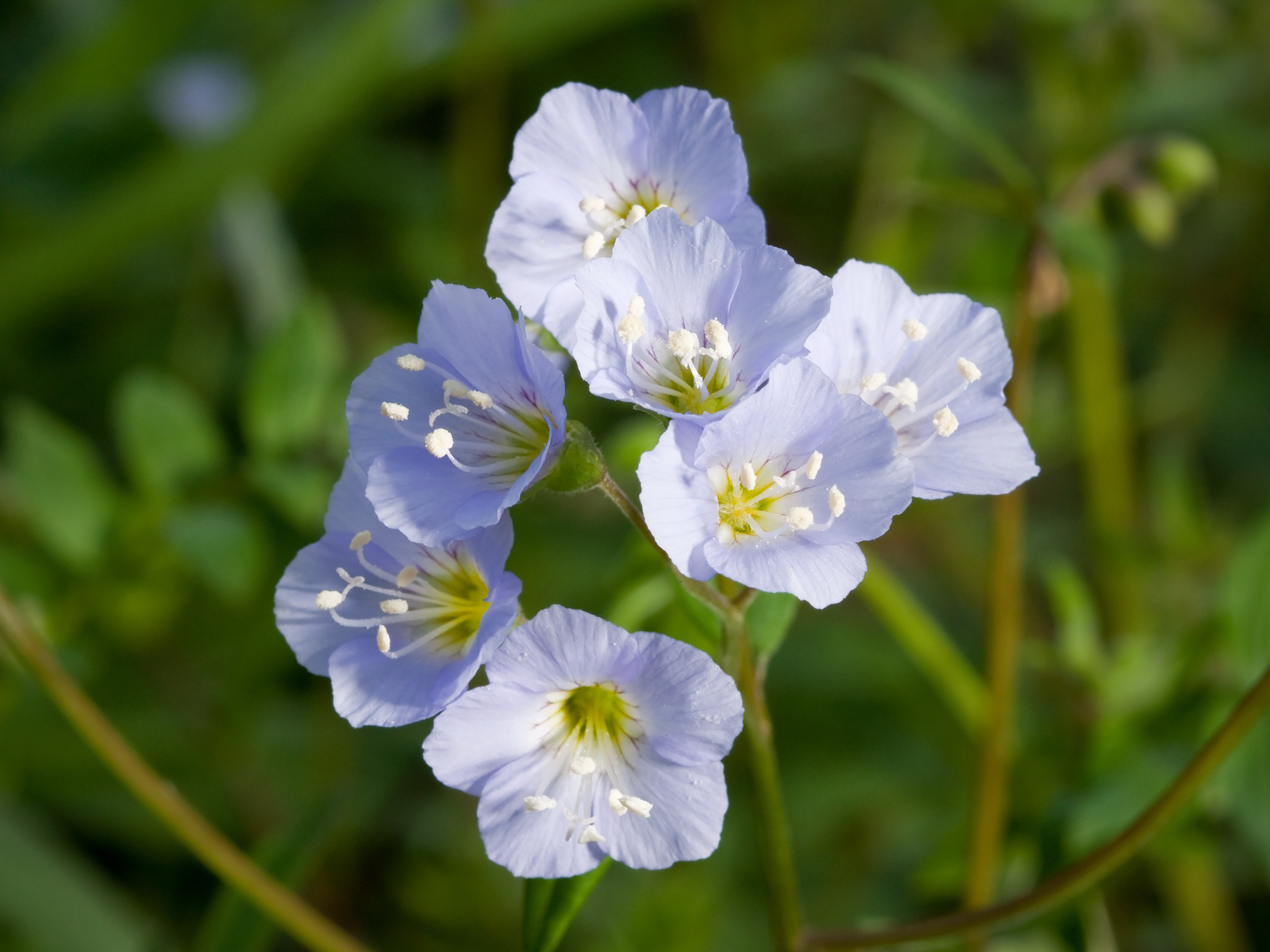
Western Herbalism
American Greek Valerian
Polemonium
Also known as Abscess root, Jacob's ladder, Sweat root, Blue bells, sometimes called Blue bells.
Polemonium reptans, commonly called American Greek Valerian, abscess root or Jacob's ladder, is a low-growing perennial of eastern North American woodlands, valued by the nineteenth-century eclectic physicians for its root. It found a place in eclectic practice as a diaphoretic and expectorant for febrile chest complaints, and its old name abscess root records its traditional use, internally and as a poultice, for suppurative skin conditions. It has largely fallen out of contemporary use and is rarely stocked today, but it remains a documented part of the North American herbal tradition.

Ask Herbert about American Greek Valerian. Herbert is the master herbalist inside Bountiful Herbs: he answers from this plate and eleven hundred others, with dosing, pairing and cautions. Your first ten questions are free.
Ask HerbertActions
Indications what the tradition reached for it in
- Bronchitis with loose productive cough
- Chronic catarrh
- Low fevers with poor perspiration
- Boils and abscesses
- Skin eruptions of a chronic, sluggish type
- Nervous restlessness with fever
- Laryngitis
- Feverish colds with a tight, irritable cough
Specific indications
Persistent, dry, irritative cough with a sense of tightness across the chest
Low-grade, lingering fever that will not break into a proper sweat
Safety
Pregnancy: Avoid in pregnancy given the absence of modern safety data on this little-studied herb.
Breastfeeding: Avoid in lactation for the same reason of insufficient safety information.
The record lists 2 contraindications; open the plate in the library to read them in full.
In practice
Abscess root was reached for by the eclectics chiefly in low, lingering febrile states where the skin stayed dry and the patient felt tight and restless, and in chest colds that produced a loose but persistent cough.
Dosing as the sources wrote it
| Preparation | As written | Metric |
|---|---|---|
| Decoction | 2-4 g dried root daily | 2000-4000 mg |
| Tincture (1:5) | 1-3 mL three times daily | 1-3 mL |
| The tincture, made of whiskey, in doses of from 1 to 2 fluid ounces, 2 or 3 times a day, has been found valuable in scrofulous diseases, and other chronic diseases where an alterative is indicated. | 29.57-59.15 mL |
Doses are reproduced from the sources for practitioners and are not a recommendation for any person.
From the sources
Overview. Polemonium reptans, commonly called American Greek Valerian, abscess root or Jacob's ladder, is a low-growing perennial of eastern North American woodlands, valued by the nineteenth-century eclectic physicians for its root. It found a place in eclectic practice as a diaphoretic and expectorant for febrile chest complaints, and its old name abscess root records its traditional use, internally and as a poultice, for suppurative skin conditions. It has largely fallen out of contemporary use and is rarely stocked today, but it remains a documented part of the North American herbal tradition.
Clinical Notes. Abscess root was reached for by the eclectics chiefly in low, lingering febrile states where the skin stayed dry and the patient felt tight and restless, and in chest colds that produced a loose but persistent cough.
Drawn from King's American Dispensatory, 18th edition (Felter and Lloyd), and the Bountiful Herbs editorial.
Nearby on the shelf
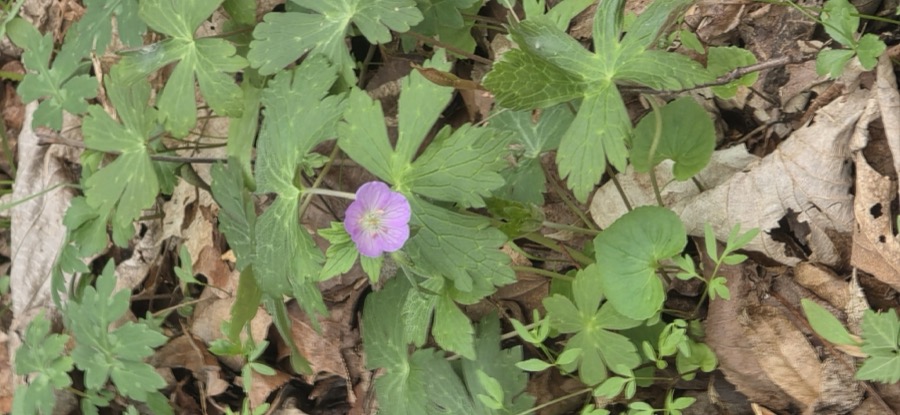 American cranesbillGermanium maculata
 American dittanyCunila mariana
 American figwortScrophularia marilandica
 American GinsengPanax quinquefolius
 American helleboreVeratrum viride
 American HollyIlex Opaca
 American pasque flowerAnemone Patens
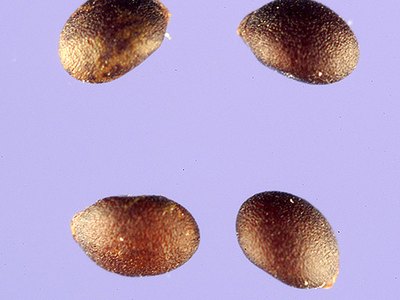 American pennyroyalHedeoma pulegioides
The whole plate is in the library. The compass, Compare, the Sky of eleven hundred plants and the formulary open with an email address and a password, free, with the formula builder and its safety engine. Herbert without limit, his formulating, clients, the handouts and the labels are the paid room.
Open the library, free