Chinese Herbalism
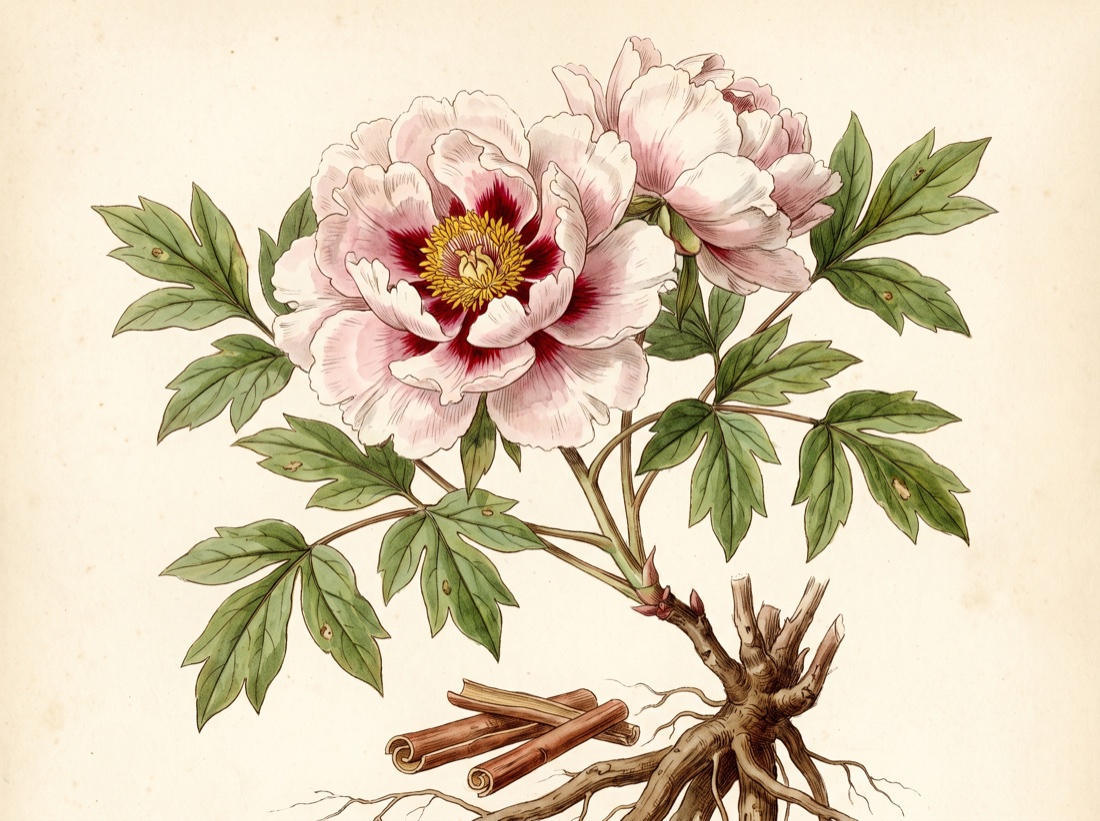
Tree peony
Paeonia suffruticosa
Also known as moutan, moutan peony, mountain peony, moutan root bark, mǔ dān pí.
Tree peony is a woody shrub of the peony family, native to the mountains of central and northern China and cultivated there for well over a thousand years for its flowers and its root bark. The medicine, mu dan pi, is the dried root bark of plants three to five years old, with the main supply from Anhui province. It is one of the standard heat-clearing, blood-cooling herbs of Chinese medicine and appears in many classical formulas, including Liu Wei Di Huang Wan and Gui Zhi Fu Ling Wan.

Ask Herbert about Tree peony. Herbert is the master herbalist inside Bountiful Herbs: he answers from this plate and eleven hundred others, with dosing, pairing and cautions. Your first ten questions are free.
Ask HerbertActions
Indications what the tradition reached for it in
- Heat in the blood level with rashes, epistaxis or hematemesis
- Yin deficiency fever without sweating
- Amenorrhea from blood stasis
- Dysmenorrhea with dark clots
- Fixed abdominal masses and uterine fibroids (in formula)
- Traumatic injury with swelling and bruising
- Early intestinal abscess (in formula)
- Liver fire headache with red eyes
- Menstrual irregularity with heat signs
- Carbuncles and hot skin sores
- Hypertension with liver heat (supportive)
Specific indications
Low-grade evening fever with no sweating, warm palms and soles, and a dry mouth, the picture of heat from yin deficiency
Heavy periods with dark clots and cramping in a woman who runs warm and flushes easily
Fixed lower abdominal pain with a palpable mass, prescribed alongside cinnamon twig and poria
Safety
The record lists 7 contraindications; open the plate in the library to read them in full.
In practice
Mu dan pi does two things at once that few herbs manage: it cools heat in the blood and it moves blood. That makes it the herb for heat and stasis together, as in a woman with painful clotted periods who also flushes, sleeps hot and has a red tongue tip, or in the low evening fever without sweat that follows a long illness or accompanies yin deficiency.
In Chinese medicine
Temperature: slightly cold. Taste: bitter, acrid. Channels: Heart, Liver, Kidney. Actions: Clears heat and cools the blood, for warm disease that has entered the blood level with rashes, nosebleed and vomiting of blood; Clears deficiency heat, especially the steaming-bone fever without sweating of yin deficiency; Invigorates blood and dispels stasis in amenorrhea, painful periods, abdominal masses and traumatic injury; Drains liver fire in headache, red eyes and flank pain; Reduces swelling and helps discharge pus in abscesses, including early intestinal abscess.
Dosing as the sources wrote it
| Preparation | As written | Metric |
|---|---|---|
| Decoction | 6-12 g dried root bark daily | 6000-12000 mg |
| Powder | 1-3 g dried root bark twice daily | 1000-3000 mg |
| Tincture (1:5, 45%) | 2-4 mL three times daily | 2-4 mL |
Doses are reproduced from the sources for practitioners and are not a recommendation for any person.
From the sources
Overview. Tree peony is a woody shrub of the peony family, native to the mountains of central and northern China and cultivated there for well over a thousand years for its flowers and its root bark. The medicine, mu dan pi, is the dried root bark of plants three to five years old, with the main supply from Anhui province. It is one of the standard heat-clearing, blood-cooling herbs of Chinese medicine and appears in many classical formulas, including Liu Wei Di Huang Wan and Gui Zhi Fu Ling Wan.
Clinical Notes. Mu dan pi does two things at once that few herbs manage: it cools heat in the blood and it moves blood. That makes it the herb for heat and stasis together, as in a woman with painful clotted periods who also flushes, sleeps hot and has a red tongue tip, or in the low evening fever without sweat that follows a long illness or accompanies yin deficiency.
Chinese Medicine Profile. Temperature: slightly cold. Taste: bitter, acrid. Channels: Heart, Liver, Kidney. Actions: Clears heat and cools the blood, for warm disease that has entered the blood level with rashes, nosebleed and vomiting of blood; Clears deficiency heat, especially the steaming-bone fever without sweating of yin deficiency; Invigorates blood and dispels stasis in amenorrhea, painful periods, abdominal masses and traumatic injury; Drains liver fire in headache, red eyes and flank pain; Reduces swelling and helps discharge pus in abscesses, including early intestinal abscess.
Conservation. Medicinal supply is from cultivation, mainly in Anhui and Shandong, and the species is not considered at risk; several wild tree peony relatives in China are protected and should not be wild-harvested.
Nearby on the shelf
 Tongue fernPyrrosia lingua
 Toothache PlantSpilanthes acmella
 TormentilPotentilla erecta
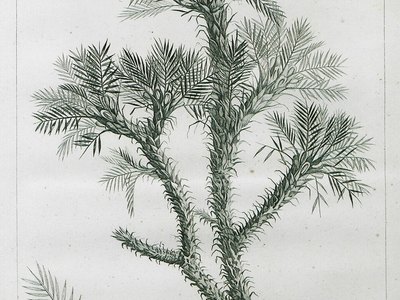 TragacanthAstragalus verus
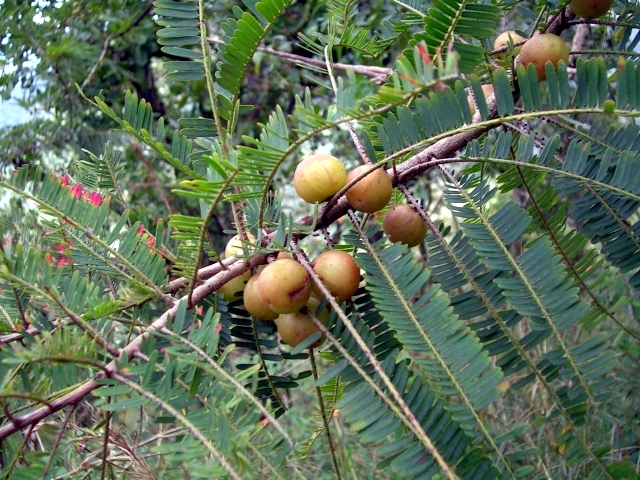 TriphalaTriphala
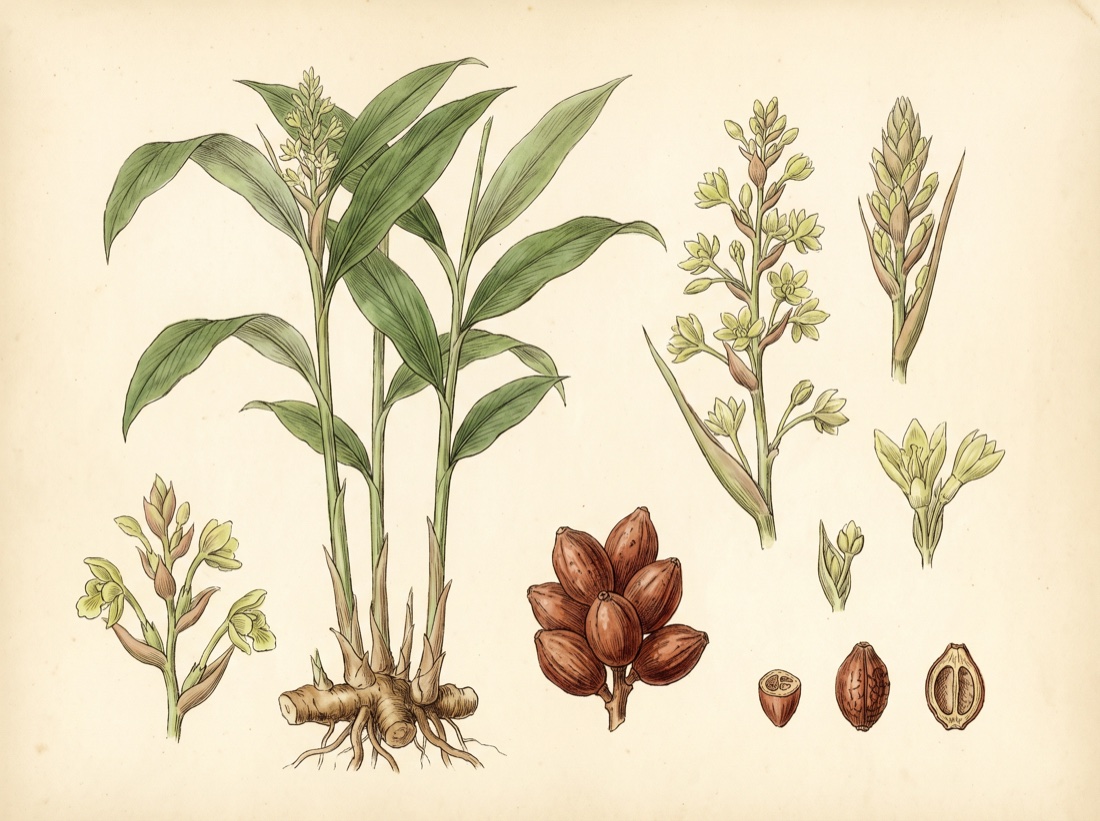 Tsao-koAmomum tsao-ko
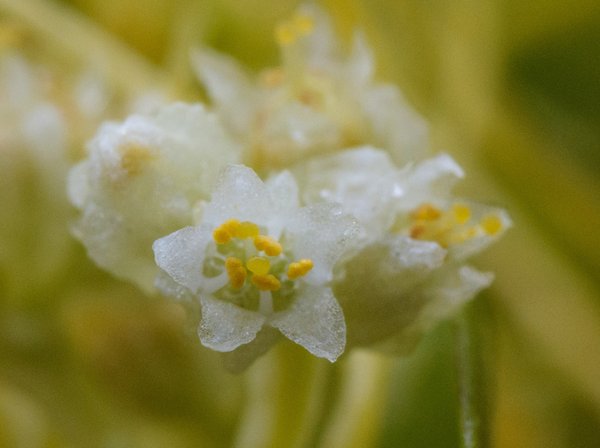 Tu Si ZiCuscuta chinensis
 Tulip treeLiriodendron tulipifera
The whole plate is in the library. The compass, Compare, the Sky of eleven hundred plants and the formulary open with an email address and a password, free, with the formula builder and its safety engine. Herbert without limit, his formulating, clients, the handouts and the labels are the paid room.
Open the library, free